
The Uncut Truth: Why Russian Diamonds Are Funding Conflict and Challenging Global Ethics
The shimmering allure of diamonds has long captivated humanity, symbolizing love, commitment, and timeless beauty. Yet, beneath their polished surface, a stark and unsettling reality is emerging, casting a shadow over the industry. A Ukrainian diplomat has issued a fervent plea to consumers worldwide: desist from purchasing Russian diamonds. This powerful appeal stems from the undeniable link between these precious gems and the financing of the ongoing war in Ukraine, transforming what was once a symbol of purity into a potential contributor to unimaginable suffering.
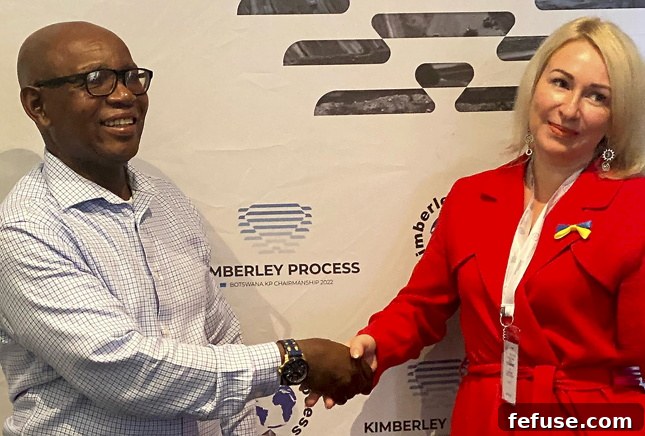
Liubov Abravitova, Ukraine’s esteemed ambassador to South Africa, Botswana, and Mozambique, articulated this critical concern with a clarity that resonated deeply. Her remarks came at a pivotal moment, during an intersessional meeting of the Kimberley Process (KP) in Botswana, where attempts to broaden the definition of “conflict diamonds” to include state-sponsored aggression met with a disheartening stalemate. This failure highlights a growing chasm between traditional industry definitions and the evolving complexities of modern geopolitical conflicts.
The Moral Imperative: A Diplomat’s Call to Conscience
Ambassador Abravitova’s message is not merely a diplomatic statement; it is a profound moral appeal. “When you see Bucha, Irpin, Gostomel, all those atrocities… I think they should think twice when they are buying diamonds that can be of origin of Russia, because they are basically sponsoring the killings,” she conveyed to Reuters. These names, now tragically synonymous with heinous war crimes, serve as a stark reminder of the human cost of the conflict. The diplomat’s words underscore a fundamental ethical dilemma for consumers: can one truly enjoy a symbol of love and purity knowing its origins might be tainted by violence and bloodshed?
For decades, the global diamond industry has strived to clean up its image, primarily through the Kimberley Process, designed to prevent the trade in “blood diamonds” that funded civil wars in Africa. However, the current crisis in Ukraine presents a new, unprecedented challenge that pushes the boundaries of this established framework. The ambassador’s call isn’t just about economic sanctions; it’s about a fundamental shift in consumer awareness and responsibility, urging individuals to connect their purchasing power directly to global humanitarian concerns.
Kimberley Process Under Scrutiny: A Rudderless Ship?
The Kimberley Process Certification Scheme (KPCS), established in 2003, was a landmark agreement aimed at eradic eradicating the trade in conflict diamonds. Its definition focuses on “rough diamonds used by rebel movements or their allies to finance conflict aimed at undermining legitimate governments.” This definition, while effective in addressing the specific crises it was designed for, now appears increasingly inadequate in the face of state-sponsored aggression.
The Stalemate in Botswana: A Divided Front
At the recent KP intersessional meeting in Botswana, a coalition of nations and civil society groups made a concerted effort to address the issue of Russian diamonds. Calls to formally discuss and potentially broaden the definition of conflict diamonds were championed by Australia, Britain, Canada, the European Union, Japan, Switzerland, the United States, and various civil society organizations. These participants recognized the urgent need for the KP to adapt its mandate to reflect contemporary realities, where a major diamond-producing state is actively engaged in a conflict widely condemned by the international community.
However, their efforts were met with staunch opposition. Belarus, China, the Central African Republic, Kyrgyzstan, and Mali actively blocked these discussions. The Kimberley Process operates on a consensus basis, meaning that even a single dissenting voice can prevent a topic from being formally addressed or a decision from being made. This consensus rule, originally intended to foster broad agreement, has effectively become a veto mechanism, paralyzing the organization in moments of critical geopolitical contention.
The KP Civil Society Coalition’s Dire Warning
The Kimberley Process Civil Society Coalition (KPCSC), an umbrella organization representing numerous non-governmental groups involved in monitoring KP activities, did not mince words in its assessment of the situation. In a scathing statement, the KPCSC “deplored the incapacity of the certification scheme to address its demons.” This strong critique highlights a profound disillusionment within the very organizations dedicated to upholding the KP’s integrity.
The coalition went further, declaring that the “KP ship was rudderless, or actually sinking.” This powerful metaphor paints a grim picture of an organization adrift, unable to navigate the turbulent waters of modern conflict. The KPCSC accused a “small group of participants” of abusing their veto power, thereby preventing any meaningful discussion on issues deemed “critical for the future of the KP.” This internal deadlock not only undermines the immediate goal of addressing Russian diamonds but also casts a long shadow over the future relevance and effectiveness of the entire certification scheme.
The Economic Weight of Russian Diamonds and the War Effort
Russia is one of the world’s largest producers of rough diamonds, with its state-owned mining giant, Alrosa, dominating a significant portion of the global market. The revenue generated from these diamond sales flows directly into the Russian state budget, indirectly financing its military operations and sustaining the war machine in Ukraine. This economic link transforms every purchase of a Russian diamond into a potential contribution to the conflict.
While direct sanctions have been imposed on other Russian industries and financial institutions, the diamond sector has proven more challenging to address comprehensively due to its complex supply chain and the fungible nature of rough diamonds once they enter cutting and polishing centers, particularly in India. Without clear, robust mechanisms to identify and segregate Russian-origin diamonds, they can easily become commingled with gems from other sources, making traceability a significant hurdle for retailers and consumers alike.
The Imperative of Supply Chain Transparency
The controversy surrounding Russian diamonds brings to the forefront the critical need for greater supply chain transparency in the jewelry industry. Consumers, increasingly aware of the ethical dimensions of their purchases, are demanding to know the true origin of their products. This demand extends beyond just the ethical sourcing of diamonds, encompassing metals, labor practices, and environmental impact.
For the diamond industry, this means moving beyond basic KP certification to embrace more granular tracking methods. Technologies like blockchain are emerging as potential solutions, offering immutable records of a diamond’s journey from mine to market. Such innovations could provide the verifiable provenance that consumers and ethical advocacy groups are now demanding, ensuring that a diamond’s beauty is matched by its clean ethical record.
Ethical Consumerism in the Modern Era
The plea from Ambassador Abravitova resonates with a broader trend of ethical consumerism. Modern consumers are not just purchasing products; they are investing in values. They seek to align their spending with their moral compass, shunning goods produced through exploitation, environmental damage, or, in this case, the financing of war. This shift in consumer behavior represents a powerful force capable of driving change within industries that might otherwise resist reform.
For individuals, exercising ethical consumerism means:
- Asking detailed questions about the origin of diamonds from jewelers.
- Seeking out jewelers who can provide verifiable documentation of a diamond’s journey.
- Considering alternatives like lab-grown diamonds, which offer a conflict-free and environmentally controlled option.
- Supporting brands that are transparent about their sourcing and actively committed to ethical practices.
The collective power of consumer choice, when amplified across global markets, can exert immense pressure on retailers, manufacturers, and ultimately, on diamond-producing nations. A sustained boycott or even a significant decline in demand for Russian-origin diamonds could significantly impact the revenue streams that currently support the conflict.
Beyond the Kimberley Process: Redefining “Conflict”
The impasse within the Kimberley Process underscores a fundamental flaw in its current structure: its inability to address state-sponsored conflict. The original definition of “conflict diamonds” was tailored to address non-state armed groups. However, the nature of global conflict has evolved, and the international community now grapples with situations where sovereign states are the perpetrators of aggression and human rights abuses, funded by their natural resources.
This situation compels a broader re-evaluation of what constitutes a “conflict resource” and how international frameworks can be adapted to effectively address these new challenges. Should the definition of conflict diamonds be expanded to include any gems funding a state engaged in actions condemned by the UN General Assembly or other major international bodies? This question is vital not only for diamonds but also for other natural resources that can fund conflicts globally.
The failure of the KP to achieve consensus on this matter highlights the inherent difficulties in updating international agreements, especially when powerful economic and political interests are at play. It also raises questions about the future relevance of a body that cannot adapt to evolving global crises, potentially paving the way for alternative certification schemes or stronger national legislative actions.
The Future of Ethical Diamonds
The current controversy is a defining moment for the diamond industry. It presents an opportunity for genuine reform and a reaffirmation of ethical principles. For the industry to maintain its integrity and consumer trust, several changes are imperative:
Strengthening Certification and Traceability:
Moving beyond basic KP compliance to embrace comprehensive, verifiable supply chain transparency. This includes exploring advanced technologies and establishing industry-wide best practices for tracking diamonds from their geological origin to the final consumer.
Redefining “Conflict Diamonds”:
An urgent re-evaluation of the Kimberley Process’s definition of conflict diamonds is necessary. The international community must find a way to update this definition to encompass state-sponsored aggression and human rights violations, even if it requires significant diplomatic effort and potential reforms to the KP’s consensus rule.
Consumer Education and Empowerment:
Empowering consumers with clear, accessible information about diamond origins and ethical sourcing. Transparent labeling and easy-to-understand certifications will allow individuals to make informed choices that align with their values.
Industry Accountability:
Jewelers and retailers must take proactive steps to ensure their supply chains are free of Russian-origin diamonds. This includes rigorous due diligence, clear communication with suppliers, and a willingness to sever ties with entities that cannot guarantee ethical sourcing.
In conclusion, the urgent plea from the Ukrainian diplomat serves as a powerful reminder that the true value of a diamond extends far beyond its carat weight or brilliance. It encompasses its provenance, its journey, and its impact on the world. As consumers, our choices hold significant power, and in this critical moment, choosing not to buy Russian diamonds is a tangible act of solidarity with the people of Ukraine and a firm stand against the financing of conflict. The future of ethical diamonds, and indeed the credibility of the entire industry, hinges on its willingness to confront these uncomfortable truths and adapt to a world that demands both beauty and conscience.