
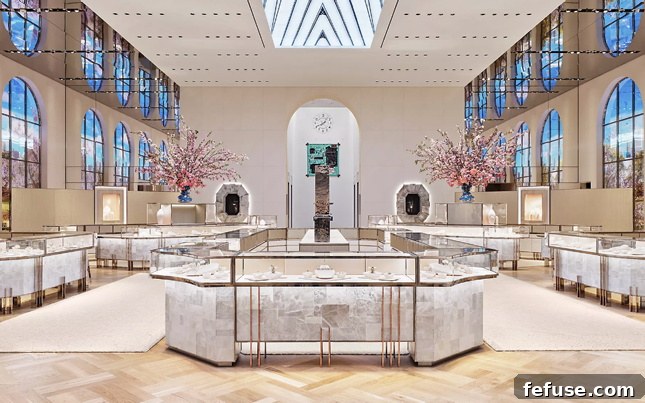
Tiffany & Co.’s Iconic Fifth Avenue Flagship Reimagined: The Grand Unveiling of The Landmark
New York City’s Fifth Avenue, a global beacon of luxury and aspiration, recently witnessed a monumental event: the grand reopening of Tiffany & Co.’s legendary flagship store. After an ambitious four-year, $500 million transformation, the venerable jeweler has unveiled a breathtaking reinvention of its iconic home, now proudly christened “The Landmark.” This extensive renovation marks a significant milestone not just for Tiffany & Co. but for the entire luxury retail landscape, setting a new standard for immersive and experiential shopping.
For decades, the address at 727 Fifth Avenue has been synonymous with elegance, dreams, and the timeless allure of Tiffany’s signature blue box. Immortalized in cinematic history as the setting for the beloved 1961 film “Breakfast at Tiffany’s,” the store has always been more than just a retail space; it’s a cultural touchstone. The decision to undertake such a massive overhaul underscores a deep commitment to preserving its heritage while propelling the brand firmly into the future, catering to a new generation of luxury consumers.
A Visionary Transformation: Inside The $500 Million Masterpiece
The half-billion-dollar investment was meticulously channeled into a complete metamorphosis, inside and out. The exterior now boasts a breathtaking, shimmering glass addition above the original structure, a respectful nod to its historic facade while introducing a strikingly modern architectural element. This new crown allows natural light to cascade into the upper floors, creating an airy and sophisticated ambiance that was previously unimaginable.
Inside, every detail has been thoughtfully curated to elevate the customer journey. The design team, led by world-renowned architect Peter Marino, has masterfully blended Tiffany’s rich legacy with contemporary aesthetics. Visitors are greeted by soaring ceilings, intricate craftsmanship, and a captivating interplay of light and texture. The interior features bespoke furnishings, hand-painted murals, and custom artworks, transforming each floor into a distinct gallery-like experience. The store now feels less like a traditional shop and more like an immersive museum dedicated to the art of jewelry and luxury lifestyle, offering private viewing rooms, intimate lounge areas, and state-of-the-art display technologies.
Perhaps one of the most anticipated additions is the new Blue Box Café by Daniel Boulud. This exquisite dining experience, situated on the sixth floor, offers guests the chance to truly have “Breakfast at Tiffany’s,” or indeed lunch and afternoon tea, in an environment of unparalleled elegance. It’s an experiential element that directly taps into the brand’s cultural resonance, offering a memorable moment that extends beyond a mere purchase.
The Star-Studded Grand Opening: A Celebration of Luxury and Legacy
The unveiling of The Landmark was, as expected, a spectacle befitting a brand of Tiffany’s stature. Last Wednesday, April 26th, Fifth Avenue glittered with the presence of Hollywood’s elite, fashion icons, and global tastemakers. The guest list read like a who’s who of contemporary culture, including luminaries such as Florence Pugh, Gal Gadot, Anya Taylor-Joy, Zoë Kravitz, Michael B. Jordan, Dwyane Wade and Gabrielle Union, Brooklyn and Nicola Peltz-Beckham, and Dylan Sprouse and Barbara Palvin.
These celebrities, many of whom serve as brand ambassadors or represent the aspirational demographic Tiffany aims to attract, brought an undeniable buzz to the event. Their presence amplified the store’s reopening across social media and global news outlets, showcasing Tiffany’s continued relevance and appeal in the pop culture landscape. The event was not merely an opening; it was a powerful statement about the brand’s revitalized energy and its enduring position at the pinnacle of luxury.
Bernard Arnault’s Vision: The Genesis of a Grand Transformation
The driving force behind this colossal endeavor is none other than Bernard Arnault, the world’s richest person and the astute CEO of LVMH Moët Hennessy Louis Vuitton. LVMH, the luxury conglomerate that acquired Tiffany & Co. in 2021 for a staggering $15.8 billion, embarked on this ambitious project with a clear vision: to restore Tiffany to its undisputed glory as the world’s premier high jewelry house.
Arnault’s discerning eye for luxury and his unwavering commitment to excellence are legendary. He famously recounted an experience within the original store that crystallized the need for change. “We got lost in the building,” he candidly told the Wall Street Journal in an interview. “Here is a guy getting lost in his own shop. I said we have some work to do on this.” This anecdotal observation, coming from a man who meticulously oversees an empire of over 75 distinguished houses, speaks volumes about the imperative for a seamless, intuitive, and truly luxurious customer experience that the previous iteration lacked.
LVMH’s acquisition of Tiffany & Co. was a strategic move aimed at bolstering its position in the hard luxury segment, particularly in the critical American market. Under LVMH’s stewardship, brands are often re-energized through significant investment in product innovation, global marketing, and, crucially, flagship retail experiences. The transformation of The Landmark is a direct embodiment of this strategy, designed to reassert Tiffany’s dominance and draw in a new generation of affluent buyers who seek both heritage and innovation in their luxury purchases.
The Future of Luxury Retail: Tiffany’s Landmark as a Blueprint
The reopening of The Landmark is more than just a single store’s revival; it’s a testament to the evolving nature of luxury retail. In an age where e-commerce is pervasive, physical stores must offer something truly extraordinary to entice discerning consumers. Tiffany’s new flagship serves as a blueprint for the future: a blend of high-touch service, immersive experiences, artistic installations, and culinary delights, all housed within an architecturally stunning environment.
This grand undertaking reinforces Fifth Avenue’s status as a quintessential global luxury destination. With brands continually vying for attention and market share, investing in monumental flagships like The Landmark demonstrates a long-term commitment to brand building and consumer engagement. It signals to the world that luxury is not just about owning beautiful objects, but about experiencing a lifestyle, a narrative, and an unparalleled sense of place.
In conclusion, Tiffany & Co.’s reimagined Fifth Avenue flagship, now known as The Landmark, is a powerful statement of intent. It is a harmonious fusion of historical reverence and audacious modernity, an architectural marvel and a retail triumph. Under Bernard Arnault’s visionary leadership, LVMH has not merely renovated a store; they have rekindled the flame of an American icon, ensuring that Tiffany & Co. continues to shine brightly as a beacon of luxury, aspiration, and timeless elegance for generations to come.