
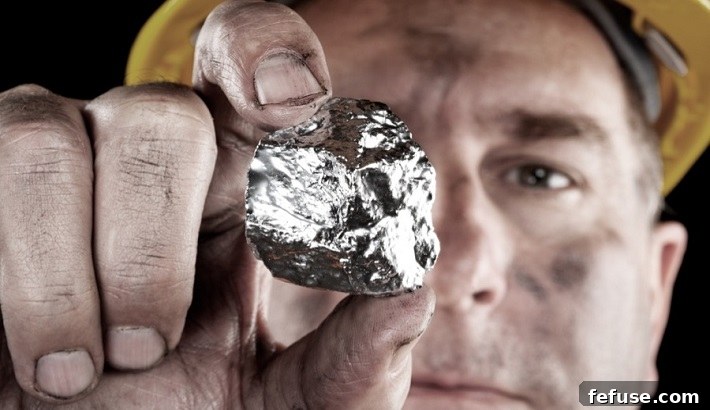
Unveiling Silver’s Promising Horizon: A Comprehensive Market Outlook
Following a period of subdued performance, the global silver market is poised for a significant turnaround, with the esteemed Silver Institute forecasting a “more supportive” environment for the precious metal in the year ahead. This optimistic outlook is underpinned by a confluence of macroeconomic factors, robust demand drivers across diverse sectors, and evolving supply dynamics. Early indicators, such as a notable 12% surge in sales of the U.S. Mint’s American Eagle coins in January 2019 compared to the previous year, highlight a burgeoning interest that promises to redefine silver’s market trajectory.
Macroeconomic Tailwinds and Shifting Investor Sentiment
A primary catalyst for silver’s anticipated resurgence lies in the projected shift in monetary policy. The U.S. Federal Reserve is widely expected to adopt a more dovish stance, signaling a potential easing of its aggressive interest rate hike cycle. Historically, periods of lower interest rates tend to bolster the appeal of non-yielding assets like precious metals, as the opportunity cost of holding them diminishes. This economic environment makes silver, alongside gold, a more attractive investment alternative, drawing capital from other asset classes that might offer lower real returns.
Beyond interest rate policy, growing apprehension surrounding global equity markets is compelling investors to seek safe-haven assets. Market volatility, geopolitical uncertainties, and concerns over economic slowdowns are powerful motivators for diversification. In this landscape, silver’s unique dual nature as both an industrial commodity and a store of value positions it as an increasingly compelling option for those looking to hedge against risk and preserve wealth. The rising demand for physical silver, evidenced by increased coin sales, underscores this palpable shift in investor behavior towards tangible assets.
Robust and Diversifying Demand Drivers for Silver
The demand side of the silver equation presents a particularly strong case for optimism, with the Silver Institute projecting growth across multiple key sectors. This diversified demand base provides a resilient foundation for the metal’s market performance, mitigating risks associated with reliance on any single application.
Industrial Fabrication: The Enduring Engine of Silver Demand
The industrial fabrication sector remains the bedrock of silver consumption, and the Silver Institute anticipates a modest but significant rise in demand from this segment. Silver’s unparalleled properties – including its exceptional electrical and thermal conductivity, strength, ductility, and malleability – make it indispensable in a vast array of high-tech applications. From crucial components in electronics, automotive systems, and medical devices to its use in sophisticated catalysts and water purification systems, silver’s industrial footprint is expansive and continues to grow with technological advancements. The ongoing digitalization and electrification of global industries ensure a steady, foundational demand for the metal.
The Solar Silver Surge: Powering Photovoltaic (PV) Growth
Perhaps the most dynamic and rapidly expanding area of demand for silver is the photovoltaic (PV) sector, particularly for solar energy applications. The demand for silver from this critical renewable energy segment is deemed exceptionally strong, fueled by a global imperative to transition towards cleaner energy sources. Governments worldwide are implementing ambitious policies, subsidies, and incentives to accelerate the adoption of solar power, making it an increasingly competitive and attractive energy solution. Silver powder, in the form of silver paste, is a vital component in the manufacturing of crystalline silicon photovoltaic cells, allowing for efficient conduction of electricity. As solar technology advances and deployment scales globally, the demand for solar-grade silver is expected to continue its robust growth trajectory, underscoring silver’s pivotal role in the green energy revolution.
Jewelry and Silversmithing: Sustained Consumer Appeal
Beyond its industrial utility, silver maintains a strong and enduring appeal in the consumer market, particularly within the jewelry and silversmithing sectors. The Institute forecasts solid growth for these traditional uses, reflecting silver’s timeless aesthetic value, affordability compared to gold, and versatility in design. From intricate artisanal pieces to mass-produced fashion accessories, silver jewelry continues to captivate consumers across diverse demographics. This consistent demand, driven by cultural significance, personal adornment, and gifting traditions, contributes a stable and predictable component to the overall silver demand profile.
Exchange-Traded Products (ETPs): Expanding Investment Accessibility
In the realm of investment, Exchange-Traded Products (ETPs) backed by physical silver are projected to see significant expansion, with an estimated growth of 8 million ounces this year. ETPs provide investors with a convenient, liquid, and cost-effective way to gain exposure to the price movements of physical silver without the complexities of direct storage and insurance. Their increasing popularity reflects a broader trend of institutional and retail investors seeking transparent and accessible vehicles for precious metals investment. The growth in silver ETP holdings is a clear indicator of rising investor confidence and a strategic allocation towards silver within diversified portfolios.
Physical Silver Investment: A Tangible Asset in Uncertain Times
The demand for physical silver investment, encompassing bullion coins and bars, is also expected to exhibit healthy growth, with a predicted increase of 5%. This reflects a fundamental desire among investors to hold tangible assets, particularly during periods of economic uncertainty or currency devaluation. Physical silver is widely regarded as a traditional hedge against inflation, a reliable store of wealth, and a protective asset against geopolitical instability. The accessibility of physical silver products, coupled with their intrinsic value, makes them a preferred choice for individuals and institutions looking to diversify their holdings beyond traditional paper assets.
Navigating Silver Supply Dynamics: Challenges and Opportunities
While demand drivers appear robust, the supply side of the silver market presents its own set of complexities, contributing to the overall bullish outlook.
Primary Silver Mine Production: A Declining Trend
The Silver Institute anticipates a 2% decline in primary silver mine production for the year. This trend is largely attributable to several factors, including the depletion of high-grade silver deposits, reduced exploration expenditures in previous years, and operational challenges faced by mining companies. Furthermore, stricter environmental regulations and rising production costs can also impact output. As standalone silver mines become scarcer and more expensive to operate, the overall supply from dedicated silver mining operations is expected to contract, creating a tighter market balance.
By-Product Silver: A Crucial Secondary Source
Despite the decline in primary production, any small increases in overall silver supply are projected to originate from mining operations where silver is extracted as a by-product of other metals, primarily gold and zinc-lead. Silver is often found co-located with base metals or gold deposits, meaning its extraction is intrinsically linked to the economics of the primary metal being mined. This characteristic implies that the supply of by-product silver is less sensitive to fluctuations in silver prices and more dependent on the market dynamics and production levels of gold, copper, lead, and zinc. This diversified source of supply helps to partially offset the decrease from dedicated silver mines.
Scrap Silver Supply: The Recycling Factor
The supply of scrap silver, derived from industrial recycling, discarded jewelry, and melted coins, is expected to pick up modestly. Higher prevailing silver prices often incentivize recycling efforts, as the economic viability of recovering silver from waste streams or existing products improves. Advancements in recycling technologies also contribute to more efficient recovery processes. While scrap silver provides a flexible component to overall supply, its volume is often reactive to price movements and technological capabilities, providing a necessary, albeit fluctuating, supplement to newly mined metal.
Market Absorption: Balancing the Scales
Crucially, the market is generally seen as well-positioned to absorb the existing supply, particularly given the strong demand anticipated across various downstream sectors. The combined forces of robust industrial applications, surging investment interest, and stable consumer demand are expected to readily consume the available silver. This equilibrium between supply and demand is a fundamental indicator of a healthy and potentially appreciating market for the precious metal.
The Silver Price Forecast and Investment Rationale
Given these compelling market fundamentals, the Silver Institute has confidently projected a strengthening in the silver price for the year ahead, forecasting an average price of US$16.75 per ounce. This represents a significant 7% increase over the previous year’s average, signaling a strong reversal from prior performance. This prediction is not merely an arbitrary figure but is deeply rooted in the expectation of increased investor participation and sustained industrial demand.
Investors, increasingly wary of the volatility and potential overvaluation in equity markets, are actively searching for alternative assets that offer both stability and growth potential. Precious metals, especially silver, stand out in this regard. Silver offers a unique proposition: it serves as a traditional safe-haven asset, protecting wealth during economic uncertainty, while also being a vital industrial commodity integral to burgeoning high-growth sectors like renewable energy and advanced electronics. This dual functionality provides a compelling investment rationale, attracting both conservative wealth preservationists and growth-oriented investors.
Conclusion: A Bright Future for the White Metal
In summary, the outlook for silver is decidedly positive, with strong indications of a supportive market environment. The confluence of a more accommodating monetary policy from the Federal Reserve, a burgeoning demand from the photovoltaic sector, sustained industrial and jewelry consumption, and heightened investor interest in both physical and exchange-traded products, collectively paint a picture of significant potential. Coupled with a tightening supply from primary mining operations, these factors are expected to drive the price of silver upwards, reaffirming its status as a critical and valuable asset in the global economy. As the world increasingly shifts towards sustainable technologies and seeks refuge from market turbulences, silver is strategically positioned to shine brightly in the years to come.
NewsSource: CanadianMiningJournal
Top Image: from silver institute