
As the calendar turns, marking the transition from one year to the next, the professional jewelry industry takes a moment to reflect on the pivotal trends and significant narratives that defined the past year. These insights from 2019 are not merely historical footnotes; they serve as critical indicators and shapers of what the next twelve months, and indeed the foreseeable future, hold for jewelers, designers, retailers, and consumers alike. Understanding these shifts is paramount for anyone looking to thrive in the dynamic world of fine jewelry and watches. From evolving consumer behaviors to monumental corporate acquisitions and the rise of new product categories, the industry is in a constant state of flux, demanding agility and foresight.
- Jewelry and Watch Purchases See Significant Rise
In a promising indicator for the sector, recent market analysis from Mintel, a leading market research provider, revealed a notable uptick in consumer spending on jewelry and watches. Their findings indicate that a substantial two-thirds of individuals reported purchasing either a piece of jewelry or a watch for themselves or as a gift for someone else within the last five years. This represents a healthy 5% increase compared to 2018 figures, underscoring a growing appetite for these luxury and sentiment-rich items. The surge in purchasing spans across various demographics, with more consumers engaging in both self-gifting and acquiring pieces for others. A closer examination of purchase patterns by Mintel highlights that watches and costume jewelry are particularly popular choices for personal acquisitions, suggesting a trend towards accessible fashion statements. Conversely, when it comes to gift-giving, precious jewelry pieces continue to reign supreme, reflecting their enduring value and emotional significance. Mintel estimated the total valuation of the UK jewelry market to have reached an impressive £5.9 billion in 2019. Looking ahead, the firm projects continued steady growth for the sector, forecasting a Compound Annual Growth Rate (CAGR) of 2.7% over the next five years, signaling a robust and expanding market.
- LVMH’s Strategic Acquisition of Tiffany & Co. Signals Market Shift
The year 2019 was marked by a colossal development in the luxury sector with the announcement of LVMH’s acquisition of iconic American jeweler Tiffany & Co. This multi-billion-pound deal saw the luxury conglomerate enter into a definitive agreement to purchase Tiffany for $135 per share in cash, valuing the transaction at approximately $16.2 billion (or £12.5 billion) in equity. This landmark deal represents LVMH’s most significant acquisition to date, sending ripples throughout the global luxury market. While some industry observers initially questioned the strategic wisdom of acquiring a brand that had reportedly faced challenges in maintaining its top-tier positioning, the acquisition fundamentally strengthens LVMH’s formidable presence within the lucrative jewelry sector. It specifically positions the French luxury giant to compete more directly and aggressively with established players like Richemont, a dominant force in high-end watches and jewelry. Furthermore, the acquisition provides LVMH with a significantly larger and more influential foothold within the crucial United States market. Industry experts widely anticipate that this high-profile business transaction will act as a catalyst, sparking a wave of similar consolidation efforts and strategic acquisitions from other major luxury groups in the coming years, as they vie for dominance in the rapidly expanding and fiercely competitive high-end jewelry market.
- Piercing Phenomenon Fuels Jewelry Business Growth
The widespread enthusiasm for body piercings reached new heights over the past couple of years, with 2019 witnessing a significant number of traditional jewelers enthusiastically embracing this trend. Leading this innovative charge was Astrid & Miyu, a brand that ingeniously transformed its business model by integrating a dedicated piercing service. The successful introduction of a professional piercing studio at its flagship boutique not only attracted a new demographic but also spurred the brand to expand its retail footprint to meet surging consumer demand. Following this success, prestigious department store Selfridges also welcomed Astrid & Miyu’s piercing studios into its stores, recognizing the immense popularity of the concept in the UK market. This pioneering move inspired numerous other brands and retailers to follow suit, including prominent names such as Accessorize, Dinny Hall, and Lark & Berry, all keen to capitalize on the lucrative piercing trend. Adding further momentum to this movement was the strategic launch of Inverness, a leading global piercing supplier, into the UK market. Inverness actively supported independent jewelers by hosting free training sessions across the country, empowering more and more jewelry stores to incorporate professional piercing services into their offerings. This initiative is expected to continue boosting business significantly for many jewelry retailers in the current year, tapping into a vibrant market for personalized body adornment.
- Links of London’s Demise Serves as a Stark Warning
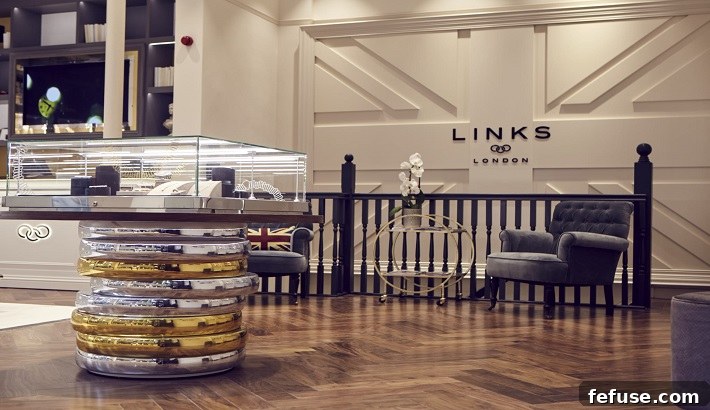
Despite accumulating warning signs over an extended period, the news of Links of London’s collapse into administration, and its subsequent failure to secure a buyer for rescue, sent shockwaves throughout the jewelry industry. Facing relentless cash flow pressures and an increasingly challenging retail landscape, the company ultimately declared that it had “no choice” but to appoint administrators. The once-celebrated jewelry firm, which operated a network of 28 stores and seven concessions across the UK and Ireland, had been diligently implementing a comprehensive turnaround strategy. While initial efforts showed some promise, they proved insufficient to reverse the business’s fortunes in the long term. The eventual outcome saw significant staff reductions at its head office, and employees across its boutiques nationwide were left to confront the New Year without employment, following a deeply unfortunate ‘everything must go’ closing down sale. The demise of Links of London resonated deeply within the trade, with many industry professionals describing it as “too close to home.” The event served as a somber yet critical warning, prompting many jewelers to re-evaluate and proactively improve their business models, reinforcing the imperative to ensure their own long-term survival in an unforgiving retail environment.
- Jewelers Poised to Capitalize on the Social Commerce Boom
The past year witnessed an explosive growth in social commerce, fundamentally reshaping the landscape of e-commerce by making online shopping more integrated and seamless than ever before. This burgeoning trend, where consumers can purchase products directly through social media platforms, is rapidly transforming traditional retail paradigms. Given this undeniable momentum, further solidified by Instagram head Adam Mosseri’s stated long-term vision to “ramp up” the platform’s retail capabilities, it is unequivocally clear that social commerce is not a fleeting fad but a permanent fixture in the retail ecosystem. For jewelers, neglecting social media as a viable shopping platform is no longer an option. To effectively leverage the social commerce boom, businesses must prioritize several key areas this year. Firstly, investing in exceptional product imagery is crucial, as jewelry is inherently visual. Secondly, actively utilizing shoppable features on visually-led social networks like Instagram and Pinterest can significantly boost engagement and direct sales. Thirdly, maintaining an impeccably optimized e-commerce website is vital, ensuring it is mobile-responsive, fast-loading, and ready to seamlessly convert users funnelled from social media. Particular attention must be paid to the checkout process, as customers frequently transition directly from social media feeds to payment pages. Overly long or complicated checkout procedures are a notorious cause of shopping cart abandonment, making a streamlined, intuitive checkout experience absolutely essential for maximizing conversions in the social commerce era.
- Necklaces Emerge as the Most Sought-After Jewelry Style
Insightful research conducted by Mintel has unveiled compelling data regarding consumer preferences in jewelry purchasing, identifying necklaces as the undisputed leader in popularity. The study revealed that a significant half of all individuals who acquired jewelry within the past five years opted for a necklace, firmly establishing it as the most popular jewelry purchase. This category was very closely followed by earrings, underscoring their strong market appeal. While bracelets and rings also maintain their status as popular jewelry pieces, their purchasing frequency is marginally lower. Rings, in particular, often present a unique challenge when intended as gifts due to inherent sizing complexities, which can deter potential buyers. In terms of design and style, sentimental necklaces continue to hold immense appeal, a trend exemplified by Astley Clarke’s win for Personalised Jewellery Collection of the Year with its highly acclaimed Celestial locket line. Beyond sentimentality, necklaces designed for stacking and layering have also been exceptionally popular, with consumers enthusiastically investing in chains of various lengths to curate personalized and unique multi-layered looks. For earrings, the enduring popularity of hoops remains strong, building on their significant comeback a few years prior. Furthermore, the demand for versatile mini studs that can be effortlessly paired with multiple piercings has translated into robust sales figures for jewelers across the UK, reflecting a trend towards individual expression and curated adornment.
- High Street Challenges Persist, Yet Jewelers Show Resilience
The first half of 2019 painted a stark picture for the British high street, witnessing the alarming disappearance of 2,870 physical stores. This figure translates to an average of 16 store closures per day, marking the highest rate recorded in a five-year period. Retailers continued to engage in extensive restructuring activities and increasingly shifted their focus to online channels, primarily in a strategic effort to combat escalating operational costs such as high rents and business rates, coupled with persistently slumping sales figures. Despite this seemingly bleak broader retail landscape, the jewelry trade demonstrated remarkable resilience, celebrating a notable number of new store openings. Both independent jewelers and larger multiples actively continued to expand their physical retail portfolios, driven by a commitment to enhancing the in-store customer experience. By prioritizing personalized service and fostering unique retail environments, jewelers successfully aimed to secure sales amidst an otherwise challenging retail climate. This resilience stems from a fundamental understanding: regardless of the rapid growth of e-commerce, jewelry remains a luxury and deeply personal product. Many customers instinctively prefer to physically touch, feel, and try on pieces before committing to a purchase. This inherent characteristic provides jewelers with a significant advantage, provided they strategically embrace an omnichannel approach. Survival and growth in this evolving market necessitate not only the enduring power of bricks-and-mortar stores but also a robust and engaging online presence.
- Lab-Grown Diamonds Spark Intense Industry Debate
The year 2019 significantly elevated the profile of lab-grown diamonds, gaining considerable exposure, partly attributed to high-profile figures like Meghan Markle adorning pieces featuring man-made stones. Across the UK, several progressive brands, including Astrid & Miyu and Carat* London, introduced collections featuring lab-grown diamond products, indicating a growing acceptance and demand. Further illustrating this momentum, Madestones reported an overwhelmingly positive reception from retailers at International Jewellery London. On the American front, Signet, a retail giant, substantially expanded its lab-grown diamond jewelry portfolio, while De Beers made a strategic move into the physical retail market with its dedicated Lightbox brand. Concurrently, a lab-grown diamond council was established, signaling efforts to standardize practices and set professional benchmarks within this burgeoning segment. However, despite clear and rising consumer demand for lab-grown diamond products, the trade remains sharply divided, particularly concerning the ethical claims put forth by companies marketing such pieces. For instance, the chief executive of the Diamond Producers Association (DPA) notably claimed that no lab-grown diamond producer currently utilizes renewable energy sources. The DPA, in a significant move, joined forces with the World Federation of Diamond Bourses (WFDB) to actively counter what they term “negative advertising” originating from the lab-grown sector. As the industry moves forward, 2020 and beyond are anticipated to see companies on both sides of this contentious argument seeking greater clarity and transparency regarding the ethical nature and environmental impact of both natural and man-made stones.
- Trust Outweighs Price for Millennial Jewelry Buyers
A revealing study conducted by Inhorgenta Munich, a prominent jewelry trade show, has shed light on the purchasing preferences of millennials, indicating a significant shift in priorities for this influential demographic. The research highlighted that millennials predominantly prefer to acquire jewelry and watches from bricks-and-mortar retailers, citing trust and exceptional customer service as factors of greater importance than mere price. Specifically, 44% of surveyed consumers aged 18-35 expressed a preference for purchasing jewelry and watches from a physical person, emphasizing the value of human interaction and expert guidance. Furthermore, a compelling 51% identified trusting a retailer as the single most critical factor influencing their shopping decisions. Interestingly, given the paramount role of trust in their purchasing calculus, a substantial 40% of surveyed millennials named department stores as their preferred retail venue. This preference suggests that if independent jewelers fail to proactively invest in forging strong connections and building rapport with younger consumers, this demographic is likely to gravitate towards more familiar and comfortable retail establishments, such as department stores. This insight underscores a crucial imperative: jewelry stores must be exceptionally well-equipped to cultivate meaningful relationships with millennials. Neglecting this vital aspect risks losing a significant share of revenue from a generation poised to become the highest-spending global consumer group from 2020 onwards.
- Men’s Jewelry Sector Experiences Significant Growth
The landscape of men’s fashion is undergoing a noticeable transformation, with men increasingly choosing to accessorize their outfits with diverse forms of jewelry. The era when men’s adornments were largely confined to watches and wedding rings is rapidly becoming a thing of the past. Today’s style-conscious gentlemen are actively seeking out jewelry pieces that can be worn both for everyday elegance and for special occasions, reflecting a growing desire for personal expression and sartorial sophistication. While the men’s jewelry segment may still constitute a smaller proportion of the overall market, its burgeoning growth makes it a sector that unequivocally cannot be ignored by industry players. Across the board, industry experts are reporting a consistent rise in men’s purchases of fashion accessories, prompting British jewelers, in particular, to ensure they are not missing out on the substantial opportunities presented by this expanding market segment. Chana Baram, a perceptive retail analyst at Mintel, highlights that men are progressively allocating more of their discretionary spending towards enhancing their appearance, and for the modern man, jewelry has become a key component of this investment. She shares, “Whilst it is unlikely that the men’s jewelry market will truly compete with the women’s anytime soon, there is no denying that this part of the market is becoming increasingly important. More brands and retailers should be giving men’s jewellery dedicated space in-store.” This strategic advice is further corroborated by robust sales figures reported by leading men’s jewelry suppliers across the UK, affirming the strong upward trajectory of this dynamic market. From sophisticated bracelets and contemporary rings to distinctive necklaces and stylish cufflinks, the options for men’s jewelry are diversifying, catering to a wider range of tastes and preferences.
The year 2019 offered a comprehensive snapshot of an industry in transition, characterized by both challenges and unprecedented opportunities. From the surging consumer interest in jewelry and watches to the strategic consolidation of luxury powerhouses, and from the unexpected boom in piercing services to the solemn lessons learned from retail failures, these trends paint a vivid picture. Furthermore, the imperative of digital transformation through social commerce, the enduring appeal of specific jewelry styles, the resilience of physical retail against a backdrop of high street decline, the contentious rise of lab-grown diamonds, and the evolving purchasing psychology of millennials, alongside the significant growth in men’s jewelry, collectively underscore a dynamic and adaptable sector. Looking forward, the jewelry industry is poised for continued evolution, driven by innovation, a deeper understanding of consumer desires, and a steadfast commitment to navigating both traditional and emerging market forces. Adaptability, ethical considerations, and a seamless omnichannel presence will undoubtedly define success for jewelers in the years to come.
News Source: professionaljeweller