
Gold Prices Recede from Peaks Amidst Strengthening Dollar and Economic Optimism
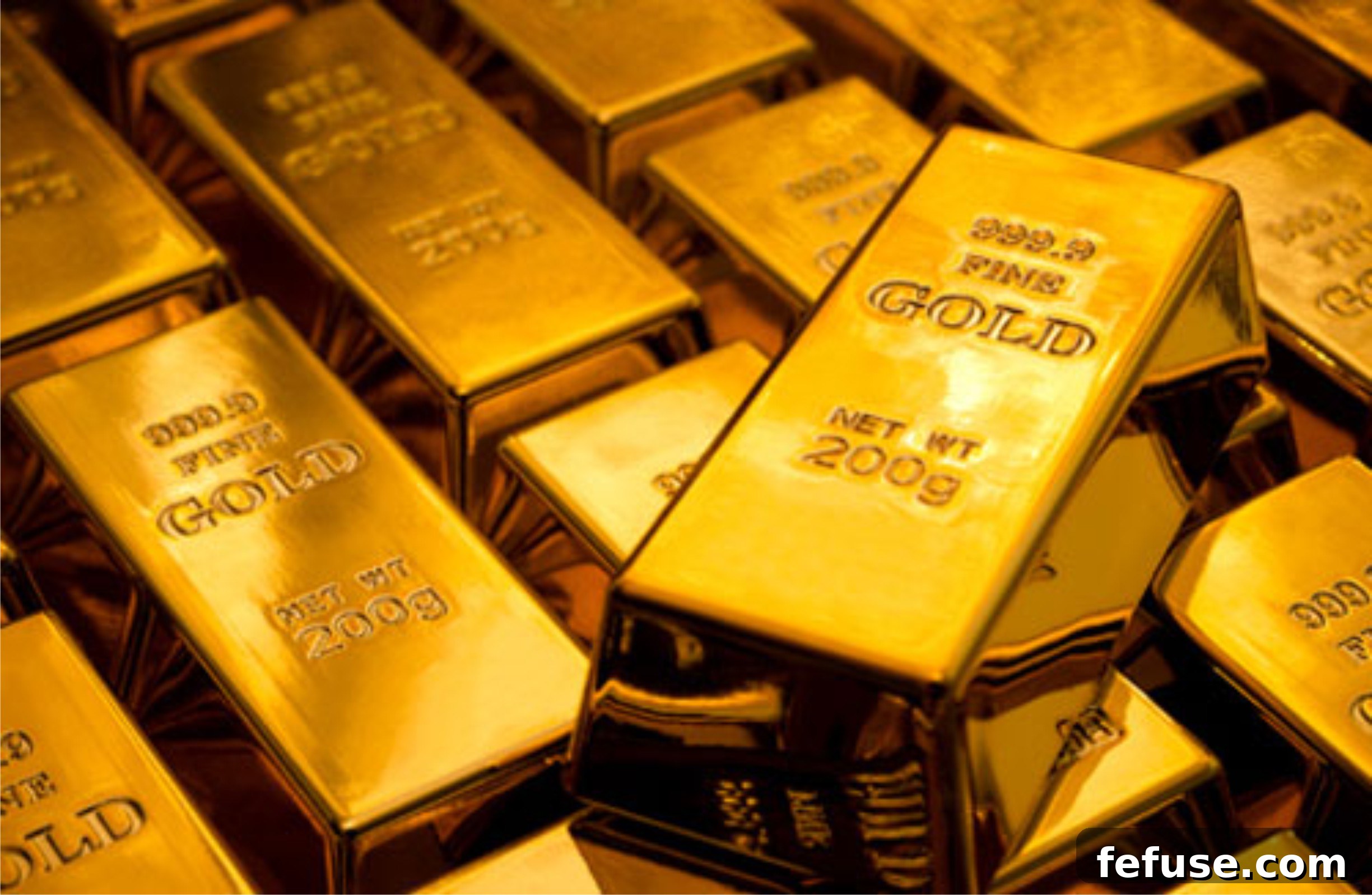
The precious metals market, often a barometer of global economic and political stability, experienced a notable shift as the first week of October concluded. Gold prices found themselves hovering near two-month lows, marking a significant downturn after a consistent four-week decline – a streak not witnessed earlier in the year. This retraction placed the yellow metal at approximately US$ 1,270 per ounce by Friday, a stark contrast to its impressive 12-month peak of US$ 1,370 per ounce reached in early September. That earlier surge had been primarily fueled by escalating geopolitical tensions, particularly the sudden flare-up of the North Korean crisis, which typically bolsters gold’s appeal as a safe-haven asset.
Understanding the Recent Downturn in Gold Values
The journey of gold from its September highs to October’s troughs illustrates a classic interplay of economic fundamentals, monetary policy expectations, and shifting investor sentiment. Gold’s recent weakness can be attributed to a confluence of factors, each contributing to an environment where the allure of traditional safe havens diminishes. Foremost among these drivers was a palpable strengthening of the US dollar, which often moves inversely to gold prices. When the dollar gains ground, gold, being denominated in the US currency, becomes relatively more expensive for international buyers holding other currencies, consequently dampening demand. This inverse relationship is a fundamental principle in precious metals trading, making the dollar’s performance a critical determinant for gold’s trajectory.
Beyond currency dynamics, a string of better-than-expected economic data emerging from the United States painted a picture of robust growth and stability. This positive economic outlook, coupled with the increasing likelihood of another US interest rate hike before the year concludes, significantly impacted investor calculations. Higher interest rates increase the opportunity cost of holding non-yielding assets like gold, making interest-bearing investments comparatively more attractive as their real returns improve. Furthermore, a widespread upswing in equity markets across the globe diverted investor capital from the perceived safety of gold towards riskier, yet potentially more lucrative, stock market ventures. When stock indices are hitting new highs, the incentive to hold gold for capital appreciation often lessens. The Chinese holidays during this particular week also played a subtle role, as reduced participation from a major global gold consumer meant that market sentiment in Europe and the US held dominant sway, reinforcing the bearish trend and limiting potential buying support from the Asian markets.
Key Economic Indicators Bolstering Investor Confidence
Several specific economic statistics and policy developments provided a solid foundation for renewed investor confidence, thereby mitigating the traditional safe-haven appeal of gold. These indicators collectively suggested a healthier and more resilient US economy than many had anticipated, prompting a shift in investment strategies:
- Declining Jobless Claims: Data from the US Department of Labor indicated a higher-than-expected decline in jobless claims. This metric is a crucial barometer of labor market health; a consistent fall in claims signifies fewer people seeking unemployment benefits, translating to a robust job market, increased consumer confidence, and stronger spending power. This positive trend directly contributes to overall economic optimism, as a healthy employment landscape underpins consumer demand and economic growth, reducing the need for defensive assets.
- Surging US Exports and Narrowing Trade Deficit: Reports highlighted that US exports had surged to an over two-year peak. An increase in exports is a clear sign of growing international demand for American goods and services, boosting domestic industries, supporting job growth, and contributing positively to the nation’s balance of trade. This surge helped to narrow the trade deficit, a positive development often interpreted as a sign of economic strength and competitiveness on the global stage, further enhancing confidence in the US economy’s fundamental resilience.
- Rising US Factory Orders: The economy also saw a higher rise in US factory orders than initially expected. This data point is a forward-looking indicator for the manufacturing sector, reflecting new orders placed with manufacturers for durable and non-durable goods. A sustained increase in factory orders suggests growing industrial activity, business investment, and confidence in future economic growth. It signals that companies are anticipating increased demand, which bodes well for future production and economic expansion, reducing the perceived risk in the market.
Collectively, these robust economic figures signaled a firming US economy, leading investors to believe that the period of low inflation and moderate growth might be transitioning into a more dynamic phase. Such an environment naturally diminishes the urgency for safe-haven assets, redirecting capital towards growth-oriented investments, particularly in equities and other risk assets.
Political Developments and Monetary Policy Signals
Beyond pure economic data, political developments and signals from monetary authorities also played a pivotal role in shaping market sentiment and reducing demand for gold:
- Passage of Government Spending Bill: The successful passing of the government’s spending bill for the next year in the US House of Representatives provided a much-needed sense of fiscal stability and legislative progress. This act of governance reduced uncertainty regarding potential government shutdowns or budgetary stalemates, fostering a more predictable environment for businesses and investors. Such stability is typically seen as a positive for overall market confidence and reduces the flight to safety that often benefits gold.
- Strong Indications of Proposed Tax Reforms: The market was significantly buoyed by strong indications of proposed tax reforms. The prospect of significant tax cuts for corporations and individuals often sparks optimism about future corporate earnings, increased investment, and accelerated economic growth. This potential policy initiative, even in its proposal stage, contributed to a bullish outlook for the stock market and a decreased appetite for non-yielding assets, as investors anticipated higher returns from equity holdings.
- Janet Yellen’s Candidacy for Fed Chair: News that current US Federal Reserve Chair Janet Yellen was among the candidates being considered for reappointment to this prestigious post in the coming year also contributed to market calm. While the ultimate decision was still pending, the inclusion of Yellen, known for her cautious and data-dependent approach to monetary policy, signaled a potential for continuity and stability in central bank leadership. This reduced policy uncertainty that might otherwise drive investors to gold, as continuity generally implies less market disruption and a clearer path for monetary policy.
These political and monetary signals collectively painted a picture of a stable and proactive US administration and a predictable central bank, elements that are historically detrimental to gold’s appeal as an asset sought during times of uncertainty and instability. The overall sentiment shifted from caution to calculated optimism, making traditional safe-haven investments less attractive.
Gold’s Enduring Role Amidst Shifting Tides
Despite the recent downturn, it is crucial to remember gold’s enduring role in the global financial landscape. Historically, gold has served as a critical hedge against inflation, currency devaluation, and geopolitical risks. Its intrinsic value and lack of counterparty risk make it a preferred asset during periods of extreme market volatility or systemic crises. Its appeal as a “crisis commodity” is well-documented, offering a tangible store of value when confidence in paper currencies or financial institutions wavers. However, in an environment characterized by strengthening economic indicators, rising interest rates, and a stable political outlook, gold’s luster as a safe haven naturally dims.
Investors often reallocate capital, moving from less productive assets like gold to more growth-oriented investments when confidence in traditional financial markets is high. This rotational shift explains why gold struggled even as the global economy, particularly the US, showed signs of robust health. The opportunity cost of holding gold, which does not yield interest or dividends, becomes more pronounced when other assets are offering strong returns. Nevertheless, astute investors recognize that gold remains an essential component of a diversified portfolio, offering protection against unforeseen future shocks and acting as a long-term store of value, particularly against tail risks that conventional assets might not cover.
Looking Ahead: The Role of Uncertainty and Key Economic Data
However, the global economic and political scenario is rarely without its complexities, and uncertainty remains a key descriptor for many analysts. While current trends point towards a stronger US economy and diminishing safe-haven demand, the trajectory of gold prices could reverse just as suddenly as the current decline began. Geopolitical flashpoints, unexpected economic slowdowns in other major global economies, or shifts in central bank rhetoric could quickly reignite gold’s appeal. For instance, renewed tensions in specific regions, a sudden downturn in growth in China or Europe, or a more aggressive stance from other central banks could trigger renewed demand for the precious metal.
A significant determinant of gold prices in the short term, as analysts keenly watch, will be the forthcoming data on US non-farm payrolls. Expected to be released later in the day, this comprehensive report provides critical insights into the health of the US labor market, including job creation, unemployment rates, and wage growth. This data is highly scrutinized by the Federal Reserve and has a direct impact on interest rate policy expectations. A stronger-than-expected non-farm payrolls report would likely reinforce the narrative of a robust economy, potentially strengthening the dollar further and increasing the odds of a Fed rate hike, which would put renewed downward pressure on gold. Conversely, a weaker report could cast doubt on the sustained economic recovery, potentially weakening the dollar, reducing rate hike expectations, and causing gold prices to rebound as investors seek refuge from perceived economic instability.
Furthermore, beyond the immediate impact of non-farm payrolls, investors will continue to monitor global trade relations, inflation trends, and the ongoing dialogue surrounding central bank policies worldwide. Any escalation in trade disputes, a sudden uptick in inflation, or an unexpected dovish shift from central banks could quickly alter the current market dynamics, pushing investors back towards precious metals. These elements underscore the dynamic and often unpredictable nature of the gold market, where macroeconomic shifts and geopolitical events can rapidly change investment priorities.
Conclusion: A Dynamic Outlook for Gold
In conclusion, the recent performance of gold prices reflects a complex interplay of robust US economic data, a strengthening dollar, anticipation of further monetary tightening, and a resurgence of confidence in global equity markets. While these factors have collectively dampened gold’s safe-haven appeal, leading to its current retreat from earlier highs, the inherent volatility of global politics and economics ensures that the yellow metal’s role as a protector of wealth remains pertinent. The immediate future of gold will be significantly influenced by critical economic releases like the non-farm payrolls report, which will offer fresh clues about the health of the US economy and the Federal Reserve’s next policy moves. For investors, understanding these dynamic forces and maintaining a vigilant eye on both macroeconomic trends and geopolitical developments is key to navigating the ever-evolving landscape of precious metals investment. Gold, while currently experiencing headwinds, maintains its strategic importance within a diversified portfolio for its ability to hedge against unforeseen risks.