
Boucheron Reimagines Luxury: Transforming Industrial Waste into High Jewelry with Cofalit
In a bold move that challenges conventional notions of preciousness and sustainability, luxury French jeweler Boucheron has unveiled a groundbreaking collection featuring an extraordinary material derived from recycled industrial waste. This audacious initiative, spearheaded by the maison’s artistic director, Claire Choisne, sees the transformation of a material once destined for road-building into exquisite high jewelry pieces. The collection, aptly named “Jack de Boucheron Ultime,” introduces Cofalit – a vitrified, harmless substance born from what was formerly asbestos-containing industrial waste – as a central element, signaling a radical shift in the landscape of ethical and innovative luxury.
The Unconventional Heart of Luxury: Understanding Cofalit
At the core of Boucheron’s latest innovation lies Cofalit, a material with a remarkable origin story. Typically, industrial waste, including that which contains asbestos, is crushed and repurposed for mundane applications such as road construction. However, through an advanced process of vitrification – intense heat and fusion – this waste is transformed into a glassy, inert, and crucially, completely harmless substance known as Cofalit. This sophisticated process effectively encapsulates and stabilizes any hazardous components, rendering them safe for handling and, as Boucheron has demonstrated, for artistic expression.
The scientific marvel behind Cofalit is its molecular restructuring. Under extreme temperatures, the industrial waste undergoes a metamorphosis, melting into a liquid state and then solidifying into a stable, non-porous vitreous material. This transformation neutralizes the previously hazardous characteristics, making Cofalit not only safe but also incredibly durable and visually distinct. Its inherent dark, often lustrous appearance is a direct result of its unique composition and the vitrification process, offering a compelling aesthetic that is far removed from its humble origins.
Claire Choisne’s Vision: Redefining Preciousness
The driving force behind this pioneering collection is Boucheron’s artistic director, Claire Choisne. Her ability to perceive beauty and potential in the unexpected has once again set Boucheron apart. Choisne’s fascination with Cofalit stems from its intrinsic paradox: a material universally deemed “un-precious,” even undesirable, yet possessing a profound narrative and unique aesthetic quality once transformed. “Cofalit is the complete opposite of what is considered precious in the collective imagination,” Choisne remarks, highlighting her deliberate challenge to established norms.
Choisne’s vision extends beyond mere material innovation; it delves into a philosophical exploration of value. She embraces “the radicality and aesthetic appearance of this recycled industrial byproduct, which has reached the end of its life cycle.” Her inspiration is deeply rooted in the concept of resurrection – taking something that has been cast aside, deemed to have “no further utility,” and imbuing it with renewed significance and enduring value. “I wanted to restore its value in a lasting way through this capsule collection,” she explains, positioning the “Jack de Boucheron Ultime” collection as a testament to the power of transformation and artistic reimagination.
This approach aligns perfectly with a growing global consciousness that questions the origins and ethical implications of luxury goods. By intentionally selecting a material with such an unconventional background, Choisne and Boucheron are not just crafting jewelry; they are crafting a statement about the future of luxury – one where ingenuity, sustainability, and a powerful narrative can be as valuable as, if not more than, rarity alone.
The “Jack de Boucheron Ultime” Collection: A Fusion of Innovation and Artistry
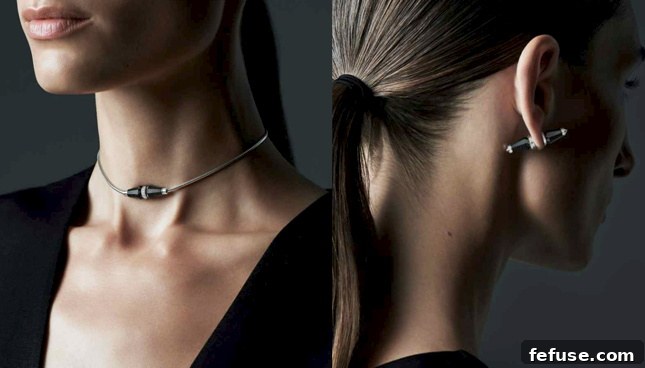
The “Jack de Boucheron Ultime” collection is a testament to the meticulous craftsmanship and innovative spirit characteristic of Boucheron. While the specific designs are eagerly anticipated, one can expect the distinctive Cofalit to be skillfully cut, polished, and integrated into pieces that maintain the elegance and sophistication synonymous with the house. The challenge and artistry lie in taking this unique, dark, glassy material and elevating it to the realm of high jewelry, often alongside traditional precious metals and gemstones. Imagine the striking contrast of polished Cofalit against the brilliance of diamonds or the warmth of gold, creating a visual dialogue between the conventional and the avant-garde.
The integration of Cofalit into jewelry pieces requires specialized techniques. Its glassy nature means it can be precisely faceted and polished to achieve a high sheen, much like traditional gemstones. However, its composition presents unique handling requirements, which Boucheron’s expert artisans are undoubtedly mastering. The collection will likely feature a range of items, from rings and necklaces to bracelets and earrings, each designed to showcase Cofalit’s unique texture and depth, transforming it from an industrial byproduct into an object of desire and conversation. The “Ultime” designation suggests a collection that pushes boundaries to the maximum, offering ultimate exclusivity, ultimate innovation, and an ultimate statement on luxury’s evolving identity.
Redefining Luxury in the 21st Century: Beyond Scarcity
Boucheron’s embrace of Cofalit is more than a design choice; it’s a profound commentary on the evolving definition of luxury in the modern era. For centuries, luxury was predominantly defined by scarcity, inherent material value (gold, diamonds, rare gems), and artisanal exclusivity. While these pillars remain relevant, there is a seismic shift occurring in consumer values. Today’s discerning luxury consumer is increasingly seeking products that embody ethical sourcing, environmental responsibility, and a compelling narrative that resonates with their own values. They desire luxury that tells a story, not just about opulence, but about purpose and impact.
The “Jack de Boucheron Ultime” collection directly addresses this paradigm shift. By championing a recycled industrial material, Boucheron is asserting that true preciousness can be found not just in naturally rare elements, but also in human ingenuity, transformative processes, and a commitment to sustainability. This “new preciousness” derives its value from innovation, the powerful message it conveys, and the positive impact it represents. It challenges the long-held belief that only the naturally rare can be truly luxurious, proposing instead that the art of transformation and the spirit of responsible creation can elevate even the most unassuming materials to unparalleled heights of prestige.
Sustainability and Circular Economy in High Jewelry
The luxury industry, particularly high jewelry, faces increasing scrutiny regarding its environmental footprint and ethical practices. Sourcing precious metals and gemstones often involves complex supply chains that can raise concerns about ecological impact, labor practices, and conflict. While many brands are making strides in responsible sourcing, Boucheron’s venture with Cofalit represents a leap forward into the principles of the circular economy. This approach emphasizes reducing waste, maximizing resource utilization, and transforming what was once considered waste into valuable new products.
By utilizing Cofalit, Boucheron contributes to reducing industrial waste that might otherwise end up in landfills, while also avoiding the environmental impact associated with mining new materials. It exemplifies how creativity and technology can intersect to offer sustainable alternatives without compromising on aesthetic appeal or perceived value. This move positions Boucheron not merely as a luxury brand, but as a leader in sustainable innovation, inspiring others within the industry to explore similar radical approaches to material sourcing and product development. It’s a powerful statement that sustainability can be a catalyst for extraordinary design, rather than a limitation.
Addressing Concerns and Shaping Perceptions
The decision to use a material derived from asbestos-containing waste naturally raises questions and potential concerns. However, Boucheron is careful to emphasize the complete transformation of the material into Cofalit through vitrification, rendering it entirely harmless. This crucial detail is key to addressing any public skepticism and underscores the scientific rigor behind their material selection. Education plays a vital role here; communicating clearly about the vitrification process and the inert nature of Cofalit is essential for consumer acceptance and appreciation.
Furthermore, the challenge of integrating “waste” into luxury products is a perception game. Boucheron, through Claire Choisne’s artistic vision and the meticulous craftsmanship of their ateliers, effectively transcends this initial perception. By focusing on the material’s unique aesthetic qualities and the powerful narrative of transformation and sustainability, they elevate Cofalit from mere waste to a coveted ingredient in high jewelry. It’s a testament to the brand’s confidence and its ability to shape new benchmarks for what is considered valuable and desirable in the luxury market.
Impact and Future Implications for Luxury
Boucheron’s “Jack de Boucheron Ultime” collection with Cofalit is poised to have a significant impact on the luxury industry. It sets a formidable precedent for material innovation, demonstrating that traditional boundaries can be challenged and redefined. This move encourages other luxury brands to think beyond conventional material palettes and explore unconventional, sustainable, and technologically advanced alternatives. It’s a clarion call for increased creativity in addressing environmental concerns, proving that ethical choices can indeed lead to groundbreaking design and enhanced prestige.
The collection also reinforces Boucheron’s long-standing reputation as a pioneer. From its early innovations in design to its continuous push for creative freedom, the maison consistently demonstrates its forward-thinking approach. By embracing Cofalit, Boucheron cements its position not just as a creator of beautiful objects, but as a thought leader shaping the future trajectory of luxury—a future where innovation, sustainability, and profound storytelling converge to create enduring value and beauty.
Conclusion: A New Era of High Jewelry
The “Jack de Boucheron Ultime” collection marks a pivotal moment for Boucheron and the luxury jewelry industry as a whole. By transforming recycled industrial waste, specifically the vitrified Cofalit, into objects of exquisite beauty and desire, Boucheron is not just launching a new line; it is launching a new philosophy. Under Claire Choisne’s visionary guidance, the collection eloquently articulates that luxury is no longer solely about inherent material value, but about ingenuity, ethical responsibility, and the power of artistic transformation.
This audacious endeavor demonstrates that even materials once deemed worthless, or even hazardous, can be meticulously transformed into harmless, beautiful, and profoundly meaningful components of high jewelry. Boucheron is charting a course towards a more sustainable and imaginative future for luxury, inviting consumers to embrace a definition of preciousness that is as rich in narrative and environmental consciousness as it is in aesthetic brilliance. The “Jack de Boucheron Ultime” collection is not merely jewelry; it is a symbol of hope, innovation, and a bold reimagining of what luxury can truly be in the 21st century and beyond.