
A New Era for Synthetic Diamonds: GIA Examines Record-Breaking 10.08 Carat Blue HPHT Diamond
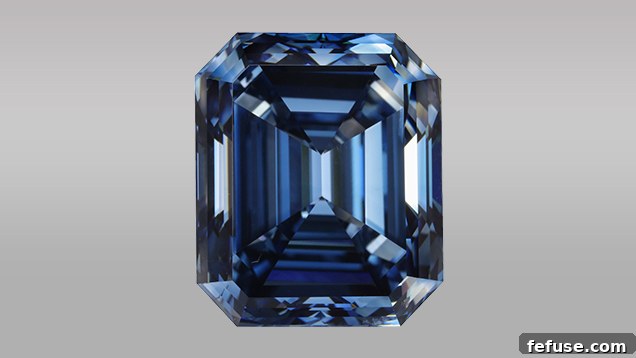
In a significant development for the world of gemology and material science, the Gemological Institute of America (GIA) in Hong Kong made a groundbreaking discovery in September 2016. Their experts meticulously examined a 10.08 carat blue synthetic diamond, meticulously grown using the High-Pressure, High-Temperature (HPHT) method. This magnificent stone not only shattered previous records as the largest HPHT synthetic diamond ever documented by the GIA but also stood as the largest blue HPHT synthetic diamond the institute had encountered. It surpassed a 5.27 carat blue HPHT sample that had been examined just a few months prior in May 2016 by the same laboratory, further highlighting the rapid advancements in this cutting-edge technology. All three of these monumental stones, including the preceding record holders, were the impressive creations of New Diamond Technology (NDT), a leading innovator based in St. Petersburg, Russia.
The Genesis of Gemstone Innovation: Understanding HPHT Technology
The High-Pressure, High-Temperature (HPHT) method represents a marvel of modern engineering, replicating the extreme conditions deep within the Earth where natural diamonds are formed. This sophisticated process involves placing a diamond seed crystal in a growth cell along with a carbon source (often graphite) and a metal solvent-catalyst. Under immense pressures, typically ranging from 5 to 6 gigapascals (GPa), and temperatures soaring between 1300°C and 1600°C, the carbon dissolves into the molten metal and recrystallizes around the seed, forming a new diamond layer by layer. This technology has continuously evolved, enabling manufacturers like New Diamond Technology (NDT) to produce larger, purer, and more intricate synthetic diamonds with remarkable consistency and control over their characteristics. The development of HPHT synthesis has truly revolutionized the diamond industry, offering an alternative that is not only ethically sourced but also holds immense potential for various applications beyond traditional jewelry.
Unveiling the 10.08 Carat Marvel: A Closer Look at its Gemological Features
The remarkable 10.08 carat synthetic diamond presented to the GIA was an elegantly crafted emerald cut, boasting precise dimensions of 13.54 × 11.39 × 7.36 mm. Its captivating hue earned it a color grade equivalent to a Fancy Deep blue, a designation reserved for diamonds exhibiting a rich, intense saturation of color that is both striking and highly desirable. The client, showing admirable transparency, submitted the stone specifically for scientific examination and openly disclosed its synthetic origin, facilitating a thorough and unbiased study by GIA experts.
Clarity and Internal Characteristics
Under magnification, the diamond revealed subtle but definitive characteristics indicative of its HPHT growth. Very weak color zoning with a distinct banded structure was observed, a common fingerprint of the layer-by-layer growth process. Furthermore, a few exceedingly small metallic inclusions and minor fractures were detected, leading to a clarity grade equivalent to SI1. These metallic inclusions are remnants of the metal solvent-catalyst used during the HPHT synthesis, another tell-tale sign of its laboratory origin. Microscopic examination employing crossed polarizers revealed no detectable strain within the diamond’s structure, a crucial indicator suggesting a remarkably low density of dislocations and, consequently, high crystalline perfection.
Growth Patterns and Fluorescence: A Window into its Creation
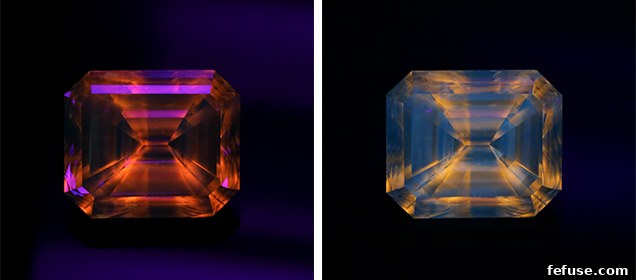
One of the most compelling pieces of evidence for its HPHT origin came from fluorescence images captured using the GIA’s state-of-the-art DiamondView instrument. These images vividly displayed the distinctive “hourglass” growth pattern, a signature characteristic of diamonds grown via the HPHT method. This pattern is formed by the differential incorporation of impurities and growth rates in various crystallographic directions. Further confirming its synthetic nature, strong blue phosphorescence was also detected, a phenomenon where the diamond continues to emit light after the exciting UV source has been removed. The fluorescence images were predominantly illuminated by the {111} growth sector, which exhibited significantly stronger blue fluorescence. The {100} growth sector, by contrast, displayed very weak fluorescence and was notably smaller, strongly indicating that this synthetic diamond was produced with a dominant octahedral growth habit. Intriguingly, the diamond also showcased a powerful red-orange fluorescence when exposed to long-wave UV radiation, and a vibrant yellow fluorescence under short-wave UV light (as depicted in Figure 2). Both of these specific fluorescence reactions are considered uncommon in HPHT synthetic diamonds, adding another layer of unique identity to this particular specimen.
Beyond Visuals: The Power of Spectroscopic Analysis
To delve deeper into the diamond’s internal composition, advanced spectroscopic techniques were employed. Infrared absorption spectroscopy provided unequivocal confirmation that this was a Type IIb diamond. This diamond type is characterized by the presence of boron atoms within its crystal lattice, which are responsible for its distinctive blue color. The strong absorption band observed at approximately 2800 cm–1 in its infrared absorption spectrum directly corresponds to this boron impurity. Subsequent photoluminescence analysis, conducted at the extremely low temperature of liquid nitrogen and using varying laser excitations, yielded surprising results. Despite the presence of boron, the analysis revealed the diamond to be remarkably pure, with no other detectable impurity-related emissions. This suggests an exceptionally clean growth environment and precise control over the introduction of boron, highlighting NDT’s advanced manufacturing capabilities.
Transformative Impact: Implications of Advanced Synthetic Diamond Technology
Based on the comprehensive analysis of these distinctive gemological and spectroscopic features, the GIA confidently concluded that the sample was indeed an HPHT synthetic diamond. This extraordinary find offers yet another compelling indication of the rapid and relentless progress occurring in HPHT synthetic diamond technology. The ability to consistently produce such large, high-quality blue synthetic diamonds has profound implications, extending far beyond the realm of luxury.
Reshaping the Jewelry Industry
For the diamond jewelry industry, these advancements present an exciting new option. Consumers are increasingly seeking ethically sourced and sustainable alternatives, and high-quality lab-grown diamonds fit this demand perfectly. They offer the same chemical, physical, and optical properties as natural diamonds, often at a more accessible price point, without the environmental or social concerns sometimes associated with mined diamonds. The availability of large, fancy-colored synthetic diamonds, like this magnificent blue specimen, expands creative possibilities for designers and offers consumers a broader spectrum of choice.
Unlocking Industrial and Research Potential
Beyond adornment, synthetic diamonds hold immense promise across numerous industrial and research applications. Their unparalleled hardness makes them ideal for cutting, grinding, and polishing tools in manufacturing. Their exceptional thermal conductivity positions them for use in advanced electronics, particularly in heat sinks for high-power devices. Furthermore, the semiconductor properties of boron-doped synthetic diamonds, like this Type IIb example, are crucial for developing next-generation electronic components and even quantum computing applications. Their biocompatibility also makes them suitable for certain medical instruments and research. The ability to precisely control the properties of synthetic diamonds opens doors to tailoring materials for specific high-performance requirements across various scientific and technological fields.
NDT’s Vision: Unique Carbon “DNA” and Sustainable Diamonds
New Diamond Technology (NDT) is at the forefront of this innovation, continuously pushing boundaries. They have revealed ambitious plans to further diversify their offerings, including large colorless and blue HPHT-grown diamonds created from unique donor carbon “DNA.” This innovative approach involves transforming unusual carbon sources, such as car leather and wood trim, into ultra-clean graphite for diamond synthesis. This not only adds a fascinating narrative and personalized touch to the diamonds but also aligns with growing trends towards sustainability and repurposing materials, demonstrating a truly forward-thinking approach to diamond production.
GIA’s Unwavering Commitment: Ensuring Confidence in the Diamond Market
In an evolving diamond market where synthetic diamonds are becoming increasingly sophisticated and prevalent, the role of independent gemological laboratories like the GIA is more critical than ever. The GIA maintains stringent protocols and invests heavily in cutting-edge research and instrumentation to confidently and accurately identify every type of synthetic diamond available on the market. Their dedication to robust identification ensures transparency and protects consumer confidence, allowing individuals to make informed decisions about their diamond purchases, whether natural or laboratory-grown. This commitment safeguards the integrity of the entire diamond industry, providing clarity in an increasingly complex landscape.
The Future is Bright: Continued Advancements in Synthetic Diamond Technology
The examination of this 10.08 carat blue HPHT synthetic diamond by the GIA stands as a powerful testament to the relentless pace of innovation in diamond growing technology. It signifies not just a new record, but a preview of what the future holds. We can anticipate even larger, more complex, and diverse synthetic diamonds emerging from laboratories, each pushing the boundaries of scientific and engineering capabilities. These advancements will continue to benefit both the luxury consumer market, offering stunning and ethical choices, and critical high-tech industries, providing materials with unprecedented properties for groundbreaking applications. The journey of synthetic diamonds is one of continuous discovery, promising exciting developments for years to come.
News Source : gia.org