
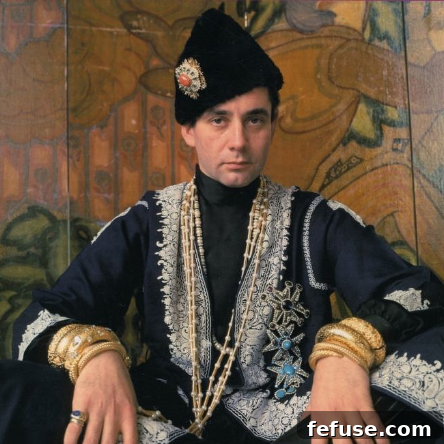
Kenneth Jay Lane: The Daring Icon Who Redefined Costume Jewelry
The world of fashion and jewelry recently mourned the loss of Kenneth Jay Lane, an iconic costume jewelry designer whose bold and innovative creations graced the necks, wrists, and ears of royalty, Hollywood legends, and fashionistas alike. Lane, a true New York social fixture, passed away peacefully in his sleep at his Manhattan home at the age of 85. His executive vice president, Chris Sheppard, confirmed his passing, marking the end of an era for a designer who fearlessly championed “fabulous fakes” and democratized luxury with unparalleled charm and wit.
A Visionary’s Humble Beginnings and Bold Philosophy
Born in Detroit in 1932, the son of an automotive parts supplier, Kenneth Jay Lane grew up far from the glittering world of high fashion he would eventually dominate. Yet, it was perhaps this practical background that instilled in him a grounded, yet audacious, approach to design. Lane was famously unapologetic about his work, gleefully dubbing his creations “junque” and “faque.” He even went as far as to declare, “I myself am a fabulous fake,” a statement that perfectly encapsulated his playful, self-aware ethos and his revolutionary perspective on adornment.
His philosophy wasn’t merely a gimmick; it was a profound commentary on the artifice and aspirations of fashion. Lane believed that jewelry, regardless of its material value, should be about design, style, and the sheer joy of self-expression. He challenged the rigid conventions that dictated what was considered “acceptable” luxury, paving the way for a more inclusive and imaginative approach to personal style. This audacious viewpoint resonated deeply, enabling him to build a legacy that transcended mere imitation and firmly established him as a master of design in his own right.
From Shoe Embellishments to Jewelry Empire: The Genesis of KJL
Lane’s journey into the dazzling world of jewelry was not a direct path. His academic pursuits led him to the University of Michigan and later the esteemed Rhode Island School of Design, foundational experiences that honed his artistic sensibilities. He began his career in the art department at the influential *Vogue* magazine, immersing himself in the visual language of high fashion. This exposure to cutting-edge aesthetics and editorial vision undoubtedly shaped his understanding of style and trendsetting.
His creative path then led him to footwear design, working under legendary names like Roger Vivier at Christian Dior and later for Arnold Scaasi. It was during this period, while meticulously decorating shoes with intricate jewels, that Lane’s burgeoning interest in jewelry design truly sparked. The transition from adorning footwear to crafting standalone pieces felt natural, almost inevitable, as he recognized the immense potential to create wearable art that could transform an entire ensemble. This pivotal realization set the stage for the launch of his eponymous jewelry collection in 1963.
The collection quickly garnered attention, but its trajectory soared after the Duchess of Windsor, Wallis Simpson, a renowned style icon and discerning jewelry collector, acquired several of his pieces. Her endorsement was a powerful testament to Lane’s talent, instantly catapulting his brand into the elite circles of fashion. This pivotal moment not only validated his design prowess but also signified a seismic shift in how costume jewelry was perceived, elevating it from mere imitation to a celebrated art form.
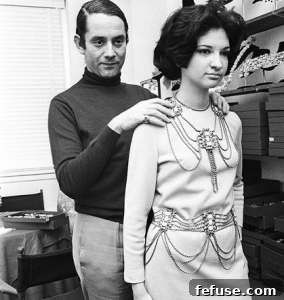
The visionary designer Kenneth Jay Lane with a model showcasing his captivating creations in the 1960s. (Image: @auvintage)
Democratizing Dazzle: The KJL Impact on Fashion and Society
Kenneth Jay Lane’s genius lay not just in his designs, but in his profound understanding of fashion’s evolving landscape. He observed a cultural shift, noting, “A whole new group of beautiful people began to exist. They started dressing up and costume jewelry was rather dull. I believed it didn’t have to be.” This insight fueled his mission to inject vitality, glamour, and audacious style into a category that had long been overlooked or dismissed. He understood that modern women desired versatility and flair without the immense burden or cost of precious gems, and he delivered this with an infectious enthusiasm.
His approach was revolutionary: he unapologetically copied high jewelry designs, not to deceive, but to make magnificent aesthetics accessible to a wider audience. Lane firmly believed in bringing “great design to everyone,” a democratic principle that resonated deeply within the emerging social strata of the 1960s and beyond. Remarkably, this frankness charmed even the most discerning members of society. Elite women, known for their priceless collections, enthusiastically mixed Lane’s outsized, vibrant faux gems with their genuine diamonds and emeralds – a pioneering form of “high-low dressing” that prefigured today’s eclectic fashion trends.
Adorning the Elite: Jackie Kennedy and Diana Vreeland
Perhaps no anecdotes better illustrate Lane’s unique position in the fashion world than his collaborations with two of the 20th century’s most influential women: Jacqueline Kennedy Onassis and Diana Vreeland. Jackie Kennedy, known for her impeccable style and discreet elegance, famously commissioned Lane to create high-quality knockoffs of her priceless jewels. This wasn’t merely a practical decision to relieve herself of the burden of constantly wearing irreplaceable heirlooms; it was a testament to Lane’s ability to replicate the grandeur and artistry of fine jewelry with impeccable craftsmanship and an undeniable flair. His pieces allowed her to maintain her iconic look with ease and confidence, blurring the lines between what was “real” and what was exquisitely “fake.”
Equally extraordinary was the endorsement from Diana Vreeland, the legendary editor of *Vogue* and later, a special consultant to the Costume Institute of the Metropolitan Museum of Art. Vreeland, with her avant-garde vision and unshakeable belief in style over substance, famously entrusted Lane with overseeing the jewelry for an exhibition at the Metropolitan Museum of Art. This appointment, almost unimaginable today for a designer primarily known for costume jewelry, underscored Vreeland’s recognition of Lane’s profound artistic integrity and his unparalleled contribution to the history of adornment. It firmly cemented his status not just as a commercial success, but as a legitimate force in the world of art and design.
A Socialite’s Sparkle: Kenneth Jay Lane in Pop Culture
Beyond his design studio, Kenneth Jay Lane was a magnetic personality, charismatic and impeccably handsome, making him a perpetual fixture in New York City’s vibrant nightlife. His presence at exclusive events, including Truman Capote’s legendary Black and White Ball, only amplified his mystique and solidified his status as a cultural icon. He wasn’t just creating fashion; he *was* fashion, embodying the glamour and daring spirit of the era.
His celebrity transcended the fashion pages, permeating popular culture to an extent few designers ever achieve. Such was his notoriety in 1960s and 1970s New York that even rock ‘n’ roll legend Lou Reed immortalized him in his 1974 song “Sally Can’t Dance.” The lyrics paint a vivid picture of a particular societal set and their aspirations:
“Sally can’t dance
She knew all the really right people
She went to Les Jardins
She danced with Picasso’s illegitimate mistress
and wore Kenneth Lane jewels, really hey, it’s trash, but
Sally, can’t dance no more, yeah”
This lyrical inclusion speaks volumes. It positions Kenneth Lane jewels as a symbol of aspiration and belonging within a specific, fashionable milieu, even while playfully acknowledging the “trash” (i.e., non-precious) nature of the materials. It highlights how deeply his designs had permeated the zeitgeist, becoming synonymous with a certain kind of chic, rebellious glamour that defined an era.
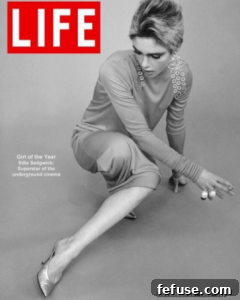
The iconic Edie Sedgwick gracing the cover of Life magazine, exquisitely adorned in Kenneth Jay Lane earrings. (Image: @seasonsandstories)
Enduring Acclaim: Awards and Legacy
Kenneth Jay Lane’s illustrious career spanned over five decades, during which he received numerous accolades that firmly cemented his place in the pantheon of fashion design. These awards were not merely honorary mentions but significant acknowledgments from the industry’s most respected institutions, celebrating his innovative spirit and enduring influence. Among his many honors, he was awarded a prestigious Coty Award in 1966, an honor considered one of the highest distinctions in American fashion at the time. This was followed by the Harper’s Bazaar International award in 1967, further solidifying his global impact.
The Neiman Marcus Fashion Award in 1968 recognized his significant contributions to the retail and luxury sectors, while the Swarovski award in 1969 underscored his masterful use of crystals and other non-precious materials to create dazzling effects. Even later in his career, his creativity remained undiminished, earning him the Brides magazine award in 1990, demonstrating his lasting appeal across diverse markets and generations. Each award represented a facet of his multifaceted genius, from groundbreaking design to commercial success and cultural relevance, painting a picture of a designer who consistently pushed boundaries and redefined expectations.
Reinvention and Reach: The QVC Phenomenon
As fashion trends shifted in the 1990s, with a temporary cooling of enthusiasm for overtly glamorous faux gems and even jewelry in general, many designers might have faded into obscurity. Not Kenneth Jay Lane. True to his entrepreneurial spirit and his unwavering belief in making great design accessible, he embraced a new platform for his creations: QVC, the televised home shopping network. The self-professed “fabulous fake” displayed zero snobbery about selling his wares on television, recognizing the immense reach and democratic potential of the medium. This move was not a retreat but a brilliant strategic pivot, allowing him to connect directly with millions of consumers who coveted a touch of his signature sparkle without the prohibitive price tag of traditional luxury.
His appearances on QVC were nothing short of sensational. By 1997, his twice-a-month, four-hour segments were reportedly bringing in an astounding $1.5 million each, a testament to his enduring appeal, his engaging personality, and the timeless allure of his designs. Lane became a QVC icon, charming viewers with his anecdotes and design insights, making designer jewelry feel attainable for everyday women. His success on QVC wasn’t just a commercial triumph; it was a reaffirmation of his core philosophy – that style and glamour should be enjoyed by all, regardless of their budget or social standing.
Upon learning of his passing, QVC released a heartfelt statement, reflecting on their long and successful collaboration: “We are saddened to learn of the passing of Kenneth Jay Lane. He will be greatly missed by all who knew him, but his legacy will live on through his designs. We are thankful to have spent more than 20 years with Kenneth as a part of our QVC family, and our thoughts and prayers are with his loved ones during this difficult time.” This tribute from a major retail partner highlights the depth of his impact and the genuine affection he inspired.
A Lasting Sparkle: Tributes and Documentaries
Kenneth Jay Lane’s legacy extends far beyond his dazzling designs. He meticulously documented his extraordinary life and career in his memoir, *Faking It*, published in 1996, offering readers an intimate glimpse into the mind of a true fashion icon. Even after his passing, his story continues to captivate, with a documentary dedicated to his remarkable 50-year career already in production. Titled *Fabulously Fake: The Real Life of Kenneth Jay Lane*, the film was written, produced, and directed by British filmmaker Gisele Roman. This eagerly anticipated documentary promises to illuminate his life through the eyes of those who knew him best, featuring interviews with close friends and admirers such as Barbara Bush, Joan Collins, Tory Burch, and Diane von Furstenberg.
While the film is currently seeking a distributor, it was projected to air in early 2018, underscoring the enduring interest in Lane’s pioneering spirit. His influence continues to resonate within the fashion community, as evidenced by the outpouring of tributes following his death. Designer Tory Burch, a close friend and admirer, shared a poignant photo of a young and charismatic Lane on her Instagram, accompanied by a heartfelt caption: “So sad to lose my dear friend Kenny…RIP #KennethJayLane.” Such personal tributes from industry luminaries highlight not only his professional impact but also the profound personal connections he forged throughout his remarkable life. Kenneth Jay Lane’s vision transcended mere accessories; he gifted the world a philosophy of style that celebrated individuality, audacity, and the sheer joy of sparkle, proving that true glamour lies in design, not just in dollars.
News Source: www.jckonline.com