

The U.S. watch and jewelry market is currently navigating a period of significant adjustment, as evidenced by a consistent deceleration in sales growth. For the third consecutive month, May 2024 saw a further cooling in year-on-year sales increases, according to the latest comprehensive estimates released by the U.S. Department of Commerce. This trend signals a maturing market dynamic and shifts in consumer spending habits, prompting a closer look at the underlying economic factors and retail strategies at play.
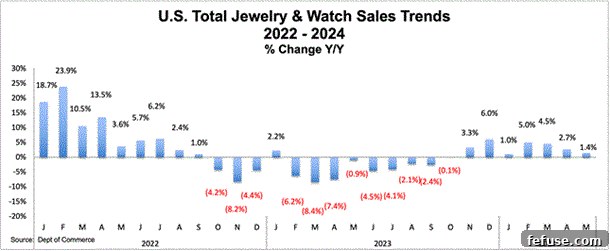
While the sector continues to exhibit growth, the pace has undeniably slowed. The marginal increase recorded in May — up by just 1.4 percent compared to May 2023 — underscores prevailing tough trading conditions with few immediate signs of substantial improvement. This figure marks a notable step down from previous months, painting a clear picture of diminishing momentum within the luxury and personal accessories segment.
Delving deeper into the data reveals a clear trajectory of deceleration throughout the spring. In April, sales were 2.7 percent higher year-on-year, a significant drop from March’s 4.5 percent increase. February had recorded the strongest performance of the quarter, with sales rising by a robust 5.0 percent. This sequential decline from 5.0% to 4.5%, then to 2.7%, and finally to 1.4% in May, illustrates a tightening market and a more cautious consumer base. These revised figures provide a holistic view of the market, encompassing sales from major multi-line retailers such as Amazon, Costco, and Walmart, which collectively account for approximately two-thirds of all watch and jewelry sales in the U.S., alongside dedicated specialty jewelers.
Decoding the Current Market Dynamics: A Deeper Look into May’s Figures
The latest data from the U.S. Department of Commerce offers crucial insights into the evolving landscape of the watch and jewelry industry. The 1.4% year-on-year increase in May, while still positive, represents the slowest growth rate observed in recent months. This slowdown isn’t merely a minor fluctuation; it’s part of a consistent trend that began earlier in the year, indicating a broader market shift rather than a temporary blip. Businesses across the sector, from high-end boutiques to mass-market retailers, are feeling the impact of a more conservative consumer environment.
The historical comparison over the past few months paints a stark picture of deceleration. Starting strong in February with a 5.0% increase, momentum waned to 4.5% in March, then 2.7% in April, culminating in May’s modest 1.4%. This consistent pattern suggests that external economic pressures are having a cumulative effect on discretionary spending, particularly within categories considered luxury or non-essential. Understanding these month-to-month changes is vital for retailers and brands to adjust their strategies, manage inventory, and plan for future quarters effectively.
Crucially, these comprehensive figures encapsulate the entire spectrum of the market. They include sales from e-commerce giants and big-box stores like Amazon, Costco, and Walmart, whose vast reach and competitive pricing often allow them to capture a larger share of consumer wallets, especially during periods of economic uncertainty. Simultaneously, the data also reflects the performance of traditional specialty jewelers, who often operate with different business models, higher overheads, and a reliance on more discerning, high-value purchases. The unified slowdown across these diverse channels suggests a pervasive sentiment among consumers.
The Divergence: Multi-line Retailers vs. Specialty Jewelers
A significant takeaway from the recent sales data is the observed divergence in performance, or at least resilience, between multi-line retailers and specialty jewelers. While the overall market is slowing, multi-line retailers appear to be maintaining a more stable growth trajectory. This phenomenon can be attributed to several factors. These large retailers often benefit from diversified product offerings, allowing them to cushion the impact of a slowdown in any single category. Their ability to offer competitive pricing, frequent promotions, and a convenient, one-stop shopping experience – whether online or in vast physical stores – appeals to budget-conscious consumers.
Moreover, the sheer volume of foot traffic and online engagement that multi-line retailers command provides a distinct advantage. Consumers visiting these stores for groceries or household items might make impulse jewelry purchases or opt for more affordable watch options available. Brands that partner with these large platforms also gain access to a wider demographic, potentially offsetting declines in the high-end luxury sector. Their robust supply chains and extensive marketing budgets further enable them to adapt quickly to market shifts and maintain visibility.
Conversely, specialty jewelers are often disproportionately affected during economic downturns or periods of decreased consumer confidence. These businesses typically specialize in higher-value items, custom designs, and a more curated shopping experience, which inherently targets a more affluent or occasion-driven clientele. When consumers tighten their belts, discretionary luxury purchases are often the first to be deferred or reduced. Specialty jewelers also face higher operating costs associated with prime retail locations, expert staff, and secure inventory management. Competing with the pricing and convenience of mass-market retailers becomes increasingly challenging, requiring them to emphasize their unique value propositions, such as personalized service, craftsmanship, and exclusivity.
Underlying Economic Headwinds Shaping Consumer Behavior
The deceleration in watch and jewelry sales is not an isolated event; it is deeply intertwined with broader economic factors influencing consumer spending patterns across the U.S. Several macroeconomic headwinds are contributing to the cautious sentiment among buyers, directly impacting industries reliant on discretionary income and luxury purchases.
The Persistent Grip of Inflation and Interest Rates
Inflation remains a critical concern for American households. Despite some moderation, the elevated cost of everyday necessities – from groceries and fuel to housing and utilities – continues to strain household budgets. When essential expenses consume a larger portion of disposable income, consumers naturally scale back on non-essential items like high-end watches and jewelry. The perceived value of these items is weighed against immediate financial security, leading to deferred purchases or a preference for more affordable alternatives.
Compounding the effect of inflation are the sustained higher interest rates. The Federal Reserve’s aggressive rate hikes, implemented to combat inflation, have increased borrowing costs across the board. This impacts everything from credit card debt to mortgages and car loans, further reducing consumers’ available funds for discretionary spending. High interest rates also make financing large purchases less attractive, discouraging consumers from acquiring big-ticket jewelry items or luxury watches, even if they could afford the upfront cost. Businesses also face higher borrowing costs, affecting their ability to invest and manage inventory.
Shifting Consumer Priorities and Confidence
Another significant factor is the ongoing shift in consumer priorities post-pandemic. During the peak of the pandemic, travel and services were restricted, leading to a surge in demand for goods, including watches and jewelry. As economies have reopened, there has been a noticeable pivot back towards experiential spending – travel, dining out, entertainment, and other services. This rebalancing of consumer budgets away from goods and towards experiences naturally reduces the allocation for luxury retail items.
Furthermore, overall consumer confidence plays a crucial role. Economic uncertainty, geopolitical tensions, and concerns about potential future downturns can make consumers more hesitant to part with their money, especially for luxury goods. When job security feels less certain or the economic outlook appears cloudy, saving becomes a higher priority than splurging. Retailers in the watch and jewelry sector are highly susceptible to these fluctuations in sentiment, as their products often represent aspirational purchases rather than necessities.
Navigating the Nuances of the Watch and Jewelry Market
The watch and jewelry market is not monolithic; it comprises various segments that may react differently to economic pressures. Understanding these nuances is crucial for businesses aiming to maintain resilience and identify pockets of growth amid the broader slowdown.
Segment-Specific Performance: Luxury vs. Everyday Wear
There is an ongoing discussion about how different price points within the watch and jewelry market are performing. The ultra-luxury segment, typically catering to high-net-worth individuals, might exhibit more resilience due to less sensitivity to economic fluctuations. However, even this segment can be affected by broader wealth depreciation or a decline in ostentatious spending during periods of uncertainty. Conversely, the mid-range and affordable luxury segments, which rely on a broader base of aspirational consumers, are likely feeling the pinch more acutely. Everyday wear items, fashion jewelry, and entry-level watches might fare better if they offer perceived value and are priced competitively, making them accessible to a wider demographic who may still want to treat themselves without breaking the bank.
E-commerce vs. Brick-and-Mortar: Evolving Retail Landscape
The battle for market share between online and physical retail continues to evolve. E-commerce platforms offer unparalleled convenience, vast selections, and often better prices, which can be particularly appealing to cost-conscious consumers. However, for high-value items like watches and fine jewelry, the in-store experience remains paramount. Consumers often prefer to physically see, touch, and try on these items before making a significant investment. The expertise of a sales associate, the ambiance of a boutique, and the perceived security of a physical transaction add significant value. Therefore, an omnichannel strategy, seamlessly integrating online and offline experiences, is becoming indispensable. Retailers need to ensure their digital presence is robust and engaging, while their physical stores offer unique, memorable, and personalized experiences that justify the visit.
Strategic Adaptations for a Dynamic Market
In a climate of decelerating growth, proactive and adaptive strategies are essential for businesses in the watch and jewelry sector to not only survive but thrive. This requires a nuanced understanding of their target audience and a willingness to innovate across all facets of their operations.
For Specialty Jewelers: Cultivating Unique Value
Specialty jewelers, facing direct competition from larger retailers and shifting consumer preferences, must double down on their unique strengths. This means emphasizing personalized customer service, offering bespoke or custom design options, and showcasing unique, artisanal pieces that cannot be found elsewhere. Building strong community ties, hosting exclusive events, and focusing on storytelling around their craftsmanship and heritage can create a compelling value proposition. Investing in staff training to ensure exceptional product knowledge and a consultative sales approach can also differentiate them. Furthermore, exploring niche markets, such as ethically sourced gemstones or antique jewelry, can attract dedicated clientele.
For Multi-line Retailers: Leveraging Scale and Data
Multi-line retailers, while benefiting from scale, must continually optimize their operations to maintain their competitive edge. This includes leveraging their extensive data analytics capabilities to identify emerging trends, personalize product recommendations, and fine-tune pricing strategies. Efficient supply chain management is crucial to ensure a diverse and timely inventory without excessive carrying costs. Effective cross-promotion across different product categories can drive incidental jewelry purchases. Continuous investment in digital platforms, offering seamless online shopping experiences, augmented reality try-ons, and responsive customer support, will also be vital to capture and retain market share.
Innovation in Product and Marketing
Innovation is key across the entire industry. This encompasses not just new product designs and collections but also sustainable practices, ethical sourcing, and transparency in production—factors increasingly valued by modern consumers. Marketing efforts need to evolve, moving beyond traditional advertising to embrace digital engagement, influencer collaborations, and content marketing that tells compelling brand stories. Emphasizing the emotional value and longevity of watches and jewelry as investments or heirlooms can resonate more deeply during uncertain times. Brands that can effectively communicate their unique identity, values, and relevance to contemporary lifestyles will be better positioned for success.
The Road Ahead: Outlook and Predictions
The outlook for the U.S. watch and jewelry market for the remainder of the year will largely depend on the broader economic trajectory. Factors such as the persistence of inflation, the Federal Reserve’s monetary policy decisions regarding interest rates, and overall consumer confidence will continue to exert significant influence. If inflation eases more substantially and consumer sentiment improves, we might see a stabilization or even a modest rebound in growth rates. However, a prolonged period of economic uncertainty could lead to further deceleration.
Despite the current slowdown, the luxury market, including watches and fine jewelry, has historically demonstrated resilience over the long term. These items often represent more than just fashion accessories; they are symbols of milestones, personal achievements, and enduring value. This intrinsic appeal ensures a foundational demand that typically recovers once economic conditions stabilize. Nevertheless, businesses cannot afford complacency. Agility and responsiveness to market signals will be paramount. Those that adapt their product offerings, refine their customer experiences, and embrace innovative marketing strategies will be best equipped to navigate the challenging landscape ahead.
In conclusion, the U.S. watch and jewelry market is undergoing a period of recalibration, moving from robust post-pandemic growth to a more measured pace. While sales are still increasing, the deceleration observed in May for the third consecutive month signals a shift in consumer behavior driven by economic pressures. Retailers, especially specialty jewelers, must prioritize differentiation and exceptional value, while multi-line players leverage their scale and data insights. The future success of the industry hinges on strategic foresight, continuous innovation, and an unwavering focus on understanding and meeting the evolving needs of the modern consumer.