
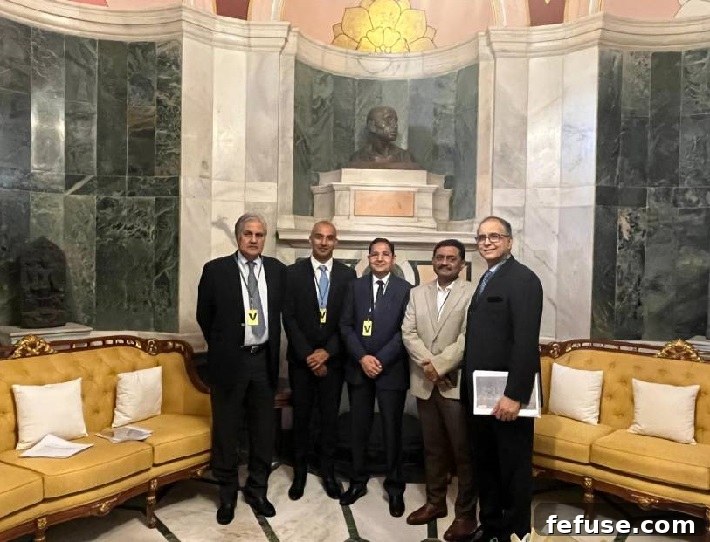
In a pivotal move to fortify the foundation of India’s formidable gem and jewellery export sector, a distinguished high-level delegation from the Gem & Jewellery Export Promotion Council (GJEPC) engaged in a critical dialogue with Shri Shaktikanta Das, the Hon’ble Principal Secretary to the Prime Minister. The objective of this crucial meeting was to present a comprehensive set of recommendations aimed at mitigating the adverse repercussions of proposed U.S. tariffs on an industry that is not only a significant foreign exchange earner but also a vital employer for millions across the nation.
This proactive initiative by the GJEPC underscores the industry’s strategic foresight and its commitment to ensuring sustained growth and global competitiveness amidst evolving international trade dynamics. The delegation highlighted the urgent need for governmental intervention to address specific tariff-related challenges that threaten to disrupt the delicate balance of trade under the prospective India–U.S. Bilateral Trade Agreement (BTA).
GJEPC Delegation: A Unified Voice for India’s Precious Sector
The GJEPC delegation, spearheading this critical advocacy effort, was led by Shri Kirit Bhansali, the esteemed Chairman of GJEPC. His leadership brought together a powerful collective of industry stalwarts, ensuring that the diverse voices and concerns from across the gem and jewellery value chain were represented at the highest echelons of government. The key members of this influential delegation included:
- Shri Shaunak Parikh, Vice Chairman of GJEPC, whose insights into market trends and strategic planning are invaluable.
- Shri Anoop Mehta, Co-Convener of the Diamond Panel at GJEPC and President of the Bharat Diamond Bourse, representing the cornerstone of India’s diamond trade.
- Shri Adil Kotwal, President of the Southern Gujarat Chamber of Commerce and Industry (SGJMA), providing a regional perspective on manufacturing and export challenges.
- Shri Sabyasachi Ray, Executive Director of GJEPC, whose deep understanding of policy and trade regulations guides the Council’s strategic direction.
This formidable assembly of leaders collectively emphasized the profound importance of the gem and jewellery sector to India’s economy and its global standing. Their unified message conveyed the urgency with which the proposed tariff issues needed to be addressed to protect thousands of livelihoods and India’s reputation as a global leader in gem and jewellery manufacturing and export.
Addressing Core Tariff Challenges: Protecting Polished Diamonds
One of the most pressing recommendations put forth by the Council focused on securing the future of India’s polished diamond exports. The GJEPC emphasized the urgent need for the inclusion of both diamonds and coloured gemstones within Annexure II of the U.S. Government’s Ad Valorem Reciprocal Tariff Notification. This specific inclusion is not merely a technicality; it represents a crucial protective measure designed to shield India’s polished diamonds from the specter of escalating duties that could severely undermine the nation’s export competitiveness in the global market.
India is the undisputed global leader in cutting and polishing diamonds, processing approximately 90% of the world’s rough diamonds by value. This segment of the industry supports an immense ecosystem, from artisanal craftsmen to advanced manufacturing units. Higher U.S. tariffs on these products would directly translate into increased costs for U.S. importers and consumers, potentially shifting demand to other markets and diminishing India’s dominant market share. By advocating for their inclusion in Annexure II, the GJEPC aims to ensure that these crucial exports receive favorable tariff treatment, thereby preserving India’s competitive edge and safeguarding the extensive value chain associated with diamond processing.
Proposing a Capped Duty Regime for Jewellery Exports
Beyond diamonds, the GJEPC also put forward a significant proposal concerning finished jewellery. The Council advocated for a pragmatic cap on total import duties for all jewellery entering the U.S. market, suggesting this cap be set at a maximum of 10%, inclusive of all ad valorem charges. This proposal aims to introduce a level of predictability and fairness into the tariff structure, which is currently subject to various duties that can make planning and pricing challenging for exporters.
A predictable and reasonable duty cap of 10% would not only benefit Indian exporters by making their products more competitive in the U.S. but would also offer advantages to U.S. retailers and consumers through potentially lower costs. It would foster a more stable trade environment, encouraging greater investment and long-term partnerships between Indian manufacturers and U.S. buyers. Such a measure would strengthen the overall bilateral trade relationship by removing arbitrary barriers and promoting smoother market access for high-quality Indian jewellery.
Reciprocal Concessions: A Balanced Approach to Bullion Imports
In a demonstration of India’s commitment to fostering a truly reciprocal and mutually beneficial trade environment, the GJEPC also championed the cause of reciprocal duty concessions for gold and silver bullion imports into India. This mirrors the successful framework already established under the Comprehensive Economic Partnership Agreement (CEPA) between India and the UAE, where similar benefits have been extended.
The ability to import gold and silver bullion at concessional duties is critical for India’s jewellery manufacturing sector. Gold, in particular, is a primary raw material, and reducing its import cost directly enhances the competitiveness of Indian-made jewellery. This proposal aims to provide Indian manufacturers with a significant advantage, enabling them to produce more cost-effectively, boost exports, and further establish India as a global jewellery manufacturing hub. By seeking similar concessions from the U.S., India is not only looking to reduce its input costs but also to create a more balanced and equitable trade dynamic that benefits both nations.
India’s Offer: Fostering Mutual Benefit in Jewellery Trade
Underscoring its commitment to a balanced and equitable trade framework, India expressed its openness to extending significant duty concessions for jewellery imports originating from the U.S. Specifically, India indicated a willingness to offer duty reductions ranging from 6% to 10%. This gesture highlights India’s proactive stance in creating a trade environment built on mutual benefit and reciprocal arrangements rather than unilateral impositions.
Such a concession would open new avenues for U.S. jewellery manufacturers to access the rapidly growing Indian market, providing them with a competitive advantage. It aligns with the broader goal of strengthening the strategic economic partnership between India and the U.S., transforming it into a relationship where both parties actively seek opportunities for shared prosperity. This proposal demonstrates India’s leadership in advocating for a tariff regime that promotes fair competition, expands market access for both sides, and ultimately contributes to a more robust global trade ecosystem.
The Critical “Early Harvest” Window: Time is of the Essence
The GJEPC delegation underscored the profound urgency of their recommendations, particularly emphasizing that these relief measures for the gem and jewellery sector must be prioritized under the “Early Harvest” component of the Bilateral Trade Agreement (BTA). This specific urgency stems from a narrow, critical three-month window before reciprocal tariffs are slated to come into force. The activation of these tariffs without prior protective measures would pose a significant and potentially devastating disruption to India’s export operations and supply chains.
An “Early Harvest” agreement is designed to deliver immediate economic benefits and build momentum for broader trade negotiations by addressing less contentious issues first. For the gem and jewellery sector, this window is not merely a formality but a lifeline. Delays in securing these tariff protections could lead to substantial financial losses, order cancellations, and a destabilization of an industry that provides livelihoods to millions. The GJEPC’s plea for immediate action highlights the industry’s vulnerability to sudden policy shifts and its crucial need for a stable and supportive trade environment to thrive.
Positive Assurances and a Forward-Looking Outlook
The critical meeting concluded on a positive and reassuring note. Shri Shaktikanta Das, recognizing the immense economic contributions and employment generation capabilities of the gem and jewellery sector, assured the GJEPC delegation that their concerns would be afforded the highest priority. He committed to conveying these vital recommendations through the appropriate channels during the ongoing and sensitive deliberations with U.S. counterparts.
This assurance from the Principal Secretary to the Prime Minister has been received by the industry as a profoundly positive step forward. It signals that the Indian government is acutely aware of the challenges faced by its export-oriented sectors and is committed to actively safeguarding their interests on the global stage. As India navigates the complexities of global trade and seeks to solidify its position as a leading economy, robust governmental support for key industries like gems and jewellery is paramount. The outcome of these high-level discussions will undoubtedly play a crucial role in shaping the future trajectory of India’s gem and jewellery exports, fostering resilience and sustained growth amidst an increasingly intricate global economic landscape.