
Unveiling the Gemstone Journey: Enhancing Transparency in the Jewelry Supply Chain
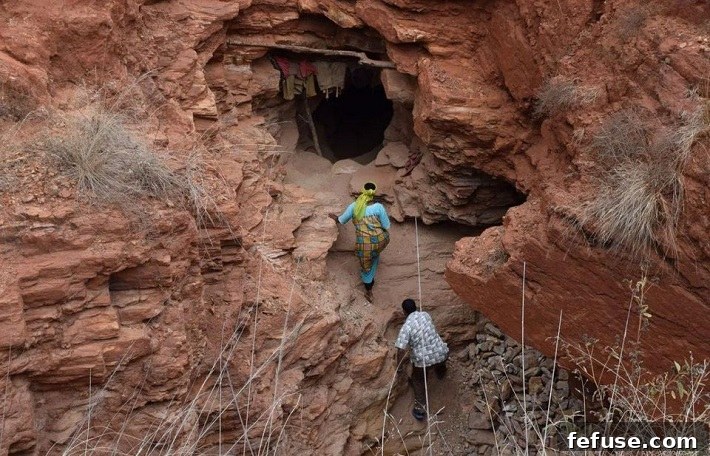
Achieving genuine transparency within the jewelry industry’s supply chain presents a unique and formidable challenge, often surpassing the complexities faced by most other sectors. Unlike the large-scale, capital-intensive operations characteristic of commodity mining for resources like oil, the extraction of precious materials for jewelry largely relies on the diligent efforts of artisanal and small-scale miners (ASM). This vast global workforce, estimated at over 40 million individuals, typically operates in remote, off-grid locations, often working by hand with minimal technology. They may be solitary workers, members of small family or community units, or part of compact companies, particularly prevalent in Latin America. Despite their crucial role, these miners frequently lack significant economic representation within the very industries that depend on their output. Cristina Villegas of Pact highlights the scale of this reliance, stating, “About 20% of all gold is mined this way, 20% of all diamonds, and a staggering 80% – 90% of colored gemstones.” This fundamental reliance on ASM sets the stage for a convoluted supply chain where transparency becomes exceptionally elusive.
The Unequal Value Proposition: Why Colored Gemstone Miners Struggle for Fair Prices
The discrepancy in pricing transparency between different precious materials is stark and profoundly impacts the livelihoods of miners. For gold, a relatively standardized commodity, a transparent pricing mechanism exists through benchmarks like the London Bullion Market (LBMA) fix. This allows gold miners, on average, to retain approximately 80% of the market price for their efforts. However, the situation for colored gemstones is dramatically different. Their value is highly subjective and variable, influenced by an intricate combination of factors including color, clarity, cut, and origin, making it incredibly difficult for gemstone miners to accurately gauge and demand a fair market price for their raw materials. This inherent lack of pricing clarity often results in colored gemstone miners receiving significantly less than the true value of their arduous work.
Further compounding this issue is the common practice of selling colored gemstones in their rough, unimproved state. These raw materials are then typically shipped, often across international borders, to aggregators who possess the specialized knowledge and equipment required for heating, cutting, and polishing. By the time these gemstones enter the broader market as finished products, their original source and the conditions under which they were mined become incredibly difficult, if not impossible, to ascertain. This journey, from mine to market, often involves multiple intermediaries, each adding a layer of opacity that obscures the gemstone’s true provenance and ethical footprint.
Adding another layer of complexity to the jewelry supply chain is the pervasive practice of material reuse. Unlike many industrial components that are discarded after their initial lifespan, precious metals and gemstones possess an enduring value and aesthetic appeal. They routinely remain in circulation for hundreds of years, easily melted down, recut, re-manufactured, and re-sold to create new pieces. While this inherent recyclability is a testament to their lasting worth and contributes to sustainability in some ways, it simultaneously complicates efforts to trace the initial origin of materials within a new piece of jewelry, making the ‘trust, but verify’ dictum an even greater challenge.
The Verification Dilemma: Why Sourcing Responsible Materials Remains an Uphill Battle
For discerning consumers who increasingly demand to know the origin and ethical journey of their jewelry materials, the answers are often elusive; in many cases, it is simply impossible to provide definitive proof. Similarly, jewelers committed to working exclusively with responsibly sourced materials find themselves navigating a labyrinthine challenge. The principle of “trust, but verify” becomes deeply problematic, even for large corporations endowed with substantial financial resources. The practicalities of ensuring ethical sourcing are immense: traveling to remote artisanal mining sites, establishing robust systems for tracking materials through multiple hands, and implementing value-adding processes closer to the point of extraction are all prohibitively expensive, incredibly time-consuming, and frequently hazardous endeavors. What proves daunting for multinational corporations often remains completely beyond the reach of the small businesses that, remarkably, dominate the global fine jewelry industry. This creates a critical bottleneck for widespread ethical adoption.
Supply Chain Initiatives: Too Complex, Too Inaccessible for Small Businesses
In response to the growing awareness of ethical concerns, several significant initiatives have emerged, though their effectiveness for the vast majority of jewelry businesses remains a subject of debate.
The Kimberley Process Certification Scheme (KPCS): A Flawed Foundation
The Kimberley Process Certification Scheme (KPCS), established in 2003, represented an initial, albeit imperfect, global effort to tackle the pervasive problem of conflict diamonds within the jewelry supply chain. While undeniably a crucial first step in bringing this issue to the forefront, KPCS is frequently criticized for its inherent flaws. Born from a United Nations General Assembly initiative, it encompasses 82 member countries, naturally entailing a complex web of diverse political agendas and often conflicting priorities. Despite its ongoing evolution and its undeniable role in keeping conflict diamonds on the radar of government leaders and large corporations, its practical impact diminishes significantly as diamonds move closer to the market. The reason is simple: while small business owners in the jewelry industry are mandated to seek written confirmation from their suppliers regarding KPCS compliance, they possess no meaningful, independent means to verify or validate these assurances. This renders the verification process largely symbolic for the smaller players.
The Responsible Jewellery Council (RJC): Striving for Comprehensive Standards
In 2005, the Responsible Jewellery Council (RJC) was founded with the ambitious goal of establishing comprehensive standards and certifications for responsible practices across the entire jewelry sector. Its robust standards extend to virtually all jewelry materials and cover critical areas such as human rights, labor rights, environmental impact, mining practices, and detailed product disclosure. While becoming fully RJC certified is an extensive and rigorous process that involves significant self-reporting and auditing, it often proves to be an insurmountable hurdle for most small businesses that typically lack the necessary resources, both in terms of dedicated time and administrative capacity, to complete the certification. However, recognizing this challenge, the RJC commendably makes its detailed standards and valuable self-assessment tools freely available. There is encouraging evidence that a growing number of small business owners within the jewelry industry are accessing these resources, embarking on their own incremental journeys towards adopting more responsible supply chain practices, even if full certification remains out of reach.
Despite their significant contributions, both KPCS and RJC frequently face criticism for their perceived shortcomings. Yet, as Stewart Grice, VP of Mill and Refining for Hoover & Strong (a prominent metal refiner and manufacturer known for its leadership in ethical metals supply), wisely articulated at the 2018 Chicago Responsible Jewelry Conference, “Don’t let perfect be the enemy of good. Just start somewhere.” This philosophy underscores the vital work these organizations have accomplished in establishing foundational standards and defining responsible practices, providing a crucial starting point from which the industry can continue to build and improve.
Bringing Responsible Supply Chain Activism to Smaller Jewelry Companies: A Grassroots Movement
Around the same time that RJC was taking shape in 2006, a groundbreaking grassroots movement began to coalesce. Three visionary independent metalsmiths – Christina Miller, Susan Kingsley, and Jennifer Horning – co-founded Ethical Metalsmiths. Their core intention was dual: first, to elevate awareness among smaller jewelry producers and their consumers regarding the widespread abuses and injustices prevalent in traditional jewelry supply chains; and second, to actively cultivate a viable market for metals and gemstones that could be demonstrably sourced in strict accordance with internationally recognized ethical and environmental standards. Their focus extended beyond just mining, delving into jewelry-making practices at the micro-level of the small jewelry shop. They sought to raise awareness about the environmental impact inherent in fabrication techniques and to explore and champion more responsible, sustainable ways to produce jewelry and operate small jewelry businesses. This pioneering association quickly became a nexus for like-minded jewelry practitioners, many of whom have since emerged as influential thought leaders and driving forces within the contemporary responsible jewelry movement. Their work underscored a critical need: to forge direct, transparent connections between on-the-ground mining communities and the practicing jewelers who use their materials.
This crucial need for direct engagement and transparency has finally begun to materialize in earnest, with the recently launched Moyo Gemstone Collaboration standing out as a prime example of excellent progress in this vital area. It represents a paradigm shift, moving from broad, often inaccessible initiatives to targeted, actionable models that empower small businesses and mining communities alike.
The Moyo Gemstone Collaboration: A Blueprint for Future Responsible Jewelry Initiatives
The Moyo Gemstone Collaboration offers an incredibly exciting and promising model for short supply chain initiatives, providing a tangible pathway for small businesses to actively participate in ethical sourcing. It powerfully demonstrates that it is not only possible but also practical to closely connect artisanal miners directly with jewelry makers, thereby establishing meaningful and verifiable responsibility initiatives. While the challenges inherent in creating truly responsible supply chains and achieving full transparency in the global jewelry industry are undeniably vast, intricate, and globally dispersed, projects like the Moyo Gemstone Collaboration shine a bright and hopeful light on the path forward, proving that change is indeed achievable.
From Spark to Market in Under Three Years: The Moyo Journey
The genesis of the Moyo Gemstone Collaboration is a testament to rapid, impactful development. In 2016, the Gemological Institute of America (GIA) approached Pact, an organization dedicated to assisting artisanal and small-scale (ASM) mining communities, with a pivotal question: could providing specialized gemstone education directly to the miners themselves make a tangible difference in their livelihoods and practices? Pact responded with immediate and enthusiastic affirmation. A pilot project was swiftly launched, bringing together GIA trainers, Pact staff, and the Tanzania Women Miners Association (TAWOMA). This project delivered crucial educational resources and training, empowering the women miners to better understand the value of the rough gem material they extracted. The results were transformative and immediate, enabling these miners to earn three to five times more than they had previously, directly improving their economic security and community well-being.
The project continued its rapid evolution at the 2017 Chicago Responsible Jewelry Conference. It was there that Cristina Villegas of Pact, Monica Stephenson of ANZA Gems, and Stuart Pool of Nineteen48 convened and formulated an ambitious plan to further advance the collaboration with TAWOMA. Their shared vision was to establish a direct, short supply chain that would bypass traditional intermediaries, linking TAWOMA miners directly with gemstone buyers and cutters. To ensure unparalleled traceability and accountability within this innovative chain, they strategically partnered with Everledger, a leader in blockchain technology. From that point, the collaborators worked with remarkable speed, co-designing every aspect of the project hand-in-hand with the miners themselves, ensuring that the solution was not only technologically sound but also deeply embedded in the realities and needs of the mining communities.
Key Strengths of the Moyo Model: Targeted Focus, Inclusion, Flexibility, and Rapid Feedback
The Moyo Gemstone Collaboration’s success can be attributed to several critical strengths that distinguish it from previous efforts and offer a blueprint for future initiatives.
Big Idea, Targeted Focus for Reproducible Impact
Remarkably, this project transitioned from its initial conceptualization to education, robust traceability, and market integration within an astonishing three-year timeframe. It leverages sophisticated blockchain technology, the very same system multinational logistics companies employ to track vast inventories. Instead of attempting a prohibitively ambitious, industry-encompassing overhaul, the Moyo team strategically focused their efforts on a specific, well-defined group of miners. This targeted approach allowed them to effectively pilot a project that is inherently reproducible, either in its entirety or in various parts, in other mining communities and for different materials in the future. This focused, rapid project methodology ensures fast feedback loops, enabling swift identification and implementation of improvements. Given the relatively small and dedicated group involved in this collaboration, it is reasonable to anticipate that enhancements and adaptations can be made with exceptional agility, fostering continuous improvement and scalability.
Inclusion and Collaboration: The Foundation of Success
The Moyo project exemplifies a powerful model of cooperation, meticulously bringing together a diverse array of stakeholders: miners, impassioned community activists, cultural experts, dedicated educators, astute market specialists, and innovative technology providers. This broad spectrum of expertise converged to meticulously hash out the intricate details of a mine-to-market initiative specifically designed to yield tangible benefits for all participants. Business strategists widely acknowledge that highly collaborative projects, enriched by a great diversity of thought and experience, are inherently more likely to achieve resounding success. This holds especially true for ambitious projects that purposefully cut across traditional business, cultural, and national boundaries, where multifaceted perspectives are essential for navigating complex challenges and fostering inclusive growth.
Flexibility: A Counterpoint to Bureaucracy and Inertia
Expansive initiatives like the Kimberley Process Certification Scheme (KPCS) and the Responsible Jewellery Council (RJC) are undeniably necessary and play a crucial role in shaping industry standards at a macro level. However, large-scale, politically charged, and corporately driven endeavors often come with inherent systemic flaws. For many of the same reasons that multinational corporations frequently struggle with fostering rapid innovation and entrepreneurial agility, multinational initiatives are often plagued by bureaucratic politics, slow decision-making, and organizational inertia. The Moyo Gemstone Collaboration, with its deliberately smaller team, tighter focus, and agile structure, is significantly less susceptible to these pervasive shortcomings. While there is no absolute guarantee that any project can entirely escape political dynamics or always prove perfectly adaptable, judiciously limiting the number of potential agendas and vested interests certainly increases the likelihood of greater flexibility, responsiveness, and resilience in the face of evolving challenges.
Rapid Feedback: Accelerating Learning and Adaptation
One of the most significant challenges inherent in any change initiative lies in the unknown – “we don’t know what we don’t know.” At a certain juncture, a new idea must transition from theory to practice, requiring launch and diligent collection of real-world feedback. Small-scale initiatives, such as Moyo, typically demonstrate far greater effectiveness in both collecting and swiftly acting upon critical feedback and valuable suggestions. The implementation of rapid feedback loops is absolutely key to quickly advancing along a project’s learning curve, enabling continuous optimization and ensuring that solutions remain relevant and impactful for the communities they serve. This iterative process of learning and adaptation is crucial for sustainable progress in complex environments.
While a common complaint occasionally voiced within the jewelry industry suggests that there are “too many different initiatives” and that these efforts often lack coordination, this perspective may miss a crucial point. We are already acutely aware of the limitations and bottlenecks that arise from concentrating such vital, transformative work in the hands of very few, very large, and often bureaucratic endeavors. On the contrary, the industry has likely suffered historically from a dearth of such focused, community-level projects. Therefore, the recent surge in diverse initiatives should be viewed as a highly positive sign – a clear indication that meaningful, widespread progress towards truly responsible supply chains could finally be on the horizon. More minds at the table, more diverse approaches being tested, ultimately lead to faster and more effective solutions.
Indeed, numerous similar and equally exciting projects are currently being spearheaded by small, collaborative groups worldwide. This proliferation is unequivocally a good thing, primarily because the jewelry industry, despite its ancient roots, is still in its relative infancy when it comes to establishing truly robust and transparent responsible supply chains. The industry must move with unprecedented speed and agility to catch up to, and ideally get ahead of, rapidly evolving consumer expectations for ethical sourcing and sustainability. As Mark Hanna, CMO at Richline Group (and a recognized leader in corporate social responsibility initiatives within the jewelry industry) frequently emphasizes, “The more minds we can bring to the table, the faster we will figure out how to ‘do gooder’.” This collective intelligence and diverse approach are indispensable for navigating the complexities ahead.
The Moyo Gemstone Collaboration is not merely a promising concept; it offers real, meaningful progress right now, delivering tangible benefits to communities and transforming sourcing practices. However, perhaps its most enduring legacy will be its role as a powerful template, a proven blueprint for future responsible jewelry initiatives across the globe. At this critical juncture in our collective progress, the jewelry industry should resist the temptation to passively hold out for mythical, perfect, one-size-fits-all solutions. Instead, it must actively and intentionally work with urgency, exploring a diverse array of methods, fostering innovative partnerships, and cultivating collaborative models that promise to solve the biggest, most entrenched problems in the simplest, most effective manner possible. As these pioneering projects are launched, tested, and refined, industry knowledge, engagement, and commitment will organically grow. And ultimately, this incremental, community-by-community, initiative-by-initiative approach may indeed be the only truly effective way to tackle big, messy, and globally interconnected challenges – one responsible step at a time.
NewsSource: forbes