
The Ultimate Guide to Lab-Grown Emeralds: Authenticity, Benefits, and Comparison with Natural Gemstones
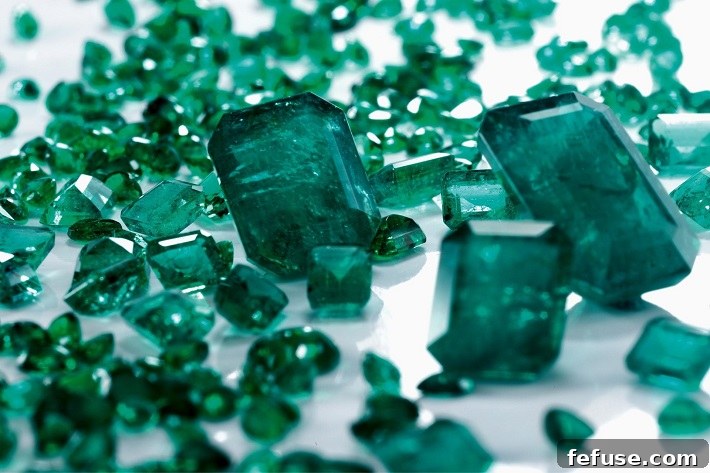
Emeralds, with their mesmerizing green hues, have captivated humanity for millennia, symbolizing rebirth, spring, and eternal love. Historically, these precious gemstones were exclusively sourced from the depths of the Earth, each one bearing unique markers of its natural origin. However, advancements in scientific technology have brought forth a remarkable alternative: lab-grown emeralds. These exquisite gems mirror the beauty and essence of their mined counterparts so precisely that differentiating between the two can be an arduous task, even for seasoned gemologists. Despite their striking similarities, subtle distinctions exist, offering consumers a compelling choice in the world of fine jewelry.
Understanding Lab-Grown Emeralds: Are They Real?
The term “lab-grown” often sparks questions about authenticity. It’s crucial to understand that lab-grown emeralds are not imitations or simulants; they are genuine emeralds. They possess the exact same chemical composition, crystal structure, and physical properties as natural emeralds. The only difference lies in their origin: one is formed within the Earth’s crust over millions of years, while the other is cultivated in a controlled laboratory environment by human hands.
What Defines a Lab-Grown Emerald?
Lab-grown emeralds, also known as synthetic emeralds, are created by meticulously recreating the geological conditions under which natural emeralds form. This sophisticated process takes place in highly monitored laboratory settings, where scientists precisely control temperature, pressure, and the availability of essential elements. The duration required to grow an emerald largely depends on the desired size and quality. Producing larger, high-quality emerald crystals can take several months, a testament to the intricate science involved.
A common misconception is that a lab-grown emerald is not a “real” emerald. This is fundamentally incorrect. Leading producers, such as BIRON® Gems, create emeralds that are chemically, physically, and optically identical to those extracted from mines. They contain the same Beryl mineral composition (beryllium aluminum cyclosilicate) and trace elements like chromium or vanadium that give emeralds their characteristic green color. This makes them 100% genuine emeralds, offering all the beauty and prestige of their natural equivalents.
Distinguishing Lab-Grown from Imitation Emeralds
It’s vital to differentiate lab-grown emeralds from imitation emeralds. Imitated emeralds (also known as simulants) are materials that merely *look* like emeralds but lack their chemical and physical properties. Examples include green glass, colored cubic zirconia, or other stones dyed green. These imitations only mimic the physical appearance of an emerald and do not share its inherent characteristics or value. In contrast, lab-grown emeralds are structurally and chemically identical to natural ones, making them a true emerald in every sense, just with a different origin story.
The Science Behind the Sparkle: How Lab-Grown Emeralds Are Made
The creation of lab-grown emeralds is a remarkable feat of scientific engineering, leveraging deep understanding of geological processes. The two primary methods used to produce these gems are the flux-growth and hydrothermal processes, each designed to replicate the specific conditions needed for beryl crystal formation.
The Flux-Growth Method
The flux-growth method involves creating a molten solution in a platinum crucible. This solution contains the constituent elements of emeralds (beryllium, aluminum, silicon, oxygen, and color-causing trace elements like chromium). A flux, which is a solvent material, is added to lower the melting point of the beryl components, allowing them to dissolve at more manageable temperatures. Seed crystals of beryl are then introduced into this highly controlled, supersaturated molten mix. As the solution slowly cools, the emerald crystals gradually grow layer by layer onto the seed crystals. This process is very slow, often taking several months, which contributes to the formation of crystals with exceptional clarity and rich color. The longer the growth period, the larger and often more perfect the resulting emerald crystal tends to be.
The Hydrothermal Growth Method
The hydrothermal process directly recreates the intense heat and pressure conditions found deep within the Earth’s crust where natural emeralds form. In this method, a specialized pressure vessel (an autoclave) is used. Inside, a nutrient solution containing the necessary elements for emerald growth is heated to high temperatures (typically around 600-800°C) and subjected to immense pressure (around 1,000-2,000 atmospheres). A seed crystal is placed in a cooler zone within the autoclave. The superheated water acts as a solvent, dissolving the nutrient material from a warmer zone and transporting it to the cooler seed crystal, where it precipitates and grows into an emerald. This method typically produces hexagonal crystals, mirroring the natural crystal habit of beryl, and is known for yielding emeralds with excellent clarity and vibrant color saturation. The precise control over temperature and pressure in this environment ensures uniform growth and minimizes impurities.
Lab-Grown Emeralds vs. Natural Emeralds: A Detailed Comparison
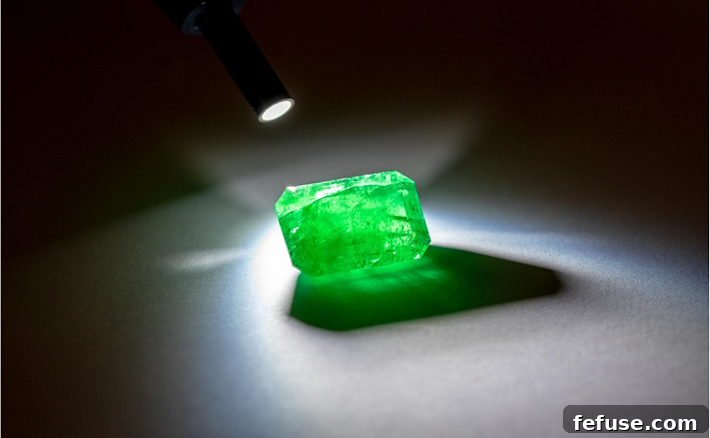
While lab-grown emeralds are chemically and physically identical to natural emeralds, their distinct origins lead to several key differences that are important for consumers to understand. Identifying these differences often requires advanced gemological equipment and expertise, as the similarities far outweigh the discernible distinctions.
Clarity and Purity: A Pristine Beauty
One of the most significant advantages of lab-grown emeralds is their superior clarity. Unlike natural emeralds, lab-grown emeralds are typically free from the numerous inclusions and internal fractures that are characteristic of their mined counterparts. Natural emeralds grow in uncontrolled, dynamic geological environments, where various minerals and gasses can become trapped within the crystal structure as it forms. These inclusions, often referred to as “jardins” (French for garden), are unique fingerprints of a natural emerald’s journey, but they can also affect its transparency and structural integrity. Lab-grown emeralds, created in controlled laboratory conditions, are meticulously engineered to minimize these internal flaws, resulting in gems that are often “eye-clean” and exhibit exceptional brilliance. This pristine clarity makes them highly desirable for those seeking a flawless appearance.
Enhanced Durability for Everyday Wear
The presence of inclusions and fractures in natural emeralds can make them inherently weaker and more brittle. These internal flaws act as points of weakness, making natural emeralds more susceptible to chipping or breaking when subjected to impacts or pressure. This characteristic has often made natural emeralds a gemstone requiring careful handling. In contrast, lab-grown emeralds, with their significantly reduced number of inclusions, tend to be more durable and robust. Their structural integrity is generally superior, allowing them to withstand more pressure and wear without easily getting damaged. This enhanced durability makes lab-grown emeralds an excellent choice for everyday jewelry, offering peace of mind to the wearer.
Perfect Color Consistency and Customization
The color of a natural emerald is influenced by the precise quantity and distribution of trace elements, primarily chromium, vanadium, and iron, within its geological formation. Because these conditions vary wildly across different mining locations and even within the same mine, the shade of green for natural emeralds is rarely constant. They can range from light yellowish-green to deep bluish-green. While these variations are part of a natural emerald’s charm, they can make it challenging to find perfectly matched pairs or sets.
The color shade for lab-grown emeralds, however, is precisely controlled and independent of external geological factors. Scientists can meticulously adjust the chemical environment during growth to produce a consistent and vivid green color. This allows for the creation of emeralds with a highly desirable, saturated hue, and can even be tweaked to meet specific customer preferences or to perfectly match a desired shade. Most lab-grown emeralds are intentionally designed to exhibit a vibrant, rich green, which is often highly sought after in the market.
Cost-Effectiveness: Accessible Luxury
The high cost of natural emeralds is primarily driven by their rarity, the extensive labor and risks associated with mining, and the strong consumer demand fueled by perception and historical value. As naturally occurring deposits dwindle and mining becomes more challenging and expensive, prices continue to climb. Lab-grown emeralds, in stark contrast, are significantly more affordable and readily available. Their controlled production eliminates the uncertainties and high costs of mining, allowing them to be offered at a fraction of the price of comparable natural stones. Given that the intrinsic differences between the two types of emeralds are negligible to the naked eye and only detectable by trained gemologists with specialized equipment, choosing a lab-grown emerald presents a compelling opportunity to acquire stunning, genuine emerald jewelry without the exorbitant cost.
Environmental and Ethical Considerations
Beyond cost, the environmental and ethical impact of gemstone sourcing is an increasingly important factor for consumers. Traditional emerald mining often involves significant environmental disruption, including deforestation, soil erosion, and water pollution. It can also be associated with challenging labor conditions and conflict minerals in certain regions. Lab-grown emeralds offer a more sustainable and ethical alternative. Their production has a considerably smaller environmental footprint, requiring less land, water, and energy compared to large-scale mining operations. Furthermore, the controlled laboratory environment eliminates concerns about unfair labor practices, dangerous working conditions, or contributing to regional conflicts. For environmentally conscious and ethically minded consumers, lab-grown emeralds provide a guilt-free way to enjoy the beauty of this magnificent gemstone.
Choosing Your Emerald: Making an Informed Decision
The decision between a lab-grown and a natural emerald often comes down to personal priorities, budget, and values. If you are seeking a gem with a unique geological history, the romance of being formed deep within the Earth, and are prepared for a higher price point and potential inclusions, a natural emerald might be your preference. These are often cherished for their rarity and individual character.
However, if your priorities include affordability, superior clarity, enhanced durability, consistent color, and a commitment to environmental and ethical sourcing, then a lab-grown emerald is an excellent choice. It offers identical beauty and chemical composition without the premium price or the environmental and social impacts associated with traditional mining. Many find the idea of owning a flawless, vibrant emerald at a more accessible price point incredibly appealing, especially for engagement rings or daily wear jewelry.
Caring for Your Emerald Jewelry
Regardless of whether your emerald is natural or lab-grown, proper care is essential to maintain its beauty. Emeralds are generally softer than diamonds and rubies (ranking 7.5 to 8 on the Mohs scale of hardness) and should be protected from harsh blows. Avoid exposing them to extreme temperature changes and harsh chemicals, as these can potentially damage the stone or its setting. Clean your emerald jewelry gently with warm water, mild soap, and a soft brush. Ultrasonic cleaners and steam cleaners are generally not recommended for emeralds, especially natural ones with inclusions, as vibrations can exacerbate fractures.
Conclusion: Embracing the Future of Emeralds
Lab-grown emeralds are unequivocally in no way inferior to natural emeralds in terms of their inherent beauty, chemical makeup, or physical properties. They look just as stunning, if not more so due to their enhanced clarity, as their naturally mined counterparts. The rise of lab-grown emeralds represents a significant leap forward, offering consumers an accessible, ethical, and equally beautiful alternative to traditional gemstones. When you choose to wear a lab-grown emerald, you do not need to be shy about it. On the contrary, you can proudly showcase a gem that represents cutting-edge science, responsible sourcing, and exceptional value. The differences between lab-grown and natural emeralds are so subtle that, to the untrained eye, they are virtually indistinguishable. This means you can enjoy the same captivating allure and timeless elegance of an emerald, confident in its quality and origin, knowing that you’ve made a smart and conscious choice.