
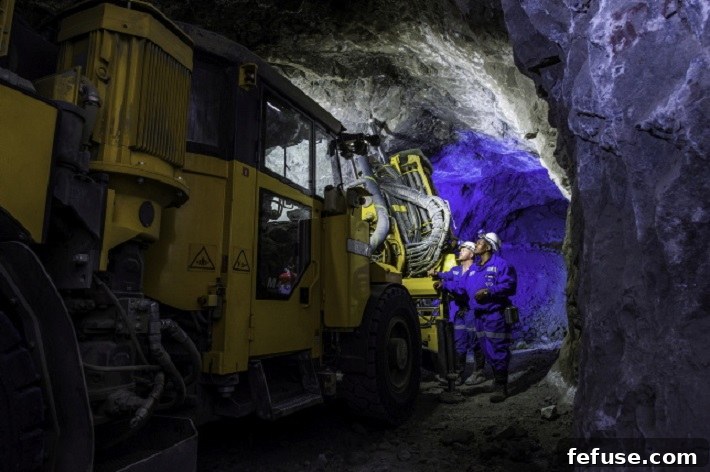
The South African diamond mining landscape is witnessing a notable transformation with the recent acquisition of Petra Diamonds’ Koffiefontein mine by Stargems, a Dubai-based rough diamond trader that has significantly expanded its global footprint. This strategic transaction, finalized for a nominal cash consideration, marks a pivotal moment for both companies and casts a spotlight on the future trajectory of diamond extraction in the region. The Koffiefontein mine, a historic and significant asset in South Africa’s Free State province, had been on care and maintenance since November 2022, following a period of operational challenges and financial losses under Petra Diamonds’ stewardship. Stargems’ decisive move to take over this legacy mine not only signals its ambitious growth strategy within the mining sector but also underscores a profound commitment to revitalizing operations and addressing critical environmental responsibilities associated with such an asset.
Stargems Takes the Reins at Koffiefontein: A Strategic Acquisition
In a move that reverberated through the international diamond industry, Stargems officially acquired the mothballed Koffiefontein mine from Petra Diamonds. The deal, announced on Monday, April 8th, by Petra CEO Richard Duffy, effectively transfers ownership and operational responsibility of the long-standing diamond deposit. While the exact nominal cash consideration remains undisclosed, a key and highly significant component of the agreement stipulates that Dubai-based Stargems will assume all environmental rehabilitation liabilities and ongoing care and maintenance costs associated with the mine. This aspect is particularly crucial, as it relieves Petra Diamonds of substantial future financial obligations previously earmarked for the mine’s closure and post-mining responsibilities. The acquisition is not merely a transfer of assets but a strategic realignment, aiming to inject new life into an operation that, despite its rich history and substantial resource base, had become a drain on its former owner’s balance sheet. Stargems’ proven track record in various segments of the diamond value chain positions them uniquely to undertake this challenging yet potentially rewarding venture.
Petra Diamonds’ Strategic Divestment and Financial Prudence
For Petra Diamonds, the sale of Koffiefontein represents a calculated strategic divestment, allowing the company to streamline its portfolio and concentrate resources on its core, more profitable assets. Petra had originally acquired the Koffiefontein deposit from the venerable De Beers in 2007, operating it for over a decade before making the difficult decision to place it on care and maintenance in late 2022 due to persistent financial losses and mounting operational complexities. The mine’s anticipated end-of-life was projected for 2025, a timeline that prompted Petra to critically reassess its long-term viability and contribution to the company’s overall strategy. In its interim results for H1 FY 2024, Petra Diamonds had transparently disclosed setting aside a substantial $23.1 million specifically for liabilities, costs, and commitments associated with Koffiefontein. The successful sale to Stargems, therefore, not only transfers the operational burden but also significantly mitigates these substantial future financial outlays, thereby bolstering Petra’s financial position and enhancing its strategic flexibility for future growth and investment in other projects. Richard Duffy, Petra’s CEO, expressed profound satisfaction with the agreement, emphasizing its potential for sustained economic activity in the region and highlighting Stargems’ perceived technical and financial capabilities to conduct operations responsibly for all stakeholders involved, including employees, communities, and environmental bodies.
The Legacy and Untapped Potential of Koffiefontein Mine
The Koffiefontein mine boasts a truly storied history within South Africa’s prestigious diamond sector, having been a significant and consistent producer for many decades, contributing substantially to the nation’s reputation as a global diamond powerhouse. Situated strategically in the Free State province, it has long been a vital cornerstone of the local economy, providing crucial employment opportunities and contributing significantly to regional development and infrastructure. Prior to the halt of operations in November 2022, the mine was indeed nearing the end of its life cycle as per Petra’s operational projections and geological assessments. However, a comprehensive 2021 assessment indicated a considerable gross resource base of 5.25 million carats still residing within the deposit. This substantial remaining resource base is undoubtedly a key and compelling factor in Stargems’ acquisition decision, strongly suggesting that with renewed investment, optimized operational strategies, and a fresh perspective, the mine could potentially extend its productive life far beyond its previous forecast or unlock significant value through different mining methodologies and advanced extraction techniques. The inherent challenges that led to its mothballing – including escalating operational costs, diminishing returns from older infrastructure, and the inherent complexities of deep underground mining – will now fall to Stargems to meticulously navigate, with the exciting opportunity to transform a significant legacy liability into a profitable and sustainable venture for the future.
Stargems’ Ambitious Foray into Diamond Mining: A New Era
Stargems, established four decades ago, has long been recognized as a prominent and respected player in the rough diamond trading arena, building a reputation for integrity and market acumen. Over the years, the Dubai-based entity has strategically diversified its operations, adeptly expanding into various segments of the diamond value chain including diamond manufacturing, wholesaling, sophisticated retailing, and specialized diamond tendering services. This robust, vertically integrated business model has provided Stargems with a comprehensive and unparalleled understanding of the entire diamond value chain, from its rawest form at the mine to the sparkling finished product in the market. However, a more recent and undeniably significant strategic pivot has seen Stargems actively acquiring substantial mining interests in South Africa, marking its deliberate and ambitious entry into the upstream segment of the global diamond industry. Since 2022, the company has been systematically building its mining portfolio within the country, demonstrating a clear long-term vision. Notable previous acquisitions include Rooipoort Holdings, which holds crucial mining rights for an alluvial diamond project strategically located near the historically rich diamond fields of Kimberley, and the infamous Jagersfontein mine. The Jagersfontein acquisition, in particular, came with its own unique set of complexities, having been closed by De Beers in the 1970s and experiencing a tragic tailings dam burst in September 2022, which resulted in fatalities and significant environmental damage. Stargems’ willingness to take on such challenging assets unequivocally demonstrates its long-term vision, its robust financial capacity, and a clear appetite for calculated risk within the intricate South African mining sector, viewing these acquisitions not just as assets but as profound opportunities for comprehensive rehabilitation, renewed ethical production, and sustainable development.
The Broader Context: South Africa’s Diamond Mining Landscape and Its Future
South Africa holds a distinguished and almost mythical place in the global diamond industry, renowned worldwide for its exceptionally rich kimberlite deposits and a history deeply intertwined with the discovery and production of some of the world’s most famous and magnificent diamonds. However, like many mature mining regions, the industry has faced its share of significant challenges, including the gradual depletion of easily accessible reserves, rising operational costs due to deeper mining, fluctuating global diamond prices influenced by market dynamics, and increasingly stringent environmental and social regulations that demand greater corporate responsibility. Many older mines, like Koffiefontein, inherently require substantial capital investment, innovative technological approaches, and fresh management strategies to remain economically viable and competitive in the modern era. The entry of new, dynamic, and well-resourced players like Stargems is therefore absolutely crucial for the revitalization and sustained growth of the sector. Such strategic acquisitions not only prevent valuable mines from being permanently abandoned and lost but also bring in much-needed fresh capital, introduce advanced technologies, and foster a renewed commitment to exploration and sustainable production. This invigorated approach can lead to the extension of mine lifespans, the creation of new and diversified employment opportunities, and sustained contributions to the national and provincial economies, particularly in regions heavily reliant on mining for the livelihoods of their communities and inhabitants.
Commitment to Environmental Responsibility and Sustainable Mining Practices
A critical and non-negotiable aspect of the Koffiefontein acquisition is Stargems’ explicit commitment to taking on the mine’s substantial environmental rehabilitation liabilities. In modern mining, environmental stewardship is not merely a compliance issue but a paramount ethical and operational imperative. Abandoned or poorly rehabilitated mines can pose significant long-term ecological damage, public health risks, and economic burdens on local communities and governments. The comprehensive transfer of these crucial responsibilities from Petra Diamonds to Stargems is a clear testament to the evolving and increasingly rigorous standards of corporate accountability and sustainability within the global mining sector. It strongly implies that Stargems is not only interested in the potential profits derived from diamond extraction but is also demonstrably prepared to invest significant resources in responsible closure, remediation practices, and long-term environmental management. This unwavering commitment aligns seamlessly with global best practices for sustainable mining, which emphasize minimizing environmental footprints, actively conserving biodiversity, efficiently managing water resources, and ultimately ensuring that post-mining landscapes are stable, non-polluting, and contribute positively to local ecosystems and the well-being of surrounding communities. The successful and exemplary rehabilitation of Koffiefontein under Stargems’ new and dedicated ownership could serve as a powerful model and inspiration for future mine revitalizations, setting a new benchmark not only in South Africa but also across the broader international mining landscape.
Economic Revival and Community Empowerment: A Glimmer of Hope
Petra CEO Richard Duffy’s statement about the deal providing “ongoing economic activity in the region” profoundly underscores a significant and far-reaching socio-economic benefit. The closure or mothballing of a major mine has devastating and cascading effects on local communities, leading to widespread job losses, business closures, a decline in local services, and a severe deterioration in living standards for countless families. The prospect of Koffiefontein restarting or significantly continuing its operations under Stargems’ revitalized ownership offers a much-needed beacon of hope for the local workforce and the surrounding communities that depend heavily on the mine. Reopening or expanding a mine typically involves direct job creation for skilled miners, engineers, technicians, and essential support staff, as well as substantial indirect employment generated through local suppliers, service providers, and a myriad of auxiliary businesses that thrive around mining operations. Furthermore, a revitalized mine can actively contribute to local infrastructure development, support vital skill training programs, and initiate community development projects, fostering profound economic empowerment and long-term stability in the region. Stargems’ investment in Koffiefontein is therefore not just a shrewd business transaction; it is a potential powerful catalyst for regional economic revival, profoundly transforming the lives of countless individuals and families who depend on the mine’s continued and responsible existence, creating a ripple effect of positive change.
Future Outlook and Strategic Implications for the Diamond Industry
The acquisition of Koffiefontein by Stargems is a bold, strategic, and forward-thinking move that unequivocally positions the Dubai-based company as a significant and emerging force in the global diamond mining sector. With its rapidly expanding portfolio of valuable South African diamond assets, Stargems is signaling its clear intent to become a fully integrated diamond enterprise, meticulously controlling more aspects of the intricate value chain from rough extraction at the mine face to polished sales in retail markets. This ambitious vertical integration strategy is meticulously designed to enhance profitability, secure crucial supply chains, and effectively mitigate market volatility that can impact other players. For the Koffiefontein region itself, this acquisition offers a much-needed renewed opportunity for economic prosperity, sustained employment, and community stability, injecting a fresh sense of optimism. For the broader South African diamond industry, it highlights the immense potential for existing, older assets to find new life and purpose under innovative, well-resourced, and responsible ownership. As Stargems navigates the complexities of restarting or optimizing operations at Koffiefontein, the industry will keenly watch to see if this acquisition sets a precedent for the successful revitalization of other mature diamond mines, thereby contributing significantly and enduringly to South Africa’s rich and lasting legacy as a premier diamond-producing nation on the global stage for generations to come.