
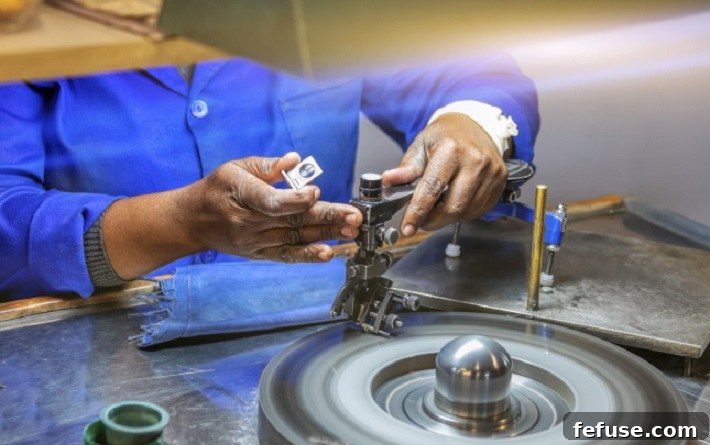
Surat’s Diamond Industry Grapples with Global Demand Slump: A Deep Dive into India’s Diamond Capital
Surat, India, globally renowned as the epicentre of the diamond cutting and polishing industry, is currently navigating one of its most challenging periods. The vibrant hub, responsible for processing over 90% of the world’s rough diamonds, is experiencing a significant downturn, marked by widespread temporary closures and reduced operational capacities across its numerous manufacturing units. This alarming trend is a direct consequence of a persistent and severe slump in global demand for polished diamonds, sending ripples of concern throughout the industry and impacting thousands of livelihoods.
Widespread Closures and Reduced Operations Hit Surat
Reports from the heart of India’s diamond capital indicate a substantial contraction in activity. Up to a third of Surat’s diamond units are reported to have either ceased operations temporarily or are implementing shortened work weeks. This unprecedented scale of disruption highlights the severity of the market conditions and the mounting pressure on manufacturers.
The situation was dramatically underscored by a recent announcement from Kiran Gems, one of India’s largest diamond manufacturers. The company, a prominent player in the industry, informed its approximately 50,000 polishers of a decisive 10-day production halt, effective from August 17th. This strategic pause was explicitly designed to address the critical issue of market imbalance, aiming to re-establish a healthier equilibrium between the existing supply of polished diamonds and the significantly diminished global demand. Such a move by a leading industry giant reflects a collective struggle to manage burgeoning inventories and prevent further price erosion.
The Scope of the Crisis: Small and Medium Businesses Bear the Brunt
The impact of this downturn is particularly acute for the smaller and medium-sized polishing operations that form the backbone of Surat’s diamond industry. Jagdish Khunt, President of the Surat Diamond Association, conveyed to the Hindustan Times newspaper the profound challenges facing these businesses. “The industry is facing a tough period. The slowdown has impacted many small and medium-sized businesses,” Khunt stated, painting a clear picture of the prevailing difficulties.
Out of an estimated 5,000 diamond cutting and polishing units in Surat, only about 3,500 are currently operational. This statistic reveals a concerning closure rate of nearly 30% of the industry’s productive capacity. Furthermore, many of the units that remain open are coping with the crisis by drastically reducing working hours, a measure that directly impacts the earnings and stability of their workforce. This strategy, while aimed at maintaining operations, inevitably leads to reduced income for diamond polishers and ancillary workers, creating significant economic strain on families and local communities.
Lingering Concerns Over Job Security and Livelihoods
The implications of this slowdown extend far beyond production figures and balance sheets. An unnamed diamantaire voiced serious concerns to the newspaper, highlighting the plight of many smaller operations that are now closing for two or even three days a week. The most pressing worry revolves around potential job losses. As the industry anticipates the reopening of diamond units after the traditional summer vacations, typically around August 28th, there is a palpable apprehension regarding the security of employment for thousands of skilled artisans and laborers. A prolonged slump could force many businesses to make difficult decisions, potentially leading to widespread layoffs and a significant social impact on a workforce already operating on often tight margins.
Decelerating Exports and Inventory Management
The current state of Surat’s diamond industry is mirrored in India’s official export figures for polished diamonds. The nation’s polished diamond exports have shown a consistent decline throughout the year, marking a worrying trend for an industry heavily reliant on international trade. June witnessed one of the most substantial drops, with exports plummeting by 26 per cent year-on-year to just $1.02 billion. This significant contraction in export value underscores the diminished global appetite for luxury goods and the inventory challenges faced by retailers worldwide.
In a proactive measure to stabilize the market and mitigate further price depreciation, manufacturers had drastically cut their rough diamond imports as early as last October. This coordinated effort, spearheaded by the Gem and Jewellery Export Promotion Council (GJEPC), was a direct response to 18 months of continuous price decline in the diamond market. By curbing the inflow of raw materials, the industry aimed to control the supply of polished diamonds and prevent an oversupply that would inevitably depress prices further. While a necessary step for market correction, such measures also indicate the deep-seated issues affecting the entire diamond value chain, from mining to retail.
Root Causes of the Global Diamond Slump
Several interconnected factors contribute to the current predicament faced by Surat’s diamond industry:
- Global Economic Slowdown: Major consumer markets, particularly the United States, Europe, and China, are experiencing economic headwinds, including high inflation, rising interest rates, and reduced consumer confidence. This translates directly into decreased discretionary spending on luxury items like diamonds.
- Inventory Overload: Post-pandemic, there was a surge in demand that led to increased production and stocking. However, as economic conditions shifted, retailers found themselves with excess inventory, leading to a reluctance to place new orders.
- Changing Consumer Preferences: There’s a subtle but growing shift in consumer priorities, with some opting for alternative luxury goods or experiences over traditional diamond jewellery. The rise of lab-grown diamonds also presents a new dynamic, though the core issue remains a dip in overall demand for natural stones.
- Geopolitical Tensions: Ongoing conflicts and trade uncertainties can disrupt supply chains and dampen consumer sentiment globally, further exacerbating the slowdown.
Surat’s Resilience and Future Outlook
Despite the current challenges, Surat’s diamond industry has a long history of resilience and adaptability. Over decades, it has overcome various market fluctuations, geopolitical shifts, and economic downturns, solidifying its position as the undisputed global leader in diamond processing. The inherent skill of its artisans, coupled with the industry’s robust infrastructure and entrepreneurial spirit, positions it to weather this storm, albeit with significant effort and strategic planning.
The coordinated actions by industry bodies like the GJEPC and major players such as Kiran Gems demonstrate a collective commitment to stabilizing the market. These steps, while painful in the short term for workers and businesses, are crucial for long-term health and sustainability. The industry is closely monitoring global economic indicators, hoping for a resurgence in consumer confidence and a renewed demand for polished diamonds, particularly during upcoming festive seasons in key markets.
In the interim, focus remains on efficient inventory management, exploring new market segments, and potentially diversifying product offerings. The ability of Surat’s diamond industry to innovate and adapt will be key to navigating these turbulent times and re-emerging stronger. While the immediate outlook presents significant hurdles, the long-term prospects for natural diamonds, with their enduring appeal and intrinsic value, remain cautiously optimistic, provided global economic conditions stabilize and consumer sentiment improves.
Conclusion
The current downturn in Surat’s diamond industry is a clear indicator of broader global economic challenges impacting luxury markets. With a substantial portion of its units facing closures or reduced hours, and exports continuing to fall, the industry is at a critical juncture. The strategic production halts and coordinated efforts to manage supply are vital steps in restoring market balance. As Surat, the world’s diamond capital, navigates this difficult period, the focus remains on protecting livelihoods, stabilizing prices, and preparing for an eventual recovery driven by renewed global demand for the timeless allure of diamonds.