
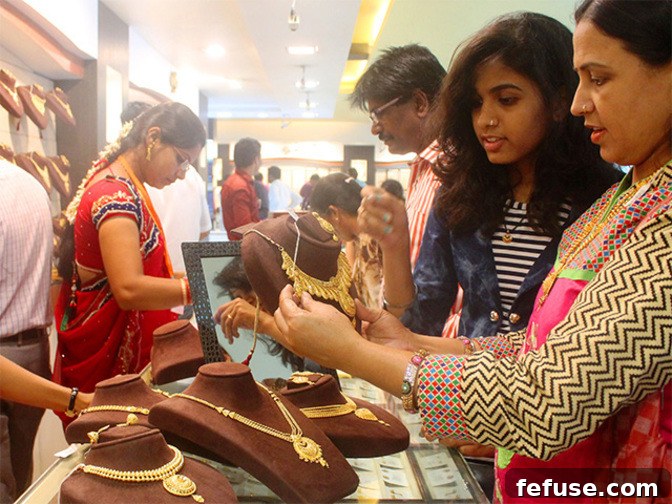
Global Gold Market Navigates Mixed Fortunes, India’s Wedding Season Shines Bright
The global physical gold market has recently presented a fascinating mosaic of regional demand, ranging from subdued interest in top consumer nations like India and China to robust stability and even growth in Singapore. This dynamic environment is, however, on the cusp of a significant transformation, primarily driven by India’s imminent peak wedding season. This culturally vital period is widely anticipated to usher in a powerful wave of renewed interest and purchasing activity for bullion in the coming weeks, acting as a crucial catalyst for the global precious metal market.
Gold’s intrinsic value transcends mere economic metrics in many cultures; it is deeply interwoven with social fabric and tradition. In India, the world’s second-largest consumer of the metal after China, gold is not just a commodity but an essential participant in wedding ceremonies. It is a symbol of prosperity, good fortune, and enduring love, making it a popular and often mandatory gift on such occasions. This profound cultural resonance ensures a consistent base demand that typically explodes during auspicious festive and wedding periods, providing a predictable boost to the market.
India’s Gold Market: Anticipation Builds for Wedding Season Surge
The Indian gold market is currently experiencing a period of heightened anticipation as the auspicious wedding season takes full swing. This annual phenomenon is a critical driver for the country’s jewellery sector, promising a significant uplift in consumer demand. Kumar Jain, a seasoned Mumbai-based jeweller, expressed strong optimism, noting, “The wedding season has started. In the next few weeks, there are many wedding dates, which will boost demand.” This sentiment underscores the cyclical nature of India’s gold market, where cultural events dictate peak periods of activity.
Understanding Premiums and Import Dynamics in India
Despite the current moderate pace of buying, dealers across India were observed charging a premium of up to $3 an ounce this week over official domestic prices. This premium has remained unchanged from the previous week, indicating a stable yet firm underlying market condition. It’s crucial to understand that the domestic price of gold in India inherently includes a 10 percent import tax, a significant levy that impacts the overall cost for consumers.
A key factor contributing to these persistent premiums, even in the absence of overwhelming immediate demand, is the recent tightening of gold import regulations. In October, the Indian government implemented stricter norms for jewellery exporters, stipulating that they could only import the yellow metal for the explicit purpose of re-export, not for sale in the domestic market. This policy adjustment has had a tangible effect on supply dynamics. A dealer from a private bank in Mumbai explained, “Gold imports by (jewellery) export houses have fallen sharply in the last few weeks. That’s why the market is in premium, despite moderate demand.” This governmental measure is part of a broader strategy to prevent the diversion of imported gold meant for value-added exports into the local market, thereby promoting domestic manufacturing and curbing potential illicit trade. The combination of a substantial import duty and these refined import rules creates a somewhat constrained supply environment. This, in turn, can lead to the formation of premiums when domestic supply struggles to keep pace with demand, even if that demand is moderate, particularly as the market gears up for the high-consumption wedding season.
China’s Gold Market: A Quiet Interlude
In contrast to India’s budding optimism, the precious metal market in China, the world’s leading gold consumer, remained notably quiet this week. Premiums in the Chinese market were recorded between $5 to $9 an ounce over benchmark rates, a slight decrease from the $6.50 to $10 range seen in the preceding week. This period of calm suggests a more cautious approach from Chinese buyers and investors, possibly influenced by domestic economic signals, fluctuating global prices, or a temporary shift in consumer priorities.
While gold’s role in Chinese culture differs from its pervasive presence in Indian weddings, it remains a highly valued asset for investment, wealth preservation, and gifting, especially during major festivals like the Lunar New Year. The observed quietude and marginal dip in premiums could be indicative of a market digesting recent price movements, or perhaps a temporary lull before renewed buying interest emerges, potentially tied to broader economic stimulus measures or shifting investor sentiment within the region.
Global Spot Gold Prices: Navigating Key Levels
On the international stage, benchmark spot gold prices demonstrated a modest upward trajectory, poised to register a small weekly gain. As of Friday, prices hovered around the $1,275.00 level, a positive movement, though still below the $1,284.10 mark reached nearly two weeks prior, which represented its highest point in almost two weeks. The global gold price is a sensitive indicator, often reflecting broader macroeconomic concerns such as inflation, interest rate expectations, currency fluctuations, and geopolitical stability.
Market analysts are keenly observing key price thresholds for insights into investor behavior. Ronald Leung, chief dealer at Lee Cheong Gold Dealers in Hong Kong, highlighted these critical levels: “Dips below the $1,270 level (toward the beginning of the week) spurred some buying, but the upside, (around the $1,280 level) limited purchases.” This observation points to a clear pattern: investors were eager to capitalize on lower prices, seeing the $1,270 level as an attractive entry point. However, as prices approached the $1,280 mark, buying momentum waned, suggesting profit-taking or increased selling pressure at higher valuations. These technical price levels often act as psychological barriers and support zones, guiding short-term trading decisions and reflecting the tug-of-war between bullish and bearish market forces.
Southeast Asian Gold Markets: A Tale of Two Cities
The gold markets in Southeast Asia presented a varied picture, with Hong Kong and Singapore showing distinct trends. In Hong Kong, a pivotal gateway for gold trade into mainland China and a regional financial hub, premiums remained largely stable, oscillating within the 60 cents to $1.20 range, mirroring the previous week’s figures. Joshua Rotbart, managing partner of J. Rotbart & Co in Hong Kong, noted the market’s overall subdued activity: “Premiums are quite low, and except for periodic large sales, the market is quiet.” This calmness suggests that Hong Kong’s market sentiment might be reflecting the quieter demand from its mainland counterpart or a period of consolidation among regional traders awaiting clearer market signals.
Singapore: A Beacon of Growing Gold Interest
In stark contrast, Singapore experienced a notable increase in gold demand, with premiums rising to 70-90 cents from the 50 cents recorded last week. This upward movement in premiums indicates a robust and growing buying interest from specific market segments. Loh Mun Chun, Director, Private Wealth at GoldSilver Central in Singapore, identified two primary drivers behind this surge: “There has been interest from two segments, the wholesalers and high net worth individuals, so it is still strong.”
Wholesalers are actively engaged in purchasing gold to replenish their stocks and meet the ongoing demands of jewellery production. This demand is partly fueled by a “spillover” effect from the recently concluded Diwali and Dhanteras festivals, which are significant gold-buying occasions in the Indian subcontinent and among the Indian diaspora. The influence of these festivals often extends beyond national borders, impacting regional supply chains. Concurrently, High Net Worth Individuals (HNWIs) in Singapore are demonstrating a strong appetite for gold. Their motivation is typically rooted in portfolio diversification, seeking a hedge against economic uncertainties, and preserving wealth through tangible assets. Singapore’s reputation as a secure financial hub, coupled with its sophisticated wealth management infrastructure, further enhances its attractiveness to these discerning investors, solidifying its position as a vibrant and dynamic market for physical gold.
The Enduring Allure of Gold and Future Market Projections
The disparate performance observed across global gold markets this week vividly illustrates the complex and multifaceted nature of gold demand. While certain regions experienced a temporary lull, others exhibited remarkable resilience and even growth. India’s deep-seated cultural affinity for gold, particularly amplified during its elaborate wedding season, remains a potent and predictable catalyst for demand. The intricate interplay between governmental policies, import regulations, and deeply ingrained cultural practices will continue to be instrumental in shaping regional market dynamics and price structures.
On a global scale, the price of spot gold remains subject to a confluence of macroeconomic factors, shifting investor sentiment, and evolving geopolitical developments. As central banks worldwide grapple with managing inflation, adjusting interest rates, and fostering sustainable economic growth, gold’s perennial role as a safe-haven asset is consistently reaffirmed. The discerning interest from high-net-worth individuals in Singapore, alongside the steady demand from wholesalers preparing for upcoming festive and ceremonial requirements, underscores gold’s enduring value as both a strategic investment and a coveted commodity. Looking forward, the coming weeks are set to unveil the true magnitude of the wedding season’s influence on India’s gold consumption, a trend that could potentially set a positive and buoyant tone for the broader Asian gold market and indeed, for the global precious metals sector.