
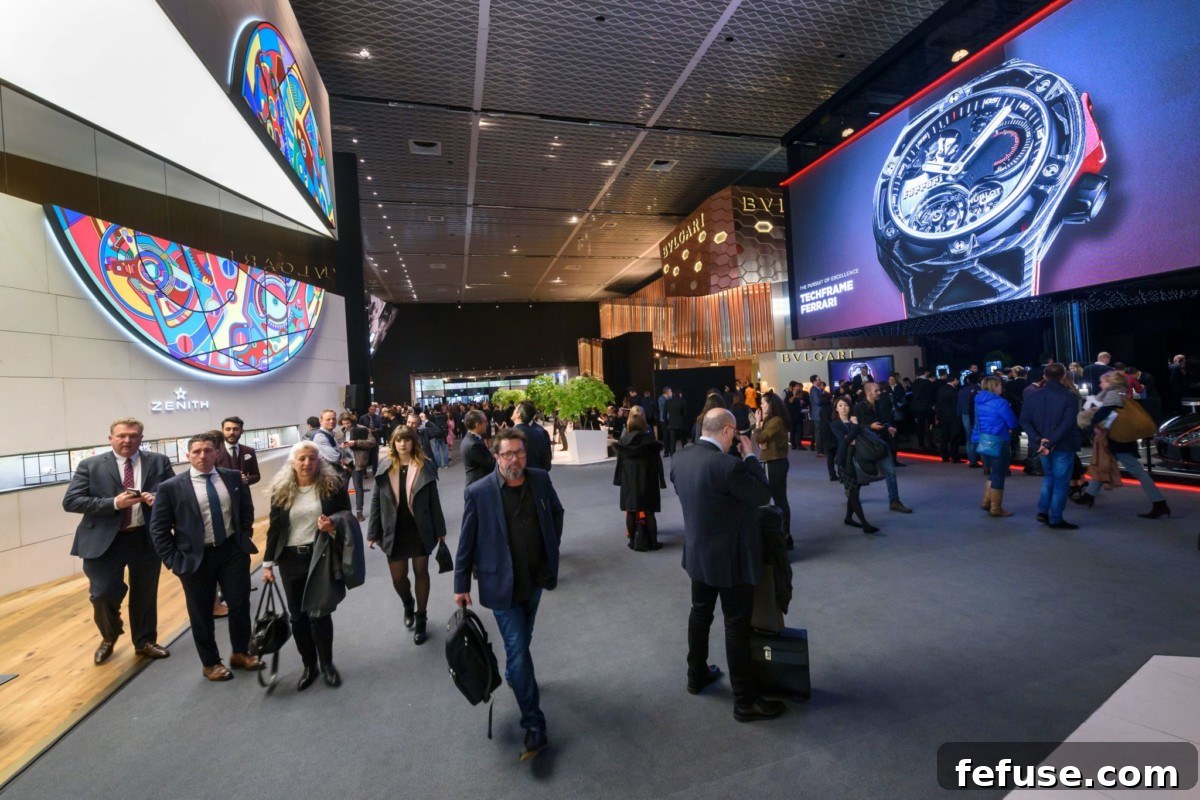
Unpacking Baselworld Hotel Deals: Are Visitors Really Getting a Fair Price?
Baselworld, the world-renowned watch and jewellery show, recently announced with considerable fanfare that it had secured “sparkling hotel deals” aimed at making attendance more affordable for visitors and exhibitors alike. This initiative was heralded as a step towards greater transparency and a commitment to enhancing the overall Baselworld experience. However, a deeper dive into these supposed deals, spearheaded by our sister publication WatchPro, reveals a stark reality that challenges the notion of genuine affordability. While some level of price transparency might have been introduced, the fundamental question remains: are attendees truly benefiting from fair pricing, or are they still facing eye-watering costs that could deter participation?
The Promise of Transparency: Baselworld’s Hotel Initiative
The MCH Group, the esteemed organiser behind Baselworld, publicly stated its success in forging an agreement with local hoteliers. This groundbreaking collaboration aimed to guarantee “transparent prices” across approximately two-thirds of Basel’s hotel market. The objective was clear: to curb the historically exorbitant accommodation costs that have plagued attendees during the event, often leading to frustration and budget overruns. By partnering directly with a significant portion of the city’s hospitality sector, Baselworld sought to present a united front, ensuring that visitors could book their stays with confidence, free from unexpected surcharges or last-minute price gouging. This move was framed as a pivotal step in rebuilding trust and making the prestigious event more accessible to a wider international audience.
The core of this partnership model revolved around setting maximum price caps for different hotel categories. The MCH Group expressed optimism that this proactive approach would create a “win-win scenario,” benefiting hoteliers through guaranteed occupancy and attendees through predictable, reasonable rates. The concept of transparency was key, promising an end to opaque pricing structures and empowering visitors with clear information before their arrival. However, as subsequent investigations reveal, the definition of “transparent” might not always equate to “affordable” or “fair,” especially when comparing event-period rates with standard off-peak pricing.
Unpacking the Deals: A Reality Check by WatchPro
Despite the official pronouncements and positive spin, WatchPro conducted an independent audit of the promised price caps, specifically targeting bookings for Baselworld week, scheduled from March 21-26 next year. The findings painted a less optimistic picture, suggesting that while price transparency might be present, the actual cost of attending the world’s premier watch and jewellery event remains exceptionally high. This investigation critically examined the rates offered by official partner hotels, contrasting them with prices for the same rooms during non-event periods, thereby exposing the significant premium still being charged to Baselworld visitors.
The Pinnacle of Luxury: Les Trois Rois
At the apex of Basel’s luxury accommodation stands Les Trois Rois, the sole 5-star establishment proudly listed among Baselworld’s ‘Official Partners’. Under the new agreement, this iconic hotel committed to offering its double rooms for a maximum rate of £1005 per night during the exhibition week. While this figure is a defined cap, the true cost implications become glaringly apparent when juxtaposed with its standard pricing. For instance, booking an identical double room just a week before or a week after Baselworld reveals a significantly lower price point of approximately £493 per night. This represents more than a 100% markup during the event, compelling visitors and exhibitors to pay more than double the standard rate for the same level of luxury and service. The premium placed on attending Baselworld, even at its most exclusive partner hotel, underscores the persistent challenge of high accommodation costs.
The inclusion of Les Trois Rois as an official partner was likely intended to showcase Baselworld’s commitment to securing deals across all segments, including the high-end. However, for many, a nightly rate exceeding £1,000, even for a 5-star experience, remains prohibitively expensive. It raises questions about how truly effective these “transparent prices” are in making the event more accessible, particularly for discerning attendees who may seek luxury but also expect reasonable value. The dramatic difference between event-week and off-peak pricing suggests that hoteliers, even under partnership agreements, continue to capitalize heavily on the immense demand generated by Baselworld.
The Mid-Range Conundrum: Hotel Wettstein
Moving down the scale, Hotel Wettstein, a 3-star property also designated as an official partner, agreed to cap its double room prices at no more than £463 per night during Baselworld week. For many attendees seeking more moderately priced options, a 3-star hotel is often a go-to choice. Yet, a comparison with its non-event rates again reveals a substantial disparity. The same room at Hotel Wettstein can be booked for as little as £125 per night in the week following the exhibition. This means visitors are paying nearly three times the standard price for a modest 3-star offering during the show. The value proposition becomes even more questionable when considering its online reputation; according to Tripadvisor, a significant 49% of reviews for Hotel Wettstein rank it as either “Average” or “Poor,” suggesting that the inflated price during Baselworld week does not necessarily correspond with an elevated guest experience.
The situation at Hotel Wettstein highlights a critical issue: the price inflation isn’t confined to luxury establishments but permeates the entire hospitality spectrum during Baselworld. Attendees seeking economical options are still faced with rates that are disproportionately high relative to the hotel’s normal pricing and perceived quality. This scenario puts a significant strain on the budgets of smaller exhibitors, independent buyers, or international visitors who are already managing substantial travel and participation costs. The “transparent prices” here merely serve to clarify the extent of the premium being charged, rather than offering a genuinely affordable alternative.
Baselworld’s Perspective: A “Win-Win” Scenario?
Despite the undeniable evidence of significantly inflated prices, Baselworld remains outwardly satisfied with the outcomes of its negotiations with the hospitality industry. Michel Loris-Melikoff, the managing director of Baselworld, expressed his pleasure, stating, “We are very pleased to see that many hoteliers not only embraced but also contributed towards the success of this initiative.” He further elaborated on the supposed success, adding, “Approximately two thirds of the hotel market agreed to participate, which is great news for our exhibitors and visitors, as hotels are an important factor in the Baselworld experience. With this partnership model, we were able to create a win-win scenario, combining interests of hoteliers, exhibitors and visitors.”
While the participation of two-thirds of the city’s hotels is indeed a notable achievement in terms of securing commitments, the interpretation of a “win-win scenario” warrants closer examination. From the hoteliers’ perspective, it is undoubtedly a win: guaranteed occupancy at substantially higher-than-average rates, even if capped, ensures robust profits during a peak period. For Baselworld, the “win” might lie in demonstrating an effort towards addressing a long-standing complaint and securing some form of price predictability, even if that predictability points to high costs. However, for exhibitors and visitors, the “win” is far less clear. Paying two to three times the standard rate for accommodation, regardless of transparency, can hardly be considered an optimal outcome, especially when considering the significant financial commitment already involved in attending such a major international event. The narrative of a “win-win” thus appears to be primarily advantageous to the organizers and hoteliers, while the attendees continue to bear a disproportionate share of the financial burden.
The Broader Impact: Who Bears the Cost?
The persistence of high accommodation costs during Baselworld has far-reaching implications, extending beyond just individual room rates. It impacts the accessibility of the show, the financial viability for smaller businesses, and ultimately, Baselworld’s long-term reputation and appeal in an increasingly competitive global market for luxury events.
Exhibitors and Visitors: The Financial Burden
For exhibitors, especially independent brands or emerging designers, the cost of participation in Baselworld is already substantial, encompassing booth rental, setup, staffing, and marketing. Adding significantly inflated accommodation costs for their teams can stretch budgets to breaking point. This financial strain can deter smaller enterprises from attending, thereby reducing the diversity and vibrancy of the show. Similarly, for individual visitors, collectors, and journalists, the combined expense of flights, exhibition tickets, and now highly priced hotels can make the journey prohibitive. This ultimately impacts attendance numbers and the overall reach of the event, potentially limiting its ability to attract new audiences and foster broader industry engagement.
The decision to attend Baselworld becomes a complex financial calculation. While the allure of the latest innovations in luxury watches and jewellery is undeniable, the practicalities of budget constraints often dictate participation. When a significant portion of the budget is allocated to basic necessities like accommodation, it leaves less room for other crucial investments, such as networking opportunities, dining, or even extending the stay to explore the region. This creates a barrier to entry, particularly for those from countries with less favorable exchange rates against the Swiss Franc, exacerbating the financial pressure.
Baselworld’s Image and Future Accessibility
In an era where major industry events face increasing scrutiny and competition, the issue of affordability is paramount. Baselworld has already navigated periods of significant change, with several high-profile brands departing in recent years. While efforts to modernize and enhance the show have been undertaken, persistent issues like high accommodation costs can erode goodwill and trust among its core audience. If attendees feel that they are being exploited, it can negatively impact their perception of the event as a whole, irrespective of the quality of the exhibits. A reputation for excessive pricing can make Baselworld seem elitist and unwelcoming, potentially alienating a segment of the market that is crucial for its long-term sustainability.
Ensuring future accessibility means addressing these core concerns head-on. A truly successful partnership model would prioritize making the event genuinely affordable, not just transparently expensive. This would involve more stringent caps, perhaps differentiated by the economic realities of different types of attendees, or a broader spectrum of truly budget-friendly official partner options. Without a more concerted effort to mitigate these costs, Baselworld risks being perceived as an exclusive luxury event whose logistical expenses outweigh its inherent value for many potential participants.
Exploring Alternatives: Beyond Official Partners
Faced with the high prices of official partner hotels, many savvy attendees are forced to explore alternative accommodation options. This often includes booking private apartments through platforms like Airbnb, or seeking hotels in surrounding towns and even across the border in Germany or France, necessitating daily commutes. While these alternatives might offer some financial relief, they often come with their own set of challenges. Commuting adds significant travel time and logistical complexity to an already packed schedule, detracting from the overall event experience. It also means less integration into the city’s vibrant atmosphere during the show, as attendees are often rushing to and from their distant accommodations.
Furthermore, relying on external platforms or distant locations can introduce uncertainty regarding quality, reliability, and security, which might not be covered by the official agreements. While these alternatives demonstrate the resourcefulness of attendees, their prevalence also underscores the fundamental problem: the official arrangements, despite their claims of transparency and benefit, are not adequately serving the diverse needs and budgets of all Baselworld participants. The fact that many are compelled to look outside the “official” ecosystem highlights a persistent gap in truly affordable and convenient accommodation solutions.
The Global Challenge of Event Accommodation
The situation in Basel is not entirely unique; major international events across the globe frequently grapple with the challenge of accommodating a surge in visitors. Cities hosting high-profile conferences, sporting events, or trade shows often witness a predictable spike in hotel prices driven by the fundamental economic principles of supply and demand. During such peak periods, hoteliers naturally seek to maximize their revenue, leading to significant price increases that can be frustrating for attendees.
However, what sets Baselworld apart is the explicit effort by the MCH Group to intervene and negotiate “transparent prices.” The question then shifts from whether prices will rise (which is expected) to whether the negotiated “transparency” actually translates into a fairer deal for the end-user. The evidence suggests that while the negotiation brought predictability, it did not significantly temper the substantial premium charged. This reflects a broader dilemma for event organizers: how to balance the commercial interests of host city businesses with the need to maintain accessibility and affordability for their audience. Effective solutions require a more collaborative and empathetic approach, understanding that the long-term success of an event is intrinsically linked to the satisfaction and financial comfort of its participants.
Moving Forward: Towards Truly Fair and Transparent Pricing
For Baselworld to truly foster a “win-win scenario” for all stakeholders, particularly its valuable exhibitors and visitors, a more robust and genuinely attendee-focused strategy for accommodation pricing is essential. While the current initiative represents a step towards transparency, it needs to evolve to deliver tangible benefits in terms of affordability.
Future negotiations could explore more aggressive price caps, perhaps tiered more granularly to reflect varying levels of hotel amenities and location. Furthermore, Baselworld could actively promote and even subsidize a wider array of truly budget-friendly options, potentially by partnering with hostels, guesthouses, or even by facilitating temporary accommodation solutions during the event. Investing in robust public transport links and incentivizing hotels slightly further afield could also broaden the range of accessible choices. The ultimate goal should be to ensure that no legitimate participant is deterred from attending due to prohibitive accommodation costs, thereby preserving Baselworld’s status as an inclusive and indispensable platform for the global watch and jewellery industry.
Ultimately, transparency alone is insufficient if the transparent prices remain exorbitantly high. The true measure of success for Baselworld’s hotel initiative will be its ability to provide not just clear pricing, but genuinely fair and accessible options that resonate with the diverse financial realities of its international audience. Only then can the event truly claim to have created a mutually beneficial environment for hoteliers, exhibitors, and visitors alike.
News Source: professionaljeweller.com