
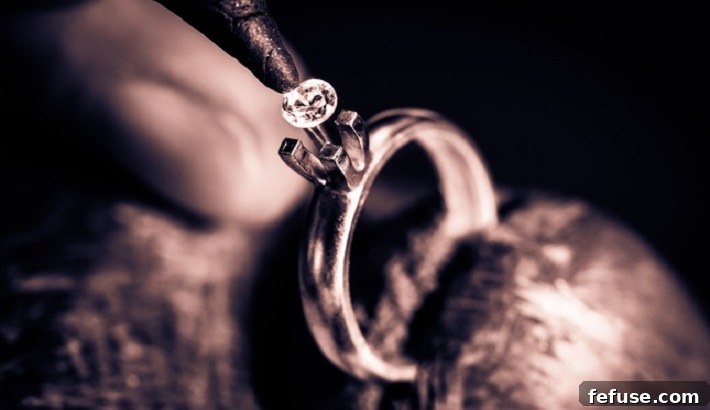
Unveiling Diamond Resilience: Jewelers Mutual and DDL Pioneer Lab-Grown Diamond Durability Research
In a significant move poised to enhance our understanding of diamond characteristics, Jewelers Mutual, a leading insurer in the jewelry industry, has generously donated seven meticulously selected lab-grown diamonds to the esteemed Diamond Durability Laboratory (DDL). This pivotal donation marks a critical juncture in a year-long collaborative research initiative aimed at thoroughly investigating the nature of damaged diamonds, encompassing both those naturally mined from the earth and their technologically advanced lab-grown counterparts. The overarching objective of this groundbreaking research is to develop a more robust and predictive model for assessing potential diamond damage that may occur during the normal course of wear and tear, ultimately benefiting consumers, manufacturers, and insurers alike.
The Genesis of a Crucial Partnership: Addressing a Knowledge Gap
The burgeoning popularity of lab-grown diamonds has transformed the jewelry landscape, offering consumers an ethical and often more accessible alternative to natural diamonds. While chemically, physically, and optically identical to their natural counterparts, questions surrounding their long-term durability, especially under daily wear conditions, have lingered without comprehensive scientific scrutiny. Jewelers Mutual, deeply entrenched in understanding the risks and realities of jewelry ownership, recognized this critical knowledge gap. Their commitment to policyholders and the broader industry spurred the collaboration with DDL, a specialized institution dedicated to the scientific analysis of diamond durability.
The donated diamonds provide a unique and invaluable dataset for this research. Ranging in size from a substantial 0.64 carats to an impressive 2.27 carats, each diamond had been previously set in an engagement ring and worn by a Jewelers Mutual policyholder. The wear periods varied considerably, from as short as 43 days to as long as two full years, offering a realistic spectrum of exposure to everyday conditions. This practical, real-world context of damage, rather than artificially induced stress, is what makes this particular collection of specimens so vital to the study.
Initial Observations Spark Deeper Inquiry
Upon initial examination of these worn and damaged lab-grown diamonds, gemologists at DDL made a compelling discovery: the observed damage patterns were distinctly different from those typically identified in natural, mined diamonds that had experienced similar wear. This preliminary finding is profoundly significant, suggesting that while lab-grown diamonds share the same chemical composition as natural diamonds (pure carbon in a cubic crystal lattice), subtle differences in their growth processes, internal structures, or even latent stresses might manifest in unique ways when subjected to external forces.
This realization immediately underscored the necessity for rigorous, in-depth evaluation. DDL has articulated plans for a complete and exhaustive assessment of each donated diamond. Through advanced gemological techniques, including high-resolution microscopy, spectroscopic analysis, and potentially micro-fracture testing, researchers aim to meticulously characterize the precise nature of the damage. This comprehensive study is anticipated to significantly deepen the industry’s collective understanding of lab-grown diamond durability, a facet of their properties that, until now, has not been explored with such scientific rigor and real-world application.
Why Does Diamond Durability Matter? Implications Across the Industry
Understanding diamond durability is not merely an academic exercise; it has far-reaching implications for multiple stakeholders within the jewelry ecosystem:
- For Consumers: Enhanced knowledge about the wear characteristics of lab-grown diamonds provides greater confidence and peace of mind. Informed purchasing decisions can be made, aligning expectations with actual performance. It also helps in understanding proper care and maintenance for their treasured pieces.
- For Jewelers and Retailers: A clearer understanding of durability allows jewelers to offer more accurate advice to their customers regarding selection, setting styles, and suitability for daily wear. It also aids in proper product description and managing customer expectations, fostering trust and loyalty.
- For Insurers (like Jewelers Mutual): Precise data on how lab-grown diamonds sustain damage informs more accurate risk assessments and policy development. This can lead to more equitable pricing for insurance premiums and streamlined claims processing, ensuring fair treatment for policyholders. It helps Jewelers Mutual fulfill its mission of protecting valuable jewelry.
- For Lab-Grown Diamond Manufacturers: Insights into common damage patterns can guide improvements in growth processes, cutting, and polishing techniques, leading to even higher quality and more resilient products.
- For the Gemological Community: This research contributes significantly to the scientific body of knowledge, providing empirical data to refine gemological classifications and testing standards for both natural and lab-grown diamonds.
The Scientific Edge of the Diamond Durability Laboratory
The Diamond Durability Laboratory is uniquely equipped to undertake this challenging research. Their expertise lies not just in identifying damage, but in understanding the underlying material science. This involves investigating factors such as: the internal stress within the diamond, the orientation of crystal planes relative to impact points, the presence of microscopic growth features unique to lab-grown processes (e.g., specific growth sectors or metallic inclusions from HPHT synthesis), and how these might influence fracture initiation and propagation.
By comparing the damage in lab-grown diamonds to a baseline understanding of natural diamond damage, DDL aims to characterize specific vulnerabilities or strengths. For instance, do certain growth methods result in tougher or more brittle stones? Are specific facets more prone to chipping than others? Answers to these questions will be invaluable.
Speaking on the significance of the donation and the ongoing research, DDL CEO Thomas Gelb expressed profound gratitude, stating, “We appreciate this donation from Jewelers Mutual and we are excited to use the stones to further our research and contribute to the industry knowledge about synthetic diamonds.” Gelb’s statement underscores the collaborative spirit and the shared vision of advancing comprehensive understanding within the diamond sector.
Towards a Predictive Model for Diamond Damage
The ultimate aspiration of this year-long collaboration is to move beyond simply identifying damage to creating a more predictive model. Imagine a future where, based on a diamond’s origin, characteristics, and intended use, gemologists and insurers could better anticipate its potential susceptibility to certain types of damage. Such a model would revolutionize how diamonds are selected, set, and insured.
This predictive capability would empower consumers to make more informed choices, perhaps opting for a more robust setting for a diamond perceived to be slightly less resistant to chipping, or understanding the implications of daily active wear on a specific stone. For manufacturers, it could lead to innovations in diamond cutting and finishing that enhance durability. For insurers, it means a more precise risk assessment, allowing for tailored policies that accurately reflect the item’s inherent resilience.
The implications extend to the entire supply chain, fostering transparency and building even greater confidence in both natural and lab-grown diamonds as enduring symbols of beauty and commitment. This research serves as a testament to the industry’s continuous evolution and its dedication to scientific integrity and consumer protection.
The Evolving Landscape of Diamonds: Coexistence and Innovation
As the diamond industry continues to evolve, embracing both the timeless allure of natural diamonds and the innovative promise of lab-grown diamonds, research like that undertaken by Jewelers Mutual and DDL becomes increasingly vital. It champions an environment of transparency, scientific rigor, and shared knowledge. Rather than viewing the two diamond categories as competitive, this research helps to understand their distinct nuances, allowing them to coexist and cater to diverse consumer preferences with full disclosure and confidence.
The findings from this study are eagerly anticipated and are expected to become a cornerstone of future discussions on diamond quality, value, and longevity. It will contribute to standardizing how diamond durability is assessed and communicated, providing a clearer framework for the entire jewelry trade and the millions of individuals who cherish diamonds.
News Source: idexonline