
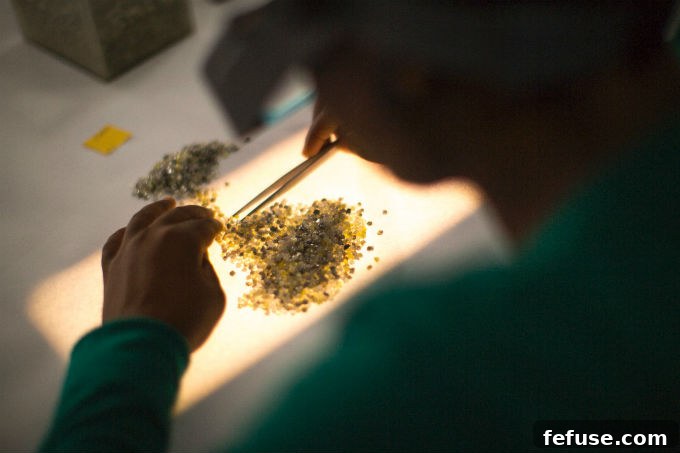
The global diamond industry closely monitors the performance of major players like the De Beers Group, and the sales figures for its 8th sales cycle of 2018 provided a nuanced picture of the market’s health. De Beers, a world leader in diamond production, reported rough diamond sales totaling US$475 million for this period. While a substantial figure, it marked a slight decline compared to the US$503 million achieved in the preceding 7th cycle of 2018.
This marginal dip in sales for Cycle 8, which encompasses both global Sightholder and auction sales, prompted industry observers to examine the underlying market dynamics. Bruce Cleaver, CEO of the De Beers Group, offered insights into the prevailing conditions, acknowledging specific headwinds while maintaining an optimistic outlook on overall demand. Cleaver highlighted that “the rupee-dollar exchange rate has impacted demand for lower value categories,” identifying a key factor influencing the slight downturn. Despite this, he emphasized the continued strength in broader market sentiment, stating, “we continue to see steady overall demand for De Beers Group rough diamonds, reflecting ongoing consumer demand for diamond jewellery in the US.” This statement underscored the resilience of core consumer markets, particularly the United States, in driving the appetite for diamond jewellery.
De Beers: A Pillar of the Global Diamond Industry
De Beers Group stands as an undisputed giant in the world of diamonds, boasting a history spanning over a century. From its origins in South Africa’s diamond fields, the company has evolved into a fully integrated diamond enterprise involved in exploration, mining, rough diamond sales, and even retail. Its operations span across Botswana, Canada, Namibia, and South Africa, making it one of the largest diamond producers by value. The company’s unique Sightholder system, where selected clients (Sightholders) are invited to purchase rough diamonds directly from De Beers at ten sales events (cycles) each year, is a cornerstone of its distribution strategy. This system ensures a steady supply chain and fosters long-term relationships within the diamond cutting and polishing industry. De Beers’ market insights and sales performance are often considered a bellwether for the health of the entire diamond sector, influencing sentiment among miners, manufacturers, and retailers alike.
Detailed Analysis of Cycle 8 Sales and Market Influences
The US$475 million provisional sales value for Cycle 8 2018, recorded as of October 15, 2018, offers a snapshot of the market’s performance during that specific period. The decline from Cycle 7’s US$503 million, though not drastic, indicated certain pressures on the rough diamond market. As articulated by Bruce Cleaver, the primary culprit for this softening was the fluctuation in the rupee-dollar exchange rate. India plays a critical role in the global diamond pipeline, being the world’s largest cutting and polishing center for rough diamonds. A weaker Indian Rupee against the US Dollar makes rough diamond imports more expensive for Indian manufacturers, consequently impacting their profitability and their purchasing power for lower-value rough diamond categories. This directly affects demand for these specific segments, leading to reduced sales volumes and potentially lower prices for certain goods. The sales figures quoted by De Beers are always on a consolidated accounting basis, prior to the capitalisation of pre-commercial production revenues at its Gahcho Kué mine, which is a significant new source of high-quality diamonds in Canada.
Furthermore, auction sales, which complement the Sightholder sales, are meticulously tracked, with the sum of all sales between the end of the preceding cycle and the end of the noted cycle being included in the reported figures. This comprehensive approach ensures that all rough diamond sales by De Beers are accounted for, providing a clear picture of their market performance. The slight reduction in sales, therefore, was not a sign of a broader systemic collapse but rather a targeted impact from specific economic factors affecting a crucial segment of the industry’s supply chain.
The Global Diamond Market in 2018: A Landscape of Resilience and Challenges
The year 2018 presented a dynamic environment for the global diamond market. While the overall sentiment remained cautiously optimistic, several factors influenced demand and supply. Economic growth in key consumer markets like the United States continued to fuel demand for luxury goods, including diamond jewellery. However, geopolitical uncertainties, trade tensions, and currency volatility in other regions introduced elements of unpredictability. The diamond pipeline, from mining to retail, is highly interconnected, meaning that fluctuations in one part of the world can have ripple effects globally. For instance, a strong US dollar generally benefits US consumers buying imported goods, but a weaker currency in other major markets can dampen local demand and import capabilities. The market was also grappling with the increasing presence of lab-grown diamonds, though at this time, their impact on the natural rough diamond market was still being assessed and largely considered distinct by major players like De Beers.
De Beers, through its extensive marketing campaigns, notably “A Diamond Is Forever” and later initiatives, has historically played a pivotal role in shaping consumer perceptions and demand for natural diamonds. In 2018, continued investment in generic diamond marketing by industry bodies, often supported by De Beers, aimed to reinforce the emotional and intrinsic value of natural diamonds, particularly among newer generations of consumers. This ongoing effort was crucial in sustaining the “steady overall demand” observed by Cleaver, even amidst regional economic pressures.
Consumer Demand: The Unwavering US Market and Evolving Preferences
The US market consistently remains the largest consumer of diamond jewellery globally, making its robust demand a critical indicator for the health of the entire industry. Bruce Cleaver’s direct reference to “ongoing consumer demand for diamond jewellery in the US” underscored its unwavering strength in 2018. Strong economic indicators in the US, including stable employment rates and rising consumer confidence, translated into healthy discretionary spending. American consumers continued to embrace diamonds for engagements, anniversaries, and self-purchases, solidifying the market’s importance.
Beyond the US, other significant markets like China and India were also undergoing transformations. China, while a growing market, was experiencing a shift towards more sophisticated tastes and a greater emphasis on branded luxury. India, despite its currency challenges, maintained its deep cultural affinity for gold and diamond jewellery, often driven by wedding and festive seasons. However, the purchasing power of these markets for certain diamond categories could be sensitive to economic shifts and exchange rates, as demonstrated by the rupee-dollar situation. Consumers globally were also becoming more discerning, prioritizing ethical sourcing, transparency, and unique designs, pushing the industry to adapt its offerings and communication strategies.
Challenges and Opportunities Shaping the Future of Diamonds
The diamond industry, like any other luxury sector, is perennially faced with a set of challenges and opportunities. Exchange rate volatility, as seen with the rupee-dollar scenario, remains a persistent challenge, directly impacting the profitability of key manufacturing centers and thus the demand for rough diamonds. The rise of lab-grown diamonds, while a separate product category, continues to be a topic of discussion within the natural diamond industry, prompting natural diamond producers to redouble their efforts in marketing and differentiation based on rarity, heritage, and intrinsic value. Economic uncertainties in major global economies can also lead to reduced luxury spending, posing a threat to overall demand.
However, significant opportunities also exist. Emerging markets, particularly in Southeast Asia and parts of Africa, represent untapped potential for diamond jewellery consumption as their middle classes expand. The increasing desire for personalized and unique jewellery offers avenues for innovation in design and craftsmanship. Digitalization and e-commerce continue to transform how diamonds are marketed and sold, providing brands with new ways to reach consumers globally. Furthermore, the commitment to responsible sourcing and sustainability across the diamond pipeline resonates strongly with modern consumers, offering an opportunity to build trust and enhance the industry’s reputation. De Beers, with its significant investment in marketing and its ethical sourcing initiatives, is well-positioned to capitalize on these evolving trends and maintain its leadership in the diamond market.
De Beers’ Strategic Outlook and Market Positioning
De Beers operates with a strategic long-term vision, acknowledging the cyclical nature of the diamond market. Its robust sales cycles are designed to ensure consistent supply to Sightholders, fostering stability across the pipeline. The company’s continued investment in exploration and mining, such as the full ramp-up of its Gahcho Kué mine, demonstrates its commitment to securing future rough diamond supply. Furthermore, De Beers has diversified its portfolio, including venturing into retail with its ‘Forevermark’ brand, which guarantees responsibly sourced and high-quality diamonds, and even exploring opportunities in lab-grown diamonds through its Lightbox Jewelry brand (though Lightbox typically focuses on the fashion jewellery segment rather than traditional engagement rings, maintaining a clear distinction from natural diamonds).
By proactively addressing market challenges, investing in technology and innovation, and reinforcing the inherent value proposition of natural diamonds, De Beers aims to sustain its dominant position. The company’s ability to navigate currency fluctuations, adapt to changing consumer preferences, and maintain strong relationships with its Sightholders will be crucial for its continued success. The slight dip in Cycle 8 sales for 2018 was a minor blip against a backdrop of overall stable demand, reinforcing the industry’s resilience and De Beers’ strategic agility in a complex global market.
In conclusion, while De Beers’ rough diamond sales for Cycle 8 2018 saw a minor decrease, primarily attributed to the rupee-dollar exchange rate affecting lower-value categories, the overarching message from the De Beers Group remained one of confidence. The enduring strength of consumer demand for diamond jewellery in key markets, especially the US, provided a stable foundation. This performance highlighted the nuanced interplay of global economic factors and regional market dynamics within the diamond industry, underscoring De Beers’ continued influence and adaptive strategies in maintaining a robust global market for natural diamonds.
News Source: jewellerynet.com