
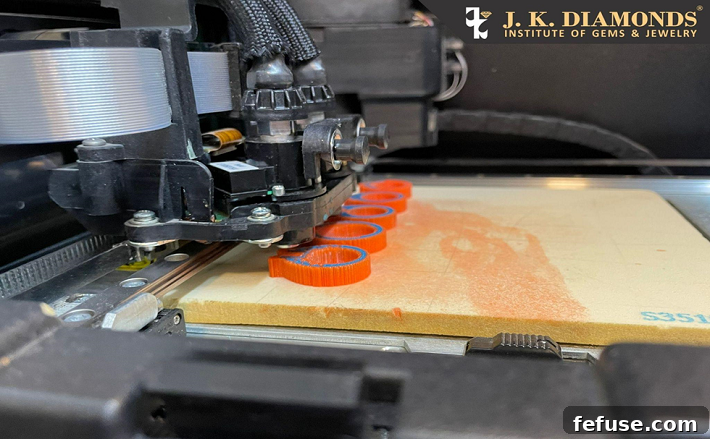
The Dawn of a New Era: 3D Printing’s Transformative Impact on Jewelry Manufacturing
In an age defined by rapid technological advancements, the manufacturing landscape is undergoing a profound metamorphosis. At the forefront of this revolution is 3D printing, a groundbreaking technology that empowers industries to innovate, create, and produce with unprecedented precision and efficiency. Far from being confined to industrial sectors, this new form of manufacturing has permeated and fundamentally reshaped nearly every industry imaginable, and the ancient, intricate world of gems and jewelry is no exception. For contemporary jewelers and aspiring designers alike, staying abreast of these fast-paced changes is not merely an advantage but an absolute necessity for thriving in a competitive global market.
For centuries, the art of jewelry making was synonymous with time-honored techniques, often involving the meticulous crafting of wax molds for a proposed design, followed by the labor-intensive process of casting these molds in precious metals. This conventional method, steeped in tradition and artisanal skill, has undeniably stood the test of time, perfecting itself through generations of craftsmanship and gradual technological enhancements. However, as design aspirations grew bolder and demand for increasingly intricate and complex pieces surged, the inherent limitations of purely manual efforts became apparent. Achieving flawless detailing and consistent finishing on highly elaborate designs presented a significant challenge, often pushing the boundaries of human dexterity and patience. The nuanced complexities demanded by modern aesthetics and consumer preferences often reached a point where manual fabrication struggled to deliver the desired level of perfection and reproducibility.
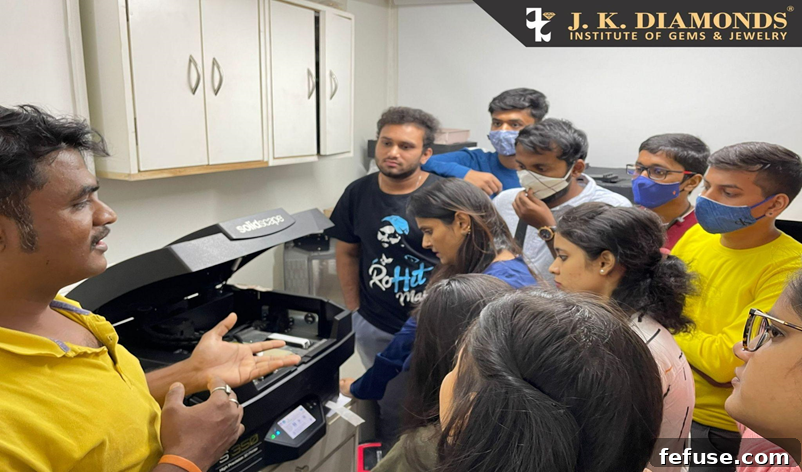
Unleashing Unprecedented Creativity: The Power of 3D Printing in Jewelry Design
To transcend the traditional barriers and elevate the craft of jewelry manufacturing, 3D printing has emerged as an undeniable game-changer. The intrinsic advantage of machines lies in their ability to execute tasks with unparalleled precision and consistency, and 3D printing technology embodies this principle perfectly. These sophisticated machines are meticulously engineered to produce intricate patterns and detailed structures that are first conceived and refined within advanced CAD (Computer-Aided Design) software environments. This digital design phase empowers designers to visualize, modify, and perfect their creations in a virtual space before any physical material is committed.
The true magic unfolds when CAD seamlessly integrates with CAM (Computer-Aided Manufacturing). This powerful duo represents the quintessential partnership in modern manufacturing, where the digital blueprint from CAD directly informs the automated production process of CAM. Together, CAD and CAM form a comprehensive package that possesses the transformative power to turn imaginative concepts into tangible masterpieces forged from precious metals such as lustrous gold, brilliant silver, and even resilient platinum. This technological synergy has liberated jewelry designers from many of the constraints of manual production, granting them unprecedented freedom to explore new creative frontiers, experiment with complex geometries, and push the boundaries of artistic expression. The advent of 3D printing technology has thus heralded an era where creativity in jewelry design knows fewer limits, paving the way for innovations that were once considered impossible.
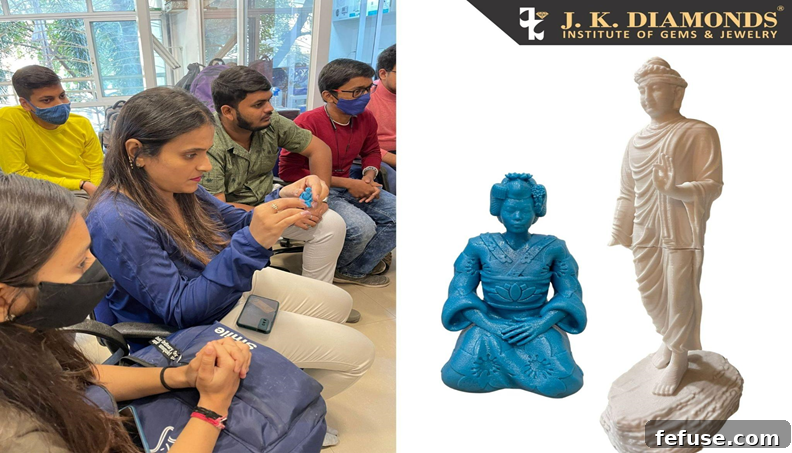
Redefining Possibilities: Why 3D Printing is Essential for Modern Jewelers
The shift towards 3D printing in jewelry manufacturing is not merely a trend; it’s a fundamental evolution driven by tangible benefits that address the shortcomings of conventional methods and open up a universe of new possibilities. One of the most significant advantages is the unprecedented **design freedom** it offers. Jewelers can now create designs with complex geometries, intricate filigree, delicate latticework, and internal structures that would be either prohibitively difficult or entirely impossible to achieve by hand. Organic forms, interlocking components, and highly personalized motifs can be rendered with absolute fidelity, translating the most imaginative visions directly into physical models.
Furthermore, 3D printing dramatically enhances **speed and efficiency**. The process of creating a physical prototype from a digital design, known as rapid prototyping, is significantly faster than traditional wax carving. This acceleration allows designers to iterate on concepts quickly, make swift revisions, and bring new collections to market at an accelerated pace. What once took days or even weeks of skilled manual labor can now be accomplished in a matter of hours, drastically reducing lead times and allowing jewelers to respond more agilely to market demands and fashion trends.
**Accuracy and consistency** are also paramount benefits. Human hands, no matter how skilled, are susceptible to minor variations. 3D printers, conversely, produce models with micron-level precision, ensuring that every detail is exact and every replicate is identical to the digital design. This consistency is crucial for creating collections where uniformity is desired and significantly reduces the potential for costly errors and material waste often associated with manual craftsmanship. Moreover, the ability to print highly detailed resin or wax models for casting means less manual finishing work is required on the final metal piece, streamlining the entire production pipeline.
The technology also supports **material versatility** indirectly. While 3D printers typically print in resins or wax, these models are then used in the lost-wax casting process to produce pieces in a wide array of precious metals. The perfection of the printed model ensures a higher quality cast, regardless of whether it’s gold, silver, platinum, or palladium. Lastly, 3D printing facilitates **mass customization**. In an era where consumers seek unique, personalized items, 3D printing enables jewelers to offer bespoke designs at a scale and speed previously unimaginable, catering to individual client specifications without incurring exorbitant costs or extensive production delays. These cumulative advantages solidify 3D printing’s role as an indispensable tool for breaking through the limitations of manual manufacturing and propelling the jewelry industry into its modern digital age.
Cultivating Future Leaders: Practical Education in the Age of Digital Manufacturing
In a world where technology constantly redefines industries, the importance of practical, hands-on education cannot be overstated, especially for professions rooted in both artistry and precision like jewelry design. Recognising this critical need, JK Diamonds Institute is committed to fostering a learning environment that is practical, real-time, and deeply connected to industry advancements. Their philosophy is centered on empowering students with not just theoretical knowledge but also the tangible skills required to excel in the rapidly evolving landscape of jewelry manufacturing.
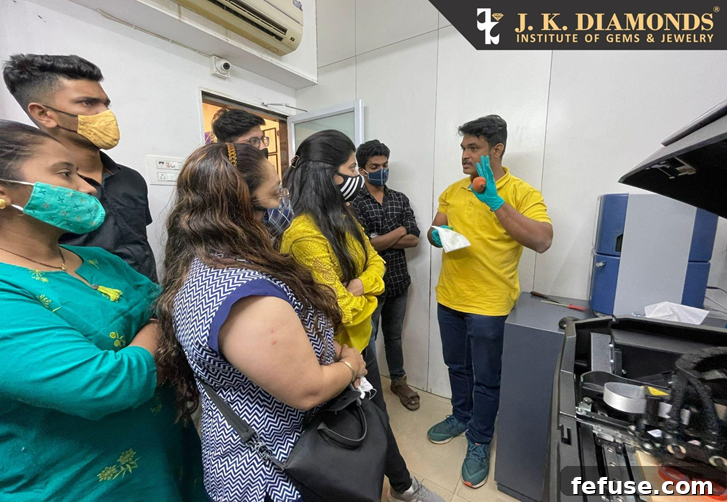
Embodying this commitment, the students of JK Diamonds Institute embarked on an illuminating field trip to a cutting-edge 3D Printing workshop located in Borivali. On the 5th of February, 2022, this experiential learning excursion provided an invaluable opportunity for students to delve deep into the innovative methodologies transforming the production of distinctive jewelry. During their visit, students gained firsthand insight into how 3D printing has fundamentally altered the process by which precious metals and gemstones are meticulously carved and shaped into exquisite pieces of jewelry. They witnessed the entire workflow, from the initial conceptualization in CAD software to the final transformation of digital designs into intricate 3D models ready for casting.
The experience proved to be profoundly captivating. Students were visibly fascinated by the advanced techniques and the previously unexplored avenues that 3D printing has opened up, not only in terms of boundless design possibilities but also in revolutionizing rapid manufacturing processes. This exposure illuminated the stark contrast between traditional limitations and the expansive creative freedom offered by modern technology. It became clear that industry leaders around the globe have not only recognized the immense potential of 3D printing but have also strategically adopted it as an integral and indispensable component of contemporary jewelry manufacturing operations. This forward-thinking approach ensures efficiency, precision, and the ability to meet the escalating demands for complex and personalized designs.
The visit reinforced a crucial educational principle: learning extends far beyond the confines of classrooms and textbooks. Effective practical learning, such as this immersive workshop experience, possesses the unique power to broaden one’s vision, deepen understanding, and equip individuals with the holistic skills necessary for comprehensive growth and success in their chosen field. By bridging the gap between academic theory and real-world application, JK Diamonds Institute is actively preparing its students to not just adapt to the future of jewelry manufacturing but to shape it.
Embracing Innovation: The Future of Jewelry Manufacturing is Here
The integration of 3D printing technology into the jewelry industry marks a pivotal moment, signaling a definitive shift from age-old traditions to a future driven by digital precision and boundless creativity. This innovative manufacturing approach is no longer a futuristic concept but a present-day reality, reshaping how jewelers design, prototype, and produce their creations. The benefits—ranging from unparalleled design freedom and rapid prototyping to exceptional accuracy and cost-efficiency in certain phases—are simply too significant for any forward-thinking jeweler to ignore.
The future of jewelry manufacturing lies in a harmonious blend of artisanal skill and advanced technology. While the human touch and the artistic vision remain irreplaceable, 3D printing, coupled with CAD/CAM software, serves as an incredibly powerful tool that amplifies these human capabilities. It enables the creation of pieces that were once relegated to the realm of imagination, making intricate designs and personalized jewelry accessible to a wider market. For aspiring and established jewelers alike, embracing this technology is not just about keeping pace; it’s about leading the way, unlocking new artistic expressions, and forging a path for sustainable and innovative growth within the industry. The era of digital craftsmanship has arrived, promising a dazzling future for the world of gems and jewelry, where tradition and innovation intertwine to create truly extraordinary adornments.