
Asia’s Jewellery Market in Flux: Navigating Political Unrest and Trade Tensions
The vibrant luxury jewellery sector across Asia has always served as a sensitive indicator of regional economic health and consumer confidence. However, the first quarter of 2019 presented a nuanced and often challenging landscape, particularly in key markets. A confluence of political upheavals in Hong Kong, coupled with the lingering uncertainties of the US-China trade dispute, cast a significant shadow over retail performance. This period starkly revealed a bifurcated market, with Hong Kong and Macau experiencing considerable headwinds, while mainland China demonstrated remarkable resilience and even robust growth, painting a complex picture for the future of luxury retail in the region.
Hong Kong’s Jewellery Sector: Grappling with Unprecedented Challenges
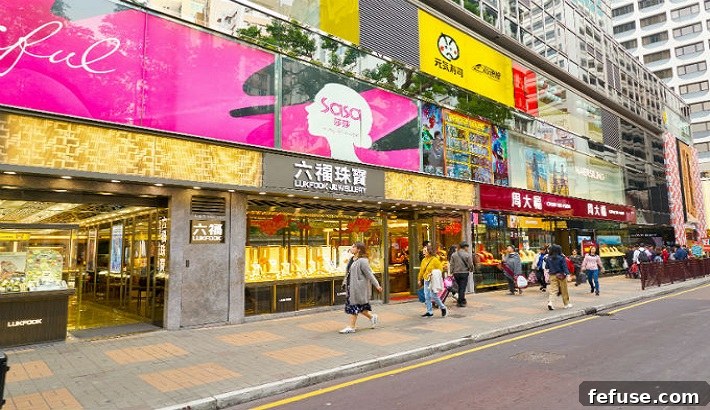
Hong Kong, traditionally a glittering beacon for luxury shopping and a critical gateway for mainland Chinese consumers seeking high-end goods, saw its esteemed jewellery sales suffer a notable decline. The primary culprits were the escalating political unrest and widespread street protests that gripped the city. These prolonged demonstrations led to significant disruptions in daily life, impacting public transport, causing road closures, and directly affecting retail operations in prime shopping districts. The resulting atmosphere of instability naturally deterred both local and international shoppers, severely eroding consumer confidence.
Beyond internal political strife, the broader geopolitical tensions stemming from the US-China trade war added another layer of complexity. The protracted dispute introduced an overarching sense of economic apprehension, leading consumers to adopt a more cautious approach to discretionary spending. This uncertainty hit the luxury market particularly hard, as high-value items like fine jewellery are often among the first categories to be impacted during periods of economic doubt. Furthermore, the relative strength of the Hong Kong dollar during this period made luxury purchases less attractive for tourists from certain regions, compounding the challenges faced by retailers.
Retailers in Hong Kong and Macau cited a “tough base of comparison” from previous periods of robust growth, meaning that even a slight downturn felt more pronounced against prior successes. This, combined with the prevalent “cautious consumer sentiment,” created an environment where shoppers were hesitant to commit to significant purchases. The once bustling streets, typically filled with eager shoppers, saw reduced foot traffic, directly translating into lower sales volumes for the jewellery industry.
Leading Retailers Face Diverse Outcomes
Chow Tai Fook Jewellery Group Ltd.: A Dominant Player Under Pressure
As one of the largest and most influential jewellery retailers in Asia, Chow Tai Fook Jewellery Group Ltd.’s performance offers a critical insight into the industry’s health. For the three months ending June 30, 2019, the company reported a significant 11 percent drop in same-store sales across its Hong Kong and Macau operations. This decline was a direct consequence of the aforementioned political instability and the cautious spending behavior among consumers. The data underscored how even market leaders with established brand loyalty were not immune to the challenging operating environment.
A detailed breakdown of product categories within Hong Kong and Macau highlighted specific areas of impact. Sales of gem-set jewellery, often considered a barometer for high-end discretionary luxury spending, plummeted by a steep 16 percent. Gold products, which hold significant cultural and investment value in the region, also saw a substantial decrease of 13 percent. These figures reflect a broad retraction in consumer appetite for high-value items, as economic and political uncertainties encouraged a shift towards saving rather than spending on luxury goods.
Luk Fook Holdings (International) Ltd.: Navigating Mixed Fortunes
Another prominent regional retailer, Luk Fook Holdings (International) Ltd., also reported a challenging first quarter. The company experienced an overall 10 percent decline in same-store sales. Similar to Chow Tai Fook, Luk Fook attributed this downturn to a relatively high comparative base from the previous year and the persistent negative impact of the US-China trade war on broader market sentiment. These external pressures created a challenging backdrop for maintaining sales momentum.
Interestingly, while Luk Fook’s overall gold product sales fell by a substantial 19 percent, suggesting reduced investment purchases and gifting due to economic jitters, sales of gem-set jewellery managed to rise by 4 percent. This divergence indicates a nuanced consumer behavior; perhaps certain segments of gem-set jewellery, catering to specific tastes or lower price points, retained their appeal. Regionally, Luk Fook’s sales in Hong Kong and Macau declined by 10 percent, consistent with the broader market trend. However, a notable difference from Chow Tai Fook’s performance was Luk Fook’s 7 percent sales decline in mainland China, indicating that not all retailers benefited equally from the mainland’s growth drivers.
Richemont Group: Global Luxury Brands Feel Regional Pains
Even global luxury conglomerates like Richemont, parent company to world-renowned jewellery houses such as Cartier and Van Cleef & Arpels, felt the localized impact of Hong Kong’s challenges. For the three months ending June 30, 2019, Richemont reported a seemingly healthy 9 percent sales growth across the Asia Pacific region. However, this regional aggregate masked a significant disparity: while most key markets in the region achieved double-digit growth, Hong Kong was a clear exception, registering a retreat in sales.
Richemont explicitly cited the recent street protests as a primary factor for Hong Kong’s downturn, acknowledging their disruptive effect on retail environments and consumer confidence. The aforementioned relative strength of the Hong Kong dollar was also noted as a contributing factor, making purchases less attractive for overseas visitors. Despite these specific difficulties in Hong Kong, the overall performance of Richemont-owned brands like Cartier and Van Cleef & Arpels remained robust globally, with a 7 percent increase in sales, buoyed by strong demand for their iconic jewellery and watch collections in other, more stable growth markets. This highlights the inherent resilience of ultra-luxury brands through diversified geographical reach, even when facing acute regional challenges.
Mainland China: A Beacon of Growth and Stability
In stark contrast to the struggles witnessed in Hong Kong and Macau, mainland China emerged as a significant growth engine for the jewellery industry during this period. Chow Tai Fook, for instance, reported an impressive 11 percent growth in same-store sales across its extensive network in China. This robust performance was broadly supported by strong demand across product categories: gem-set jewellery sales increased by 8 percent, and gold products saw a substantial 12 percent rise. This consistent growth trajectory in mainland China provides a compelling counter-narrative to the regional slowdown, underscoring the market’s increasing importance.
Several key factors converged to fuel China’s remarkable resilience and expansion. Crucially, strategic policy initiatives by the Chinese government, such as reduced VAT (Value Added Tax) and lower customs duty rates, played a pivotal role. These measures effectively made luxury goods, including high-end jewellery, more competitively priced within mainland China compared to purchasing them overseas. This pricing advantage successfully incentivized domestic consumption, encouraging affluent Chinese consumers who might traditionally have travelled to Hong Kong or other international destinations for luxury shopping to make their purchases locally. This strategic shift towards internal consumption has been a cornerstone of China’s economic policy, aiming to capture a larger share of its burgeoning luxury market domestically.
Furthermore, the ongoing expansion of China’s middle class, coupled with steadily rising disposable incomes, continued to generate robust demand for luxury items. While the overarching US-China trade war undeniably created an atmosphere of uncertainty, its direct impact on consumer spending within mainland China’s jewellery market appeared to be significantly mitigated by these powerful internal growth drivers and proactive policy adjustments. The continuous evolution of retail formats, including an aggressive push into e-commerce and sophisticated digital engagement strategies, also enabled retailers to effectively reach a broader and more diverse audience across China’s vast geography, contributing significantly to sustained growth.
Navigating the Future: Strategic Imperatives for Asia’s Jewellery Retailers
The starkly disparate performance across the Asian jewellery market in early 2019 underscores the critical necessity for adaptability, agility, and strategic diversification among retailers. For companies with significant exposure to the Hong Kong market, the immediate future involves navigating persistent political uncertainties while simultaneously striving to rebuild eroded consumer confidence and re-attract tourists once stability is restored. This may necessitate the implementation of highly localized marketing campaigns, offering unique product assortments tailored to local preferences, and potentially even re-evaluating the physical footprint of stores in once-prime tourist-dependent areas.
Conversely, capitalizing on the robust and sustained growth in mainland China demands continued strategic investment. This includes expanding physical retail networks into new Tier 2 and Tier 3 cities, significantly enhancing digital presence and e-commerce capabilities, and developing a profound, nuanced understanding of evolving Chinese consumer preferences and purchasing behaviors. The demonstrable success of reduced VAT and customs duties highlights the pivotal role of competitive pricing strategies and the strategic importance of positioning products effectively in a market increasingly driven by affluent domestic consumption.
The broader implications for the global jewellery industry are unequivocally clear: regional political stability and the intricate dynamics of international trade relations profoundly influence luxury retail outcomes. Retailers must proactively develop agile and resilient strategies capable of withstanding unforeseen geopolitical shocks and rapidly adapting to shifting consumer landscapes. This holistic approach should encompass strengthening online sales channels, diligently exploring and investing in emerging markets within Asia, and potentially decentralizing certain operational aspects to reduce an over-reliance on single, vulnerable hubs like Hong Kong.
Ultimately, while specific regions within Asia currently face immediate and formidable headwinds, the fundamental underlying demand for exquisite fine jewellery and luxury items across the continent, particularly within the vast and expanding market of mainland China, remains robust. The current challenging landscape presents both significant obstacles and substantial opportunities, compelling leading retailers to innovate, evolve, and redefine their strategies to secure a prosperous future in this inherently dynamic and ever-changing market. The resilience demonstrated by the Chinese market, combined with the strategic foresight and innovative adjustments made by pioneering retailers, will undoubtedly shape the trajectory of Asia’s multifaceted jewellery sector in the years to come.