
Walmart.com Sells Luxury Watches: A Deep Dive into High-End Horology on the E-Commerce Giant
In a surprising twist that blurs the lines between mass-market retail and high-end luxury, Walmart.com, the digital storefront of the American retail behemoth, has quietly become a purveyor of prestige timepieces. While many shoppers might associate Cyber Monday deals on DVDs with Walmart, a closer look reveals an unexpected array of luxury items, including exquisite watches from some of the world’s most renowned brands. This strategic shift highlights Walmart’s aggressive expansion into the online marketplace, directly challenging the traditional boundaries of e-commerce and offering a new, albeit unconventional, avenue for consumers to acquire luxury goods.
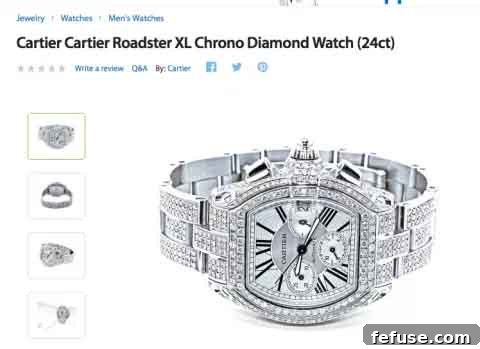
Among the most striking examples is a stunning diamond Cartier watch, listed for an astonishing $18,000. This particular piece, boasting an impressive manufacturer’s suggested retail price (MSRP) of $45,000, immediately captures attention, signalling that Walmart’s online platform is evolving far beyond its humble origins. Such a high-value item on a platform known for its affordability underscores a significant transformation in Walmart’s e-commerce strategy and its commitment to broadening its product catalog through a network of third-party sellers.
The Unlikely Home of High Horology: Walmart’s Foray into Luxury
The Cartier watch is not an isolated incident but rather a prominent example of a curated selection of luxury watches made available on Walmart.com. These items are primarily offered through independent vendors, such as Jewelry Unlimited Inc., which appears to be leveraging Walmart’s vast online presence to reach a wider audience for its specialized inventory. This model allows Walmart to offer a diverse range of products without directly managing the inventory or distribution of these high-value items, positioning itself as a comprehensive marketplace.
Beyond the diamond Cartier, the selection of prestige timepieces is remarkably robust. Discerning shoppers can also find an impressive $19,642 IWC Portuguese Classic Chronograph, a testament to Swiss precision and sophisticated design. For those with a penchant for iconic status, an 18k gold $15,899 Rolex President is also available, representing the pinnacle of luxury and horological excellence. Not to be outdone, an elegant $15,086 Omega Men’s Constellation, famed for its distinctive “Griffes” or claws, further diversifies the high-end offerings. The convenience of these luxury purchases is enhanced by the inclusion of free shipping for all these premium watches, adding an extra layer of appeal for online buyers.
Walmart’s Aggressive E-Commerce Push and the Jet.com Catalyst
Wal-Mart’s silence to a request for comment by JCK regarding these luxury listings speaks volumes about its focus on strategic expansion rather than detailed disclosures. However, a spokesperson did indicate to The Wall Street Journal that the integration of third-party sellers has enabled Walmart to introduce “some brands that Wal-Mart hasn’t traditionally had in the past.” This statement confirms the retailer’s deliberate strategy to diversify its online offerings and penetrate new market segments.
The aggressive pursuit of third-party sellers is a cornerstone of Walmart’s evolving e-commerce strategy. Faced with fierce competition from online giants like Amazon, Walmart has been investing heavily in expanding its digital footprint and transforming its online platform into a comprehensive marketplace. This strategy was significantly bolstered by its August purchase of e-tailer Jet.com. The acquisition of Jet.com was not merely about absorbing a competitor; it was a strategic move to integrate advanced e-commerce technology, logistics expertise, and a more sophisticated customer demographic into Walmart’s digital ecosystem. Jet.com’s platform and operational capabilities provided Walmart with the tools to more effectively onboard and manage a vast array of third-party vendors, including those specializing in high-end goods. This acquisition accelerated Walmart’s ability to offer an unprecedented breadth of products, from everyday essentials to aspirational luxury items, all under the Walmart.com umbrella.
While the spokesperson remained tight-lipped about the specific sales figures for these high-end pieces, their presence on the platform alone indicates a significant shift in Walmart’s market positioning and ambition. It demonstrates a clear intent to capture a share of the luxury goods market, traditionally dominated by specialized boutiques and high-end department stores. This move positions Walmart not just as a discount retailer but as a versatile online marketplace capable of catering to a wide spectrum of consumer needs and budgets.
Navigating the Grey Market: Understanding the Nuances of Online Luxury Purchases
The watches sold on Walmart.com by third-party sellers often fall into what is known as the “grey market.” The grey market refers to the trade of goods through distribution channels that are not authorized by the original manufacturer, but are not illegal either. For luxury watches, this often means products are acquired from authorized dealers who have excess inventory, or from distributors who sell to unauthorized resellers, usually at a discount. While these watches are genuine, they might come with different warranty provisions—often provided by the seller rather than the manufacturer—and may lack the full boutique experience associated with an authorized purchase.
For consumers, the grey market presents both opportunities and potential pitfalls. The primary advantage is often a significantly lower price point compared to authorized retail prices, as evidenced by the Cartier watch’s discount. This makes luxury items more accessible to a broader audience. However, buyers must exercise due diligence. Questions about authenticity, the validity of warranties, and after-sales service become paramount. While reputable third-party sellers like Jewelry Unlimited Inc. strive to ensure authenticity and customer satisfaction, the responsibility ultimately lies with the consumer to verify the product’s condition, origin, and warranty terms before making a substantial investment. This dynamic is a critical aspect of modern online retail, especially for high-value goods, and directly connects to the broader theme explored in articles such as The Internet Is Causing Grey Skies for Watch Retail, which examines the disruptive impact of online sales on traditional luxury watch distribution.
Implications for Luxury Watch Brands and Traditional Retailers
Walmart’s foray into selling luxury watches, even through third-party vendors, sends ripples throughout the luxury watch industry. For established brands like Rolex, Cartier, IWC, and Omega, maintaining brand exclusivity and controlling their distribution channels are paramount. The presence of their products on a mass-market platform like Walmart.com, albeit through third parties, can complicate their brand image and potentially dilute their luxury perception. These brands typically work with a network of authorized dealers who uphold specific standards of service, presentation, and pricing. Grey market sales, regardless of the platform, can undermine these efforts by introducing price competition and altering the consumer’s purchasing experience.
Traditional brick-and-mortar luxury watch retailers, who invest heavily in opulent storefronts, trained staff, and exclusive inventory, face increased pressure. They must now contend with the aggressive pricing strategies often found on online marketplaces, where overheads are significantly lower. This forces them to innovate, focusing more on experiential retail, personalized service, and building strong client relationships to justify their premium pricing. The digital transformation of retail, accelerated by platforms like Walmart.com expanding their marketplace, necessitates a re-evaluation of business models across the luxury sector. Brands and retailers alike are challenged to adapt to new consumer buying behaviors while safeguarding the integrity and allure of their high-value products.
The Consumer’s Perspective: Opportunities and Cautions
For the consumer, the availability of luxury watches on Walmart.com offers an intriguing proposition. It democratizes access to high-end horology, potentially allowing individuals who might not typically frequent luxury boutiques to acquire a dream timepiece. The convenience of browsing and purchasing alongside everyday items adds a unique dimension to the luxury shopping experience. However, this convenience comes with a critical caveat: vigilance is key. When considering a significant purchase like a $15,000 Rolex or an $18,000 Cartier from an online marketplace, consumers should:
- Verify Seller Reputation: Thoroughly research the third-party seller’s reviews, ratings, and track record specifically for high-value items.
- Understand Warranty Details: Clarify whether the watch comes with a manufacturer’s international warranty or a seller-backed warranty, and what that entails for repairs and service.
- Review Return Policies: Be fully aware of the return window, conditions, and any restocking fees for such a substantial purchase.
- Scrutinize Product Descriptions: Look for clear indications of the watch’s condition (new, used, refurbished), its originality, and any included accessories like original box and papers.
- Consider Authentication: For ultimate peace of mind, especially for pre-owned or grey market pieces, consider having the watch independently authenticated upon receipt by a reputable watchmaker.
The promise of luxury at a potentially discounted price is tempting, but the savvy buyer understands that a meticulous approach to online purchasing is essential, particularly when navigating the sophisticated world of high-end watches.
Conclusion: A New Era for E-Commerce and Luxury Retail
Walmart.com’s venture into the luxury watch market through third-party sellers signifies a pivotal moment in the evolution of e-commerce. It illustrates how traditional retail giants are aggressively adapting their online platforms to encompass a far broader spectrum of products, challenging established notions of brand positioning and market segmentation. The integration of high-end items like Rolexes, Cartiers, IWCs, and Omegas on a platform known for its value offerings demonstrates a strategic ambition to compete across all retail fronts, powered by acquisitions like Jet.com and a robust third-party marketplace strategy.
While the availability of these prestige timepieces offers exciting opportunities for consumers seeking value and convenience, it also underscores the growing complexity of the online luxury market. The lines between authorized and grey market distribution continue to blur, necessitating greater transparency from sellers and increased diligence from buyers. As the digital landscape continues to reshape consumer habits, Walmart’s bold move serves as a compelling case study, showcasing the dynamic interplay between accessibility, luxury, and the ever-expanding capabilities of modern online retail. It’s a testament to a future where high-end horology might be just a click away, even from the most unexpected digital storefronts.
News Source: JCKOnline.com