
Pandora’s CEO Reveals the True Driver Behind Lab-Grown Diamond Sales: Affordability Over Sustainability
In a rapidly evolving jewelry market, where terms like “ethical sourcing” and “sustainability” increasingly dominate consumer discourse, Pandora’s CEO, Alexander Lacik, has offered a refreshingly candid — and potentially controversial — perspective. Speaking to Fortune magazine, Lacik asserted that consumers are primarily drawn to lab-grown diamonds not by their environmental credentials, but by their significantly lower price point. This frank admission challenges widely held assumptions about modern consumer behavior, particularly among younger generations who often voice strong environmental and social concerns.
Lacik’s insights cut through the marketing jargon, positing a simpler truth about purchasing decisions in the luxury goods sector. “When we talk about product choice, there are only two things that actually drive behavior,” he stated, unequivocally identifying price and design as the paramount factors. While acknowledging the growing importance of environmental, social, and corporate governance (ESG) factors, he relegated them to a secondary role. “ESG is a nice feature and for the people that are interested, we have a good story to tell, but it’s not the driver of the business,” Lacik clarified. This statement suggests a pragmatic approach to business, prioritizing core market dynamics over perceived consumer ideals.
The Price vs. Principle Debate: What Truly Motivates Diamond Buyers?
The global diamond market has long grappled with perceptions of ethics and sustainability. Traditional mined diamonds face scrutiny over their environmental impact, labor practices, and the potential for conflict financing, often leading to the search for more “responsible” alternatives. Lab-grown diamonds emerged as a compelling solution, promoted heavily for their traceability, conflict-free status, and reduced environmental footprint compared to traditional mining operations. However, Lacik’s comments from the helm of one of the world’s largest jewelry brands suggest that while these ethical considerations are valuable, they might not be the ultimate decision-making factor for the average buyer.
For many consumers, especially when considering a significant purchase like a diamond, the economic reality often overrides abstract principles. A diamond, whether for an engagement ring, anniversary gift, or personal indulgence, represents a substantial investment. The allure of acquiring a larger, more visually impressive stone within a predetermined budget becomes an incredibly powerful motivator. Lab-grown diamonds offer precisely this: the ability to obtain a diamond of superior carat weight, clarity, or color for a fraction of the cost of its mined equivalent. This affordability factor democratizes access to larger, more brilliant stones, making dream jewelry accessible to a broader demographic.
Deconstructing “Sustainability” in the Jewelry Industry
The concept of “sustainability” itself in the context of diamonds is complex and multifaceted. While lab-grown diamonds eliminate the environmental disruptions associated with mining and the geopolitical issues often linked to diamond sourcing, their production process is not without its own environmental footprint. Manufacturing lab-grown diamonds requires significant energy, often relying on industrial processes that contribute to carbon emissions, depending on the energy mix used. Companies producing lab-grown diamonds are increasingly moving towards renewable energy sources to bolster their sustainability claims, but the industry as a whole is still in transition.
Pandora’s strategy to shift entirely to lab-grown diamonds was initially framed around ethical and environmental superiority. While these benefits are undoubtedly part of the appeal, Lacik’s recent remarks pivot the narrative back to a more fundamental business truth: market demand is largely dictated by tangible benefits to the consumer, primarily cost. Sustainability, while a positive attribute, serves more as a secondary justification or an added bonus rather than the primary impetus for purchase. For brands, this means that while investing in sustainable practices is crucial for corporate reputation and for a segment of the market, the dominant sales drivers remain firmly rooted in product attributes like price and aesthetic appeal.
The Millennial and Gen Z Paradox: Stated Values vs. Actual Spending
Lacik’s observations extend specifically to younger generations, Gen Z and millennials, who are often portrayed as the torchbearers of conscious consumerism. While these demographic groups frequently express strong concerns about environmental protection, social justice, and ethical consumption, Lacik implies that their actual purchasing decisions for high-value items like diamonds may tell a different story. “Gen Zs and millennials may claim they’re driven by environmental concerns,” he noted, “but at the end of the day they want the biggest stone they can get for their budget.”
This perspective highlights a common paradox in consumer behavior: the gap between stated intentions and actual behavior. Consumers may aspire to make environmentally friendly choices, but practical constraints such as budget limitations, availability, or perceived value often lead them to prioritize other factors. For many young consumers entering the market for engagement rings or significant jewelry pieces, the opportunity to acquire a larger, more impressive diamond that fits their financial reality is simply too compelling to overlook. Lab-grown diamonds perfectly bridge this gap, offering the desired aesthetic and perceived quality without the prohibitive price tag of an equivalently sized mined diamond.
Pandora’s Pivotal Shift and Industry Repercussions
Pandora made waves in May 2021 with its groundbreaking announcement: it would no longer use mined diamonds in any of its products, opting instead for ethically preferable lab-grown diamonds. This bold strategic move sent shockwaves through the traditional diamond industry, sparking intense debate and criticism. Pandora positioned its decision as a stand for ethics and sustainability, aligning with growing consumer demand for transparent and responsible sourcing. This commitment was seen as a pioneering step, with Pandora becoming one of the first major jewelers to entirely pivot away from mined diamonds.
However, the announcement was met with a swift backlash from industry bosses and organizations representing traditional diamond miners and sellers. They accused Pandora of “potentially false and misleading assertions,” arguing that the environmental and social impacts of mined diamonds were often overstated or misrepresented, and that the traditional industry itself had made significant strides in ethical sourcing. Critics suggested that Pandora’s move was more about cost-cutting and market positioning than genuine ethical superiority. Lacik’s recent comments lend credence to the idea that while ethical messaging was a component, the underlying business strategy was deeply intertwined with the economic advantages offered by lab-grown diamonds.
This industry dispute underscored the intense competition and ideological divide between the traditional diamond market and the burgeoning lab-grown sector. Pandora’s decision, driven by both a desire for ethical branding and a keen eye on market trends, has undoubtedly influenced other jewelers and forced a re-evaluation of supply chains and marketing strategies across the board.
The Affordability Advantage: Pandora vs. Tiffany’s Pricing Contrast
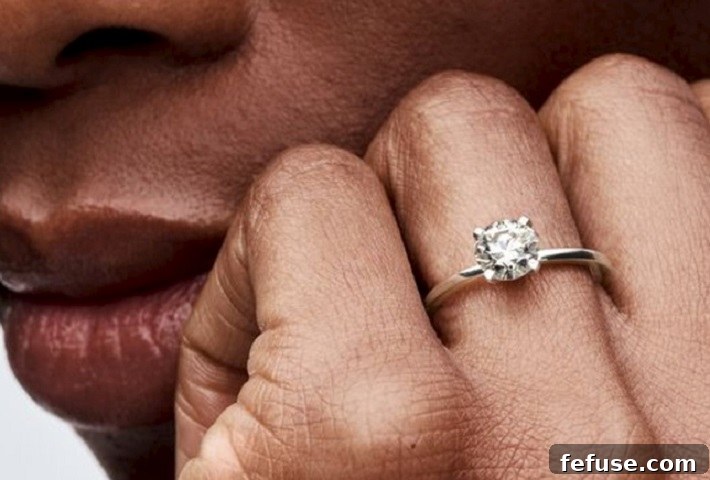
The stark price difference between lab-grown and mined diamonds is perhaps the most compelling argument for Pandora’s strategy. A direct comparison illustrates this economic chasm: a Pandora 1-carat lab-grown solitaire ring is priced at approximately $1,750. In stark contrast, an equivalent size and style from a high-luxury brand like Tiffany’s, renowned for its mined diamonds, would cost at least $16,000. This nearly tenfold price differential is a game-changer for consumers and a powerful lever for brands like Pandora aiming for market share.
This dramatic price gap allows Pandora to tap into a massive market segment that desires the prestige and beauty of a diamond but is unwilling or unable to pay the premium associated with mined stones and traditional luxury brands. By offering high-quality, visually identical diamonds at a fraction of the cost, Pandora effectively positions lab-grown diamonds as an accessible luxury. This strategy not only expands the market for diamond jewelry but also challenges the perception that true luxury must come with an exorbitant price tag, especially when an aesthetically identical product is available for significantly less.
The comparison also highlights the different market segments Pandora and Tiffany aim for. Tiffany’s brand equity is built on heritage, exclusivity, and the inherent value and rarity of natural diamonds. Pandora, while a major player, operates in a more accessible, mass-market luxury space. The shift to lab-grown diamonds perfectly aligns with Pandora’s brand ethos of offering beautiful, quality jewelry that is attainable for a broader customer base, while simultaneously addressing contemporary concerns about ethical sourcing and environmental impact – albeit with price as the primary catalyst.
Conclusion: Redefining Value in the Modern Diamond Market
Alexander Lacik’s forthright observations offer a crucial reality check for the jewelry industry and for anyone tracking consumer trends. While environmental and ethical considerations are undoubtedly significant, and increasingly influence corporate strategy and branding, the core drivers of consumer behavior for high-value purchases like diamonds remain remarkably consistent: price and design. For the vast majority of buyers, the tangible benefit of obtaining a larger, more stunning diamond within their budget surpasses the often-abstract appeal of “sustainability” as a standalone motivator.
Pandora’s strategic pivot to exclusively lab-grown diamonds, initially framed as an ethical imperative, is now seen through a more pragmatic lens. It’s a brilliant business move that capitalizes on the economic advantages of lab-grown diamonds, offering consumers an affordable alternative that also happens to carry ethical benefits. This approach doesn’t dismiss sustainability but rather integrates it as a compelling secondary feature that enhances the primary value proposition: accessibility and exceptional value. As the jewelry market continues to evolve, brands that understand and adapt to these fundamental consumer drivers – balancing aspirational values with economic realities – will ultimately be the ones to thrive, redefining what constitutes value in the modern diamond landscape.