

Navigating Modest Growth: US Watch and Jewelry Sales in March Amid Shifting Economic Tides
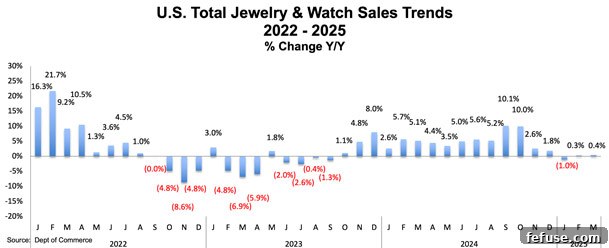
The luxury accessories market in the United States continues to demonstrate a cautious yet discernible trajectory, as evidenced by recent data from the U.S. Department of Commerce. March witnessed a modest uptick in retail sales for watches and jewelry, edging up by a mere 0.4%. This slight increase underscores a persistent trend of subdued momentum within a sector accustomed to more robust growth, signaling a period of recalibration for both consumers and retailers alike.
While the overall growth figure for the sector might appear incremental, a closer examination reveals nuanced preferences shaping consumer behavior. During March, the jewelry segment notably outperformed watches, registering a slight increase in sales. Conversely, watch sales experienced a minor dip, indicating a divergence in spending patterns within the luxury accessories category. Market analysts are interpreting these trends as a strong indicator that consumers are increasingly prioritizing quality over quantity. In the prevailing economic climate, characterized by various uncertainties, individuals appear to be opting for fewer, yet more expensive and perhaps more enduring, pieces of jewelry, possibly viewing them as investments or significant emotional purchases.
A Glimpse at Recent Performance and Market Fluctuations
The March figures, though modest, represent a slight improvement when viewed in the context of preceding months. They mark a gentle rebound from February’s 0.2% growth and a more significant recovery from January’s 1.0% decline. This sequential improvement, while encouraging, paints a broader picture of cautious consumer spending that has become a hallmark of the luxury market in early 2024. The luxury sector, often a bellwether for discretionary spending, is clearly feeling the effects of broader economic sentiments, prompting stakeholders to reassess strategies and expectations.
Understanding the watch and jewelry market’s performance requires situating it within the larger framework of national consumer spending. The U.S. Bureau of Economic Analysis (BEA) reported a more buoyant 0.7% rise in overall consumer spending for March, marking the strongest monthly increase observed in two years. However, this seemingly robust surge in general spending was predominantly fueled by a specific, preemptive buying spree: a spike in automobile purchases. Consumers rushed to acquire vehicles ahead of anticipated price hikes, which are linked to impending reciprocal tariffs. This distinction highlights that while general consumer confidence may be present for necessary or strategic purchases, discretionary luxury spending remains constrained by a different set of factors, including perceived value, economic outlook, and personal financial security.
From Boom to Balance: The Evolution of the Luxury Market Post-2023
The current subdued growth contrasts sharply with the dynamic performance witnessed throughout much of 2023. Last year, the watch and jewelry sector frequently experienced month-over-month growth rates that occasionally surpassed an impressive 10%. This robust period was largely driven by pent-up demand, increased disposable income from pandemic-era savings, and a general celebratory mood as economies reopened. However, that era of explosive growth now appears to be transitioning into a more restrained and sustainable phase. Factors contributing to this shift include persistent inflation, higher interest rates impacting borrowing costs, and a general cooling of the economic landscape, which collectively compel consumers to be more discerning with their luxury purchases.
The move towards “quality over quantity” is not merely a fleeting trend but a fundamental shift in consumer values within the luxury sphere. Economic uncertainties often prompt consumers to invest in pieces that hold perceived long-term value, demonstrate superior craftsmanship, or possess timeless appeal, rather than acquiring numerous trend-driven items. This preference influences everything from material choices (e.g., a focus on ethically sourced gemstones or recycled precious metals) to brand reputation and legacy. Retailers who align their offerings and messaging with this sentiment are likely to fare better in the current environment, emphasizing durability, heritage, and the intrinsic value of their products.
The Looming Shadow of Tariffs: A Critical Challenge Ahead
Looking forward, the sector faces fresh and formidable challenges, most notably the implementation of new tariffs. Initially announced in April, these tariffs have been delayed until July, granting a brief reprieve but also extending a period of uncertainty for the industry. These reciprocal tariffs, often part of broader trade disputes, are designed to influence trade balances by making imported goods more expensive. For the watch and jewelry industry, which relies heavily on global supply chains for raw materials, components, and finished products, these tariffs pose a significant threat.
The impending tariffs will inevitably increase the cost of goods for retailers and manufacturers. This situation forces them to make tough strategic decisions: Should they absorb these higher costs, thereby diminishing their profit margins, or should they pass them along to the consumer through increased retail prices? Each option presents its own set of risks. Absorbing costs can strain business profitability and operational sustainability, especially for smaller enterprises. Passing costs to consumers, on the other hand, risks dampening demand further in an already cautious market. Luxury goods, by their very nature, are price-sensitive, and a significant jump in prices could deter even affluent buyers, leading to reduced sales volumes in the months ahead.
Strategic Responses and Future Outlook for the Luxury Sector
In anticipation of these challenges, retailers and manufacturers in the watch and jewelry sector are likely to adopt a range of strategies to mitigate the impact and sustain growth. These may include:
- Supply Chain Diversification: Exploring alternative sourcing options in countries not subject to new tariffs to reduce import costs.
- Inventory Management: Optimizing stock levels to avoid oversupply and minimize holding costs, especially for items that might be heavily impacted by tariffs.
- Enhanced Customer Experience: Investing in personalized services, unique in-store experiences, and robust after-sales support to justify price points and build brand loyalty.
- Marketing and Branding: Reinforcing brand values, heritage, and the intrinsic artistry of their products to underscore their investment potential and emotional significance, thereby strengthening consumer perceived value against potential price increases.
- Digital Transformation: Leveraging e-commerce platforms and digital marketing more effectively to reach a broader audience and streamline sales processes, potentially offsetting some operational costs.
- Focus on Domestic Production: For some brands, there might be a renewed interest in increasing domestic manufacturing to bypass import tariffs, though this is often a long-term strategic shift.
The trajectory of the watch and jewelry market in the latter half of 2024 will largely depend on a confluence of these internal strategies and external economic factors. Beyond tariffs, global economic stability, inflation trends, and shifts in consumer confidence will continue to play pivotal roles. The industry is adapting to a new normal, where sustained double-digit growth may be less frequent, and strategic agility, discerning consumer understanding, and robust operational planning are paramount.
Conclusion: A Landscape of Resilience and Refinement
The March retail sales figures for watches and jewelry in the US paint a picture of resilience amidst refinement. While growth remains modest, the slight uptick indicates a market that is finding its footing in a complex economic environment. The clear preference for quality over quantity, coupled with the looming impact of tariffs, signals a period of strategic evolution for the industry. Retailers and manufacturers must navigate these waters with foresight, adapting their business models, supply chains, and consumer engagement strategies to thrive. The ability to articulate value beyond just price, to foster trust, and to offer products that resonate with a more considered consumer base will be key to unlocking sustainable success in the luxury watch and jewelry market in the coming months and years.