
H&M’s Strategic Digital Leap: Launching E-commerce in India Amidst Global Expansion
Global fashion giant Hennes & Mauritz (H&M) is poised to make a significant stride in the burgeoning Indian retail landscape with the much-anticipated launch of its e-commerce website next year. This strategic move, confirmed in the company’s nine-month report for the period spanning December 2016 to August 2017, underscores H&M’s commitment to bolstering its presence in one of the world’s most dynamic consumer markets. The announcement highlights a pivotal moment for both the retailer and Indian fashion consumers, promising a new era of accessibility and choice.
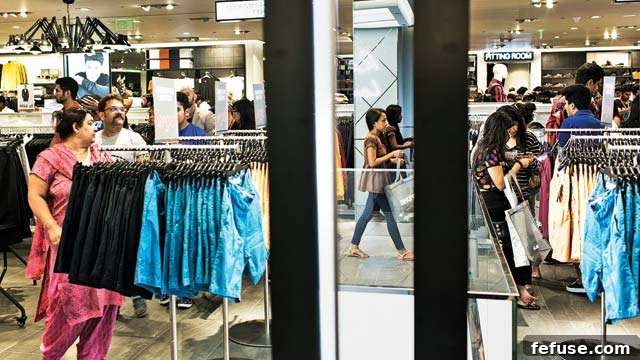
India represents a critical growth pillar for H&M. The fashion garments retailer has already demonstrated impressive performance, registering a remarkable 142% sales growth in India from its 17 operational stores during the nine-month reporting period. Currently, H&M boasts 20 stores across 10 Indian cities, with plans for rapid expansion. The company was on track to inaugurate its 21st store in Amritsar shortly after this report, aiming to surpass 25 stores nationwide by the close of the year. This aggressive physical expansion, coupled with the upcoming digital launch, paints a clear picture of H&M’s long-term vision for the Indian market.
India: A Crucial Growth Market for H&M’s Digital Ambitions
Karl-Johan Persson, Chief Executive Officer of Hennes & Mauritz AB, articulated the company’s expansive digital strategy. “This year, we are also opening eight new H&M online markets so that online shopping will be available in 43 markets by the end of the year,” Persson stated. He further added, “Next year, we plan to continue our online expansion into further countries, including India. The plan is that in the future we will offer online shopping in all store markets as well as in other markets.” This vision emphasizes a global shift towards integrating digital platforms seamlessly across all operational territories, with India identified as a key market in this transformative journey.
The decision to enter the Indian e-commerce space is not merely an expansion; it’s a recognition of India’s unique market dynamics. With a vast young population, increasing internet penetration, and a growing appetite for international fashion, India presents an unparalleled opportunity for online retail. The country’s digital infrastructure is rapidly evolving, making it an opportune time for global brands like H&M to tap into a digitally native consumer base. The synergy between H&M’s established brand appeal and India’s burgeoning online shopping culture is expected to generate significant traction, offering consumers convenience and a wider array of fashion choices previously unavailable.
The Omnichannel Imperative: Seamlessly Blending Online and Offline Retail
H&M’s strategy extends beyond simply launching an online store; it’s about creating a cohesive, integrated shopping ecosystem. Persson elaborated on the company’s continuous efforts to enhance the online experience, stating, “The company is continuously working on improving the online store and is adding more and faster delivery options, while at the same time further broadening the range of products online.” This commitment to operational excellence is critical in a competitive e-commerce environment, where speed and product diversity are paramount to customer satisfaction and retention.
Moreover, H&M is actively working towards a more holistic customer journey, blurring the lines between physical and digital touchpoints. “The physical store is increasingly being integrated with the online store for a more convenient shopping experience,” Persson explained. This omnichannel approach aims to provide customers with unparalleled flexibility, allowing them to browse online, try in-store, or order online for in-store pickup. To further elevate the in-store experience, H&M is also experimenting with innovative store concepts. “We are also testing out new store concepts for H&M to offer our customers an even more inspiring store,” Persson confirmed, signaling a forward-thinking approach to retail design that focuses on engagement and inspiration, rather than just transactions. This evolution in retail strategy is essential for meeting the demands of modern consumers who expect a fluid and personalized shopping experience.
Fueling Growth Through Digital Investment and Expanding Horizons
H&M’s dedication to digital transformation is evident in its sustained investment in online platforms. As part of its focused digital strategy, H&M successfully rolled out country-specific websites in six new markets during the year and planned to add two more – the Philippines and Cyprus – by the end of 2017. These continued investments in digital infrastructure are projected to yield substantial returns, with the group’s online sales estimated to grow by at least 25% annually in the foreseeable future. This aggressive digital expansion is a testament to the company’s belief in the power of e-commerce as a primary driver of future growth.
The fashion retail sector itself is undergoing a profound metamorphosis, driven largely by ongoing digitalization. As the company report acknowledges, “The competitive landscape is being redrawn, new players are coming in and customers’ behaviour and expectations are changing, with an ever greater share of sales taking place online.” This industry-wide shift underscores the necessity for established retailers like H&M to adapt and innovate rapidly. The clear reflection of this shift in H&M’s consistently strong online sales development indicates that their digital strategy is not only timely but also highly effective. Understanding and responding to changing consumer habits – particularly the increasing preference for online shopping – is paramount for long-term success in the dynamic global fashion market.
H&M’s Physical Footprint: Expanding Across India and Globally
While digital expansion is a key focus, H&M continues to strengthen its global physical retail presence. During the nine-month reporting period, the H&M group opened an impressive 269 new stores while closing 67, resulting in a net increase of 202 stores worldwide. As of August 31, 2017, the group operated a total of 4,553 stores, of which 209 were managed by franchise partners. This robust store count highlights H&M’s dual strategy of expanding both its online and offline channels to maximize market reach and customer engagement.
Looking ahead to the full year 2017, H&M outlined plans to open approximately 475 new physical stores globally. The primary focus for these new openings was growth markets, indicating a strategic allocation of resources to regions with high potential for consumer demand and market penetration. A significant majority of these new stores were slated to be H&M branded outlets, reinforcing the core brand’s global dominance. However, approximately 70 of the planned openings were dedicated to the group’s newer, rapidly expanding brands such as COS, & Other Stories, Monki, Weekday, and ARKET. This diversified approach to physical expansion allows H&M to cater to a broader spectrum of consumer preferences and price points, further solidifying its market position.
Innovating with New Brands: Diversifying the H&M Group Portfolio
The H&M group recognizes the immense potential in fostering and growing a diverse portfolio of brands. The company report emphasized that several of its newer brands are experiencing rapid growth and possess significant future potential. A prime example of this success is ARKET, the group’s most recent brand, which enjoyed a successful launch across 18 European online markets and with physical stores in key cities like London, Copenhagen, and Brussels. This multi-channel launch strategy for new brands demonstrates H&M’s agility and adaptability in penetrating new market segments.
The creation and successful introduction of new brands are integral components of H&M’s overarching growth strategy. This innovative approach allows the group to continually refresh its offerings, appeal to varied consumer demographics, and capture a larger share of the fashion market. Further underscoring this commitment to diversification, the company announced its intention to launch yet another new brand in the subsequent year. This continuous pipeline of new concepts and brands positions the H&M group as a dynamic and forward-thinking player in the ever-evolving global fashion industry, ready to meet future consumer demands and trends.
The Evolving Indian Fashion Retail Landscape
The Indian fashion retail landscape is currently undergoing a profound transformation, making H&M’s e-commerce entry exceptionally timely. India is characterized by a colossal youth demographic, a rapidly expanding middle class with increasing disposable income, and a significant leap in smartphone and internet penetration. These factors combine to create an environment ripe for online retail growth. Indian consumers are increasingly tech-savvy and open to international brands, seeking global fashion trends at accessible price points. H&M, with its fast-fashion model and contemporary offerings, is perfectly positioned to capitalize on these trends.
However, the market is not without its competitive challenges. India hosts a vibrant mix of domestic powerhouses, other international fast-fashion retailers, and a burgeoning ecosystem of online-only fashion platforms. H&M’s success will hinge on its ability to differentiate itself through its product range, customer experience – both online and offline – and efficient logistics. The integration of its online and physical stores will be a crucial differentiator, offering Indian consumers the flexibility and convenience they increasingly demand. The ability to seamlessly browse, try, purchase, and return across multiple channels will be key to winning over a discerning customer base.
Looking Ahead: H&M’s Future in India and Beyond
H&M’s strategic decision to launch e-commerce in India, coupled with its aggressive physical store expansion and global digital investments, marks a pivotal phase in the company’s growth trajectory. The commitment to India reflects a broader understanding of the country’s immense economic potential and its strategic importance in the global retail map. By embracing an omnichannel approach, H&M is not merely adapting to current market trends but actively shaping the future of fashion retail in India, setting a new benchmark for customer engagement and accessibility.
The convergence of H&M’s global expertise, its dedication to innovation in both product and retail experience, and India’s dynamic consumer market creates a powerful synergy. As H&M continues to expand its digital footprint and diversify its brand portfolio, its impact on the Indian fashion sector is expected to be substantial, influencing consumer choices, competitive strategies, and the overall pace of market development. The future for H&M in India appears bright, promising continued growth and an enhanced shopping experience for millions of fashion-conscious consumers across the nation.