
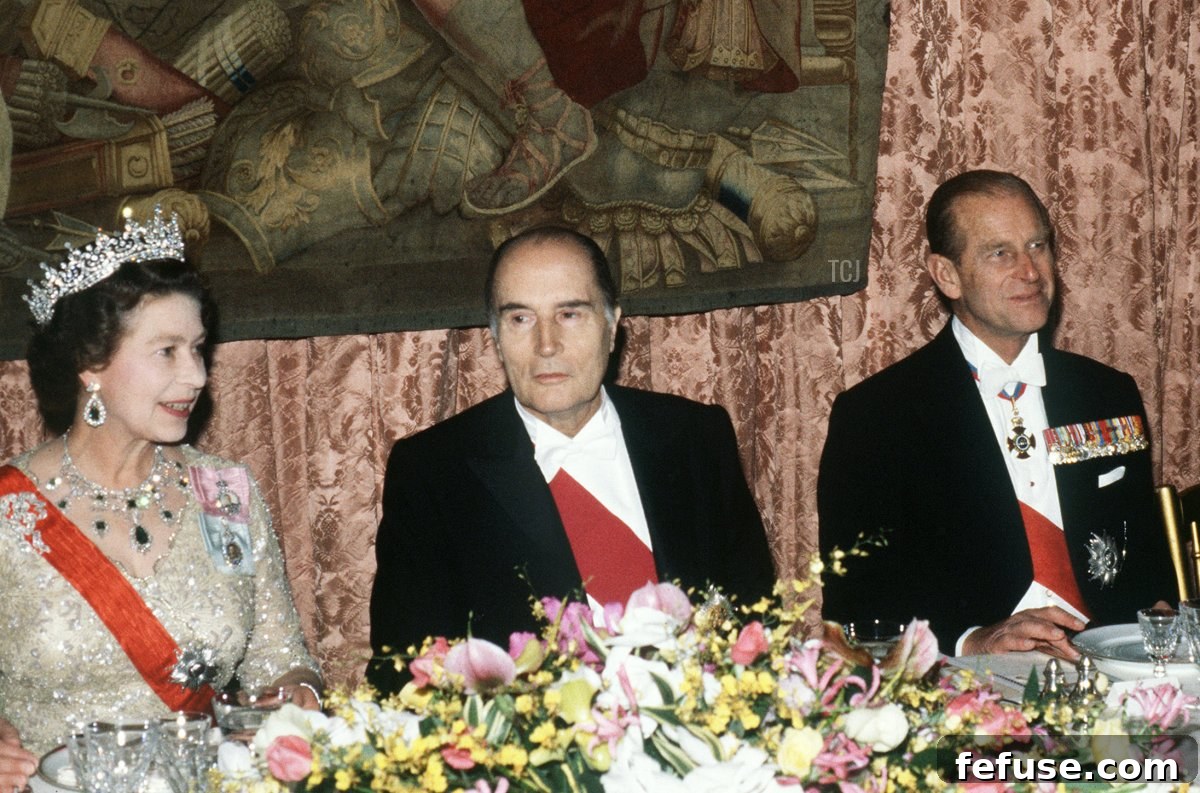
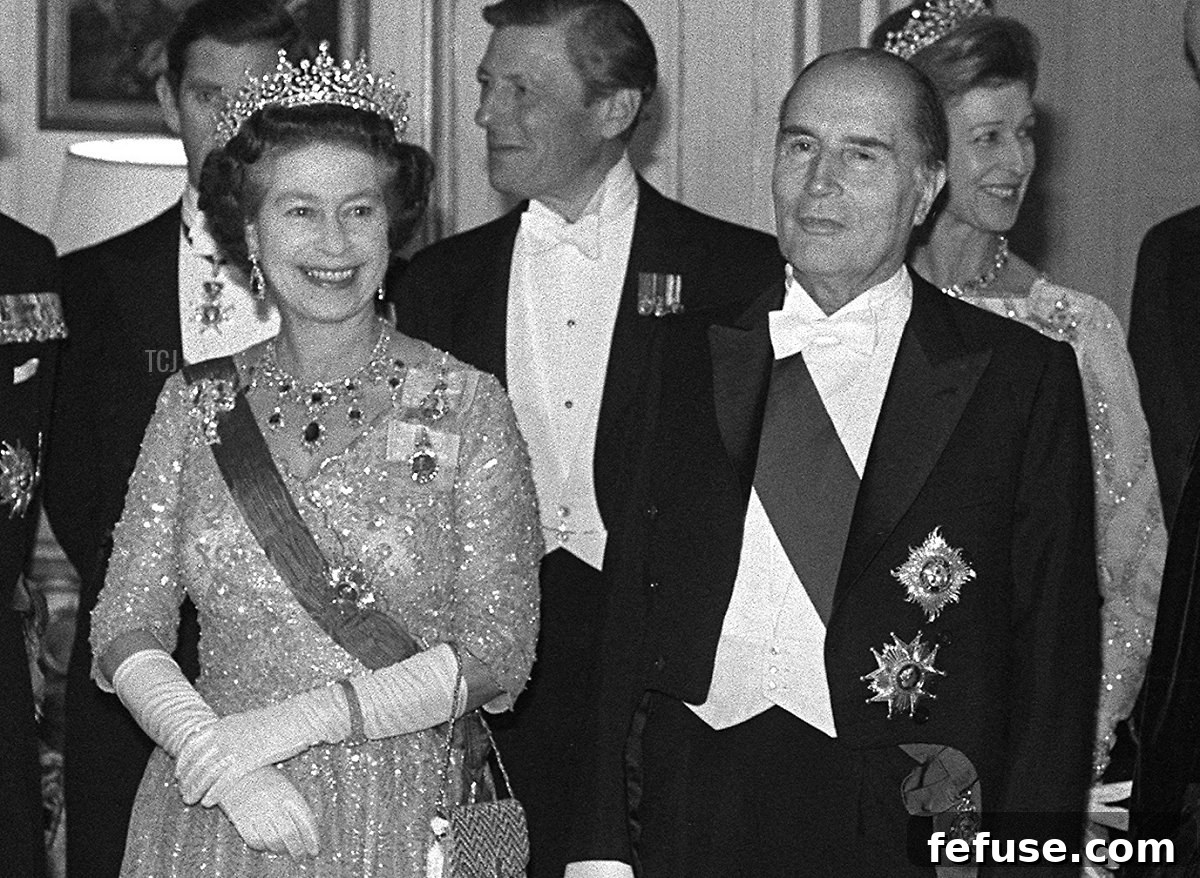
Welcome back to our “Sparkling Spotlight” series, where we delve into the magnificent jewels that graced Queen Elizabeth II during her remarkable seventy-year reign. Today, we turn our attention to a particularly memorable occasion: October 25, 1984. On this elegant evening, Her Majesty showcased a breathtaking ensemble of diamonds and emeralds, highlighted by a truly captivating necklace with an intriguing, albeit mysterious, provenance. This event not only celebrated diplomatic ties but also served as a grand display of royal tradition and unparalleled sartorial elegance, demonstrating the enduring power of royal jewelry as a symbol of both personal style and national heritage.
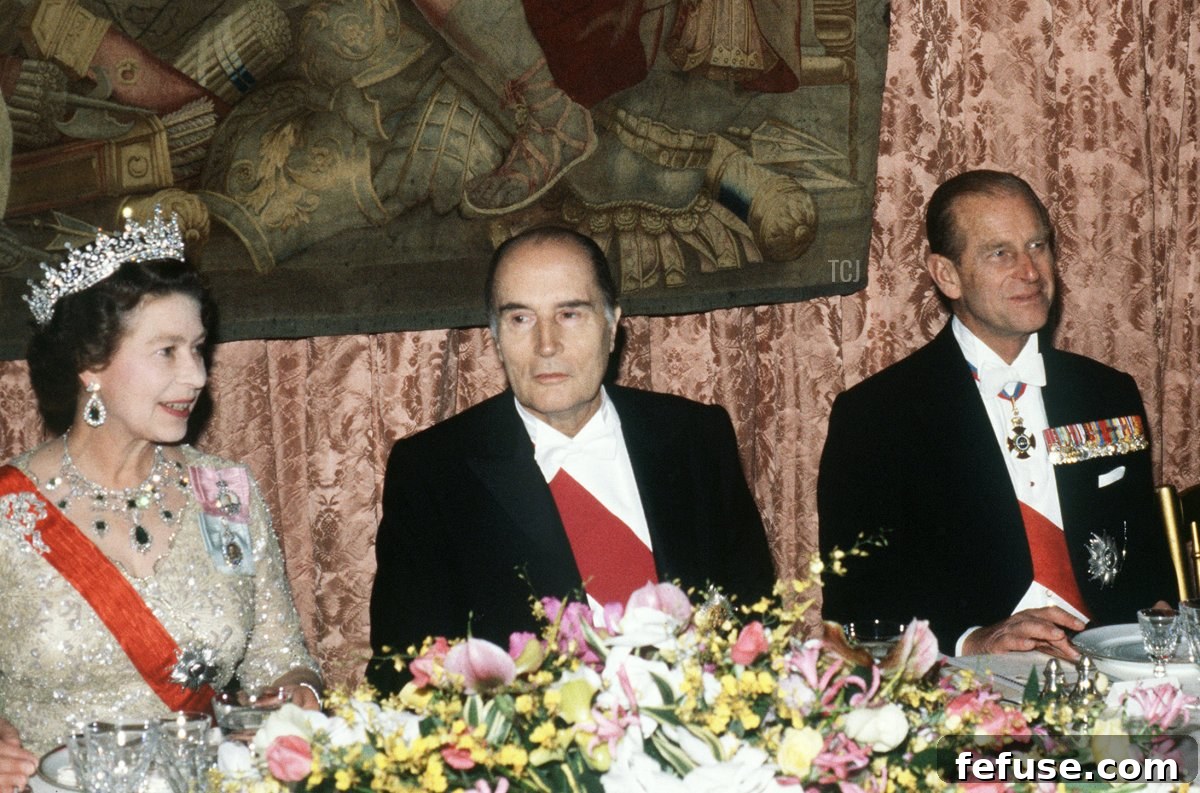
The particular event drawing our focus occurred on Thursday, October 25, 1984, when Queen Elizabeth II and her beloved husband, Prince Philip, the Duke of Edinburgh, attended a resplendent dinner. This grand affair was graciously hosted by President François Mitterrand of France at the prestigious French Embassy in London. This formal banquet was a pivotal moment during President Mitterrand’s state visit to the United Kingdom, marking the third day of his important diplomatic tour. State visits are cornerstones of international relations, fostering goodwill and strengthening alliances between nations. The choice of the French Embassy as the venue added a layer of diplomatic significance, bringing a piece of France to the heart of London for this high-profile gathering. Such events are meticulously planned to reflect mutual respect and the deep historical bonds between the two countries, making every detail, from the guest list to the décor and, of course, the attire, incredibly important.
For this exquisitely formal embassy dinner, a quintessential white-tie affair, Her Majesty Queen Elizabeth II chose an ensemble that radiated regal sophistication. She was adorned in a magnificent gleaming gold evening gown, which featured a delicate and shimmering lace overlay, lending an ethereal quality to its rich fabric. The gown’s lustrous texture and elegant silhouette were perfectly suited for the grandeur of the occasion, creating a striking visual impact under the embassy’s chandeliers. Beyond the sheer beauty of her dress, the Queen’s attire was further embellished with significant decorations, underscoring her role as Head of State and her deep connections to France. Prominently displayed were the Order of the Legion of Honour, France’s highest distinction, a testament to her longstanding friendship and alliance with the nation. Additionally, she wore the Royal Family Orders of her revered father, King George VI, and her grandfather, King George V. These personal and deeply symbolic insignia, featuring miniature portraits of the monarchs set in diamonds and suspended from silk ribbons, served as poignant reminders of her lineage and the continuity of the British monarchy, adding layers of history and personal significance to her already impressive appearance.
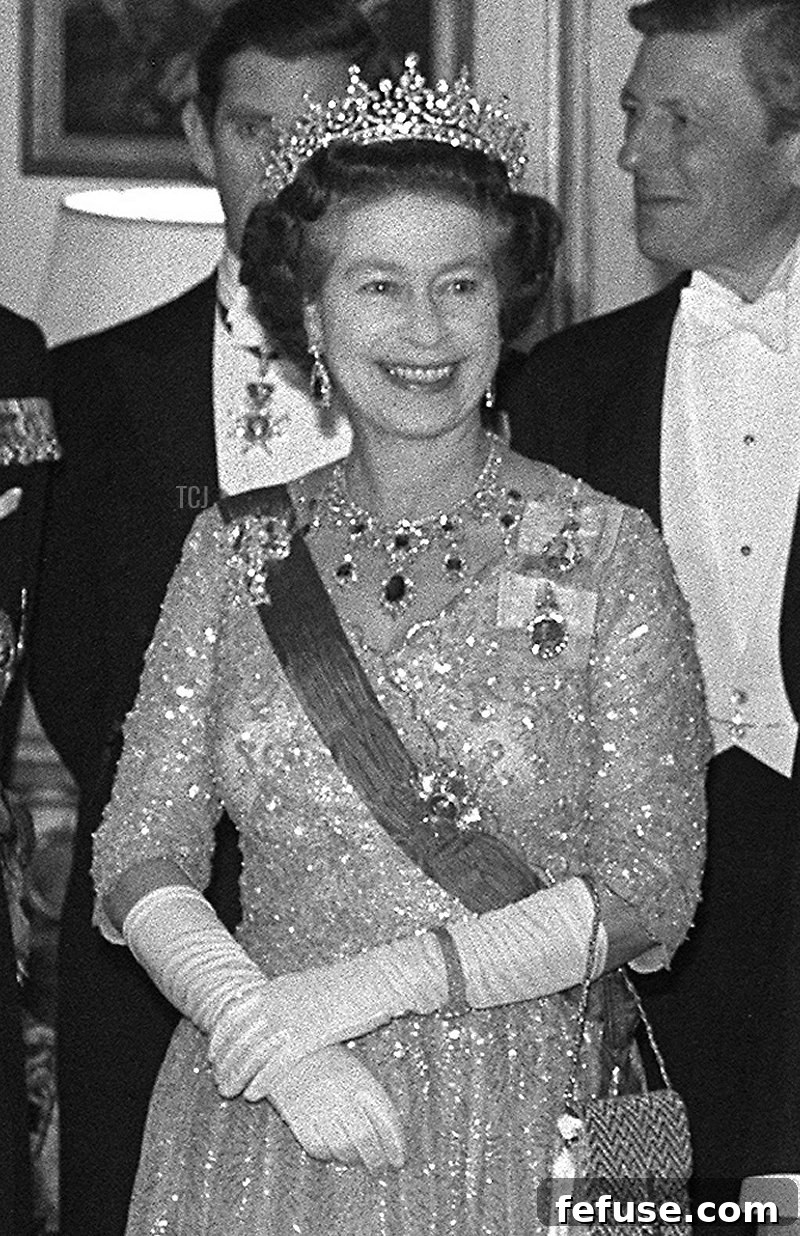
To infuse even more sparkle and historical grandeur into her already splendid ensemble, Queen Elizabeth II carefully selected a dazzling array of diamonds and emeralds from her extensive private jewelry collection. The choice of these particular gems not only complemented her golden gown beautifully but also honored the legacy of one of her most esteemed predecessors, Queen Mary. Among the jewels chosen for the evening were three pieces that originally belonged to her grandmother, Queen Mary, renowned for her impeccable taste and significant contribution to the royal jewel vault. These included the iconic Girls of Great Britain & Ireland Tiara, a magnificent diamond diadem gifted to Queen Mary upon her marriage, which had been passed down and lovingly adopted by Elizabeth II as one of her most frequently worn tiaras. Its sparkling diamonds, originally featuring pearls that were later replaced, perfectly framed her dignified presence. She also wore the elegant Lover’s Knot Brooch, a piece distinguished by its intricate diamond knot design, often associated with sentimental value and cherished by several generations of royal women. Completing this exquisite set were a pair of captivating diamond and emerald frame earrings. These striking earrings were ingeniously crafted by redesigning one of Queen Mary’s original brooches, a common practice within the royal family to adapt historic pieces for modern wear while preserving their intrinsic value and heritage. The deep green of the emeralds, set against brilliant diamonds, provided a stunning contrast and added a touch of vibrant color to her regal look, perfectly harmonizing with the overall splendor of her appearance for the state banquet.
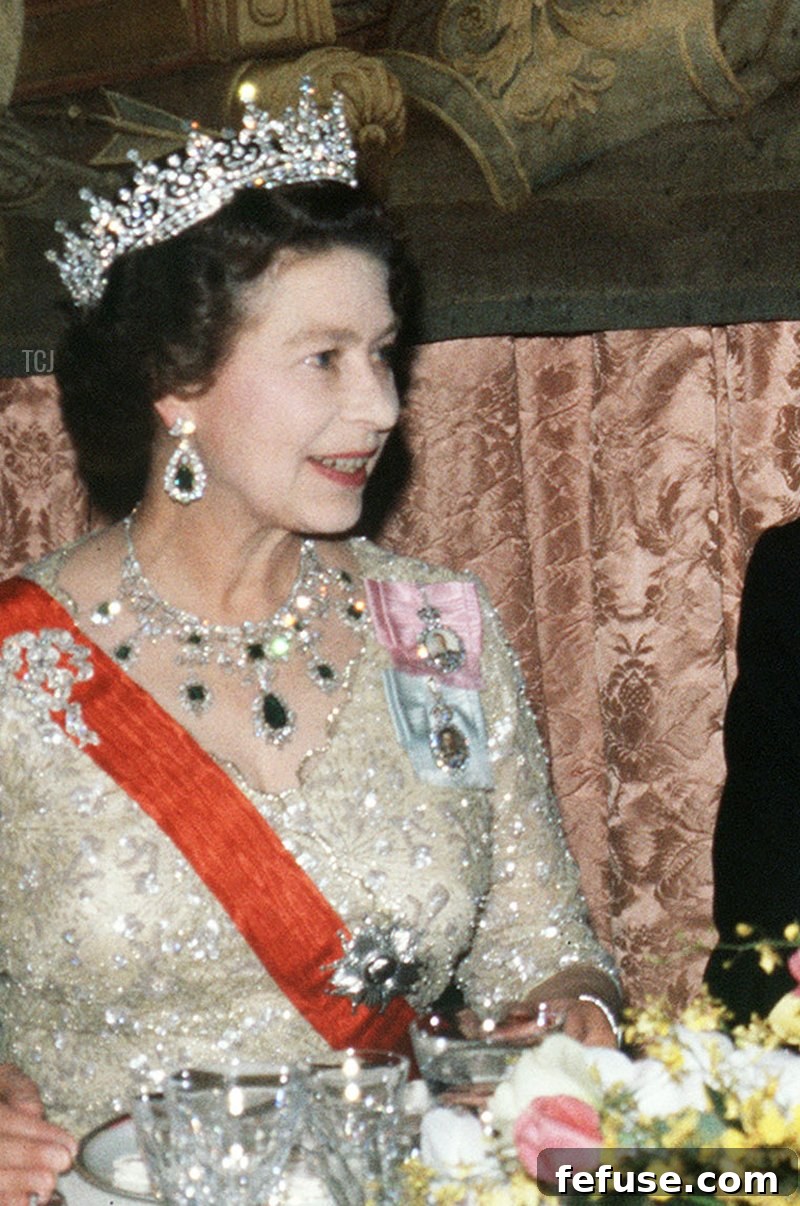
Yet, the undeniable center of attention, the true spotlight piece of Queen Elizabeth II’s magnificent ensemble, was undoubtedly the necklace she wore. This spectacular jewel is none other than the Godman Necklace, a breathtaking nineteenth-century creation showcasing a harmonious arrangement of brilliant diamonds and lush emeralds. Its intricate design and vibrant gemstones captured the light and the gaze of all who beheld it, making it a fitting centerpiece for such a significant state occasion. The story behind this exceptional piece adds another layer of intrigue and historical depth to its already considerable beauty. In 1965, the necklace was generously gifted to Her Majesty by a pair of sisters, Eva and Catherine Godman. This treasured family heirloom had been passed down to them from their distinguished father, Frederick Godman. Frederick Godman was a truly remarkable figure, widely respected as a prominent British scientist, a celebrated naturalist, and a dedicated trustee of the British Museum. His legacy as a scholar and a connoisseur of fine objects undoubtedly contributed to the necklace’s unique history. The decision by his daughters to present such a personal and valuable item to the reigning monarch speaks volumes about their patriotism and respect for the Crown, ensuring that the Godman Necklace would forever remain a part of the illustrious Royal Collection, cherished for both its beauty and its fascinating lineage.
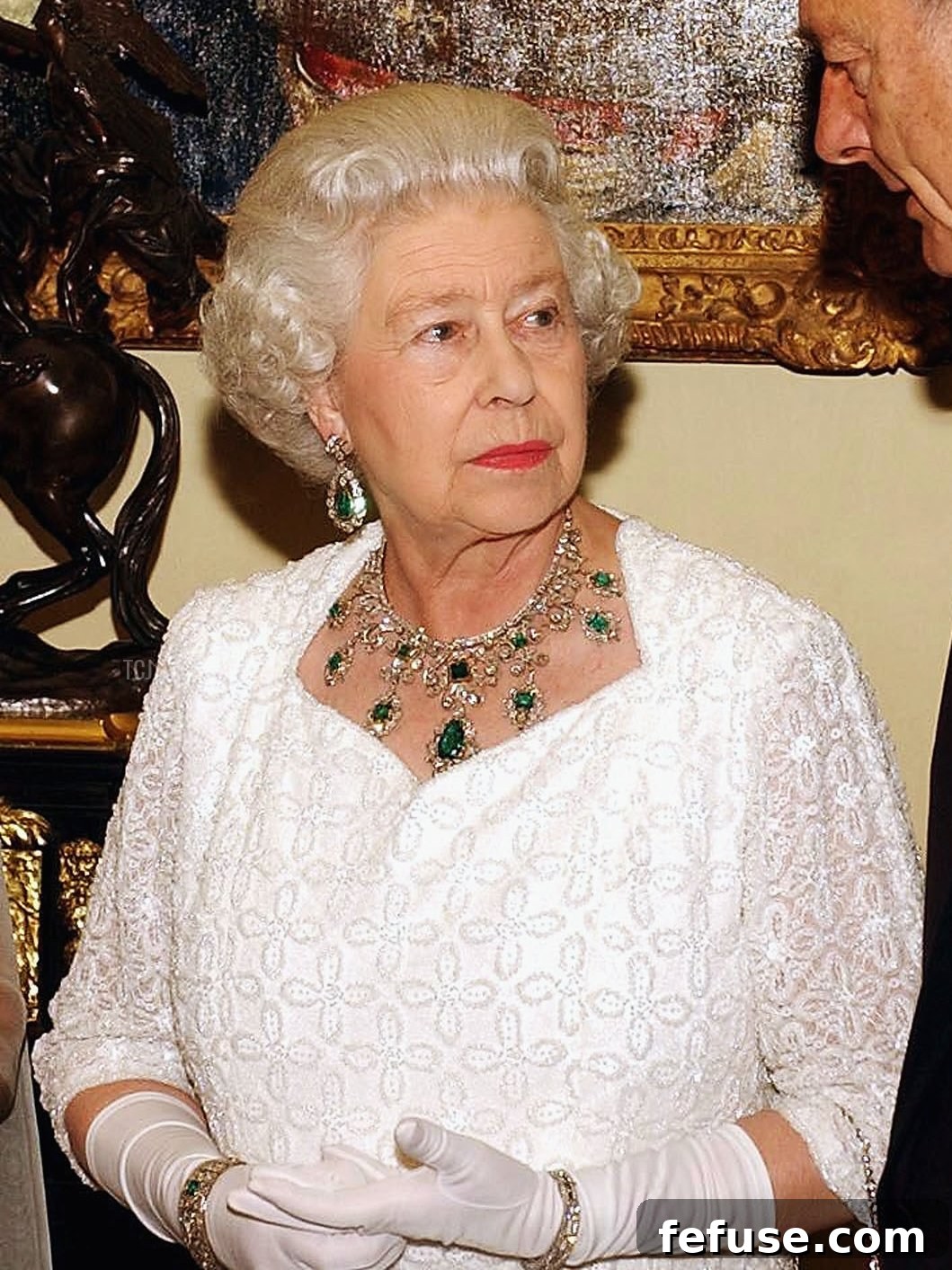
The provenance of the Godman Necklace, while undeniably fascinating, is also steeped in a captivating mystery that has only added to its allure. The Godman family harbored a strong belief that this exquisite jewel, which Frederick Godman acquired during an exploratory trip to Bavaria in the 1890s, held a direct connection to none other than Empress Joséphine of France. They speculated that the necklace might have passed through her illustrious Leuchtenberg descendants, a family branch that spread royalty across Europe. However, despite this intriguing family lore, extensive research conducted by Buckingham Palace, which involved diligent historical digging into archival records and jewel registries, regrettably failed to uncover any concrete, verifiable links connecting the necklace definitively to Empress Joséphine or the Leuchtenbergs. Jewel authentication processes for royal collections are incredibly rigorous, requiring irrefutable evidence. Yet, in a testament to her unique appreciation for beauty and perhaps the romanticism of the unconfirmed legend, Queen Elizabeth II made a rare and personal decision to accept the necklace into the Royal Collection regardless of its unconfirmed noble lineage. Over the subsequent decades of her reign, Her Majesty thoughtfully and symbolically chose to wear the Godman Necklace primarily at events with a direct connection to France. This deliberate choice was a subtle yet powerful nod to its likely, if unproven, French origins, transforming a historical enigma into a diplomatic gesture. A perfect illustration of this practice can be seen in this photograph, where she is pictured wearing the necklace for a grand banquet held at Windsor Castle in November 2004, during another significant state visit, this time by President Jacques Chirac of France to the United Kingdom. This continued use underscored the necklace’s role not just as a beautiful ornament, but as a bridge between cultures and a silent narrator of history.
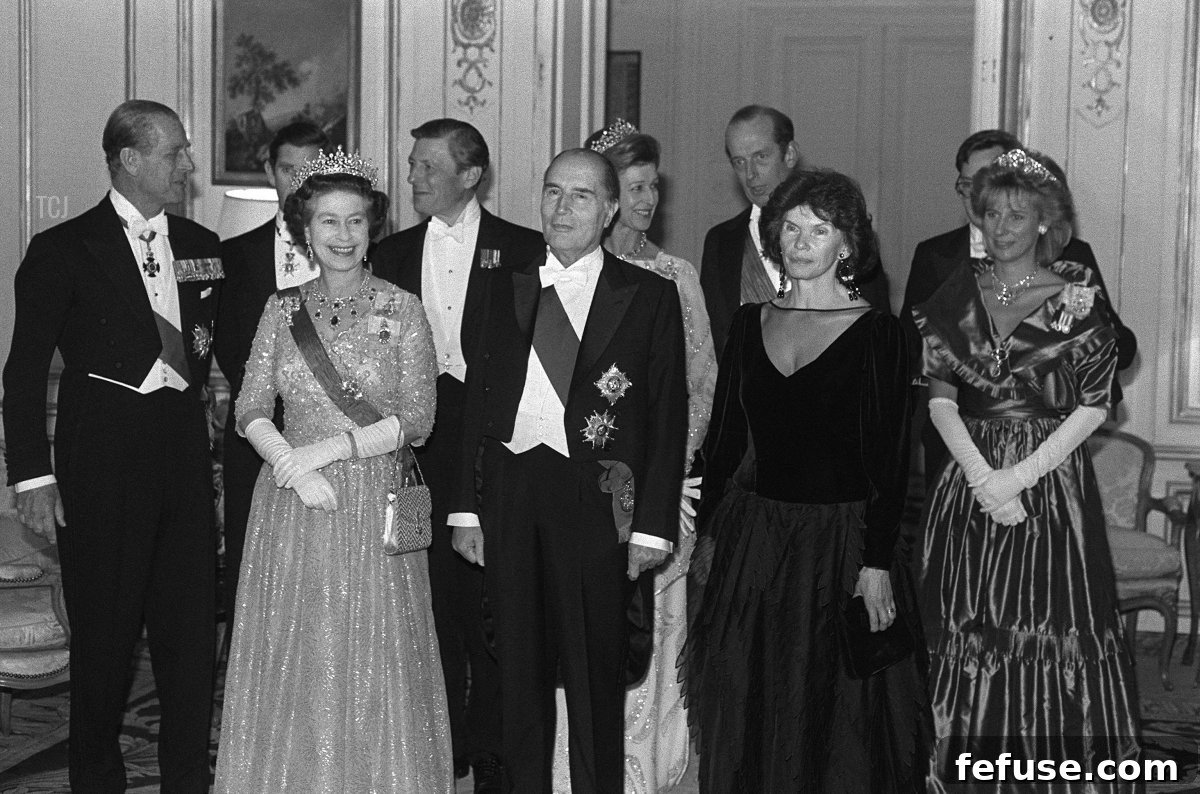
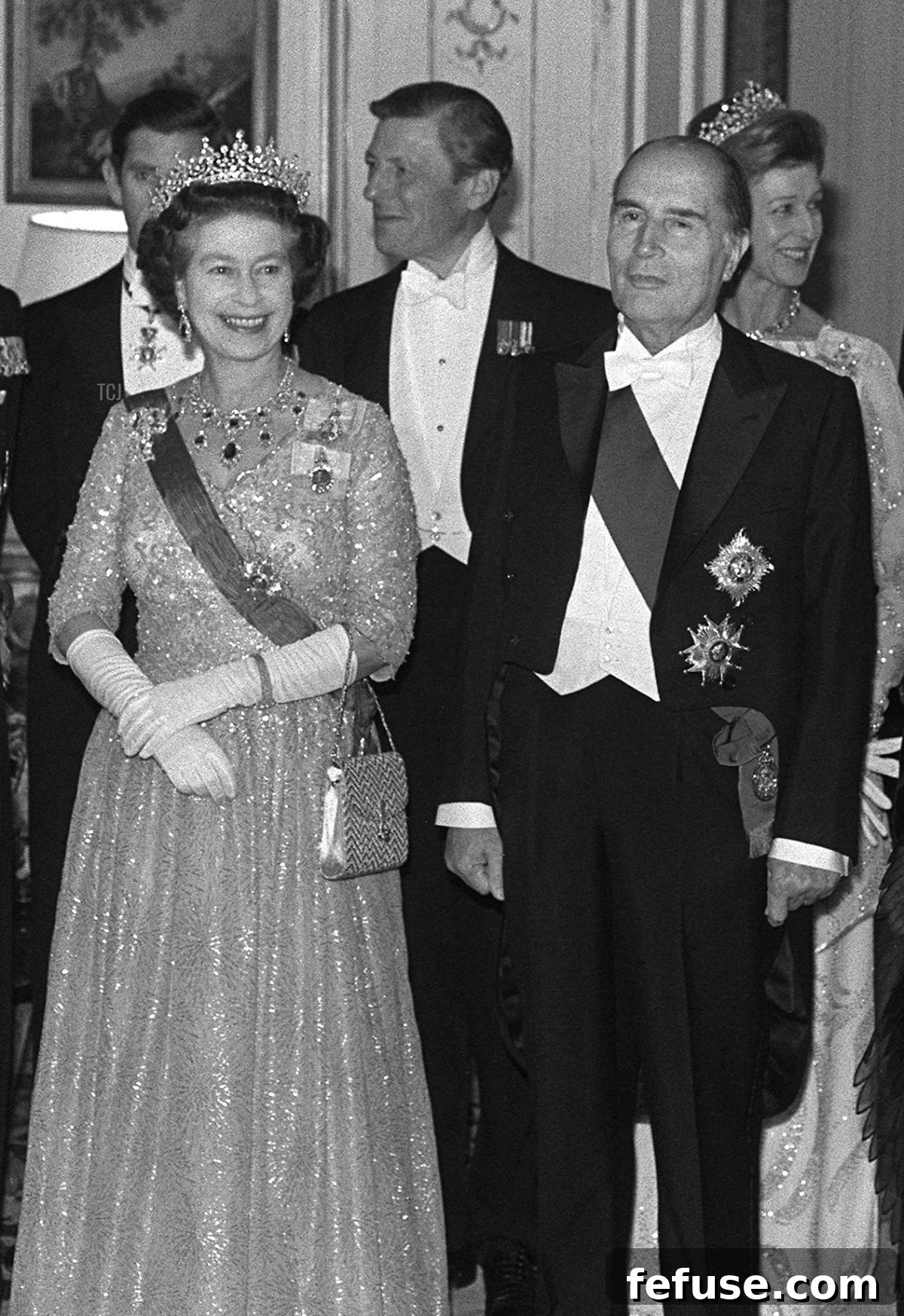
The state dinner at the French Embassy on October 25, 1984, was not solely an occasion for the Queen and the Duke of Edinburgh; it was a comprehensive display of royal presence and diplomatic solidarity, with several other esteemed members of the Royal Family attending alongside the Mitterrands. This collective appearance underscored the importance of the event and the unity of the British monarchy in supporting national interests. In this captivating group photograph, one can observe the presence of the then Prince of Wales, who is now His Majesty King Charles III, already a seasoned figure in international diplomacy, as well as the Duke of Kent, a cousin of the Queen who diligently undertook numerous public duties. Further enhancing the royal company were the Duke and Duchess of Gloucester. The Duchess, known for her elegant style, was seen wearing Queen Mary’s Honeysuckle Tiara, a versatile and historic piece that she chose to display in its delicate pink gemstone setting, adding a soft splash of color to her formal attire. Also present were Sir Angus Ogilvy and his wife, Princess Alexandra, another prominent working member of the Royal Family, who gracefully adorned the Ogilvy Tiara, a personal and significant piece within her own collection. The assembly of such an array of senior royals, each contributing to the glittering tableau of diplomacy and heritage, truly transformed the evening into an unforgettable event, reinforcing the deep-seated traditions and continuing relevance of the British Royal Family on the global stage.