
Zimbabwe’s Riches Plundered: The Staggering Cost of Systemic Corruption
Zimbabwe, a nation blessed with abundant natural resources, finds itself grappling with a pervasive crisis of corruption that has systematically siphoned billions of dollars from its economy. According to veteran economist and former Member of Parliament, Eddie Cross, this illicit drain has cost the country at least $20 billion in “disappeared” rough diamonds alone. His stark revelations, widely reported in Zimbabwean media, paint a grim picture of unchecked greed deeply embedded within the nation’s highest echelons, reaching back to the era of the late President Robert Mugabe.
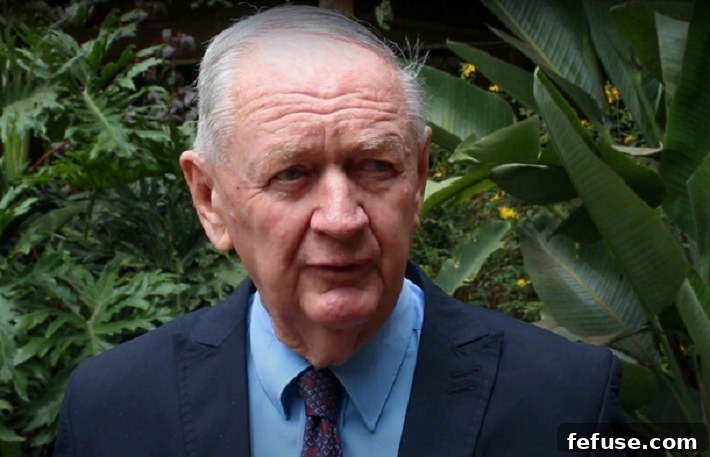
Cross, an 84-year-old esteemed figure, asserts that the economic hemorrhage continues unabated, profoundly impacting the nation’s potential for growth and prosperity. His unfiltered analysis, shared on his personal website, serves as a crucial wake-up call, urging a deeper examination of the mechanisms that facilitate such monumental illicit financial flows.
The Marange Diamond Fields: A Tale of Hope and Betrayal
The discovery of the Marange diamond fields in eastern Zimbabwe in 2006, following initial exploration by De Beers, ignited immense hope for the nation’s economic future. These vast alluvial deposits, covering nearly 100,000 hectares, held the promise of transforming Zimbabwe’s fiscal landscape. At its peak, Cross estimated that Zimbabwe’s Marange fields were producing more carats than Botswana, a globally renowned diamond producer, highlighting the immense potential that was tragically squandered.
However, what began as a beacon of economic opportunity quickly devolved into a saga of exploitation and illicit enrichment. Cross recounts how the Marange fields were allegedly taken over illegally by the Ministry of Mines. Control subsequently fell into the hands of six companies, all reportedly linked to powerful government figures, including the then-state president. This illicit transfer of ownership set the stage for a period of rampant, opaque extraction that would ultimately bleed the nation dry.
The Disappearing Billions: Mugabe’s Alleged Role
The scale of the alleged theft from Marange is staggering. Eddie Cross personally estimates that the fields have yielded nearly $30 billion in raw diamonds since production began. Of this colossal sum, approximately one-third was likely absorbed by legitimate operational costs. The remaining two-thirds, a staggering $20 billion, has, according to Cross, simply “disappeared” from the national accounts, leaving little to no benefit for the Zimbabwean populace.
Perhaps one of the most damning accusations leveled by Cross is against the late Robert Mugabe, who served as Prime Minister from 1980 to 1987 and then President until 2017. Cross alleges that Mugabe personally misappropriated $1.3 billion from the diamond proceeds. This accusation gains chilling resonance when juxtaposed with Mugabe’s own public query. He famously, and somewhat ironically, asked aloud where a reported $15 billion from diamond mining had gone. Cross suggests that Mugabe knew the answer to his own question, implying a deep personal involvement in the illicit activities he publicly questioned.
The systematic looting of Marange diamonds represents one of the most egregious examples of state capture and corruption in recent African history. The missing billions could have been channeled into vital public services, infrastructure development, healthcare, education, and poverty alleviation programs, fundamentally altering the trajectory of Zimbabwe’s development. Instead, these riches reportedly vanished into private coffers, deepening national debt and exacerbating socio-economic challenges for the majority of citizens.
Beyond Diamonds: A Culture of Systemic Corruption
The corruption in Zimbabwe, as highlighted by Eddie Cross, extends far beyond the diamond fields, pervading nearly every facet of government activity. It has become deeply institutionalized, impacting the efficiency and fairness of public administration. Cross provides a revealing personal anecdote that underscores the endemic nature of this problem. He recalls being approached by a senior civil servant who demanded a bribe to sign a routine letter. When Cross protested, stating that signing the letter was merely part of the civil servant’s job, he was met with the blunt response: “Do you think we do this sort of thing for nothing?” Unwilling to pay the bribe, Cross ultimately did not obtain the letter, illustrating the obstructive power of such pervasive corruption.
This culture of demanding payment for standard government services creates an environment where bureaucratic processes are deliberately slowed or withheld until bribes are paid. It stifles legitimate business, discourages investment, and fundamentally erodes public trust in state institutions. For ordinary citizens, this translates into difficulties accessing essential services, obtaining necessary permits, or navigating administrative procedures without resorting to illicit payments, thereby perpetuating the cycle of corruption.
The Gold Connection: Illicit Financial Flows and the Informal Economy
The scourge of corruption, Cross notes, quickly infects the private sector, creating a murky interface between legitimate commerce and illicit operations. A recent statement from the Dubai Gold Exchange provides further compelling evidence of significant illicit financial flows originating from Africa, with Zimbabwe playing a substantial role. In 2023, the exchange reported purchasing nearly 450 tonnes of gold from “informal origins” across Africa. This staggering volume of gold is valued at approximately $32 billion. Crucially, a third of this total, valued at over $10 billion, is estimated to have originated from Zimbabwe.
This revelation sheds light on a massive gold smuggling operation that bypasses formal economic channels, denying the Zimbabwean treasury billions in potential tax revenue and royalties. The “informal origins” designation often masks illicit mining, unregistered exports, and a lack of proper documentation, all indicative of a system vulnerable to exploitation. The prevalence of such large-scale gold smuggling contributes significantly to the paradoxical situation Cross describes: “No wonder we are awash in US dollars in cash.” While an abundance of hard currency might seem positive on the surface, when it circulates predominantly outside formal banking systems and taxation, it signals a shadow economy fueled by illicit activities, money laundering, and capital flight rather than healthy economic growth.
The existence of a parallel economy, largely driven by undeclared mineral wealth, undermines official economic policy, distorts market prices, and makes it incredibly difficult for the government to implement effective fiscal measures. It also exacerbates economic inequality, as the benefits of this vast wealth are concentrated in the hands of a few connected individuals, while the majority of the population struggles with high unemployment, inflation, and inadequate social services.
The Devastating Impact on Zimbabwe’s Development
The continuous leakage of economic output and income, as vividly described by Eddie Cross, has profound and devastating consequences for Zimbabwe’s development prospects. The billions lost to corruption could have been instrumental in revitalizing the nation’s dilapidated infrastructure, upgrading its healthcare and education systems, and creating sustainable employment opportunities for its burgeoning youth population. Instead, these funds are diverted, leaving critical sectors underfunded and hindering any genuine progress towards economic recovery and stability.
Systemic corruption erodes investor confidence, making Zimbabwe a less attractive destination for both domestic and foreign investment. Businesses are wary of operating in an environment where the rule of law is compromised, contracts are not honored, and illicit payments are often a prerequisite for operations. This lack of investment stifles job creation, technological advancement, and overall economic dynamism.
Moreover, pervasive corruption fuels poverty and inequality. The wealth generated from the nation’s natural resources, which should benefit all citizens, is instead concentrated in the hands of a corrupt elite, widening the gap between the rich and the poor. This exacerbates social tensions and undermines the government’s legitimacy, leading to a cycle of disillusionment and instability.
Pathways to Reform and Accountability
Addressing the deeply entrenched corruption in Zimbabwe requires a multi-faceted and sustained approach, beginning with unwavering political will. Key steps include:
- Strengthening Institutions: Empowering independent anti-corruption agencies with the resources and autonomy to investigate and prosecute cases without fear or favor.
- Enhancing Transparency and Accountability: Implementing robust measures for public financial management, including transparent budgeting, procurement processes, and public disclosure of asset declarations for public officials.
- Judicial Reform: Ensuring an independent and efficient judiciary capable of upholding the rule of law and impartially adjudicating corruption cases.
- Recovering Stolen Assets: Developing and utilizing legal frameworks for asset tracing, freezing, and recovery, both domestically and through international cooperation.
- Promoting Whistleblower Protection: Creating safe and effective channels for individuals to report corruption without fear of retaliation.
- International Cooperation: Collaborating with international bodies and other nations to combat cross-border illicit financial flows and bring perpetrators to justice.
- Engaging Civil Society and Media: Fostering an environment where civil society organizations and independent media can freely monitor government activities and expose corruption.
Conclusion: A Call for Urgent Action
Eddie Cross’s courageous and detailed exposé serves as a critical indictment of the corruption that continues to plague Zimbabwe. From the vanishing billions of Marange diamonds under Robert Mugabe’s watch to the pervasive culture of bribery and the staggering scale of gold smuggling revealed by international data, the narrative is one of a nation being systematically deprived of its wealth. The cumulative impact of these illicit activities is profound, undermining economic development, exacerbating poverty, and eroding public trust.
Zimbabwe stands at a critical juncture. The path forward demands decisive action, transparency, and a renewed commitment to good governance. Only by dismantling the deeply entrenched networks of corruption and fostering a culture of accountability can the nation hope to unlock its immense potential and ensure that its natural riches truly benefit all its citizens, paving the way for a more equitable and prosperous future.