
The Diamond Industry’s Evolving Commitment to Responsibility, Sustainability, and Provenance
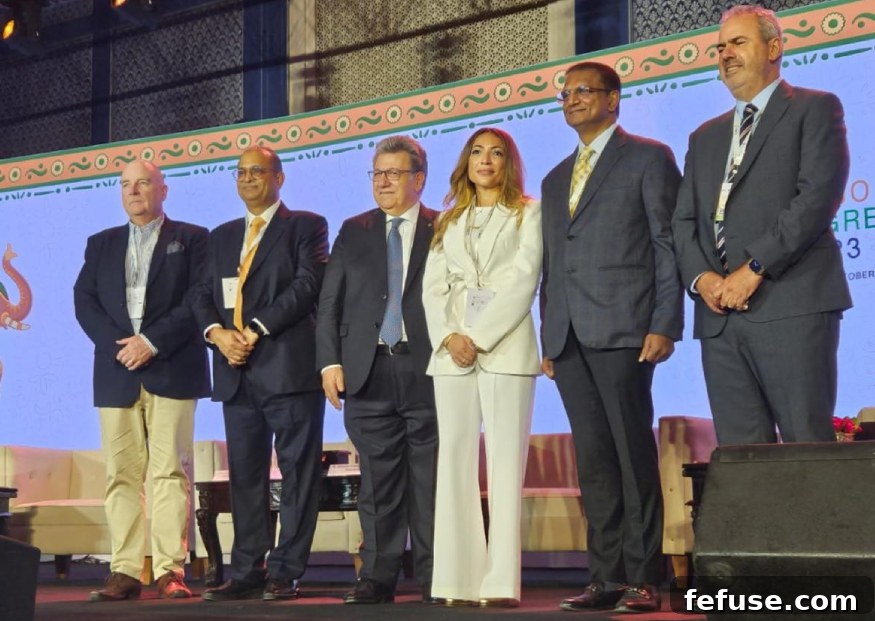
In an era where consumers are increasingly scrutinizing the origins and ethical footprint of their purchases, the global jewellery industry stands at a pivotal moment. The products it offers are not merely commodities; they are powerful symbols, often marking life’s most cherished milestones – engagements, anniversaries, births, and significant achievements. This inherent connection to profound personal meaning places a heightened emphasis on the values of responsibility, sustainability, and provenance within the sector. This critical theme was eloquently articulated by World Diamond Council (WDC) President Feriel Zerouki during her address at the opening ceremony of the 2023 Congress of the World Jewellery Confederation (CIBJO), an influential gathering that took place from October 3rd to 5th in the vibrant city of Jaipur, India. Zerouki’s remarks underscored the imperative for the industry to not only meet but exceed contemporary ethical standards, ensuring that every piece of jewellery tells a story of integrity from mine to market.
Pivotal Role of Industry Bodies in Upholding Consumer Trust
Zerouki highlighted the indispensable role played by key industry organizations such as CIBJO in fostering a robust framework of trust and ethical practice. “This is why industry bodies such as CIBJO, with its focus on consumer confidence, responsible sourcing and sustainability initiatives, are so important,” she stated. These organizations serve as crucial pillars, developing standards, facilitating dialogue, and driving collective action across the diverse and complex jewellery supply chain. Their work directly addresses the growing demand from consumers for transparency and assurance that the products they acquire are ethically sourced and produced with minimal environmental impact. The CIBJO Congress itself, Zerouki emphasized, represents a vital forum for stakeholders to converge, discuss pressing issues, share best practices, and chart a sustainable course for the future of the industry. Such events are not merely conferences but essential catalysts for progress, shaping policies and encouraging the adoption of practices that reinforce the industry’s commitment to its stakeholders and the planet.
The pursuit of consumer confidence is multifaceted, extending beyond mere product quality to encompass the entire lifecycle of a gemstone or piece of jewellery. It involves stringent measures against illicit trade, adherence to environmental protection standards, and ensuring fair labor practices at every stage of production. Organizations like the WDC and CIBJO actively engage in initiatives designed to educate consumers and empower industry participants to implement these high standards, thereby building a foundation of trust that is paramount for long-term success. Their collaborative efforts create a unified front against unethical practices, ensuring the enduring allure and integrity of natural diamonds and other precious materials.
Equity as the Cornerstone of Ethical ESG Practices
Later that same day, during a profound panel discussion dedicated to promoting responsible Environmental, Social, and Governance (ESG) practices throughout the jewellery supply chain, Feriel Zerouki expanded on a critical aspect often overlooked: the need to foster profound fairness and equity among all industry players to genuinely achieve ESG objectives. Her assertion resonated deeply: “To be ethical we need to be equitable.” This statement challenged conventional understandings of ethics, suggesting that true ethical conduct cannot exist without a foundational commitment to fairness. Zerouki passionately illustrated her point with a compelling analogy involving two individuals, one tall and one short, both paying the same price for a concert ticket. While the taller person would likely enjoy an unobstructed view of the performance, the shorter individual’s view would most probably be impeded. “True equality exists only if opportunity is equitable,” she concluded, succinctly capturing the essence of her argument. This powerful example underscores that providing equal access is not always enough; policies and practices must be designed to ensure equitable outcomes, where everyone, regardless of their position in the supply chain or the scale of their operation, has a fair chance to succeed and benefit.
This principle of equity is especially vital in the global jewellery supply chain, which often involves a vast array of participants ranging from artisanal small-scale miners in remote regions to large multinational corporations. Ensuring fair wages, safe working conditions, transparent transactions, and accessible markets for all actors, particularly those at the grassroots level, is not just a matter of compliance but a moral imperative. Ethical ESG practices demand a holistic approach that actively seeks to rectify imbalances and create a level playing field. Without equity, even well-intentioned ethical policies can inadvertently disadvantage smaller entities or communities, creating new forms of injustice. The WDC, alongside other industry bodies, advocates for policies that promote capacity building, provide fair access to markets, and ensure that the benefits of the diamond trade are shared more equitably across the entire value chain, from the mine to the consumer.
Unanimous Industry Support for the G7 Diamond Protocol
A significant highlight of the 2023 CIBJO Congress was the resounding support voiced by leaders of key jewellery and gemstone associations for the proposed G7 Diamond Protocol. This protocol represents a crucial industry-facilitated proposal, spearheaded by the WDC, designed to meet the new, urgent requirements set forth by the governments of G7 countries. The primary objective of these requirements is to significantly restrict the import and trade of rough and polished diamonds originally mined in Russia, in response to geopolitical developments. The G7 nations collectively represent a substantial portion of the global luxury market, accounting for over 60% of annual global diamond jewellery sales by value, making their stance on this issue particularly impactful.
The level of support for the G7 Diamond Protocol demonstrated the industry’s unified commitment to responsible sourcing and compliance. Among the prominent figures who publicly endorsed the protocol were CIBJO President Gaetano Cavalieri, Yoram Dvash, President of the World Federation of Diamond Bourses (WFDB), and Vipul Shah, Chairman of India’s Gem and Jewellery Export Promotion Council (GJEPC). Their support was not merely ceremonial; these leaders had been actively consulted during the formulation of the protocol, ensuring that the industry’s practical insights and capabilities were integral to its design. They were joined by the heads of other influential associations, such as the Responsible Jewellery Council (RJC), further solidifying the broad consensus behind this critical initiative. This collective backing is paramount for the successful implementation and global acceptance of such a far-reaching measure, signalling a strong, unified front from the industry to address complex geopolitical challenges while upholding ethical trade practices.
Designing an Inclusive and Effective Solution: The G7 Diamond Protocol
The proposed G7 Diamond Protocol, which has been formally presented to the G7 governments, is a meticulously crafted plan that seeks to achieve its core objective without inadvertently penalizing legitimate businesses, especially smaller and micro-enterprises. It builds upon established, effective solutions such as blockchain-backed traceability systems and robust third-party auditing schemes, which have proven their efficacy in enhancing transparency and accountability within the supply chain. However, a key innovation of this protocol lies in its commitment to inclusivity. It proposes new, accessible solutions specifically designed not to hinder compliant smaller and micro-enterprises from engaging with and accessing the lucrative G7 markets. This foresight is critical, as many stakeholders, including artisanal and small-scale miners (ASM), members of the cottage industry, and independent traders, form the backbone of the diamond supply chain in various parts of the world. Excluding them due to overly burdensome compliance requirements would not only be inequitable but could also inadvertently push legitimate smaller operations into informal, less regulated channels, undermining the very goals of the protocol.
The G7 Diamond Protocol is thoughtfully structured to align with the overarching themes of equality and equity championed by Feriel Zerouki. Its design aims to put forward a comprehensive approach that deliberately avoids favouring one commercial centre or segment of the industry over another. This commitment to neutrality ensures that all legitimate players, regardless of their geographical location or scale of operation, are treated fairly and have equitable opportunities within the global market. Crucially, the protocol is engineered to be an effective and pragmatic solution that directly addresses the G7 governments’ primary objective: to prohibit Russian diamonds from entering their markets. The solution, facilitated by the WDC through extensive stakeholder engagement and technical expertise, is therefore designed to be both fair and accessible to all compliant participants in the global diamond trade. It represents a forward-thinking model where stringent ethical controls coexist with pragmatic, inclusive mechanisms, ensuring that the entire industry can adapt and thrive in a more responsible and transparent future.
A Future Forged in Transparency and Equity
The discussions and developments at the 2023 CIBJO Congress, particularly the overwhelming support for the G7 Diamond Protocol, underscore a profound and enduring shift within the jewellery industry. It is an industry increasingly dedicated to transparency, ethical conduct, and sustainable practices, recognizing that these values are not merely regulatory burdens but fundamental drivers of consumer trust and long-term viability. The emphasis on equity, ensuring that all participants, regardless of their size, have fair access and opportunity, reflects a maturing understanding of global supply chain dynamics and social responsibility. By actively pursuing solutions like the G7 Diamond Protocol, which leverage advanced traceability while protecting the livelihoods of smaller enterprises, the diamond sector is charting a course towards a future where every brilliant stone tells a story of integrity, responsibility, and collective progress. This proactive stance not only strengthens consumer confidence but also solidifies the industry’s enduring legacy as a symbol of beauty, celebration, and ethical stewardship.