
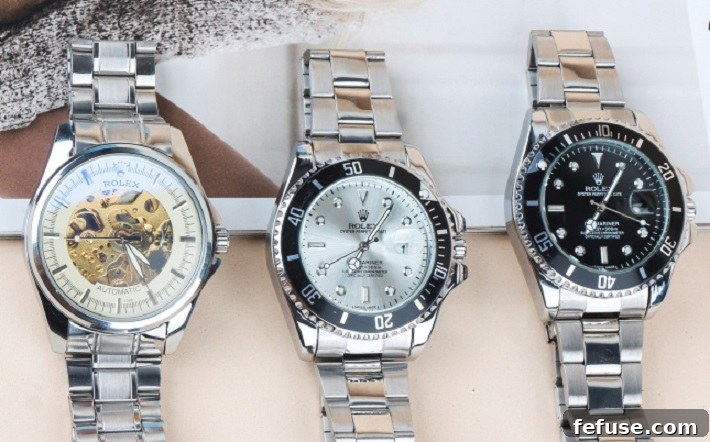
The Growing Crisis of Counterfeit Luxury Watches: How to Spot Fakes in a Sophisticated Market
The allure of luxury watches is undeniable, blending exquisite craftsmanship, historical significance, and a symbol of status. However, beneath this glamorous surface lies a dark and rapidly expanding problem: the proliferation of highly sophisticated counterfeit timepieces. As the market for luxury watches, particularly in the pre-owned sector, continues to boom, so too does the challenge of discerning authentic pieces from remarkably convincing fakes. This escalating issue not only threatens the integrity of high-end brands but also poses significant risks to unsuspecting consumers and the entire secondary market.
According to Arjen van de Vall, CEO of Watchfinder, one of the UK’s largest and most reputable sellers of second-hand timepieces, an astonishing one in ten luxury watches currently in circulation could be a fake. This alarming statistic underscores the scale of the problem. What’s even more concerning is the dramatic shift in the ease of identification. Van de Vall highlights that even for seasoned experts, the line between genuine and counterfeit has blurred to an unprecedented degree. The days when a quick glance could often expose a fake are long gone, replaced by an era where meticulous scrutiny is paramount.
The Escalating Challenge of Authenticity
The art of counterfeiting has evolved from crude imitations to highly complex reproductions that mimic genuine articles with astonishing precision. Van de Vall elaborated on this alarming trend during an interview with Bloomberg Radio, revealing how significantly their internal authentication processes have changed. “In the old days, around 20 per cent of watches would require further inspection to understand if they were fake,” he explained. This meant that the vast majority of watches could be quickly verified as genuine, with only a small fraction needing deeper investigation.
Today, the scenario is starkly different. “Today, it is around 80 per cent of watches that need this thorough testing and inspection to see if they are genuine or not,” Van de Vall stated. This dramatic increase – from 20% to 80% – illustrates the exponential growth in the sophistication of counterfeit operations. It means that what was once a relatively straightforward process for authentication centers has become an intensive, resource-heavy battle against increasingly elusive fakes. The margin for error has shrunk, and the imperative for comprehensive examination has never been greater.
Beyond the Surface: The Indispensable Role of Internal Inspection
With fakes becoming visually indistinguishable from genuine pieces on the exterior, experts are increasingly forced to delve deeper, literally. As Van de Vall confirmed, the days of relying solely on external checks – examining the dial, case finish, engravings, or bracelet – are largely over. To achieve certainty regarding a watch’s authenticity, experts must now perform invasive procedures. This typically involves opening the watch caseback to access and meticulously inspect the internal movement.
The movement, often considered the heart and soul of a mechanical watch, holds many of the definitive clues to its authenticity. Counterfeiters may replicate external aesthetics with remarkable accuracy, but replicating the intricate mechanical perfection, unique finishing, and precise engineering of a genuine high-end movement is a far more daunting task. Experts scrutinize serial numbers, specific component designs, finishes, screw types, and even the subtle ‘feel’ of the winding mechanism or chronograph pushers. This level of detail requires specialized tools, extensive training, and an encyclopedic knowledge of countless calibers across various brands and eras.
Rolex: The Ultimate Target for Counterfeiters
While all luxury watch brands fall victim to the illicit trade of counterfeiting, some are targeted more aggressively than others. Watchfinder, which is part of the prestigious Swiss Richemont conglomerate, unequivocally states that Rolex is the brand worst-hit by counterfeiters. This comes as no surprise, given Rolex’s unparalleled market dominance, universal recognition, and consistent high demand. The brand’s iconic status, combined with the fact that many of its models retain or even appreciate in value, makes it an incredibly attractive target for those looking to profit from deception.
The statistics are staggering: approximately half of all fake watches encountered in the market are Rolex replicas. This dominance in the counterfeit market mirrors its dominance in the genuine luxury watch market. The widespread desirability of models like the Submariner, Daytona, Datejust, and GMT-Master II ensures a constant demand for both authentic and replica versions. Counterfeiters capitalize on this global appeal, churning out fakes that range from cheap, easily identifiable copies to super fakes that require expert intervention to unmask. The sheer volume and sophistication of fake Rolex watches represent a significant challenge for the industry and a pervasive threat to buyers.
The “Frankenstein” Phenomenon: A Deeper Form of Deception
The threat of counterfeiting extends beyond outright fake watches manufactured from scratch. Another insidious form of deception involves what the industry refers to as “Frankenstein” watches – timepieces assembled from a combination of genuine and non-genuine parts, or authentic parts from different watches to create a fraudulent “original.” This method makes detection even harder, as the presence of genuine components can lend a deceptive air of authenticity.
A recent high-profile case involving Omega vividly illustrates this sophisticated form of fraud. Last month, Omega revealed that three former employees were involved in a criminal plot to create a “Frankenstein” Speedmaster Broad Arrow Ref. 2915-1. This particular reference is exceptionally rare and highly coveted by collectors, making it an ideal target for such a scheme. The fraudulent watch was meticulously crafted, primarily using authentic parts sourced from other vintage Omega watches. This meant that many components would pass initial authenticity checks, making the overall deception incredibly difficult to uncover.
The deception was so convincing that the company itself fell victim. Omega purchased the watch at auction in 2021, paying a record-breaking $3.4 million, believing it to be a pristine example of the rare reference. It was only later, through further internal examination and historical research, that the true nature of the “Frankenstein” creation was uncovered. This incident sent shockwaves through the collecting community, highlighting that even the most experienced buyers and brands can be fooled by expert-level fraud. It serves as a potent reminder that provenance, complete documentation, and the integrity of every single component are critical when dealing with high-value vintage timepieces.
Safeguarding Your Investment: Tips for Buyers
Given the alarming trends in the counterfeit market, prospective luxury watch buyers, especially those looking at the pre-owned sector, must exercise extreme caution and diligence. Protecting your investment and ensuring you acquire a genuine timepiece involves several key steps:
Firstly, **always buy from reputable and established dealers.** Companies like Watchfinder or authorized pre-owned dealers invest heavily in expert authenticators and rigorous inspection processes. They offer warranties and guarantees of authenticity, providing a crucial layer of protection. Avoid unverified sellers on online marketplaces or dubious private transactions, where the risk of encountering a fake is significantly higher.
Secondly, **demand comprehensive documentation.** A genuine luxury watch, particularly one from the pre-owned market, should ideally come with its original box, papers (warranty card, chronometer certificate), and service history. While the absence of these doesn’t always indicate a fake, their presence provides strong supporting evidence of authenticity and provenance. Matching serial numbers on the watch, papers, and case are essential.
Thirdly, **seek independent verification.** If you are making a significant purchase, especially from a less familiar source, consider having the watch inspected by an independent, certified watchmaker or authenticator who specializes in the brand. This additional layer of expert scrutiny can provide peace of mind and uncover subtleties that might escape an untrained eye.
Finally, **educate yourself.** While expert knowledge is paramount, understanding the basic characteristics of genuine luxury watches – their weight, finish, movement sound, dial details, and specific reference features – can help you identify obvious red flags. Be wary of prices that seem “too good to be true,” as they often are. A significantly discounted luxury watch, especially a highly sought-after model, should always raise suspicion.
The Ongoing Battle for Authenticity and Market Integrity
The fight against counterfeit luxury watches is an ongoing battle that requires continuous innovation and collaboration across the industry. Brands are investing in advanced anti-counterfeiting measures, including unique micro-engravings, proprietary alloys, and secure digital authentication systems that leverage technologies like blockchain. These initiatives aim to create a verifiable digital fingerprint for each watch, enhancing transparency and traceability throughout its lifecycle.
Furthermore, legal efforts to combat counterfeit operations are intensifying globally, with increased collaboration between law enforcement agencies and luxury goods associations. The economic impact of counterfeiting is immense, not just for individual brands but for the global economy, fueling illicit activities and undermining legitimate businesses. Ensuring the integrity of the luxury watch market is crucial for maintaining consumer trust and protecting the heritage and value that these magnificent timepieces represent.
In conclusion, the luxury watch market finds itself at a critical juncture, grappling with an unprecedented wave of sophisticated counterfeits. The days of simple fake identification are behind us, replaced by a complex landscape where expert internal inspection is frequently the only definitive safeguard. While iconic brands like Rolex bear the brunt of this threat, the “Frankenstein” phenomenon highlights an even deeper level of deception impacting all high-value timepieces. For enthusiasts and collectors, vigilance, informed decision-making, and reliance on trusted sources are not just advisable, but absolutely essential to navigate this challenging environment and preserve the true value and joy of luxury watch ownership.