
The global diamond industry, a sector synonymous with luxury and timeless elegance, finds itself at a pivotal juncture following the United States’ decisive move to impose sanctions on gem-quality diamonds originating from Russia. This significant geopolitical development, directly stemming from Russia’s actions in Ukraine, is set to reshape established supply chains and challenge long-held industry practices. Russia, a colossal player in the rough diamond market, contributes nearly 30 percent of the world’s supply, making these sanctions an event of unparalleled magnitude for the diamond trade.
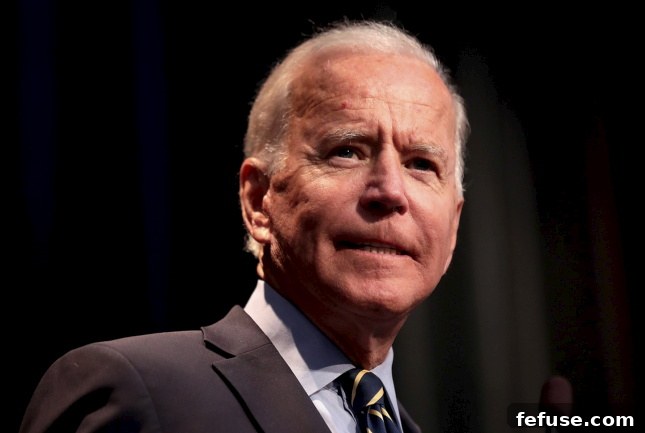
President Joe Biden’s executive order, issued on a recent Friday, formally banned the import of “non-industrial diamonds” from Russia into the US. This sweeping measure was not isolated; it arrived alongside prohibitions on other high-value Russian exports, including vodka, caviar, and various luxury goods, signaling a broad-based strategy to exert maximum economic pressure on Moscow. The President articulated the rationale behind these escalated measures, stating, “As Putin continues his merciless assault, the United States and our allies and partners continue to work in lockstep to ramp up the economic pressures on Putin and to further isolate Russia in the global stage.” This statement underscores the strategic intent to sever Russia’s access to international markets and revenue streams that could fund its ongoing military operations.
Prior to this explicit import ban, the financial landscape for Russian diamonds was already fraught with difficulties. Restrictions on bank transactions involving Russian entities, enacted approximately two weeks before the executive order, had made the purchase of diamonds from Russian companies exceedingly challenging, though not outright illegal. The latest executive order, however, unequivocally shifts the paradigm. It directly prohibits trade with Alrosa, a monolithic entity in the diamond world, a third of which is owned by the Russian government. Alrosa’s immense stature, coupled with its direct ties to the state, makes it a prime target for these sanctions, aiming to cripple a vital economic artery for Russia.
The implementation of this ban, while clear in its intention, has immediately raised complex questions, particularly concerning the definition of “Russian origin.” The US government has yet to provide comprehensive clarification on whether the prohibition extends to diamonds mined in Russia but subsequently cut, polished, and processed in other countries. This ambiguity creates a significant conundrum for the global supply chain, which is inherently intricate and multinational. As Tiffany Stevens, CEO and general counsel of the Jewelers Vigilance Committee (JVC), aptly summarized, “This is a very big deal and a once-in-a-lifetime situation for the diamond industry.” Stevens further elaborated on the core issue, stating, “The issue is ‘what is considered of Russian origin?’ It can originate in Russia and is then cut and polished in India. Is it then considered an Indian diamond at that point?” This question lies at the heart of the challenges facing diamond merchants, importers, and retailers worldwide.
The global diamond pipeline is a complex web, with rough diamonds often traveling thousands of miles from mine to market. Russia’s vast diamond fields supply a significant portion of the rough stones that are then sent to major cutting and polishing centers, most notably in India, but also in Antwerp and Israel. These centers transform the raw stones into brilliant gems, which are then distributed globally. If a diamond mined in Russia undergoes significant value addition and transformation in, for example, India, does its nationality shift? This technicality has profound implications for compliance, traceability, and the integrity of the supply chain. Jewelers and retailers, particularly those in the US market, are grappling with the potential legal and reputational risks associated with unknowingly importing or selling diamonds that, despite their final processing location, might still be deemed of Russian origin under future clarifications.
In response to this uncertainty, the Jewelers Vigilance Committee (JVC), a leading authority providing compliance guidance to the jewelry industry, has swiftly advised its approximately 600 members to immediately cease any direct purchases of diamonds from a Russian company. This proactive stance reflects the industry’s recognition of the gravity of the situation and the imperative to adhere to evolving sanctions. However, the JVC’s advice, while critical for direct transactions, does not fully resolve the “origin” dilemma for indirect purchases through third-party intermediaries or for existing inventory. The need for clear, actionable guidelines from the US Treasury Department and other relevant agencies is paramount to prevent widespread market disruption and ensure effective enforcement of the sanctions.
Alrosa’s operational scale underscores the immense impact of these sanctions. In 2021 alone, Alrosa mined an staggering 32.4 million carats, cementing its position as the world’s largest producer by volume. Its rough diamond sales for the year exceeded $4 billion, a substantial contribution to the Russian economy. The abrupt removal of such a dominant supplier from the US market will inevitably create significant ripples across the entire diamond ecosystem. Analysts are predicting potential shortages in certain categories of rough diamonds, which could lead to price volatility and increased operational costs for manufacturers and retailers. Smaller, more common diamond sizes, often abundantly supplied by Russian mines, might experience the most immediate and noticeable market shifts.
The long-term ramifications of these sanctions are still unfolding, but several key areas are likely to see profound changes. Firstly, there will be an intensified global search for alternative sources of rough diamonds. Countries like Botswana, Canada, and Australia, already significant diamond producers, may see increased demand for their output. However, matching Alrosa’s sheer volume and consistent supply profile will be a considerable challenge. Secondly, the industry will likely accelerate its efforts towards greater supply chain transparency. Technologies such as blockchain, which can provide immutable records of a diamond’s journey from mine to consumer, may see wider adoption as companies strive to prove the non-Russian origin of their stones. Thirdly, there could be a re-evaluation of ethical sourcing standards, potentially moving beyond existing frameworks like the Kimberley Process, which primarily focuses on preventing conflict diamonds, to encompass broader geopolitical and human rights considerations.
For consumers, these changes could manifest in several ways. While an immediate drastic price surge is not guaranteed due to existing inventories and the global nature of the market, upward price pressure on certain diamond types is a distinct possibility over time. More significantly, there will likely be an increased emphasis on provenance and ethical sourcing information from jewelers. Consumers, increasingly aware of geopolitical events and ethical consumption, may demand greater assurance regarding the origin of their diamonds. This shift could empower retailers who can transparently demonstrate a fully compliant and responsibly sourced supply chain.
In essence, the US sanctions on Russian gem-quality diamonds mark a watershed moment for the global diamond industry. It is a moment that demands unprecedented adaptability, robust compliance measures, and a collective commitment to transparency. The journey ahead for diamond traders, manufacturers, and retailers will undoubtedly be complex, navigating not just market dynamics but also intricate geopolitical mandates. As the industry grapples with the ‘once-in-a-lifetime’ implications, the fundamental questions of origin, ethics, and responsibility will continue to drive its evolution, forever altering the landscape of this glittering trade.