
Frida Kahlo: The Enduring Muse for Maximalist Jewelry and Self-Expression
Few artists transcend the canvas to become global style phenomena, yet Frida Kahlo, with her iconic unibrow, intricately braided hair, and vibrant attire, has done just that. More than just a painter, Kahlo forged an indelible image that continues to inspire countless admirers, designers, and especially jewelers worldwide. Her distinctive aesthetic, a compelling blend of traditional Mexican culture, personal symbolism, and defiant self-expression, has cemented her status as the original influencer, a visual powerhouse whose legacy is continually reinvented and celebrated in contemporary fashion and jewelry trends.
From key rings to coffee mugs, dish towels to dinner plates, and even a Barbie doll meticulously crafted in her likeness, Frida’s familiar visage and signature flower crown are ubiquitous. Yet, it is perhaps in the realm of jewelry that her influence truly shines, reflecting a deeply personal connection to adornment that transcended mere aesthetics. For Kahlo, jewelry was not just an accessory; it was a profound extension of her identity, a form of self-narration, and a defiant shield against a lifetime of physical and emotional pain.
Jewelry as Armor: Frida’s Personal Narrative Through Adornment
The story of Frida Kahlo is often inextricably linked to her physical suffering. Debilitated throughout her life by a devastating spinal injury sustained in a trolley accident during her youth, and later battling polio, Kahlo found solace and strength in her carefully curated public persona. Heaping on trinkets – weighty chokers, layers of silver bangles, an array of rings, and elaborate hair garlands – became a potent form of self-armament. This wasn’t vanity; it was an act of resilience, a way of redirecting attention from her physical vulnerabilities to her vibrant spirit.
Her jewelry choices were a testament to her unique vision. Often featuring pre-Columbian elements, Mexican folk art, and symbols of nature, these pieces were rich in cultural heritage and personal meaning. They served as talismans, imbued with a protective quality that offered her courage and a sense of enduring strength. As art historians and biographers have noted, Kahlo’s adornments were a crucial and meticulously considered part of the face and hands she presented to the world, offering a compelling vision of power that defied her internal struggles.
Beyond protection, jewelry was also a form of celebration for Frida. Despite her pain and frequent confinement to bed, she possessed an irrepressible zest for life. She approached dressing as if preparing for a fiesta every single day, her exuberance radiating through her colorful garments and plentiful jewels. Friends and biographers recall her delight in discovering inexpensive costume jewelry in New York dime stores, transforming humble pieces into magnificent statements through her inimitable styling. If receiving small gifts of jewelry from visitors was a way of bringing the world to her, giving was her way of extending herself out into it, fostering connections and sharing her vibrant spirit.
The Cyclical Revival: Exhibitions Fueling Frida’s Modern Influence
Frida Kahlo’s magnetic appeal has experienced regular cycles of revival since at least the late 1970s, with a reverence more commonly reserved for popular saints or timeless cultural figures. Her image, art, and life story resonate deeply across generations, cultures, and disciplines. The latest surge in her popularity, however, has been significantly fueled by a series of high-profile museum exhibitions that have brought her personal world into sharper focus.
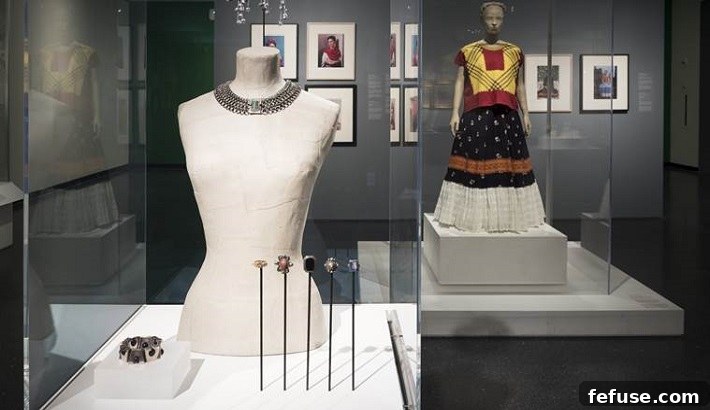
Last fall, the Victoria & Albert Museum in London hosted the highly acclaimed exhibition, “Frida Kahlo: Making Herself Up.” This seminal show provided an unprecedented look into Kahlo’s personal belongings, including her clothing, cosmetics, and, significantly, her vast collection of jewelry. By offering intimate access to the artist’s private world, the exhibition powerfully demonstrated how Kahlo meticulously constructed her identity through her appearance. A version of this exhibition, “Frida Kahlo: Appearances Can Be Deceiving,” followed at the Brooklyn Museum, further emphasizing her wardrobe and accouterments, and highlighting her distinctive penchant for layering weighty chokers, silver bangles, and weaving garlands through her hair.
These exhibitions acted as powerful catalysts, sparking a fresh wave of appreciation for Kahlo’s style and, consequently, an outpouring of Frida-inspired jewelry. The detailed displays of her personal effects allowed audiences to connect with her on a deeper, more tangible level, translating into a renewed desire to incorporate elements of her vibrant aesthetic into their own lives.
Modern Jewelers Embrace Frida’s Enduring Spirit
In the wake of this latest revival, jewelers at every level of the marketplace are enthusiastically citing Frida Kahlo as their muse. Her legacy provides a rich tapestry of inspiration, allowing designers to explore themes of resilience, cultural pride, and fearless self-expression. Many contemporary pieces directly echo Kahlo’s personal style, featuring sculptured hands, Day of the Dead skulls, vivid portraiture, and intricate floral motifs.
Canadian jeweler Holly Dyment, known for her Hollywood following, encapsulates this connection perfectly. Her collection of gold and enamel portrait rings possesses a distinctive talismanic quality, reminiscent of Kahlo’s own jewelry. Dyment suggests that wearing one of these pieces is “like having a little piece of Frida that might give you strength and courage,” echoing the protective and empowering role jewelry played for the artist herself.
Terry Gibralter, through her website House of Terrance, similarly conjures the spirit of Kahlo. Her offerings include evil eye earrings and hammered gold hands, pieces that carry a mystical touch much like Kahlo’s originals. These designs evoke a sense of protection and connection to ancient traditions, reflecting the deeper symbolic meanings that Frida imbued in her adornments. Gibralter’s creations allow wearers to feel a similar sense of security and strength that Kahlo sought through her personal collection.
Carole Le Bris Perez, another prominent jeweler, delves into Kahlo’s fascination with the Mexican cult of death, creating ornate pieces that feature tourmaline, sapphire, turquoise, and diamond-encrusted skull rings and pendants. These designs are a direct homage to Frida’s profound engagement with mortality and her culture’s unique perspective on life and death. Perez aims to “create her vibe,” translating Kahlo’s spiritual and aesthetic inclinations into modern, wearable art.
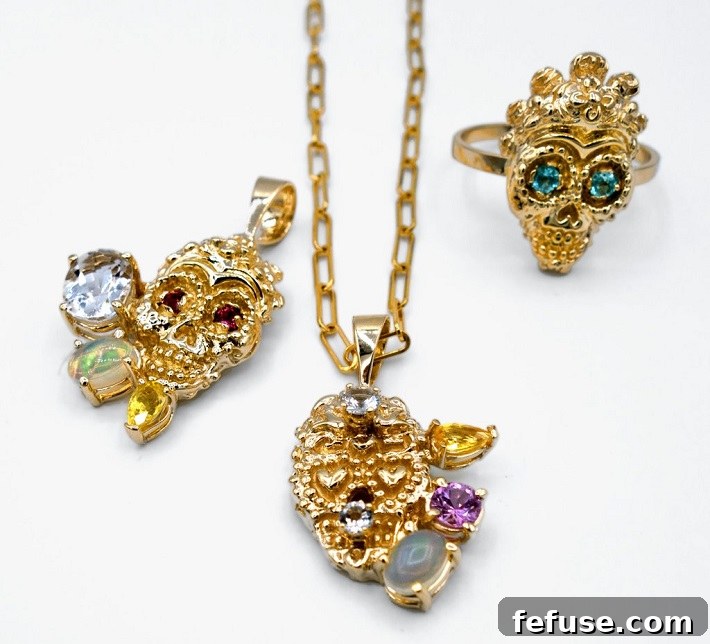
The online marketplace Etsy further illustrates this widespread phenomenon, with a proliferation of Kahlo-inflected jewelry. Mexican silver, hand-painted wooden pins, glass drop earrings, bracelets, and bangles, many embellished with the artist’s strikingly recognizable androgynous features, are marketed as Frida-inspired. This accessibility allows a broader audience to connect with and celebrate Kahlo’s unique style, making her influence truly democratic.
Frida’s Maximalist Style: A Timeless Fashion Statement
Frida Kahlo’s personal style, characterized by its bold colors, rich textures, and abundant adornments, perfectly aligns with a noticeable shift in contemporary fashion towards maximalism. As Dayna Isom Johnson, who charts trends for Etsy, observes, “People are moving away from the minimal look and embracing maximalism, piling on color and texture, which is the definition of Frida style.” In an era often dominated by understated aesthetics, Kahlo’s embrace of abundance and fearless self-expression offers a refreshing and empowering alternative.
Her style was never about blending in; it was about standing out, asserting her presence, and celebrating her heritage. She countered her physical frailty by threading vibrant flowers through her hair, freighting her torso with heavy Colombian jade necklaces, and adorning her fingers with eye-catching gobstopper rings. This deliberate maximalism, a rejection of subtlety in favor of exuberant visual storytelling, resonates powerfully with modern sensibilities seeking authenticity and individuality.
Even jewelers whose connection to Kahlo might seem tangential find inspiration in her audacious spirit. Deirdre Featherstone, known for her fanciful drop earrings and necklaces crafted from pale coral, tourmaline, and lavender jade, sees a kinship in Frida’s love for color. “Frida adorned herself in color. She lived in color,” Ms. Featherstone remarks, adding lightheartedly, “She could rock a pair of earrings.” This sentiment captures the essence of Kahlo’s enduring appeal: her ability to transform personal struggles into a vibrant, unforgettable statement of art and life.
The Enduring Legacy of an Unforgettable Icon
Frida Kahlo’s powerful image, artistic genius, and unwavering spirit have secured her place as an eternal muse. Long before Madonna, Lady Gaga, or Cardi B mastered the art of self-invention, Kahlo meticulously crafted a persona that continues to captivate and inspire. Her jewelry, in particular, serves as a poignant reminder of her resilience, her deep cultural roots, and her profound ability to express an inner world of both pain and fierce joy.
Her legacy extends far beyond art and fashion; she remains a potent symbol of feminism, Mexican cultural pride, and unwavering individuality. The continued proliferation of Frida-inspired jewelry is not merely a passing trend; it is a testament to the enduring power of her narrative. Each piece, whether a carefully crafted artisan pendant or a mass-produced charm, carries a fragment of her audacious spirit, inviting wearers to embrace their own strength, celebrate their heritage, and adorn themselves with the same fearless self-expression that defined the unforgettable Frida Kahlo.