
Navigating Headwinds: US Watch and Jewelry Market Faces Tariff Challenges Amid Shifting Consumer Landscape
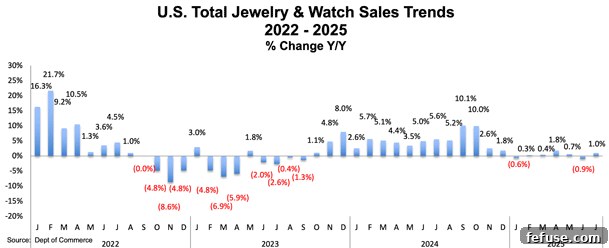
The dynamic landscape of the US watch and jewelry market is currently characterized by a delicate balance of underlying caution and fleeting surges. Recent data from the US Department of Commerce revealed a seemingly positive, albeit modest, 1.0% sales increase in July. However, a deeper analysis suggests this uptick was less an indication of robust consumer demand and more a strategic maneuver by exporters and retailers. Companies, anticipating impending tariff hikes, proactively accelerated inventory movement to mitigate future cost implications, painting a complex picture for the sector.
The July Anomaly: A Closer Look at the 1.0% Uptick
While a 1.0% increase in sales might, at first glance, appear as a sign of resilience, market analysts are quick to dissect the underlying motivations. This particular rise in July was predominantly driven by a wave of front-loading activities across the supply chain. Manufacturers and distributors, well aware of forthcoming import duties and potential trade escalations, rushed to ship goods into the United States. This preemptive action allowed them to bypass the higher tariff rates that were expected to be implemented shortly after, securing better margins for existing stock before the policy changes took effect. The data, meticulously compiled by the US Department of Commerce, offers a snapshot of transactional volume rather than a definitive measure of organic consumer interest, highlighting the influence of external trade policies on immediate market performance.
Such tariff-driven surges create temporary market distortions. While they bolster short-term sales figures, they can also lead to an accumulation of inventory within the country, potentially setting the stage for future discounting or oversupply issues if consumer demand doesn’t catch up. Understanding this distinction is crucial for stakeholders, as a rise fueled by strategic stockpiling differs significantly from one spurred by genuine, sustained consumer enthusiasm for luxury items. This phenomenon underscores how global trade policies can directly impact local retail dynamics, influencing everything from pricing strategies to inventory management across the US watch and jewelry sector.
A Stark Contrast: Deceleration from Previous Year’s Momentum
The small increase observed in July stands in sharp contrast to the vigorous momentum experienced by the market in the preceding year. Looking at the broader trend, the average monthly growth for the first seven months of 2025 has registered at a mere 0.6%. This figure represents a significant deceleration when compared to the robust growth exceeding 5% recorded during the same period in 2024. This dramatic shift points to deeper underlying economic currents that are tempering consumer enthusiasm and spending habits within the luxury goods sector.
Several macroeconomic factors are likely contributing to this notable slowdown. Persistent inflation, even if moderating, continues to erode household purchasing power, especially for discretionary items like watches and jewelry. Furthermore, rising interest rates, implemented to curb inflation, make credit more expensive, influencing consumers’ willingness to finance larger purchases. Uncertainty surrounding the overall economic outlook, geopolitical tensions, and ongoing discussions about a potential recession also play a critical role in shaping consumer confidence. When households feel less secure about their financial future, they tend to prioritize essential spending over luxury goods, directly impacting the watch and jewelry market’s ability to replicate its previous year’s stellar performance.
The shift from a thriving 5% growth to a subdued 0.6% is not merely a statistical anomaly; it signifies a fundamental change in market dynamics. Retailers are now grappling with a more cautious consumer base, requiring them to adapt their strategies, from marketing to inventory management, to navigate this new, less buoyant environment. This deceleration underscores the sensitivity of the luxury market to broader economic indicators and highlights the challenges faced by businesses operating in a period of economic transition.
Unpacking Revised Sales Data: A Glimmer or Continued Caution?
Market transparency and accurate data reporting are paramount for informed decision-making. In June, initial estimations had suggested a more significant decline in sales, projecting a fall of 1.7%. However, subsequent revisions based on actual transaction data have now placed the decline at a milder 0.9%. Such revisions are common in economic reporting, as initial forecasts often rely on preliminary data, while final figures incorporate a more comprehensive set of transactions. While a reduction in the reported decline might offer a momentary sigh of relief, it does not fundamentally alter the narrative of a market experiencing contraction.
Even with the upward revision, a 0.9% decline still signifies a negative trend, indicating that consumer spending in the watch and jewelry sector remains under pressure. This revised figure prevents an overly pessimistic interpretation but simultaneously confirms that the market is far from buoyant. For analysts and retailers, this underscores the importance of looking beyond raw percentages to the underlying drivers. The persistent decline, however slight, reflects continued caution among consumers and the challenges retailers face in stimulating demand. It suggests that while the situation might not be as dire as initially thought, the market environment remains challenging, demanding strategic agility and adaptability from businesses.
The Shadow of Tariffs: Reciprocal Measures and Retail Price Pressures
The ongoing slowdown in consumer spending within the watch and jewelry sector has been significantly amplified by the pervasive uncertainty surrounding reciprocal US tariffs. These tariffs, often implemented in response to trade actions by other nations, are a double-edged sword. While intended to protect domestic industries or leverage trade negotiations, they invariably lead to increased import costs for goods entering the US market. For luxury items like watches and jewelry, a substantial portion of which is imported, these tariffs translate directly into higher procurement costs for retailers.
Ultimately, these increased costs are often passed on to the consumer in the form of higher retail prices. When the price of a high-end watch or an exquisite piece of jewelry becomes elevated due to tariffs, it directly impacts affordability and subsequently dampens demand. Consumers, particularly those sensitive to price fluctuations for discretionary purchases, may delay or forgo purchases altogether. This psychological impact of uncertainty also plays a significant role; the mere threat or implementation of tariffs creates a climate of unpredictability, leading both businesses and consumers to adopt a more cautious approach to spending and investment. Such trade policies introduce an additional layer of complexity for retailers already grappling with fluctuating consumer sentiment and economic volatility, making strategic pricing and inventory management more challenging than ever.
Swiss Watch Exports: A Case Study in Tariff Evasion Tactics
Further illustrating the profound impact of impending tariffs, Swiss watch exports to the US witnessed a notable 6.9% rise in July. This surge, while seemingly positive, is a classic example of manufacturers strategically “front-loading shipments” to pre-empt higher import duties. The Swiss watch industry, renowned globally for its precision and luxury, relies heavily on international markets, with the US being one of its most significant destinations. Facing the prospect of tariffs as high as 39% on certain luxury goods, Swiss manufacturers rapidly expedited their shipments to ensure their products entered the US before the new, more punitive rates took effect.
This tactical maneuver, while beneficial in the short term for Swiss exporters looking to maintain profit margins, creates a different set of challenges for the US market. A significant influx of inventory means that US retailers are now holding larger stocks of Swiss watches. While this avoids the immediate cost increase from tariffs, it could lead to potential oversupply if consumer demand does not meet the elevated inventory levels. This distinction is crucial: a rise in exports *to* the US does not automatically equate to a rise in *sales within* the US. Instead, it indicates a strategic stocking by the supply chain, which could later necessitate aggressive promotional activities or discounting to move excess inventory, potentially impacting brand perception and profit margins for retailers down the line. It’s a clear indicator of how trade policy shapes global supply chain logistics and ultimately influences retail operations.
Industry Outlook: Navigating a Challenging Terrain
As the luxury watch and jewelry market continues to grapple with these multifaceted pressures, industry observers are sounding a note of caution. While the July sales increase offers a temporary reprieve, it is widely regarded as a fleeting effect of tariff anticipation rather than a reversal of the underlying negative trend. The consensus suggests a perpetually challenging environment for watch and jewelry retailers in the coming months. The combination of sustained tariff pressures, which increase operational costs and retail prices, and persistently weak consumer sentiment is likely to continue weighing heavily on sales performance.
Retailers are thus faced with the unenviable task of navigating a landscape marked by uncertainty. Managing inventory will be crucial; an oversupply resulting from front-loaded shipments, coupled with subdued demand, could necessitate aggressive discounting, potentially eroding brand value and profit margins. Marketing strategies will need to be highly agile, focusing on value propositions beyond just price, emphasizing craftsmanship, heritage, and unique customer experiences. Furthermore, investing in robust e-commerce platforms and omnichannel strategies will be vital, as consumers increasingly blend online research with in-store purchases. The ability to adapt quickly to changing market conditions, consumer preferences, and geopolitical shifts will determine which retailers not only survive but thrive in this turbulent period.
Beyond Tariffs: Long-Term Trends and Future Resilience
While tariffs and immediate economic concerns dominate the current discourse, the US watch and jewelry market also faces longer-term evolutionary pressures. Consumers, especially younger demographics, are increasingly prioritizing sustainability, ethical sourcing, and personalization. Brands that can effectively communicate their commitment to these values will likely gain a competitive edge. The digital transformation also continues to reshape the industry, with augmented reality try-ons, virtual showrooms, and sophisticated data analytics becoming integral to engaging customers and optimizing operations. These trends, independent of trade policies, necessitate significant strategic investment and innovation from retailers.
Looking ahead, the resilience of the luxury sector will hinge on its capacity for innovation and its ability to connect with evolving consumer desires. Predictions for the crucial holiday season and the latter half of the year remain cautiously optimistic, with many hoping for a slight rebound in consumer confidence. However, any sustained recovery will likely depend on a stabilization of global trade relations, a clearer economic outlook, and the industry’s proactive efforts to adapt to new challenges and opportunities. Those who prioritize agility, customer-centricity, and sustainable practices are best positioned to navigate the complex currents and emerge stronger in the years to come.
In conclusion, the US watch and jewelry market is at a crossroads. The modest sales increase in July, while appearing positive, largely reflects tactical maneuvers to circumvent impending tariffs rather than a genuine surge in consumer demand. With a sharp deceleration in growth compared to the previous year, persistent consumer caution, and the looming shadow of trade uncertainties, the environment for retailers remains challenging. Success in this volatile period will undoubtedly require strategic foresight, adaptable business models, and a keen understanding of both macroeconomic pressures and shifting consumer behaviors.