
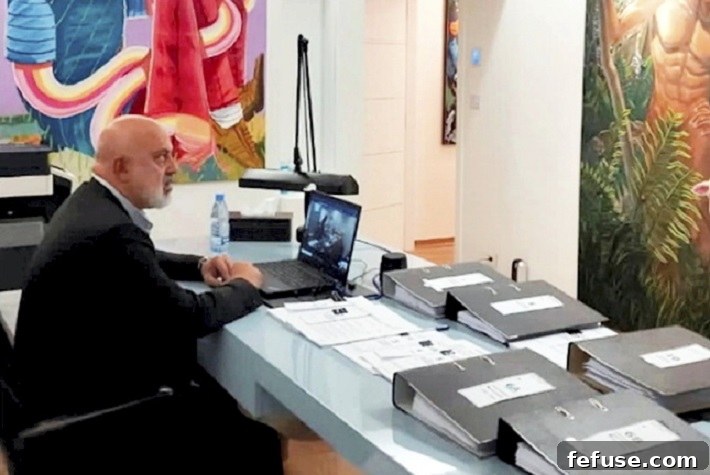
The battle against global terror financing has intensified with federal prosecutors in the United States taking decisive action against Nazem Said Ahmad, an individual widely recognized as a key financier for the Lebanon-based Hezbollah terror group. In a significant legal development, documents have been filed to seize an extensive list of high-value assets belonging to Ahmad, including 35 additional diamonds, a collection of artworks and sculptures, and a substantial sum of $2 million in cash. This aggressive pursuit underscores the unwavering commitment of US authorities to disrupt and dismantle the financial lifelines of designated terrorist organizations worldwide.
US Intensifies Crackdown on Hezbollah Funding Networks: Targeting Nazem Said Ahmad’s Vast Fortune
This latest move is part of a broader, sustained campaign by the US government to pressure and incapacitate individuals and entities that provide material or financial support to Hezbollah. The comprehensive nature of the assets targeted – ranging from precious gems to fine art – reveals the sophisticated and often clandestine methods employed by these networks to move and store illicit wealth, circumventing international sanctions and regulatory oversight.
The OFAC Blacklisting and Initial Allegations
The legal groundwork for these forfeiture actions was significantly bolstered by prior measures taken by the US Treasury Department’s Office of Foreign Assets Control (OFAC). In April of the current year, OFAC issued a critical blacklisting, designating 52 individuals and various entities that it identified as instrumental in providing critical financial and logistical support to Ahmad. This extensive network was allegedly supplying cash, precious gems, valuable art pieces, and an array of luxury goods, all channeled to Ahmad as part of a sophisticated money laundering operation designed to benefit Hezbollah.
In its official designation, OFAC painted a detailed picture of Ahmad, describing him not merely as a financier but as a “diamond smuggler and art collector.” The agency highlighted his alleged deep involvement in illicit trade, asserting that he “dealt in millions of dollars of goods and services in violation of the global terrorism sanctions regulations.” This characterization is crucial, as it underscores the dual nature of Ahmad’s alleged operations: leveraging high-value commodities like diamonds and art for their liquidity and ease of transfer, while simultaneously using them as instruments for money laundering and sanctions evasion on a massive scale.
Unpacking the Latest Forfeiture Request
The most recent court filings, dated August 16, provide explicit details about the specific assets targeted for forfeiture. Among the items listed is a particularly striking 2.4-carat “green diamond cushion modified brilliant cut ring,” a testament to the luxurious and easily concealable nature of the assets allegedly accumulated by Ahmad. Alongside this unique piece, an additional 34 diamonds have been identified for seizure, further emphasizing the central role of the gem trade in Ahmad’s alleged illicit activities. Beyond the glittering array of precious stones, the government is also seeking the forfeiture of numerous artworks and sculptures, along with a substantial $2 million in cash, which could represent proceeds from his various dealings or liquid assets used for operational funding.
It is important to note that these recent requests for forfeiture are not isolated incidents. The US government has previously initiated actions to seize an even larger trove of assets associated with Ahmad, demonstrating the sheer scale of his alleged illicit wealth. Prior efforts have sought the forfeiture of over 450 diamonds and more than 100 pieces of artwork. When viewed collectively, these figures paint a stark picture of a meticulously constructed financial empire built on illicit gains, meticulously designed to funnel resources to a designated foreign terrorist organization.
The Gravity of the Charges: Conspiracy and Money Laundering
Nazem Said Ahmad, along with eight co-defendants, faces a formidable array of charges that strike at the heart of international financial integrity and national security. The indictment includes serious accusations such as conspiring to defraud the United States and other governments, evading stringent U.S. sanctions and customs laws, and engaging in intricate money laundering transactions. These charges highlight the multifaceted nature of the alleged criminal enterprise, which not only sought to enrich its participants but also actively undermined global efforts to combat terrorism and maintain financial transparency.
The legal process dictates that the forfeitures of these assets are contingent upon Ahmad’s conviction. This condition underscores the fundamental principles of due process, ensuring that the seizure of property is legally justified following a fair trial. Should Ahmad be found guilty of the charges leveled against him, the forfeiture of these millions of dollars in assets would represent a significant victory for counter-terrorism efforts, effectively stripping a key financier of his ill-gotten gains and severing a critical financial artery to Hezbollah.
Hezbollah’s Funding Apparatus and the Role of Individuals Like Ahmad
Hezbollah, designated as a foreign terrorist organization by the United States and several other countries, relies on a diverse and complex funding apparatus to sustain its military, political, and social operations. While state sponsors like Iran historically provide substantial financial support, the group also heavily leverages illicit activities to generate revenue independently. These activities include drug trafficking, arms smuggling, counterfeiting, extortion, and, crucially, money laundering through international networks.
Individuals like Nazem Said Ahmad are critical components of this funding architecture. By operating seemingly legitimate businesses – such as diamond dealing or art collecting – they can mask the true origins and destinations of funds, facilitating the movement of money across borders and through financial systems without detection. The use of high-value, easily transportable commodities like diamonds and art is particularly attractive for money laundering due to their intrinsic value, relative anonymity in certain markets, and ability to be easily liquidated globally. Ahmad’s alleged activities exemplify how terror groups exploit vulnerabilities in global trade and finance to sustain their illicit operations.
The Broader Implications for Global Terror Finance
The aggressive pursuit of Nazem Said Ahmad and his assets sends a clear and unequivocal message to other individuals and entities involved in terror financing: the United States government will relentlessly pursue those who aid and abet terrorist organizations, regardless of how complex their financial schemes or how remote their geographical location. This case serves as a powerful deterrent, illustrating the severe legal and financial consequences that await those who choose to support groups like Hezbollah.
Furthermore, these actions highlight the critical importance of international cooperation in combating illicit finance. While the US leads these efforts, the effectiveness of sanctions and asset seizures often relies on intelligence sharing, legal collaboration, and coordinated enforcement actions with partner nations. The ongoing investigation and prosecution of Ahmad underscore the long-term commitment required to effectively dismantle the global financial networks that fuel terrorism, ensuring that such assets are instead channeled towards legitimate purposes rather than violence and destabilization.
Future Outlook and the Persistent Fight Against Terror Financing
As the legal proceedings against Nazem Said Ahmad and his co-defendants unfold, the international community will be closely watching. A conviction and subsequent forfeiture of assets would not only be a significant blow to Hezbollah’s financial infrastructure but also a testament to the efficacy of aggressive enforcement strategies against terror financiers. This case may also spur further investigations into similar networks that exploit legitimate industries, like the art and diamond markets, for illicit gains.
The fight against terror financing is a continuous and evolving challenge. As governments and financial institutions implement stricter regulations, illicit networks adapt their methods, seeking new avenues for moving money and assets. The case of Nazem Said Ahmad exemplifies the intricate dance between enforcement and evasion, and the relentless efforts required by authorities to stay ahead of those who seek to fund terrorism. The sustained pressure on individuals like Ahmad remains a cornerstone of the broader strategy to safeguard global security and prevent terrorist organizations from acquiring the resources they need to operate.