
Navigating the Global Diamond Market: A Comprehensive Review of De Beers’ 2017 Performance
The global diamond jewelry market showcased dynamic trends in 2017, with early indicators suggesting an overall increase in demand. This positive trajectory was significantly supported by robust consumer marketing campaigns strategically launched during the fourth quarter. Anglo American, the parent company of diamond giant De Beers, provided these insights, offering a detailed look into the industry’s health and De Beers’ pivotal role within it.
In its annual results, Anglo American highlighted that the United States continued to be the primary engine driving growth in diamond jewelry demand. This robust performance in the North American market contrasted with other key regions, such as India, the Gulf States, and Japan, where demand for diamond jewelry remained either flat or experienced a slight decline. These regional disparities paint a complex picture of consumer confidence and economic conditions worldwide.
Strategic Marketing Investments Fueling Consumer Desire
Recognizing the critical importance of consumer engagement, De Beers significantly ramped up its marketing expenditure in 2017. The company invested an impressive sum exceeding $140 million, marking a substantial 19 percent increase compared to its 2016 marketing budget. This substantial investment was strategically allocated across two major initiatives aimed at bolstering the appeal and intrinsic value of natural diamonds.
A significant portion of this funding was channeled into promoting the Forevermark Tribute collection. This collection, known for its unique designs and commitment to responsibly sourced diamonds, aimed to capture the attention of discerning consumers seeking not just beauty, but also ethical provenance. The campaign highlighted the collection’s versatility and the emotional resonance associated with Forevermark diamonds, reinforcing their position as symbols of lasting commitment and individual expression.
Simultaneously, De Beers continued its strong support for the “Real Is Rare” campaign, spearheaded by the Diamond Producers Association (DPA). This powerful industry-wide initiative was designed to reconnect consumers with the inherent rarity, authenticity, and enduring value of natural diamonds. By emphasizing that “real is rare, real is a diamond,” the campaign sought to differentiate natural diamonds from synthetic alternatives and other luxury goods, strengthening the emotional connection consumers have with these precious stones and encouraging demand across various demographics.
De Beers’ Sales Performance: Navigating Market Complexities
While global demand for diamond jewelry saw an encouraging uplift, De Beers’ own sales experienced a slight downturn, slipping by 4 percent. This apparent contradiction can be attributed to several factors, most notably the “difficult comps” (comparables) from the first half of 2016. That period had witnessed exceptionally strong sales, making year-over-year growth more challenging in 2017. The company was navigating a shifting landscape where external market conditions and internal strategic adjustments played a significant role.
Financial Overview: Revenue, Margins, and Strategic Growth Drivers
In terms of overall financial performance, De Beers reported total revenue of $5.84 billion for 2017, a decrease from $6.07 billion recorded in 2016. Despite this dip in total revenue, the underlying EBITA (earnings before interest, taxes, and amortization) showed a positive trend, increasing slightly from $1.41 billion in 2016 to $1.44 billion in 2017, representing a 2 percent rise. This improvement in underlying profitability, even with reduced top-line revenue, signals successful operational efficiencies and strategic improvements.
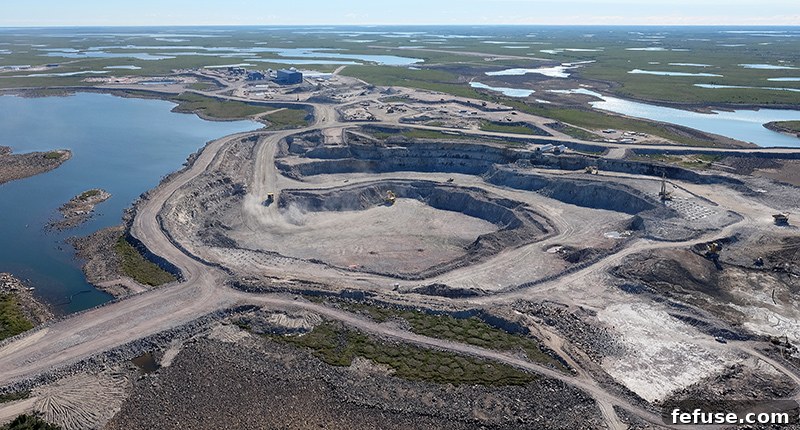
The increase in EBITA was a testament to several key drivers. Firstly, De Beers achieved improved margins across its operations, indicating more efficient cost management and optimized pricing strategies. Secondly, the company benefited from a particularly strong performance in its Canadian operations. This robust contribution from Canada was largely due to the Gahcho Kué mine coming fully online, offsetting the impact of the Snap Lake mine’s closure. Gahcho Kué, a joint venture with Mountain Province Diamonds, quickly established itself as a significant contributor to De Beers’ production portfolio.
Another crucial factor contributing to the positive EBITA was the strong showing from Element Six. As a global leader in the design, development, and production of synthetic diamond and supermaterial solutions for industrial applications, Element Six played a vital role. The segment greatly benefited from a significant recovery in the global oil and gas markets. As these industries rebounded, the demand for Element Six’s specialized diamond products, used in drilling, cutting, and other industrial processes, saw a substantial increase, underscoring the diverse revenue streams within Anglo American’s diamond division.
Unprecedented Production Growth: The Impact of Gahcho Kué
De Beers’ production figures for 2017 were nothing short of remarkable, leading all of Anglo American’s divisions with a year-over-year increase of 22 percent. The company mined a total of 33.5 million carats of rough diamonds in 2017, a substantial jump from the 27.3 million carats produced in 2016. This surge in production translated into an increased sales volume, rising from 30 million carats to 32.5 million carats, reflecting a healthy appetite in the rough diamond market.
Anglo American attributed this significant boost in diamond production primarily to stronger prevailing trading conditions in the market and, crucially, the full contribution from the Gahcho Kué mine. Located in Canada’s Northwest Territories, Gahcho Kué commenced commercial production in March 2017, rapidly scaling up its operations throughout the year. Its addition to De Beers’ mining portfolio proved transformative, solidifying Canada’s position as a major diamond-producing nation and enhancing De Beers’ overall supply capabilities.
De Beers’ top-producing mines in 2017 were strategically located across several key regions. Botswana, through Debswana – a highly successful 50/50 partnership with the Government of Botswana – continued to be the largest contributor, leveraging its rich diamond deposits and long-standing operational excellence. Following Botswana, significant production came from South Africa, where De Beers operates several renowned mines. Canada, with the full integration of Gahcho Kué, emerged as a critically important region. Namibia, through Namdeb Holdings – another successful partnership with the Government of Namibia – also contributed substantially to the total output, benefiting from its unique marine and land-based diamond recovery operations.
The Evolving Landscape of Diamond Pricing
Despite the increase in production and sales volume, De Beers observed a 13 percent drop in the average realized price for its diamonds, which fell from $187 per carat to $162 per carat. This decline in average price was influenced by a confluence of market forces and operational dynamics.
One primary factor was a stronger demand for lower-value goods observed during the first sight (sales cycle) of the year. This demand largely stemmed from Indian diamantaires actively restocking their inventories. The Indian diamond manufacturing sector was recovering from the disruptive demonetization program implemented in late 2016, which had significantly impacted their liquidity and purchasing power. As the market stabilized, there was an immediate need to replenish stocks, particularly for more accessible, lower-value rough diamonds that could quickly be processed and sold into consumer markets, especially those with price sensitivity.
Another significant contributor to the lower average realized price was the ramp-up in production from mines that typically yield a higher proportion of lower-quality or smaller diamonds. This included major operations like Orapa in Botswana and the newly fully operational Gahcho Kué mine in Canada. While these mines are highly efficient and contribute vast quantities of carats, their output often comprises a broader range of diamond qualities, including a substantial volume of goods that command lower per-carat prices compared to the higher-value diamonds sourced from other mines. The increased volume of these lower-value diamonds in the overall mix naturally brought down the average price per carat across De Beers’ portfolio, even as the total carats produced surged.
The Road Ahead: De Beers’ Outlook for 2018
Looking ahead, Anglo American expressed a cautiously optimistic outlook for the diamond industry in 2018. The company projected that improving global macro-economic conditions would likely sustain the growth trend in diamond jewelry demand. This positive forecast is underpinned by expectations of continued economic stability and consumer confidence in key markets.
However, the actual trajectory of demand growth remains contingent on several influential factors. A significant element to watch is the impact of tax cuts implemented in the U.S. and how these will translate into increased consumer spending. Should these tax reforms effectively stimulate disposable income and luxury purchases, the U.S. market could continue to be a strong driver for diamond jewelry sales. Beyond the U.S., global economic stability, geopolitical developments, and the performance of emerging markets will also play crucial roles in shaping consumer sentiment and purchasing behavior for luxury goods like diamond jewelry.
In anticipation of continued market demand, De Beers also provided a production forecast for 2018, projecting an increase to between 34 and 36 million carats. This consistent growth in planned output underscores the company’s confidence in the long-term health of the diamond market and its strategic positioning to meet evolving consumer needs worldwide.
Conclusion: A Resilient Industry Poised for Continued Growth
De Beers’ 2017 performance highlights a resilient and adaptable diamond industry. Despite some internal sales challenges and a shifting pricing landscape, strategic marketing, operational efficiencies, and significant production increases, particularly from the Gahcho Kué mine, underscored the company’s strong position. With a positive outlook for 2018, driven by improving global economic conditions and ongoing consumer engagement initiatives, the diamond market appears poised for sustained growth and innovation.
News Source: nationaljeweler.com