
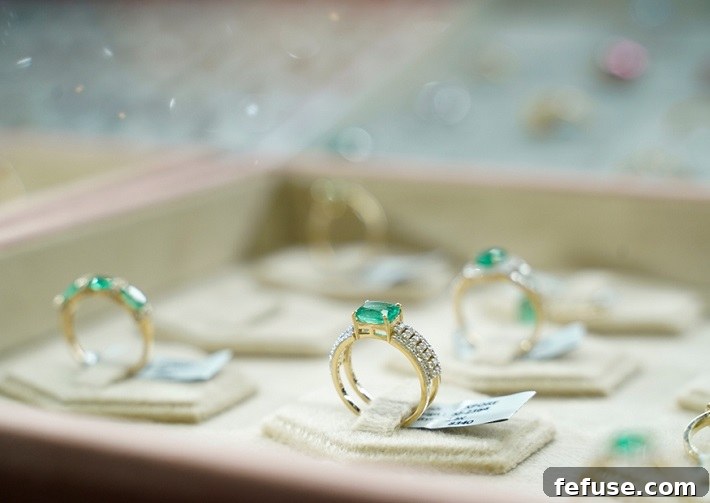
In a pivotal moment for India’s thriving gem and jewellery sector, a recent ruling by a U.S. federal court has brought a significant reprieve, temporarily halting steep import tariff hikes that threatened to severely disrupt exports to one of its most lucrative markets. The U.S. Court of International Trade in Manhattan declared the proposed “Liberation Day” tariffs—a contentious policy introduced under former President Donald Trump’s executive orders—as unlawful. This crucial decision offers immediate protection to Indian exporters from punitive duty increases, allowing the industry a much-needed breathing space amidst global economic uncertainties.
The contested tariffs, which were originally slated to take effect on April 9th, aimed to dramatically raise import duties on a wide array of goods, including a significant portion of India’s exquisite jewellery offerings. The proposed hike was staggering, increasing import duties from a standard 6% to an alarming 26%. While the implementation was subsequently deferred to July 9th pending ongoing litigation, the mere specter of such a sharp increase had already triggered widespread alarm and apprehension across India’s vibrant export community and its numerous stakeholders.
Understanding the “Liberation Day” Tariffs and Their Origins
The “Liberation Day” tariffs emerged from a broader protectionist trade agenda pursued by the Trump administration. These tariffs were part of a strategy to exert economic pressure and reshape global trade dynamics, often through unilateral measures. While the specific rationale for these particular tariffs on Indian goods was framed within the context of alleged trade imbalances or specific concerns, the overarching policy aimed to incentivize domestic production and reduce reliance on foreign imports. The U.S. Court of International Trade’s ruling now scrutinizes the legal basis and procedural legitimacy of these executive actions, highlighting the inherent complexities and potential vulnerabilities of such aggressive trade policies.
The goods targeted by these potential tariffs spanned a diverse range, but the impact on finished jewellery was particularly concerning for India. The proposed five-fold increase in duties would have rendered many Indian jewellery products significantly less competitive in the U.S. market, forcing American importers to either absorb higher costs, pass them onto consumers, or seek alternative suppliers. Such a scenario would have undoubtedly led to a decrease in demand for Indian exports, jeopardizing thousands of jobs and impacting the livelihoods of countless artisans and businesses involved in the intricate supply chain of India’s gem and jewellery industry.
The Escalation of Tariff Threats and Industry Warnings
From the moment the tariffs were announced, industry leaders in India voiced grave concerns about their potential ramifications. They unequivocally warned that such a sharp hike would not only severely impede the competitiveness of Indian jewellery in the U.S. market but also create substantial cash flow challenges for exporters. These businesses operate on often tight margins, and an sudden, dramatic increase in upfront costs could easily cripple their financial stability. The potential ripple effect across the entire value chain, from raw material suppliers to manufacturers and distributors, was a major source of anxiety for the sector.
A prime example of the potential devastation lay with the jewellery units operating from the Special Economic Zone (SEZ) in SEEPZ, Mumbai. This bustling hub is a cornerstone of India’s gem and jewellery exports, with nearly two-thirds of its staggering $3.5 billion annual exports destined for the United States. Under the proposed tariff regime, these vital units would have faced an unprecedented five-fold surge in upfront duties. For every $1 million consignment, the duty payment would have skyrocketed from approximately $60,000 to a monumental $320,000. Such an exorbitant increase would have placed an immense financial burden on exporters, many of whom are small and medium-sized enterprises (SMEs) with limited capital reserves, making continued operation and expansion exceedingly difficult.
The U.S. Court of International Trade’s Crucial Intervention
The court’s ruling, while temporary, represents a critical intervention and underscores the vital role of judicial oversight in matters of international trade policy. The U.S. Court of International Trade (CIT) is a specialized Article III court that has exclusive national jurisdiction over civil actions against the United States arising out of federal laws governing international trade. Its decision in this case highlights the principle of checks and balances, demonstrating that executive actions, particularly those with far-reaching economic consequences, are subject to legal scrutiny and must adhere to established statutory authority and procedural norms.
The specific grounds for the CIT declaring the tariffs “unlawful” often revolve around questions of presidential authority under statutes like Section 301 of the Trade Act of 1974, or procedural flaws in how the tariffs were implemented. Such legal challenges typically argue that the executive branch exceeded its delegated authority, failed to follow proper administrative procedures, or did not provide sufficient justification as mandated by law. While the court’s immediate ruling is an injunction rather than a final judgment on the merits, it signals a strong legal challenge to the validity of the tariffs and offers significant leverage to Indian exporters and their U.S. partners.
Implications of the Temporary Relief for Indian Exporters
This temporary relief offers more than just a momentary pause; it provides Indian exporters with an invaluable breathing space. It allows them to reassess their strategies, re-evaluate existing contracts, and potentially avoid immediate financial losses that would have resulted from the tariff imposition. In an environment characterized by global economic uncertainty, fluctuating demand, and persistent supply chain disruptions, predictability and stability are paramount for businesses to thrive. The court’s decision, even if interim, restores a degree of that much-needed predictability for the short term.
Beyond the immediate financial benefits, the ruling also sends a message about the importance of stable and transparent trade policies. Industries like gems and jewellery rely heavily on long-term cross-border partnerships, trust, and consistency in international trade norms. Arbitrary or sudden shifts in tariff structures can erode this trust, discourage investment, and force businesses to seek alternative markets or fundamentally alter their operational models. This reprieve reiterates the broader need for a predictable global trade environment that fosters sustainable growth rather than creating undue disruption.
Broader Impact on India-U.S. Trade Relations and the Global Landscape
The U.S. is not just a major market but a strategic partner for India, particularly as both nations seek to deepen economic ties and diversify global supply chains away from over-reliance on certain regions. Trade disputes, especially those involving significant sectors like gems and jewellery, can strain these important bilateral relationships. The court’s ruling, by nullifying a contentious tariff, inadvertently contributes to fostering a more stable and cooperative trade environment between the two countries, aligning with broader diplomatic efforts to strengthen the U.S.-India strategic partnership.
Globally, this case serves as a reminder of the ongoing volatility in international trade. The era of predictable, rules-based multilateral trade, though still aspired to, has been frequently challenged by protectionist tendencies, geopolitical tensions, and unilateral actions. This specific legal battle highlights how domestic legal systems can act as a crucial check on executive trade policy, shaping not only bilateral relations but also influencing broader international trade discourse and the stability of global supply chains.
The Indian Gem and Jewellery Sector: An Economic Powerhouse
The Indian gem and jewellery sector is far more than just an export industry; it is a cornerstone of the Indian economy and a testament to centuries of unparalleled craftsmanship. It contributes significantly to the nation’s Gross Domestic Product (GDP) and is a vital source of foreign exchange earnings. More critically, it is a massive employer, providing livelihoods to millions of skilled artisans, designers, cutters, polishers, and auxiliary workers across various tiers of society, especially in small towns and rural areas where alternative employment opportunities might be scarce. The intricate skills passed down through generations represent a unique cultural heritage that is translated into exquisite products admired globally.
India’s strength lies not only in its traditional gold and diamond jewellery but also in its evolving capabilities in creating contemporary designs, leveraging advanced manufacturing techniques, and adapting to global fashion trends. The industry’s ability to innovate, combined with its competitive cost structure and rich heritage of artistry, positions it as a global leader. Any policy, foreign or domestic, that threatens this sector has profound economic and social implications for India, making the recent court ruling all the more significant for its protective impact on this vital economic engine.
Future Outlook and Strategic Adaptations for Exporters
While the immediate threat has been neutralized, the situation is not fully resolved. The U.S. government could appeal the Court of International Trade’s decision, or the underlying trade issues might be revisited through different legal or diplomatic channels. Therefore, Indian exporters must remain vigilant and adaptable. This might involve continuing efforts to diversify their export markets beyond the U.S., strengthening relationships with existing American buyers, investing in brand building and marketing to enhance their value proposition, and actively engaging with industry bodies and governmental agencies to advocate for stable trade policies.
For businesses in SEEPZ and across India, this period offers a strategic window. It allows for deeper engagement with the U.S. market, potentially strengthening long-term partnerships and solidifying market share. It also underscores the importance of continuous dialogue between industry stakeholders and government bodies to ensure that India’s trade policies and diplomatic efforts are aligned with the needs of its export-oriented sectors. Ultimately, the ability of Indian exporters to navigate these complex global trade waters will depend on a combination of resilience, strategic foresight, and strong institutional support.
In conclusion, the U.S. federal court’s decision provides a critical moment of relief and reflection for India’s gem and jewellery industry. It averts an immediate crisis, safeguarding thousands of jobs and billions in trade. However, it also serves as a potent reminder of the dynamic and often unpredictable nature of international trade policies. For long-term prosperity, the industry, supported by robust governmental backing, must continue to champion stable, transparent, and mutually beneficial trade environments that foster sustainable growth and protect the livelihoods of millions involved in this illustrious sector.