
Shimmering Growth: Fine Jewelry and Watch Sales Sparkle as Holiday Season Exceeds Expectations
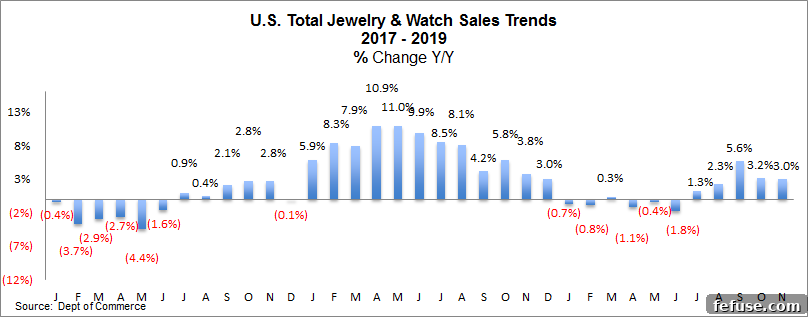
The luxury market, particularly the fine jewelry and watch sectors, concluded 2019 with a notable upward trend, signaling robust consumer confidence and spending. November 2019 data revealed a significant 3 percent increase in sales for fine jewelry and fine watches compared to the same period in 2018. This positive movement marked the fifth consecutive month of growth, illustrating a sustained momentum within these high-value categories. While there was a slight dip of just 0.2 percent compared to the exceptional figures of October, this marginal fluctuation did little to dampen the overall optimistic outlook, reinforcing the market’s underlying strength and resilience as the crucial holiday shopping season commenced.
A Resilient Market: Sustained Growth in Luxury Timepieces and Jewelry
The consistent growth observed in the fine jewelry and watch segments throughout the latter half of 2019 underscores a broader positive economic environment. Consumers demonstrated a willingness to invest in luxury goods, often seen as timeless assets or significant personal milestones. This sustained growth trajectory, particularly the fifth consecutive month of positive sales, indicates that the market was not merely experiencing a temporary spike but rather a more fundamental shift driven by factors such as stable employment, rising disposable incomes, and evolving consumer preferences for quality and craftsmanship. The slight month-over-month adjustment from October to November should be viewed within the context of robust prior performance, confirming that the underlying demand for premium watches and exquisite jewelry remained strong.
Industry analysts often look to these specific luxury categories as bellwethers for consumer confidence. The consistent positive performance suggests a degree of optimism among buyers, who are increasingly valuing enduring luxury over fleeting trends. This trend also reflects the strategic efforts of retailers and brands to innovate, enhance customer experiences, and adapt to changing retail landscapes, ensuring their offerings remain compelling in a competitive market.
The Holiday Retail Renaissance: A Deeper Dive into Consumer Spending
The holiday shopping season of 2019 proved to be a resounding success, with general retail sales surpassing expectations and providing a robust conclusion to the year. This period is particularly vital for luxury retailers, as a significant portion of their annual revenue is generated during these festive months.
Leading the Way: Signet Jewelers’ Stellar Performance
While many jewelry retailers typically release their full holiday results later, early indicators from industry giants offered a promising glimpse into the sector’s health. Signet Jewelers Limited, a global powerhouse and the world’s largest retailer of diamond jewelry, reported particularly strong figures. The company announced a 1.6 percent increase in same-store sales, with its North American operations leading the charge with a 2 percent rise. These results not only exceeded Signet’s own guidance but also served as a powerful testament to the underlying strength of the fine jewelry market, especially in a critical region like North America. The performance of such a major player often reflects broader industry trends, suggesting that smaller and independent jewelers likely also experienced a buoyant holiday season.
A significant highlight of Signet’s performance was the impressive 13.5 percent surge in its e-commerce sales. This figure underscores a pivotal shift in consumer behavior, demonstrating the increasing importance of digital channels for luxury purchases. As consumers become more comfortable buying high-value items online, jewelers who have invested in robust, user-friendly, and secure e-commerce platforms are clearly reaping the rewards. This digital acceleration is not just about convenience; it also allows brands to reach a wider audience, offer personalized experiences, and provide detailed product information that can influence purchasing decisions.
Broad Retail Strength: U.S. Holiday Spending Soars
Beyond the specialized luxury market, the overall U.S. holiday spending figures painted an equally optimistic picture. According to the National Retail Federation (NRF), total sales in the U.S. grew by a substantial 4.1 percent year-over-year, reaching an impressive $730.2 billion. This broad-based growth across various retail sectors provided a strong economic backdrop for luxury spending.
Online sales, in particular, were a standout performer, significantly outperforming initial predictions. E-commerce climbed an astonishing 14.6 percent over 2018, culminating in $167.8 billion in sales. This surge further solidified the trend of consumers migrating towards digital platforms for their holiday shopping needs, driven by factors such as convenience, wider product selections, competitive pricing, and efficient delivery options. The NRF’s data indicates that retailers who successfully integrated their online and offline channels, offering seamless omnichannel experiences, were best positioned to capture this expanding market share.
The 2019 growth rate was nearly double the comparatively weaker 2.1 percent seen in 2018, highlighting a noticeable resurgence in consumer confidence and spending power. Matthew Shay, President and CEO of the NRF, encapsulated the prevailing sentiment, stating that these robust results were a “positive indicator of what’s ahead.” This forward-looking statement suggested optimism for the year to come, based on strong foundational economic indicators and buoyant consumer engagement. The success of the 2019 holiday season served as a critical validation of the retail sector’s health and its potential for continued expansion.
The Digital Revolution: E-commerce as a Key Driver
The outstanding performance of e-commerce during the 2019 holiday season, particularly within the luxury sector, cannot be overstated. The 13.5% rise in Signet Jewelers’ online sales and the general retail’s 14.6% increase in online spending collectively illustrate a profound and ongoing transformation in how consumers shop. For fine jewelry and watches, categories traditionally associated with in-store, high-touch experiences, this digital shift represents both a challenge and a tremendous opportunity.
Luxury brands are increasingly adapting their strategies to cater to the digital consumer. This involves not only creating visually stunning and secure online storefronts but also investing in high-quality imagery, virtual try-on technologies, personalized recommendations, and sophisticated customer service tools. The convenience of browsing extensive collections from home, coupled with detailed product specifications and customer reviews, has made online purchasing an attractive option even for high-value items. Furthermore, digital channels enable brands to engage with a younger, tech-savvy demographic that may be more inclined to discover and purchase luxury items online. This strategic pivot to enhance digital presence and capabilities is crucial for maintaining competitive edge and tapping into new growth avenues in the evolving retail landscape.
Global Headwinds: Navigating Challenges in Key Markets
Despite the strong performance in the U.S. and the broader momentum in fine jewelry and watch sales, the global market was not without its challenges. Geopolitical tensions and unforeseen health crises began to cast shadows over significant international markets, prompting a cautious outlook for the future.
Hong Kong’s Sales Slump and Store Closures
One of the most immediate and impactful concerns was the continuing sales slump in Hong Kong. A pivotal hub for luxury retail and a gateway to the broader Asian market, Hong Kong experienced prolonged periods of social unrest throughout 2019. These disturbances severely impacted tourism, reduced local consumer traffic, and created an uncertain operating environment for businesses. Consequently, many luxury retailers, including prominent jewelers, faced significant declines in sales and were forced to consider store closures or scale back operations. The situation in Hong Kong highlighted the vulnerability of luxury markets to political instability and its direct repercussions on consumer spending and retail viability.
The Looming Shadow of the Coronavirus Outbreak
As 2019 drew to a close and early 2020 began, a new and unprecedented threat emerged: the coronavirus outbreak in China. This developing health crisis immediately raised concerns about its potential impact on global trade, tourism, and consumer behavior, particularly affecting the critical Chinese New Year buying period. This festive season is traditionally a peak time for luxury purchases, especially jewelry and watches, as gifts and symbols of prosperity. The prospect of widespread lockdowns, travel restrictions, and a general atmosphere of uncertainty threatened to severely curtail this vital spending period, not just within China but also from Chinese tourists globally. The interconnectedness of the global luxury market meant that a significant disruption in China would have ripple effects worldwide, posing a complex challenge for retailers already navigating other regional difficulties.
Future Projections and Market Resilience
The contrasting narratives of robust growth in the U.S. and emerging challenges in key Asian markets underscored the complex dynamics of the global luxury retail industry. The positive momentum generated by the U.S. holiday season was a crucial pillar of support, offering hope that domestic strength could partially offset international headwinds. The adaptability of the fine jewelry and watch sectors, coupled with their increasing embrace of digital commerce, suggests a capacity for resilience in the face of adversity.
For retailers and brands, the events of late 2019 and early 2020 served as a stark reminder of the need for diversification – both in terms of geographical market presence and sales channels. While traditional brick-and-mortar stores remain vital for the luxury experience, the accelerated shift towards e-commerce proved to be a critical shock absorber. The ability to pivot quickly, leverage digital strategies, and maintain strong customer relationships, even in challenging times, became paramount.
Looking ahead, the long-term outlook for fine jewelry and watches remains cautiously optimistic, predicated on global economic stability and continued innovation within the industry. The intrinsic value, emotional significance, and enduring appeal of these luxury items provide a strong foundation. However, success will increasingly depend on agility, a deep understanding of evolving consumer expectations, and the capacity to navigate a rapidly changing global landscape defined by both unprecedented growth opportunities and unforeseen challenges.
In conclusion, the fine jewelry and watch markets demonstrated significant strength and resilience during the latter part of 2019, driven by strong consumer spending and the rising influence of e-commerce. While global challenges loomed, the sector’s ability to adapt and innovate provided a promising outlook for maintaining its sparkle in the years to come.