

Humanity’s fascination with measuring and recording the passage of time is a timeless pursuit, evolving dramatically over millennia. From the rudimentary sundials and water clocks of ancient civilizations like the Sumerians and Egyptians, who meticulously deconstructed our days into hours, minutes, and seconds, the quest for precision and portability in timekeeping has been relentless. The 16th century marked a pivotal moment when personal timekeeping devices began to emerge, ushering in an era where individuals could carry time with them. Initially, these early timepieces, often referred to as ‘bracelet watches,’ were primarily adorned by women, starting with historical figures like Queen Elizabeth I. For centuries, gentlemen largely preferred the discreet elegance and practicality of pocket watches, a tradition that persisted until the early 20th century. However, the crucible of war, particularly World War I, dramatically shifted this paradigm. Pocket watches proved impractical and cumbersome on the battlefield, leading soldiers to strap them to their wrists for quick, functional access to time. This wartime necessity quickly transcended into a postwar fashion statement, giving birth to the iconic gentleman’s luxury wristwatch and cementing its place as an indispensable accessory of style, status, and precision.
The transition from a mere utility to a symbol of sophisticated craftsmanship and personal expression laid the foundation for the luxury watch market we know today. These weren’t just instruments for telling time; they were intricate mechanical marvels, testaments to human ingenuity, and enduring heirlooms. The evolution saw the emergence of legendary brands, each contributing unique innovations and design philosophies that would shape the future of horology. These distinguished manufacturers, with their rich histories and unwavering commitment to excellence, have not only mastered the art of timekeeping but have also elevated it to an art form, captivating enthusiasts and collectors worldwide with their blend of tradition, technology, and timeless appeal. Their stories are interwoven with pivotal moments in history, technological breakthroughs, and an relentless pursuit of perfection, making each timepiece a small, complex universe on the wrist.
ROLEX: The Crown of Precision and Prestige in Luxury Watchmaking
ROLEX has epitomized crafting and defining luxury watches since its inception in 1905. Founded by the visionary Hans Wilsdorf, the company initially established its roots in London, driven by Wilsdorf’s ambition to create reliable and elegant wristwatches at a time when they were still a nascent concept. His foresight led ROLEX to relocate to Geneva in 1919, a city already globally renowned as the heartland of exquisite watchmaking. This strategic move solidified ROLEX’s commitment to the highest standards of Swiss horological tradition and innovation. From its early days, ROLEX quickly distinguished itself by achieving groundbreaking milestones. It was the first wristwatch manufacturer in the world to be awarded the prestigious Swiss Certificate of Chronometric Precision in 1910. This was a remarkable achievement in an era when most portable timepieces struggled with accuracy, signaling ROLEX’s dedication to offering some of the most precise and dependable watches available on the market.
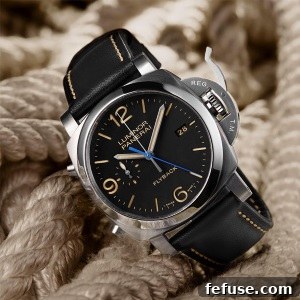
This early success was just the beginning of a long line of “firsts” for the brand, profoundly impacting the global luxury watch industry. ROLEX continued to innovate tirelessly, revolutionizing the industry with practical advancements that significantly impacted watch design and functionality. Among its most iconic contributions is the “Oyster” collection, introduced in 1926, which featured the world’s first truly waterproof and dustproof watch case. This patented sealed case protected the delicate movement within, making ROLEX watches incredibly robust and reliable, suitable for adventurers and professionals alike. The spirit of innovation continued with the development of the “Perpetual” rotor in 1931, the world’s first self-winding mechanism for wristwatches. This ingenious system eliminated the need for manual winding, harnessing the wearer’s natural wrist movements to power the watch, thereby enhancing convenience and consistent accuracy.
Beyond technical prowess, ROLEX has masterfully built a powerful brand identity synonymous with prestige, durability, and exploration. Iconic luxury watch models like the Submariner, an essential tool for divers; the GMT-Master, designed for aviators; the Datejust, a timeless classic; and the Daytona, revered by motorsport enthusiasts, have not only set industry standards but have also become cultural icons. Each model is a testament to ROLEX’s commitment to excellence and its ability to adapt to diverse professional and lifestyle needs while maintaining its distinctive aesthetic. Modern ROLEX watches continue this legacy of innovation with recent improvements, including the highly scratch-resistant Cerachrom bezel and the patented blue Parachrom hairspring, which offers exceptional resistance to shocks and temperature variations. ROLEX’s enduring appeal lies in its unparalleled blend of precision engineering, robust construction, elegant design, and an unwavering pursuit of horological perfection, solidifying its status as a leading force in the luxury watch world and a top choice for discerning collectors seeking enduring value and unmatched craftsmanship.
Patek Philippe: The Art of Complications and Exclusivity in High Horology
Patek Philippe stands as a titan in the realm of haute horlogerie, a brand whose name is synonymous with unparalleled craftsmanship, intricate complications, and extraordinary exclusivity in the luxury watch market. The esteemed manufacture was forged in 1845 through the serendipitous collaboration of two brilliant minds: Antoni Patek, a visionary Polish watchmaker with an entrepreneurial spirit, and Adrien Philippe, a prodigious French watchmaker celebrated for inventing the keyless winding mechanism – a groundbreaking innovation that eliminated the need for a separate key to wind and set a watch. By 1851, their combined genius culminated in the founding of Patek Philippe & Co. in Geneva, marking the beginning of a legacy that would continuously redefine the boundaries of watchmaking excellence.
The duo and their successors embarked on an relentless journey of innovation, introducing a series of groundbreaking improvements that pushed the limits of mechanical timekeeping. Patek Philippe is renowned for its mastery of “complications” – features beyond the basic display of hours, minutes, and seconds. They pioneered the perpetual calendar, a mechanism that correctly displays the date, day, month, and leap year without manual adjustment for centuries; the split-seconds chronograph, allowing for the timing of multiple events simultaneously; and the minute repeater, a highly complex mechanism that chimes the time on demand. These intricate functions not only demonstrated exceptional technical skill but also elevated the wristwatch from a practical instrument to a miniature mechanical symphony, making Patek Philippe a leader in complicated luxury watches.
Patek Philippe’s commitment to excellence quickly earned them a reputation as the principal supplier of exquisite pocket watches for Tiffany & Co., America’s premier jeweler. Their timepieces became the preferred choice of leading monarchs and nobility across Europe, including the discerning Queen Victoria, further solidifying their status among the elite. Today, Patek Philippe continues to boast some of the most coveted and exclusive luxury watches globally. Each piece is a testament to generations of artisanal skill, meticulous hand-finishing, and an uncompromising dedication to quality, often requiring hundreds of hours of labor to complete, ensuring its status as a true collector’s item.
The brand’s extraordinary desirability among collectors is frequently highlighted by record-breaking auction results. In 2016, the stainless steel Patek Philippe Ref. 1518, an exceptionally rare perpetual calendar chronograph, was auctioned for an astonishing $11,136,642, widely regarded as the most expensive wristwatch ever sold at auction at that time. This staggering figure underscores the brand’s unique position at the apex of watch collecting, where rarity, heritage, and unparalleled horological artistry converge. Patek Philippe’s legacy is not just about telling time; it’s about preserving a tradition of peerless craftsmanship and creating timeless treasures that transcend generations, famously encapsulated by their slogan: “You never actually own a Patek Philippe. You merely look after it for the next generation.” This philosophy resonates deeply with those who appreciate enduring value and unparalleled artistry in their luxury watches.
Jaeger-LeCoultre: The Watchmaker’s Watchmaker and Master of Innovation
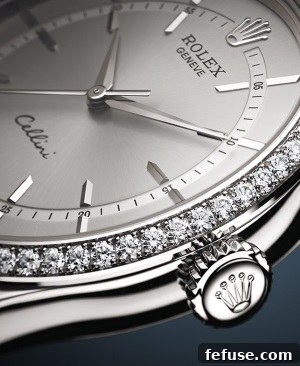
Established in 1833 in the serene Vallée de Joux, Switzerland, Jaeger-LeCoultre has carved an indelible mark in horological history, earning the revered moniker “the watchmaker’s watchmaker.” This reputation stems from their unparalleled legacy of pioneering innovation, exquisite mechanical detailing, and sophisticated complexity that has seen them develop an astounding 1,242 different calibers and register hundreds of patents and inventions over nearly two centuries. Antoine LeCoultre, the founder, began by inventing a machine to cut watch pinions from steel, laying the groundwork for a manufacture that would embrace every aspect of watchmaking under one roof – a rare feat even today and a testament to their comprehensive approach to creating luxury watches.
Jaeger-LeCoultre’s relentless pursuit of horological perfection is evident in its groundbreaking contributions, not only for its own timepieces but also by supplying movements and components to many other prestigious Swiss watch brands throughout history. Their attention to both technical mastery and aesthetic design has been a hallmark from the very beginning. A prime example is their first wristwatch, the iconic Reverso, introduced in 1931. Conceived to protect the watch face during high-intensity polo matches, its unique reversible case design quickly became an Art Deco masterpiece, perfectly blending innovative functionality with timeless elegance. The Reverso remains a cornerstone of the brand’s identity, symbolizing a unique fusion of practicality, artistry, and historical significance in the realm of luxury timepieces.
The brand’s expansive repertoire extends beyond the Reverso to include other highly acclaimed collections like the Master Control, known for its precision and reliability; the Atmos clock, a perpetual motion timepiece powered solely by atmospheric changes; and the revolutionary Gyrotourbillon, a multi-axis tourbillon that ingeniously defies gravity’s effects on accuracy. Each Jaeger-LeCoultre piece often demonstrates a timeless aesthetic that harks back to the rich traditions of the past while simultaneously pushing the boundaries of future horological design and engineering. Their ability to fuse classic elegance with avant-garde complications makes them incredibly appealing to connoisseurs and collectors alike, cementing their position as creators of sophisticated luxury watches.
In 2013, to commemorate their 180th anniversary, Jaeger-LeCoultre unveiled the Jubilee collection, featuring three exceptionally designed pieces. This collection included three limited edition luxury watches that showcased the brand’s cutting-edge innovations, such as the first flying gyrotourbillon – a mesmerizing testament to their mechanical prowess and ingenuity. The collection also introduced The Master Ultra Thin Jubilee, which, at the time of its release, claimed the title of the world’s thinnest watch, further cementing Jaeger-LeCoultre’s reputation for pushing the limits of miniaturization and precision. With a legacy built on an unwavering commitment to both artistry and engineering, Jaeger-LeCoultre continues to stand as a beacon of high horology, inspiring awe with every intricate movement and elegant design, appealing to those who seek the pinnacle of watchmaking.
Officine Panerai: A Legacy Forged in the Depths and Military Precision
Officine Panerai, a luxury watch brand deeply rooted in maritime history and military precision, boasts a unique trajectory in the global watch market. Although founded in Florence, Italy, in 1860 by Giovanni Panerai, its distinctive timepieces remained largely unavailable to the public until 1993. For over a century, Panerai operated as an exclusive supplier of high-precision instruments and watches primarily for the Royal Italian Navy, playing a crucial role in its underwater operations. This specialized focus, with the exception of limited supply to the Egyptian Navy, profoundly shaped Panerai’s robust, legible, and highly functional design philosophy, making them ideal tool watches.
A pivotal innovation came in 1916 when Giovanni Panerai patented “Radiomir,” a radium-based powder designed to make watch dials, aiming sights, and other instruments highly legible in the dark. This radioactive luminous material was revolutionary for military divers and commandos operating in the murky depths of the sea or under the cover of night. The Radiomir watches, characterized by their large cushion-shaped cases and wire lugs, became indispensable tools for the Italian frogmen during World War II, enabling them to execute covert missions with unprecedented accuracy in low-light conditions. This military heritage forms the core identity of Panerai luxury watches.
Recognizing the need for a safer alternative to radium, Panerai developed and patented “Luminor” in 1949. This new tritium-based luminous paint offered superior luminosity and was significantly less radioactive, marking an evolution in both safety and performance. The Luminor models further refined the Panerai aesthetic, introducing the iconic crown-protecting bridge, a signature feature that enhances water resistance and protects the winding crown from accidental knocks. These robust and distinctively designed watches continued to serve the Italian Navy with distinction throughout the latter half of the 20th century, cementing their reputation for durability and unique design.
When Panerai finally opened its doors to the civilian market in 1993, its unique heritage, distinctive design, and robust construction quickly captivated a new audience of watch enthusiasts. The brand successfully transitioned from a specialized military supplier to a coveted luxury brand, drawing on its rich history to create watches that are both elegant and highly functional. Today, modern Panerai collections are sold as updated tributes to these legendary WWII-era timepieces. They masterfully reflect their maritime history with a bold, fashionable Italian flair, appealing to those who appreciate a watch with character, a compelling story, and uncompromising quality. Panerai watches, with their oversized cases, clean dials, and unmistakable crown guard, continue to stand out in the luxury watch landscape, symbolizing strength, adventure, and an enduring connection to the sea, making them a distinctive choice for collectors of unique luxury timepieces.