
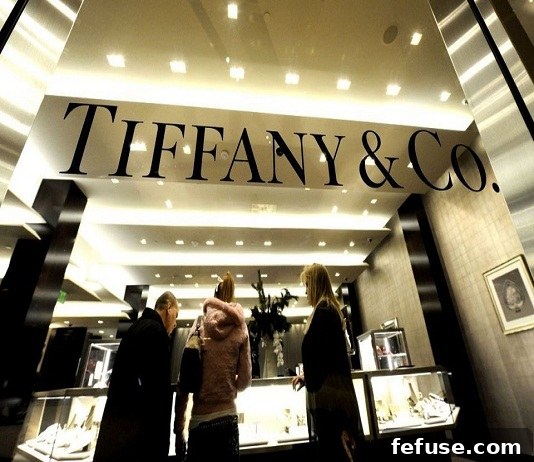
Tiffany & Co. Shines in Q2 with E-commerce Growth and Strategic Innovations
New York—Tiffany & Co., the iconic global luxury jeweler, demonstrated a resilient and strategically focused performance in its second quarter, outperforming its results from the first quarter. A significant surge in e-commerce sales proved to be a pivotal factor, bolstering net sales amidst a challenging retail environment. However, the brand concurrently navigated a landscape characterized by reduced spending from foreign tourists, which notably impacted comparable store sales across the Americas. This mixed performance underscores Tiffany’s dynamic approach to adapting to evolving consumer behaviors and market conditions, emphasizing digital strength while refining its in-store experience and product portfolio.
Americas Region: Navigating Evolving Retail Dynamics
In the Americas, Tiffany & Co. recorded a 1 percent year-over-year increase in total net sales for the second quarter, reaching a solid $439 million. This growth, though modest, highlights the brand’s underlying strength in its home market. Nevertheless, the region’s comparable store sales experienced a 1 percent decline, indicating a more nuanced interaction with traditional brick-and-mortar retail. For the first half of the fiscal year, total sales in the Americas saw a slight decrease of 1 percent, settling at $830 million, with comparable store sales reflecting a 2 percent reduction. These figures point to a transitional period for the luxury sector, where shifting purchasing habits and external economic factors play a crucial role.
During the company’s recent earnings call, Mark Aaron, Vice President of Investor Relations, provided deeper insights into these results. He explicitly credited “solid growth in e-commerce sales” as the primary driver behind the “modest top-line growth” achieved in the second quarter. This distinction is vital, as e-commerce figures are typically not integrated into comparable store sales calculations. The robust performance of Tiffany’s digital channels underscores the brand’s successful investment in its online presence, positioning it as an increasingly significant revenue stream and a critical interface for engaging modern luxury consumers.
Aaron further elaborated on the contributing factors to the softness observed in comparable store sales, specifically citing a decrease in spending by foreign tourists. High-end luxury markets, particularly in major global hubs like New York City, have historically relied heavily on international visitors. Factors such as global economic fluctuations, currency strength, and changes in travel patterns can significantly influence this demographic’s purchasing power and luxury spending habits. However, amidst these challenges, Aaron highlighted a positive turnaround for the brand’s flagship store on Fifth Avenue in New York City. The iconic location, which had previously been perceived as “a drag” on total sales immediately following the previous presidential election due to its proximity to Trump Tower, was no longer impacting regional figures negatively. This recovery signifies a return to normalcy and reaffirmed the flagship’s enduring appeal and strategic importance.
Strategic Store Enhancements and Expansions Across the Americas
Beyond sales figures, Tiffany & Co. continued to refine its physical retail footprint in the Americas during the second quarter. The company strategically added a net total of two stores, reflecting a proactive approach to market expansion and accessibility, through three new openings and one closure. These strategic adjustments are integral to optimizing Tiffany’s global distribution network, ensuring its physical presence remains aligned with market demand and brand positioning. Furthermore, significant capital was invested in enhancing existing locations to elevate the customer experience. A comprehensive renovation transformed the Vancouver, British Columbia store, imbuing it with renewed luxury and modern design elements. Similarly, a store in Tampa, Florida, underwent a strategic relocation, moving to a more advantageous commercial space to better serve its local clientele and enhance visibility.
A particularly noteworthy initiative is underway at the brand’s revered New York City flagship store. The fourth floor is currently undergoing an extensive renovation, with plans to debut an entirely new luxury accessory collection in the fall. Mark Aaron described this forthcoming collection as one that “will entice customers with both functional and whimsical design.” This bold move signifies Tiffany’s strategic diversification beyond its traditional jewelry offerings, aiming to capture a broader luxury consumer interested in unique, high-quality accessories that blend practicality with distinctive artistic flair. Such product diversification can not only attract new customers but also encourage existing clientele to explore a wider range of Tiffany-branded lifestyle products, potentially increasing average transaction values and fostering deeper brand engagement.
Innovative Product Strategy: Redefining Luxury Offerings for a New Era
The introduction of the new luxury accessory collection represents merely one component of Tiffany’s comprehensive and ambitious strategy to revitalize its brand image and stimulate comparable store sales. The company is actively pursuing several innovative product initiatives, meticulously designed to captivate both its loyal, established clientele and emerging demographics within the luxury market. Such strategic product development is paramount for a heritage brand like Tiffany to maintain its competitive edge and resonate with contemporary consumer desires.
Expanding Brand Horizons: The Launch of a New Fragrance and Watch Collection
A significant highlight within this strategic pipeline is the recent rollout of a new signature fragrance. This launch marks Tiffany’s return to the fragrance category after a 15-year hiatus, signifying a conscious effort to extend the brand’s luxurious identity beyond its iconic jewelry. A signature scent offers a unique and more accessible entry point for consumers to experience the Tiffany brand, thereby enhancing brand recognition and fostering an emotional connection. Fragrances are powerful tools for creating a multi-sensory brand experience, capable of reinforcing brand loyalty and reaching into new lifestyle segments that align with Tiffany’s aspirational image.
Further solidifying its commitment to product diversification and market expansion, Mark Aaron confirmed that an eagerly anticipated women’s watch collection is slated for release later this year. Re-entering the women’s luxury watch market with a dedicated collection strategically positions Tiffany to capture a share of this growing and highly competitive segment. This initiative aligns seamlessly with a broader industry trend where luxury houses are curating comprehensive lifestyle assortments, offering customers a holistic brand experience across various premium categories. A robust watch collection can synergize effectively with Tiffany’s existing jewelry lines, appealing to discerning clients who value both exquisite craftsmanship and timeless design in their personal accessories, thus broadening the brand’s appeal and market penetration.
Beyond these specific, high-profile launches, Tiffany & Co. is dedicated to a continuous cycle of new product introductions. This ongoing commitment to innovation is crucial for sustaining consumer interest, encouraging repeat visits to stores and online platforms, and ensuring that the brand’s offerings remain fresh, relevant, and in tune with evolving fashion trends. Aaron further emphasized that, in conjunction with product innovation, Tiffany would meticulously focus on “optimizing global distribution through store openings, renovations and some select closings.” This disciplined and strategic approach to managing its retail footprint ensures that Tiffany’s physical presence is not only extensive but also strategically positioned to maximize market opportunities and enhance profitability. Moreover, a sustained and sophisticated focus on brand awareness, executed through targeted marketing campaigns, remains a cornerstone of the company’s overarching growth strategy, essential for reinforcing its iconic status and captivating new generations of luxury consumers globally.
Jewelry Category Performance: A Shifting Consumer Landscape
An in-depth analysis of Tiffany’s jewelry category performance within the Americas during the first half of the year reveals a fascinating shift in consumer preferences. Tiffany meticulously defines its fashion jewelry as pieces crafted from silver and gold, explicitly excluding gemstones. This particular segment experienced a notable rise in popularity, signaling a robust demand for more accessible, everyday luxury items. These pieces allow consumers to enjoy the prestige and distinctive design of Tiffany without the significant investment associated with high jewelry, making luxury more attainable and suitable for daily wear.
Several of Tiffany’s contemporary and classic fashion jewelry collections garnered exceptional success. Mark Aaron specifically highlighted the remarkable performance of the new HardWear collection, which has effectively resonated with consumers seeking bold, modern, and edgy designs that challenge traditional perceptions of luxury. Similarly, the enduring appeal and strong sales of the iconic T and 1837 collections underscored the brand’s unparalleled ability to create timeless pieces that consistently maintain their relevance and desirability across generations. Furthermore, the Paloma Picasso and Elsa Peretti collections, celebrated for their unique artistic expressions and distinctive aesthetics, also delivered solid results, with the newer Paloma Picasso Melody range receiving particular acclaim for its innovative design. The collective success of these diverse collections reaffirms Tiffany’s strength in catering to a wide spectrum of tastes within the luxury fashion jewelry segment, ranging from minimalist elegance to more sculptural and avant-garde designs, thereby broadening its market appeal.
Conversely, Tiffany’s more exclusive and higher-priced offerings, specifically its bridal and high jewelry categories, experienced underperformance during the same period. This trend is not entirely isolated to Tiffany, as the broader luxury sector sometimes sees consumers deferring or downsizing significant, high-value purchases during periods of economic uncertainty or cautious spending. For Tiffany, these categories have traditionally been the bedrock of its prestige, profitability, and iconic status. The softer performance in bridal and high jewelry necessitates a renewed strategic focus or targeted marketing initiatives to re-engage consumers in these crucial segments. This could involve introducing bespoke experiences, unveiling unique and exclusive designs, or launching innovative campaigns that powerfully emphasize the enduring value, exceptional craftsmanship, and emotional significance inherent in Tiffany’s most exquisite creations.
Global Performance: Broadening Horizons and Digital Dominance
On a global scale, Tiffany & Co. showcased both resilience and strategic agility during the second quarter. Worldwide net sales saw a healthy increase of 3 percent, reaching $960 million. When adjusted for constant exchange rates, which removes the impact of currency fluctuations, the growth was even more impressive, rising by 4 percent. However, global comparable store sales experienced a 2 percent decline, a figure that narrowed to a 1 percent decrease on a constant-exchange-rate basis. This mirrors the dynamics observed in the Americas, indicating consistent global trends in consumer behavior.
The overall increase in global net sales was primarily propelled by several synergistic factors. Tiffany reported a significant boost attributed to increased wholesale diamond sales, suggesting robust demand from business-to-business partners or successful strategic bulk sales. Furthermore, the Asia-Pacific region emerged as a particularly vital growth engine, contributing substantially to the overall top line with a marked increase in wholesale sales. Crucially, the solid growth in e-commerce sales continued to be a consistent and powerful driver across all regions, playing a pivotal role in bolstering global net sales. This consistent digital strength underscores Tiffany’s successful adaptation to contemporary retail trends and its expanding capability to effectively capture and engage a wider online audience, thereby diversifying its sales channels.
Echoing the trends identified in the Americas, the softness in Tiffany’s global performance was largely attributed to a decrease in sales within the bridal and high jewelry categories. This pattern indicates a worldwide shift in consumer spending habits concerning these premium segments, presenting a consistent challenge that Tiffany is committed to addressing through innovative strategies and ongoing market adaptation. For the first half of the year, global net sales recorded a 2 percent increase, reaching $1.9 billion. However, comparable store sales experienced a 2 percent decline due to the continuation of these same identified market trends. On a constant-exchange-rate basis, net sales rose by 3 percent, while comparable store sales decreased by 1 percent, further confirming the pervasive nature of these global market dynamics and the need for adaptive strategies.
Financial Outlook and Operational Efficiency: A Foundation for Sustainable Growth
Looking towards the remainder of the fiscal year, Tiffany Chief Financial Officer Mark Erceg confidently affirmed that the company’s financial outlook remains unchanged. This unwavering projection from management signals a strong belief in the effectiveness of its ongoing strategic initiatives and its capacity to successfully navigate anticipated market conditions. The company has also made tangible and significant progress in improving its gross margins, a critical indicator of profitability and operational health within the luxury sector. Erceg explicitly attributed these improvements, in part, to the rigorous streamlining of operations—a strategic initiative that Tiffany & Co. is resolute in continuing to implement in the future. Operational streamlining encompasses a comprehensive approach to optimizing supply chains, enhancing manufacturing processes, rationalizing costs across various functional areas, and improving overall organizational efficiency. All these efforts are meticulously aimed at maximizing profitability and ensuring sustainable financial health without compromising the brand’s renowned quality, exclusivity, and luxury appeal. This unwavering commitment to operational excellence underscores Tiffany’s dedication not only to revenue growth but also to securing a robust and sustainable financial foundation for its long-term future.
Conclusion: A Legacy Brand Adapting for a Dynamic Future
Tiffany & Co.’s second-quarter results present a compelling narrative of a venerable luxury brand demonstrating remarkable resilience and strategic agility in a complex and ever-evolving global market. While navigating persistent challenges such as fluctuating tourist spending and a softer market for high-value bridal and high jewelry, the company has masterfully leveraged its rapidly expanding e-commerce capabilities and embarked on a series of bold, strategic product innovations. The robust performance of its fashion jewelry collections, coupled with ambitious new product launches—including a highly anticipated luxury accessory collection, a refreshed signature fragrance, and an forthcoming women’s watch line—eloquently showcases Tiffany’s unwavering commitment to diversifying its offerings and captivating a broader, more diverse customer base. This comprehensive approach ensures that the brand remains at the forefront of luxury trends while honoring its rich heritage.
Through thoughtful and strategic store renovations, targeted expansions, and an unyielding focus on brand awareness, Tiffany & Co. is actively shaping its future trajectory and solidifying its market position. The brand’s emphasis on meticulous operational streamlining further reinforces its financial foundation, providing the essential capital and stability required to continuously invest in innovation, design excellence, and global market expansion. As Tiffany thoughtfully navigates the dynamic landscape of luxury retail, its proactive and integrated approach to product development, distribution optimization, and digital engagement strategically positions it not only to maintain its iconic status but also to achieve sustained growth and continued relevance in the discerning luxury market for many years to come.