
High-Value Yellow Diamonds Withdrawn from Auction: A Sign of Shifting Luxury Markets?
The exclusive world of high-end diamonds and luxury auctions is currently witnessing an intriguing trend: several highly anticipated, fancy colored diamonds, particularly magnificent yellow specimens, have been abruptly withdrawn from sale at the eleventh hour. This peculiar pattern raises questions about market dynamics, seller expectations, and the evolving strategies within the rarefied atmosphere of rare gem transactions. Such last-minute removals from prestigious auctions are not commonplace and often hint at underlying complexities in the volatile, yet captivating, market for investment-grade jewels.
The Phillips New York Withdrawal: A 45-Carat Mystery
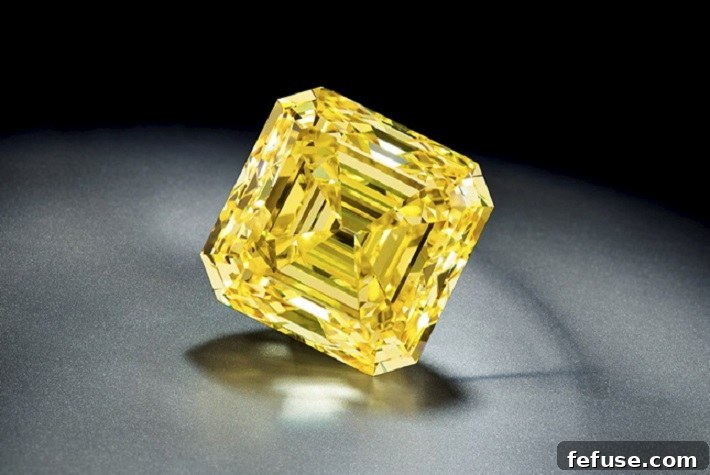
Most recently, the spotlight fell on a truly spectacular 45.07-carat fancy vivid yellow diamond, a jewel of immense beauty and significant market value, which was slated to be a highlight of the Phillips New York Jewels Auction. This extraordinary stone, with its deep, radiant hue, had generated considerable buzz among collectors, dealers, and enthusiasts alike. Experts had estimated its potential selling price to range between a substantial $2.8 million and $3.5 million, a testament to its exceptional quality and the inherent rarity of fancy vivid yellow diamonds of this size. The auction, held on Wednesday, June 12th, was poised to be a significant event, with this diamond expected to command a leading position.
However, to the surprise of many attending and observing the proceedings, the square emerald-cut diamond, boasting an impressive VS1-clarity grade, was unceremoniously pulled from the sale just before it was due to go under the hammer. Phillips, a renowned auction house with a global footprint in the luxury goods market, offered no immediate explanation for this unexpected withdrawal. The lack of transparency surrounding such a high-profile item invariably fuels speculation within the industry. Was it a disagreement over valuation? Did a private buyer emerge with an irresistible offer outside the public arena? Or did the seller simply decide that the timing was not right, perhaps believing the market could yield a better return at a later date? The official online results from Phillips later listed the 45.07-carat yellow diamond as “unsold,” a classification that, while technically accurate for items not auctioned, still leaves the deeper reasons unexplored and unanswered, perpetuating the mystery.
The Precedent: Sotheby’s and the Iconic Allnatt Diamond
This recent incident at Phillips is not an isolated event; it echoes a strikingly similar occurrence just a month prior involving another legendary yellow diamond. The celebrated 101.29-carat Allnatt diamond, an even larger and historically significant gem, was similarly withdrawn from Sotheby’s Magnificent Jewels and Noble Jewels sale in Geneva. With an even loftier estimate ranging from $6.2 million to $7.2 million, the Allnatt diamond was considered a star attraction, poised to potentially set new records for yellow diamonds of its caliber.
The Allnatt diamond holds a revered place in gemological history, named after its former owner, Major Alfred Ernest Allnatt, a prominent figure who owned it in the 1950s. Its remarkable size and exceptional fancy vivid yellow color have made it a benchmark for quality and rarity. Sotheby’s, a titan in the auction world, initially made no mention of the diamond’s absence in its post-auction report, a subtle omission that spoke volumes. However, they later confirmed that the diamond had indeed been withdrawn by the seller, an explanation that, while providing clarity on the action, still did not shed light on the underlying motivation. The parallel between these two significant withdrawals suggests a broader pattern rather than mere coincidence, prompting deeper analysis into the forces at play in the upper echelons of the diamond trade.
Understanding the Dynamics of Diamond Withdrawals
When a high-value diamond is pulled from an auction, several factors might be at play. The most common reasons often revolve around seller expectations and current market conditions. Sellers of such unique and rare items often have a “reserve price” – the minimum price they are willing to accept. If pre-auction interest or bids indicate that this reserve might not be met, a seller might opt to withdraw the item rather than risk it failing to sell publicly, which could potentially diminish its perceived value in future sales. The public perception of an “unsold” item can be detrimental to its prestige.
Another significant factor is the increasing prevalence of private sales. In an era where discretion and personalized service are highly valued, some collectors prefer to conduct transactions away from the public eye of an auction. It’s plausible that a private buyer approached the seller directly with an offer that was more appealing – either higher than the expected auction price, more certain, or simply more convenient. Auction houses themselves often facilitate such private placements, so a withdrawal doesn’t necessarily mean a sale didn’t occur; it just means it didn’t occur through the public auction format as originally planned. This shift towards private sales for ultra-high-net-worth individuals offers flexibility and confidentiality, making it an attractive alternative to the often unpredictable nature of competitive bidding.
Market Sentiment and Investment Potential
The overall economic climate and market sentiment also play a crucial role. While fancy colored diamonds, especially yellow ones, have historically demonstrated strong appreciation as investment assets, even this segment can be affected by global economic uncertainties, geopolitical tensions, or shifts in investor confidence. Sellers might be monitoring these broader trends and deciding to hold onto their assets if they anticipate a more favorable selling environment in the near future. Rare diamonds are not just beautiful ornaments; they are tangible assets, often considered safe-haven investments during times of economic volatility, similar to gold or fine art. However, even safe havens require the right timing for optimal returns.
Beyond Yellow: Other Unsold Fancy Colored Diamonds
The trend of items failing to meet their reserve or attract sufficient bids wasn’t limited solely to these high-profile yellow diamonds at Phillips. The same New York auction also saw two other fancy colored diamonds fail to sell, indicating a broader, perhaps more selective, buying environment for high-end gems. These included:
- A cushion modified brilliant-cut, 4.01-carat, fancy intense green diamond, which had an estimate of $300,000 to $350,000. Green diamonds are exceedingly rare, deriving their color from natural radiation exposure over millions of years, making them highly sought after by connoisseurs.
- A pear brilliant-cut, 3.07-carat, light-blue, VS2-clarity diamond ring by Cartier, estimated at $200,000 to $300,000. Blue diamonds are among the rarest and most coveted of all colored diamonds, with their price often reaching astronomical figures depending on color intensity and size. Even a ‘light-blue’ specimen from a prestigious house like Cartier represents significant value.
The inability of these distinctively colored diamonds to find buyers at their estimated ranges further underscores the nuanced nature of the current luxury diamond market. It suggests that while demand for rare gems remains robust, buyers are becoming increasingly discerning, perhaps prioritizing specific provenance, color saturation, or price points more rigorously than before. Or, it could indicate that the sellers’ expectations for these unique pieces simply did not align with the current market’s appetite or valuation.
The Enduring Allure of Fancy Colored Diamonds
Despite these recent withdrawals and unsold lots, the allure of fancy colored diamonds remains undiminished. These natural wonders, formed deep within the Earth over billions of years, captivate with their breathtaking hues and incredible rarity. Unlike colorless diamonds, which are valued primarily on the “4 Cs” (carat, cut, clarity, color, with colorless being the ideal), colored diamonds are primarily valued for the intensity and purity of their color. The categories range from “Faint” to “Fancy Vivid,” with “Fancy Vivid” being the most saturated and therefore the most valuable.
Yellow diamonds, in particular, are gaining significant traction. While more common than blues or pinks, deeply saturated “fancy vivid yellows” are still exceptionally rare, making them highly desirable. Their vibrant sunny disposition, combined with increasing recognition as a solid investment vehicle, ensures their continued prominence in the luxury market. The story of these withdrawn diamonds, rather than diminishing their appeal, perhaps adds another layer of mystique, highlighting their status as truly unique and irreplaceable treasures whose journey to a new owner is sometimes as complex and intriguing as their formation.
Conclusion: A Nuanced Market for Exceptional Gems
The recent withdrawals of the 45.07-carat fancy vivid yellow diamond from Phillips and the historic 101.29-carat Allnatt diamond from Sotheby’s, alongside other unsold fancy colored diamonds, paint a picture of a luxury gem market that is both robust and highly discerning. It is a market where the inherent value of rarity, beauty, and provenance is undisputed, but where the path from seller to buyer is increasingly influenced by strategic decisions, private negotiations, and fluctuating economic sentiments. These events underscore the sophistication required to navigate the high-stakes world of investment-grade jewels. While the reasons behind each withdrawal may vary, they collectively signal a dynamic environment where sellers are carefully weighing their options, often prioritizing long-term value and discreet transactions over the immediate gratification of a public sale. For enthusiasts and investors alike, these developments offer a fascinating glimpse into the intricate dance between supply, demand, and expectation in the glittering realm of precious stones.