
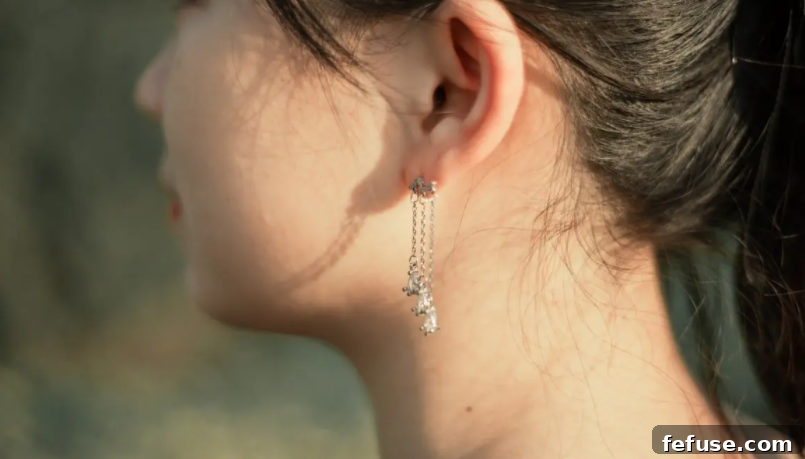
Throughout history, earrings have transcended their role as mere accessories, evolving into powerful symbols of culture, status, and personal expression. From rudimentary studs to elaborate, shoulder-grazing designs and avant-garde mismatched pairs, this ubiquitous piece of jewelry has become an indispensable element of the global fashion industry. Earring designs are incredibly versatile, offering an unparalleled ability to complement any style, making them a perennial favorite for countless individuals worldwide. This comprehensive article delves into the captivating history of earrings, tracing their journey from ancient origins to their prominent place in modern society.
The saga of earrings spans an astonishing 7,000 years, a testament to their enduring appeal and significance across diverse civilizations. Worn by both men and women across various societies and continents, earrings have consistently reflected the prevailing trends, beliefs, and social hierarchies of their respective eras.
The Earliest Glimmers: Earrings in Ancient Civilizations
The earliest documented evidence of earrings dates back to approximately 2600 B.C.E. in the advanced civilization of Sumeria, located in Mesopotamia. Archaeological findings from this period reveal exquisite earrings crafted from precious materials such as gold, deep red carnelian, and the vibrant blue lapis lazuli. These materials, often sourced through extensive trade networks, signified not only the wearer’s wealth but also their connection to distant lands. While Sumerian artifacts provide concrete proof, it is widely believed by historians and archaeologists that ancient peoples may have adorned their ears with rudimentary forms of jewelry even earlier, perhaps utilizing bones, shells, or carved wood.
In various parts of ancient Asia, earrings held particular cultural weight, often being worn more prominently by men than women. In these stratified societies, earrings served as clear indicators of an individual’s social standing, power, and affluence. Intricately designed and often made from valuable metals, they were not just decorative items but potent symbols of authority and prestige.
The vibrant Minoan civilization, flourishing on the island of Crete, embraced earrings crafted from a trio of enduring metals: gleaming gold, lustrous silver, and sturdy bronze. These pieces often reflected the sophisticated artistry and maritime culture of the Minoans. Similarly, across the Aegean civilization, hoop earrings emerged as a particularly favored style among men. These simple yet elegant circular designs spoke to a sense of classicism and practicality, yet were imbued with cultural significance.
The social implications of earrings varied dramatically across ancient societies. In Ancient Rome, for instance, earrings were initially associated with slaves, serving as a marker of their servitude. Parallel to this, in Ancient Greece, the wearing of earrings was largely confined to prostitutes, distinguishing them within society. However, as societies evolved, so too did the symbolism. Over time, wealthy Roman and Greek women began to reclaim and redefine earrings, transforming them into symbols of their own status and luxury. These affluent women adorned their ears with magnificent pieces featuring pearls, the fiery brilliance of topaz and garnet, and the serene deep blue of sapphire, showcasing their wealth and sophisticated taste. Thus, earrings in these periods represented a fascinating paradox, simultaneously worn by the most marginalized and the most privileged members of society.
Moving into the European context, the 1500s marked a significant period for earrings in England, where they became increasingly fashionable, particularly amongst the upper echelons of society. This era, characterized by the opulent styles of the Renaissance, saw earrings become a prominent feature of aristocratic attire. For a period, earrings predominantly became associated with women, evolving into a perceived ‘women’s jewelry.’ However, the pendulum swung again in the 1900s, witnessing a resurgence of interest among men who once again embraced these versatile adornments, integrating them into evolving masculine fashion trends.
In Ancient India, earrings held profound cultural and spiritual significance. They were not merely decorative but often imbued with symbolic meaning, worn by kings, queens, and other eminent figures of society as emblems of divinity, power, and prosperity. The importance of earrings in Indian culture is further underscored by their frequent mention in ancient literature and epic poems, where they often play crucial roles in narratives or serve as defining features of iconic characters. This rich tapestry of historical and literary references demonstrates the deep reverence and integral role earrings played in Indian civilization.
Earrings in the Middle Ages and Beyond: Navigating Prohibitions and Popularity
The Middle Ages presented a unique and challenging period for ear piercing and earring wearing in many parts of Europe. During the 13th century, the powerful Catholic Church issued a ban on ear piercing, viewing it as a transgression against divine will. The Church’s doctrine held that altering the body through piercing was a sin, a deliberate defacement of the human form, which was believed to be created in the image of God. This religious prohibition significantly curtailed the widespread practice of wearing earrings among the general populace, leading to a decline in their fashionability.
However, even amidst this ecclesiastical decree, earrings persisted, particularly among groups who operated outside or deliberately defied societal norms. It became a distinctive mark for those on the fringes: thieves, pirates, and other marginalized individuals famously continued to wear earrings as a symbol of their rebellion and their disregard for conventional societal and religious strictures. For these groups, an earring was not just an adornment but a badge of their outsider status, a silent protest against the prevailing moral codes.
Beyond this rebellious streak, certain specific cultural and superstitious practices involving earrings continued to exist, even under the shadow of the Church’s ban. In some communities, an earring might be worn by the only male child in a family, or by a child born after the tragic death of an elder sibling. This practice was deeply rooted in a desire for protection and served as a symbolic charm. Such a child, often considered particularly precious or vulnerable, was symbolically marked as ‘protected,’ sometimes even exempting them from participating in warfare or dangerous endeavors. This highlights the enduring belief in the protective and symbolic power of jewelry, even when religious doctrine sought to suppress it.
The tides of fashion and social acceptance began to turn significantly in the 1900s. This century witnessed a dramatic shift in earring trends, with clip-on earrings gaining immense popularity. These innovative designs offered a comfortable and convenient alternative to traditional pierced earrings, allowing individuals to adorn their ears without committing to a piercing. The widespread adoption of clip-ons played a crucial role in democratizing earring fashion, making it accessible to a broader audience. Simultaneously, perhaps fueled by the newfound freedom and versatility offered by clip-ons, a renewed and enthusiastic interest in traditional ear piercing swept across many parts of the globe, paving the way for the diverse earring landscape we know today.
Iconic Styles: The History of Popular Earring Designs
The world of earrings boasts an incredible array of styles, each with its own unique history and enduring appeal. Let’s explore some of the most iconic and beloved earring designs:
Stud Earrings: Timeless Simplicity
Stud earrings are perhaps the most ubiquitous and enduring style, celebrated for their understated elegance and classic simplicity. These minimalist adornments, characterized by a single jewel or design resting directly on the earlobe, rose to prominence in the 1920s. During this era, particularly with the Art Deco movement’s emphasis on clean lines, stud earrings resonated with a desire for refined, yet impactful jewelry. Beyond aesthetics, historical beliefs sometimes imbued stud earrings with protective qualities; some cultures believed that wearing studs could safeguard one’s aura or ward off negative energies. Diamond stud earrings, in particular, remain a timeless classic, embodying sophistication and everlasting sparkle. Blue diamond stud earrings set in sterling silver have also gained considerable popularity, offering a contemporary twist on a cherished design.
Chandelier Earrings: Ornate Grandeur
Chandelier earrings are exquisite, multi-tiered designs that gracefully dangle, often resembling miniature chandeliers. These opulent earrings boast a rich heritage, originating in India and other Middle Eastern countries, where elaborate jewelry has been a cornerstone of cultural expression for millennia. Their intricate designs, often featuring multiple cascades of gemstones or metalwork, reflected the grandeur and artistic traditions of these regions. The global appeal of chandelier earrings expanded significantly during the age of British Colonialism in India, as European traders and elites encountered and adopted these stunning pieces. Their elegance quickly captivated European royalty, exemplified by King George presenting magnificent chandelier earrings to his wife and daughter, further solidifying their status as high-fashion items. Chandelier diamond earrings, with their breathtaking brilliance and intricate structure, have historically been among the most coveted variations.
Drop Earrings: Elegant Dangles
Drop earrings, characterized by a design that “drops” below the earlobe, have been a favorite for centuries due to their ability to elongate the neck and add a touch of grace. During the vibrant Renaissance period, when artistry and opulence flourished, yellow gold diamond drop earrings were particularly popular among women. These pieces combined the warmth of yellow gold with the captivating sparkle of diamonds, reflecting the era’s appreciation for luxury and artistic craftsmanship. The versatility of drop earrings means they can range from simple single-stone drops to more elaborate designs, always maintaining an air of sophistication.
Princess Cut Diamond Earrings: Modern Geometric Appeal
The Princess cut diamond earring offers a distinctly modern aesthetic. This cut is celebrated for its precise, squarely shaped silhouette and exceptional brilliance, displaying a fine geometric look that appeals to contemporary tastes. Its clean lines and fire make it a popular choice for those seeking a modern yet elegant diamond earring. The option to buy half-carat princess cut diamond earrings exemplifies the enduring demand for this sophisticated design, which beautifully merges classic sparkle with contemporary form.
Emerald and Diamond Earrings: A Timeless Pairing
The captivating combination of diamonds and emerald earrings has remained popular for at least 500 years, a testament to the enduring allure of these precious gemstones. Emeralds, with their vivid green hues, have long been associated with royalty, renewal, and prosperity. Historically, these vibrant stones were also believed to possess medicinal properties; ancient folklore suggested that emeralds could cure ailments such as malaria and cholera, adding a layer of mystique and value beyond their beauty. This fascinating blend of aesthetic appeal, symbolic meaning, and historical belief underscores the unique story and cultural significance inherent in each type of earring.
Hoop Earrings: A Continuous Circle of Style
Hoop earrings are another ancient and incredibly versatile style, characterized by their circular or semi-circular form that passes through the earlobe. Tracing their origins back to Sumerian civilization and ancient Nubia, hoops have been continuously worn across cultures and millennia. From simple, slender bands to bold, oversized designs, hoops have symbolized everything from cultural identity to fashion-forward statements. They were popular in ancient Egypt, Greece, and Rome, and their appeal resurged in the 20th century, particularly becoming an iconic accessory in various subcultures and fashion movements, celebrated for their confidence and timeless chic.
Dangle Earrings: Dynamic Movement
Dangle earrings are a broad category encompassing any earring that hangs below the earlobe and incorporates movement. Unlike static drops, dangles often feature multiple components that sway and shimmer with the wearer’s motion. Their designs can range from playful and whimsical to elegant and sophisticated, making them incredibly adaptable to different occasions and personal styles. They allow for immense creativity in design, utilizing various materials, gemstones, and intricate metalwork to create truly unique pieces.
Ear Cuffs and Wraps: Avant-Garde Expression
More recently, ear cuffs and wraps have gained significant traction, especially among those looking for an edgy or avant-garde aesthetic without requiring piercings. These innovative designs adorn the outer helix of the ear, often creating an illusion of multiple piercings or intricate sculptural forms. Ear cuffs offer a playful and versatile way to experiment with jewelry, ranging from delicate bands to bold, statement-making pieces that wrap around the entire ear, showcasing a blend of rebellion and high fashion.
Huggies: Snug and Chic
Huggies are a popular subcategory of hoop earrings known for their snug fit around the earlobe. These small, often chunky hoops provide a comfortable and secure adornment, making them ideal for everyday wear. Their close-fitting design offers a subtle yet stylish touch, often featuring small diamonds or intricate engravings. Huggies have become a go-to choice for those seeking a minimalist, elegant look that provides a hint of sparkle or metallic shine without overwhelming the wearer.
From their prehistoric origins as functional talismans to their modern status as diverse fashion statements, earrings have enjoyed an astonishingly rich and varied history. They have served as markers of identity, wealth, rebellion, and beauty, evolving through countless styles and materials. Each pair of earrings, whether a simple stud or an elaborate chandelier, carries with it echoes of past civilizations and the ever-changing tapestry of human culture and adornment. As fashion continues to evolve, one thing remains constant: the enduring and captivating allure of the earring.