
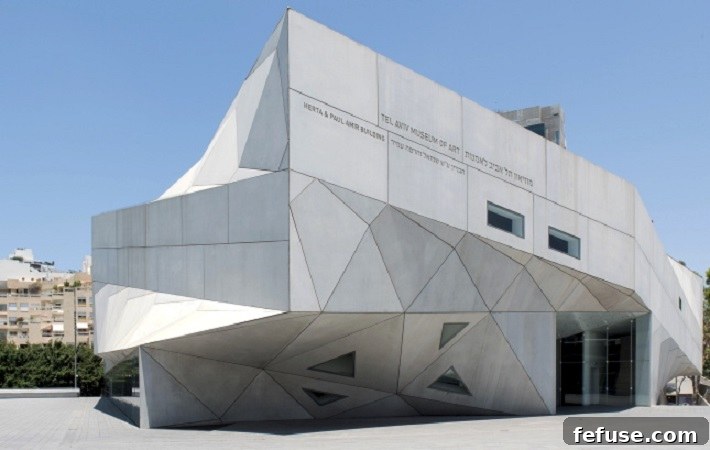
Tel Aviv Museum Boycotts Christie’s over Controversial Horten Jewelry Sale, Highlighting Nazi-Era Restitution Imperatives
In a powerful statement against wealth derived from Nazi-era profiteering, the Tel Aviv Museum of Art has officially withdrawn from its role as host for an upcoming conference on Holocaust restitution. This significant decision comes in direct protest of Christie’s, the prominent British auction house, which recently facilitated the sale of nearly $200 million worth of jewelry belonging to Heidi Horten, the late widow of Helmut Horten, a known member of the Nazi party. The museum’s withdrawal underscores the enduring sensitivity and critical importance of ethical considerations in the art world, particularly concerning legacies intertwined with the atrocities of the Holocaust.
The planned conference, titled “Reflecting on Restitution,” was poised to be a landmark event, marking the 25th anniversary of the Washington Principles on Nazi-Confiscated Art. This international agreement serves as a crucial framework for addressing art lost or stolen during Nazi rule, guiding efforts to return such works to their rightful owners. The gathering was expected to draw a distinguished assembly of Holocaust survivor families, eminent historians, and legal experts, all dedicated to advancing the cause of justice and historical accuracy in art restitution. The museum’s decision, therefore, carries substantial weight, not only for the immediate event but also for the broader discourse on ethical practices within the global art market.
The Museum’s Decisive Stance: Attentive to Criticism, Bound by Public Sentiment
The Tel Aviv Museum of Art communicated its withdrawal with clarity, stating it was “attentive to criticism and bound by public sentiment.” This declaration highlights the profound impact of public outrage and ethical scrutiny on cultural institutions. The sale of over 700 items from Heidi Horten’s collection by Christie’s had ignited widespread indignation long before the auction took place. Critics argued that proceeding with the sale, even with a pledge to donate profits to Holocaust research and charity, inherently legitimized a fortune built upon the suffering of others during one of humanity’s darkest chapters. The museum, by stepping back, has demonstrated its commitment to aligning its actions with the moral compass of its community and the international imperative to acknowledge and address historical injustices.
This move by the Tel Aviv Museum of Art serves as a stark reminder that even decades after World War II, the echoes of Nazi-era expropriation continue to reverberate, demanding vigilance and integrity from all stakeholders. The institution’s decision reflects a broader understanding that the pursuit of justice for Holocaust victims and their descendants transcends purely legal frameworks, encompassing moral and ethical responsibilities that extend to cultural platforms and the custodians of historical memory.
Christie’s Controversial Auction: A Legacy Tainted by History
The controversy surrounding Christie’s sale stems directly from the origins of the Horten family’s wealth. Heidi Horten’s first husband, Helmut Horten, was a prominent German businessman who dramatically expanded his department store empire during the 1930s and early 1940s. His expansion strategy heavily relied on what was known as “Aryanization” – the forced sale and expropriation of businesses owned by Jewish individuals who were persecuted under Nazi Germany. These businesses were acquired by non-Jewish Germans, often at severely undervalued prices, allowing individuals like Helmut Horten to amass vast fortunes at the expense of their Jewish counterparts, many of whom were subsequently driven into exile, concentration camps, or death.
The auction house, in its defense, had acknowledged the problematic source of the wealth and announced its intention to donate a significant portion of the proceeds to Holocaust education and related charities. However, for many, this measure did not go far enough. Critics argued that by facilitating such a high-profile sale, Christie’s inadvertently offered a platform for the glorification of a collection amassed through morally reprehensible means, thereby indirectly profiting from a tainted legacy. The sheer scale of the sale – attracting global attention and generating immense revenue – only amplified these concerns, raising fundamental questions about the ethical boundaries and social responsibilities of major auction houses in dealing with historical wealth tainted by heinous crimes against humanity.
The incident has forced a broader reckoning within the art market regarding the provenance of collections, not just in terms of specific artworks, but also the general source of the wealth used to acquire them. It highlights the intricate web of ethical considerations that major institutions must navigate when dealing with estates that have historical connections to regimes responsible for genocide and widespread human rights abuses. The pushback from the Tel Aviv Museum of Art and other concerned parties underscores a growing demand for transparency, accountability, and a more robust ethical framework in the global art and luxury goods trade.
The Washington Principles and the Enduring Struggle for Restitution
The conference that the Tel Aviv Museum of Art was scheduled to host held immense symbolic and practical importance. The Washington Principles on Nazi-Confiscated Art, established in 1998, represent a seminal international consensus urging nations to identify art confiscated by the Nazis and return it to its rightful owners or their heirs. This framework has guided countless efforts over the past quarter-century to research provenance, locate missing artworks, and facilitate returns, bringing a measure of justice to families devastated by the Holocaust.
Such conferences are vital forums where progress is reviewed, challenges are discussed, and strategies for future restitution efforts are forged. They provide a platform for survivor families to share their stories, for historians to present new research, and for legal experts to navigate the complex legal landscapes surrounding restitution claims. The presence of a prominent institution like the Tel Aviv Museum of Art as a host would have lent significant weight and visibility to these critical discussions. The museum’s withdrawal, while protesting Christie’s actions, inadvertently casts a shadow over the immediate staging of this important restitution dialogue, yet simultaneously amplifies the very issues it seeks to address – the moral complexities and ongoing challenges inherent in rectifying the wrongs of the Nazi era.
The absence of the Tel Aviv Museum of Art from this hosting role, therefore, serves as a poignant reminder that the work of restitution is not merely an administrative or legal task; it is deeply intertwined with moral imperatives, historical memory, and the constant need to confront uncomfortable truths about how wealth and power were accumulated during periods of immense human suffering. The integrity of the discourse on Holocaust restitution demands that all participants uphold the highest ethical standards, especially when dealing with entities whose pasts are directly implicated in the mechanisms of Nazi oppression.
Christie’s Response and the Path Forward for Ethical Commerce
In the wake of the museum’s decision, Christie’s issued a statement expressing its “respect” for the Tel Aviv Museum of Art’s choice. The auction house reiterated its commitment to supporting initiatives aimed at fostering “greater awareness and understanding of the complex issues relating to the restitution of Nazi-looted art and the essential work being done in this field.” They highlighted their plans for a year of events dedicated to this cause, funded by proceeds from the Horten sale. While this commitment is noted, it faces scrutiny in light of the perceived contradiction between facilitating a sale rooted in Nazi-era profiteering and simultaneously championing restitution efforts.
This situation presents a significant challenge for major commercial entities in the art world. How can auction houses balance their business objectives with their ethical obligations, especially when confronted with legacies of extreme moral compromise? The Tel Aviv Museum of Art’s protest demonstrates that a purely financial or legalistic approach to such matters is insufficient. Public trust and ethical standing are invaluable assets, and their erosion can have long-lasting repercussions. The incident serves as a call for auction houses and other market players to implement more rigorous ethical vetting processes for collections, going beyond legal ownership to consider the moral provenance of wealth and the historical context in which it was accumulated.
The global art market, estimated to be worth billions, has a profound responsibility to not only facilitate the exchange of cultural artifacts but also to uphold the values of justice, memory, and respect for human dignity. The controversy surrounding the Heidi Horten collection and the Tel Aviv Museum of Art’s response underscore the enduring need for vigilance, education, and unwavering commitment to ethical principles in confronting the legacies of the Holocaust. Moving forward, a collaborative approach that prioritizes moral integrity alongside commercial viability will be crucial for healing historical wounds and ensuring that cultural institutions remain beacons of ethical conduct and historical consciousness.
The Enduring Importance of Vigilance and Education
The Tel Aviv Museum of Art’s decision is more than just a localized event; it is a global beacon for ethical conduct and a powerful statement on the unwavering relevance of Holocaust memory. It signals to the world that the wounds of the past, particularly those inflicted by the Nazi regime, are not simply historical footnotes but living realities that continue to shape contemporary ethical debates. The ongoing efforts to identify and return Nazi-looted art, alongside the broader conversation about restitution, are critical components of an international commitment to ensuring that justice, however belated, is served, and that the lessons of history are never forgotten.
The controversy surrounding Christie’s and the Horten sale reminds us that institutions, whether museums or auction houses, play a pivotal role in shaping public understanding and ethical norms. Their actions resonate far beyond their immediate transactions, influencing perceptions of justice, accountability, and historical memory. In an era where historical revisionism can take many forms, the steadfast commitment of institutions like the Tel Aviv Museum of Art to confront uncomfortable truths and prioritize moral integrity over commercial convenience is more crucial than ever. This incident will undoubtedly serve as a case study for future discussions on ethical provenance, the responsibilities of art market players, and the enduring power of public sentiment in the pursuit of historical justice.