
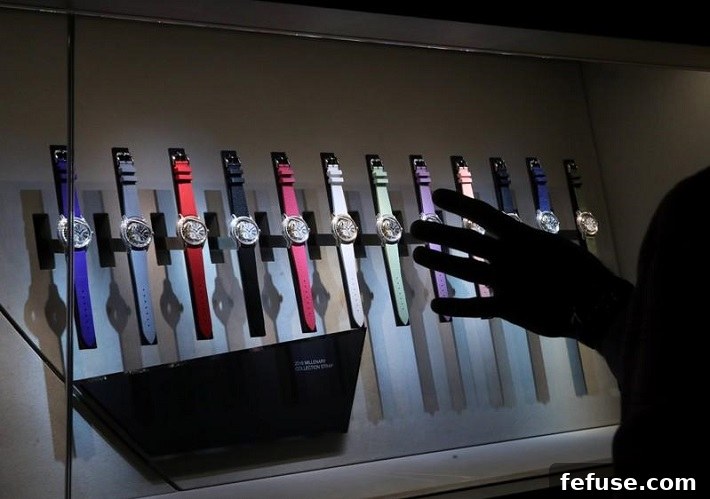
Swiss Luxury Watchmakers Adapt to Evolving Chinese Market: A Strategic Pivot Towards Domestic Demand
The esteemed Swiss watchmaking industry, long a bastion of precision and luxury, is currently navigating a complex and evolving landscape within its most crucial market: China. While signs of a slowdown in spending from Chinese tourists have become increasingly apparent, leading high-end brands are not deterred. Instead, they are executing a strategic pivot, banking on robust demand shifting to mainland China to fuel their growth ambitions for the current year and beyond.
This dynamic shift comes at a time of heightened investor caution, primarily fueled by a softening economic backdrop in China. Recent weak Chinese trade data, for instance, sent ripples through global markets, causing shares in major luxury goods companies heavily reliant on Chinese patronage to tumble. The implications are clear: the traditional model of relying on outbound Chinese tourism for luxury sales is undergoing a profound transformation, necessitating agile and localized strategies from watchmakers.
The Shifting Sands of Chinese Consumer Spending
The economic narrative in China has become a central point of concern for global luxury brands. A confluence of factors, including a weakening yuan and the Chinese government’s proactive measures such as cuts in import taxes, is significantly influencing where and how Chinese consumers choose to spend their disposable income on luxury items. Historically, Chinese tourists splurged heavily on luxury goods abroad, drawn by lower prices and a wider selection. However, these new economic realities are increasingly encouraging them to make their high-value purchases within China’s borders.
This phenomenon, often termed “re-shoring” of luxury consumption, presents both challenges and opportunities. While it might impact traditional luxury hubs like Hong Kong and European capitals, it simultaneously opens avenues for brands to deepen their engagement and investment in mainland China. Companies are now tasked with understanding the nuances of domestic consumer preferences, local retail dynamics, and digital engagement strategies that differ significantly from their global blueprints.
Luxury Brands’ Strategic Pivot to Mainland China
In response to these market shifts, many Swiss watch brands are recalibrating their strategies, with a pronounced focus on strengthening their presence within mainland China. Parmigiani, for example, a prestigious independent brand owned by the Sandoz Family Foundation, produces around 3,000 exquisite pieces annually with an average price point of 35,000 Swiss francs (£27,665). Despite the broader economic jitters, Parmigiani firmly believes this is an opportune moment for substantial investment in the Chinese market.
Davide Traxler, Parmigiani’s chief executive, articulated this strategic intent at the SIHH industry trade fair in Geneva, stating, “People are travelling less, but consuming more domestically so it is the right moment for us to strengthen our local presence (in China).” He candidly admitted that the brand, currently in a turnaround phase, was entering the Chinese market “10 years late,” underscoring the urgency and strategic importance of this move. Parmigiani is also repositioning itself at higher price points, a shift from a more accessible approach attempted a few years prior, signaling a renewed commitment to its ultra-luxury positioning that resonates with discerning domestic consumers.
Navigating Regional Challenges: Hong Kong and Greater China
While the focus shifts to mainland China, the broader Greater China region, which includes Hong Kong and Macau, has presented its own set of challenges. Richemont, the luxury conglomerate behind Cartier, reported a noticeable loss of steam in its Hong Kong business during the last three months of 2018. Other brands echoed similar sentiments, noting setbacks across various parts of Greater China.
Edouard Meylan, chief executive of the independent Swiss label H. Moser & Cie., observed a direct correlation between geopolitical tensions and market performance. “We had growth everywhere last year, except for Greater China where we saw a dip in demand due to the trade war in October and November,” Meylan stated. While he noted a subsequent recovery and an unusual surge in “big-ticket” watch sales in December and January, a pervasive sense of caution remains. Meylan’s sentiment reflects the wider industry’s apprehension, highlighting the fragility introduced by major global uncertainties such as the U.S. government shutdown, the ongoing U.S.-China trade war, and the complexities surrounding Brexit.
Resilience Amidst Uncertainty: The Enduring Appeal of Luxury
Despite the prevailing geopolitical and economic uncertainties, manufacturers across the luxury spectrum, from designer handbags to sophisticated timepieces, have largely maintained a measured outlook. They tend to downplay the potential for a dramatic fallout from the U.S.-China trade stand-off, arguing that the fundamental appetite from a burgeoning class of young, affluent Chinese consumers eager to embrace branded goods is likely to endure in the long term. This segment, particularly those in their 20s and 30s, represents a powerful demographic force, driving demand for innovative designs and heritage brands alike.
Ricardo Guadalupe, CEO of LVMH’s dynamic Hublot brand, which showcased its watches at a private hotel in downtown Geneva rather than the Richemont-dominated SIHH, confirmed this resilient trend. “We’ve noticed a small slowdown, but we’re still talking about a growth pattern,” Guadalupe affirmed. He specifically highlighted that young Chinese clients were instrumental in boosting demand for Hublot watches throughout 2018. The brand’s ability to connect with this younger demographic, often through bold designs and celebrity endorsements, has been a key factor in its continued success.
Hublot’s performance in Greater China, which accounts for approximately 13 percent of its global revenues, witnessed an impressive 60 percent surge last year. This remarkable growth can be partly attributed to Hublot’s status as a relatively newer entrant in the Chinese market, having first invested there a decade ago. This later entry has allowed the brand to capitalize on contemporary market trends and evolving consumer tastes without the legacy challenges faced by older, more established brands. While Hublot, a stablemate of Tag Heuer and Zenith within the LVMH luxury group, does not publicly disclose specific revenue figures, its market commentary offers valuable insights into the broader luxury watch landscape.
The Geopolitical Landscape and Long-Term Outlook
Looking ahead, Guadalupe projected that Hublot’s growth in 2019 might normalize to a still robust 10 to 15 percent, primarily due to tougher year-on-year comparisons following an exceptional 2018. Globally, Hublot is banking on its comparable sales expanding by at least 6 to 7 percent, a solid projection after achieving an impressive 16 percent growth in 2018. However, Guadalupe’s optimism is tempered with a cautious note regarding the broader geopolitical environment. He emphasized that this positive dynamic is likely to continue “unless there is a real catastrophe in terms of the geopolitical relations between China and the United States.”
This statement underscores the profound impact that international relations can have on consumer sentiment and purchasing power, particularly in a market as sensitive and influential as China. For Swiss luxury watchmakers, the strategy moving forward involves not only understanding evolving domestic demand but also closely monitoring global political stability. Brands are increasingly investing in localized marketing, enhancing their e-commerce capabilities within China, and developing unique boutique experiences that cater specifically to the sophisticated tastes of Chinese luxury shoppers. This holistic approach is crucial for sustaining long-term growth and maintaining market leadership.
Conclusion: A Calculated Optimism for Swiss Watchmaking
In conclusion, the Swiss luxury watch industry finds itself at a pivotal juncture, keenly observing and responding to seismic shifts in the Chinese market. While the era of relying heavily on Chinese tourist spending for exponential growth may be waning, a vibrant and increasingly localized domestic market within mainland China presents formidable opportunities. Brands like Parmigiani and Hublot are demonstrating agility and strategic foresight, adapting their investment, positioning, and marketing efforts to cater directly to this powerful domestic consumer base.
Despite lingering global uncertainties and regional slowdowns, a calculated optimism pervades the industry. The enduring appeal of high-end Swiss timepieces, coupled with the unwavering desire for luxury among young, affluent Chinese consumers, suggests a resilient path forward. Success will hinge on brands’ abilities to continually innovate, localize, and navigate the complex interplay of economic forces and geopolitical dynamics, ensuring that the timeless craft of Swiss watchmaking continues to thrive in its most significant market.
NewsSource: Yahoo Finance