
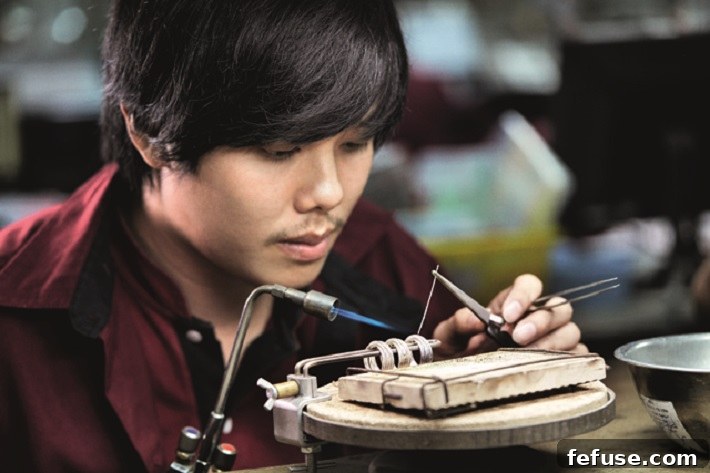
Pandora Pledges a Sustainable Future: Embracing 100% Recycled Silver and Gold by 2025
In a landmark announcement that is set to redefine sustainability standards in the luxury jewelry sector, global powerhouse Pandora has declared its unwavering commitment to completely phasing out newly mined silver and gold from its products. By the year 2025, the brand will exclusively procure all its silver and gold from recycled sources, marking a pivotal step towards a more circular and environmentally responsible business model.
This bold strategic shift underscores Pandora’s dedication to reducing its ecological footprint, promising significant environmental benefits. The transition to entirely recycled precious metals is projected to dramatically slash carbon emissions – specifically, a reduction of two-thirds for silver and an astounding cut of over 99% for gold. This move not only highlights a commitment to sustainable practices but also positions Pandora at the forefront of the industry’s ethical evolution.
The Imperative of Infinite Recyclability: A Vision for a Circular Economy
Alexander Lacik, Pandora’s chief executive officer, articulated the profound philosophy behind this initiative: “Silver and gold are beautiful jewelry materials that can be recycled forever without losing their quality. Metals mined centuries ago are just as good as new. They will never tarnish or decay.” This statement encapsulates the core principle of a circular economy, where resources are kept in use for as long as possible, extracting maximum value from them while in use, then recovering and regenerating products and materials at the end of their service life.
Lacik further emphasized Pandora’s ambition: “We wish to help develop a more responsible way of crafting affordable luxury like our jewelry, and prevent that these fine metals end up in landfills. We want to do our part to build a more circular economy.” This vision extends beyond mere compliance, aiming instead to foster systemic change within the industry by demonstrating that responsible sourcing can be both economically viable and environmentally sound. By utilizing existing precious metal reserves, Pandora actively contributes to alleviating the pressure on finite natural resources and mitigating the destructive impacts associated with traditional mining practices.
Meeting Consumer Demand with Uncompromised Quality and Ethics
The decision also resonates deeply with evolving consumer values. Stephen Fairchild, Pandora’s chief creative officer, noted the increasing importance of ethical consumption: “It is becoming increasingly important to consumers that fashion and jewelry products are manufactured in a sustainable manner. Sustainability and quality have always been core values for Pandora, and since we know that our customers care about where and how our products are made, we have been using recycled metals in our designs for years.” This acknowledges a growing awareness among buyers who seek transparency and integrity from the brands they support.
Fairchild continued, linking sustainability with the enduring appeal of Pandora’s designs: “We design our jewelry to last knowing that our fans keep their Pandora jewelry for a long time. Gold and silver never lose their quality, so by using only recycled metals, we are able to offer high quality, affordable jewelry that is even better for the environment.” This reinforces the message that sustainability does not equate to compromise; rather, it enhances the intrinsic value and ethical appeal of each piece, ensuring that Pandora jewelry remains cherished heirlooms for generations, crafted with both personal and planetary well-being in mind.
Deep Dive into Environmental Impact: Drastically Reducing Carbon Footprint
The environmental benefits of this transition are substantial and quantifiable. Currently, 71% of the silver and gold used in Pandora’s jewelry already originates from recycled sources. The move to 100% recycled precious metals will further amplify the positive impacts, specifically reducing CO2 emissions, minimizing water usage, and alleviating other significant environmental pressures. The energy required to extract new metals from the earth, process them, and transport them to manufacturing facilities is immense, often involving heavy machinery, chemicals, and vast amounts of water.
Life cycle assessments reveal compelling data: the carbon emissions associated with sourcing recycled silver are merely one-third compared to those from newly mined silver. For gold, the contrast is even more stark; recycling gold generates approximately 600 times less carbon than mining new gold. This staggering difference highlights the immense potential for environmental conservation inherent in adopting a fully recycled metal strategy. Beyond carbon, the reduction in water usage is critical, as mining operations are notoriously water-intensive and often lead to local water scarcity and pollution. Furthermore, this shift helps to curb habitat destruction, soil erosion, and the use of harmful chemicals like cyanide and mercury, which are frequently employed in traditional mining and pose severe threats to ecosystems and human health.
A Broader Spectrum of Materials and the Scope of Change
While silver constitutes the predominant material in Pandora jewelry, accounting for over half of all purchased product materials by weight, the company also incorporates smaller quantities of gold, palladium, copper, and ethically sourced man-made stones such as nano-crystals and cubic zirconia. The decision to embrace 100% recycled materials will encompass all uses of silver and gold across Pandora’s entire production chain. This includes the raw forms like grains, semi-finished components such as chains, and various other parts supplied by external partners, ensuring a comprehensive and integrated approach to sustainable sourcing.
This holistic commitment underscores the seriousness of Pandora’s pledge. It’s not just about a specific line of products but about transforming the very foundation of their material procurement, setting a new benchmark for what’s achievable in the realm of responsible jewelry manufacturing.
Leading by Example: Addressing the Climate Crisis and Resource Depletion
Reiterating the urgency of the climate crisis, CEO Alexander Lacik emphasized, “The need for sustainable business practices is only becoming more important, and companies must do their part in response to the climate crisis and the depletion of natural resources. For many years, Pandora has used recycled metals in our designs. Now we are ready to take the next step and stop using mined silver and gold altogether. This is a significant commitment that will be better for the environment and make our jewelry more sustainable.”
This statement positions Pandora not merely as a participant in sustainability efforts but as a proactive leader, recognizing the corporate responsibility to address pressing global challenges. By demonstrating that a large-scale enterprise can successfully transition away from virgin materials, Pandora provides a powerful case study for other companies wrestling with their own environmental impact and supply chain ethics. This move isn’t just about reducing internal emissions; it’s about influencing broader industry practices and fostering a more conscientious approach to global resource management.
Navigating the Supply Chain: Ensuring a Robust Future for Recycled Metals
While the ambition is clear, the practical implementation requires careful planning, especially given the current landscape of recycled metal supplies. Today, only around 15% of the world’s silver supply comes from recycled sources, with more than half of this originating from industrial applications such as chemical production, electronics, and other manufacturing processes, rather than directly from post-consumer jewelry. This presents a challenge for a company of Pandora’s scale.
To ensure a consistent and reliable supply of responsibly sourced recycled silver, Pandora will intensify its collaboration with existing suppliers and forge new partnerships. A critical element of this strategy will involve rigorous certification processes, adhering to leading supply chain initiative standards such as those set by the Responsible Jewellery Council (RJC). The RJC provides a framework for ethical, social, and environmental practices across the jewelry supply chain, offering independent third-party certification to member businesses. By partnering with and adhering to such standards, Pandora guarantees the integrity and traceability of its recycled metals, assuring consumers of their ethical provenance.
Furthermore, Pandora plans to actively engage with key stakeholders throughout the supply chain. This collaborative approach will involve exploring innovative opportunities to increase the overall availability of recycled silver and gold globally, as well as working to enhance production standards within the recycling sector. This proactive engagement aims not only to secure Pandora’s own future supply but also to contribute to the broader development and maturation of the recycled precious metals market, ultimately benefiting the entire industry.
A Holistic Approach to Sustainability: Beyond Precious Metals
Pandora’s decision to transition to recycled precious metals is not an isolated initiative but a cornerstone of its comprehensive and ambitious decarbonization targets announced in January. The company has already made significant strides in its operational sustainability. In 2020, Pandora successfully sourced 100% renewable electricity for its two state-of-the-art jewelry crafting facilities in Thailand. Building on this achievement, the company has committed to becoming carbon neutral across its entire operations by 2025.
Further solidifying its commitment to global climate action, Pandora has officially joined the Science Based Targets initiative (SBTi). The SBTi is a collaborative effort between CDP, the United Nations Global Compact, World Resources Institute (WRI), and the World Wide Fund for Nature (WWF), which helps companies set ambitious emissions reduction targets in line with the latest climate science. As part of this commitment, Pandora will publish a detailed plan next year outlining how it will reduce carbon emissions across its full value chain, ensuring alignment with the goals of the Paris Agreement to limit global warming.
Paving the Way for a Sustainable Future in Luxury
Pandora’s commitment to 100% recycled silver and gold by 2025 represents more than just a change in sourcing; it signifies a profound shift in corporate philosophy and a bold challenge to conventional industry practices. By prioritizing environmental stewardship, responding to evolving consumer demands, and investing in a circular economy, Pandora is not only securing a more sustainable future for its own operations but also setting a powerful precedent for the entire luxury jewelry sector. This initiative reinforces the idea that true luxury in the 21st century extends beyond exquisite craftsmanship and dazzling materials to encompass responsible sourcing, ethical production, and a genuine commitment to the health of our planet.