
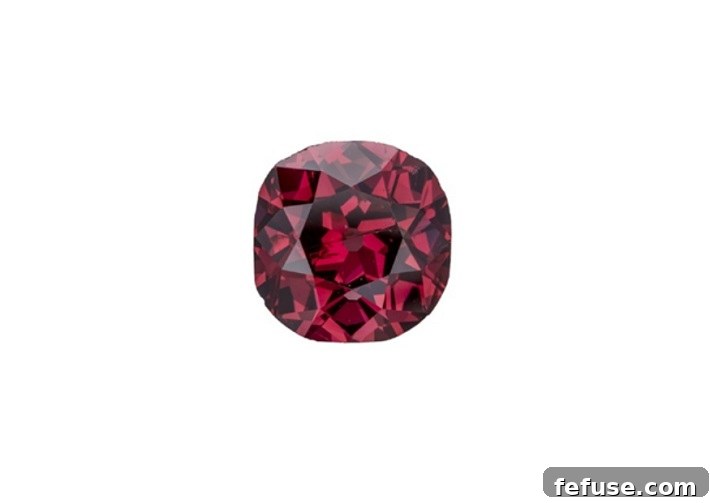
The Smithsonian National Museum of Natural History, a beacon of scientific exploration and public education, is poised to unveil an extraordinary new jewel that promises to captivate audiences worldwide. This spring, the museum’s renowned gem collection will welcome the Winston Red Diamond, a magnificent 2.33-carat fancy red diamond. Hailed by experts as one of the rarest and most significant gems ever discovered, its debut marks a pivotal moment in the museum’s illustrious history. On April 1st, this exceptional crimson treasure will be showcased alongside the breathtaking Winston Fancy Color Diamond Collection, inviting visitors into a world of unparalleled beauty and geological marvels. This dual exhibition underscores the Smithsonian’s commitment to presenting the most exquisite natural wonders, further enriching its already unparalleled displays of precious stones. The arrival of these gems not only enhances the museum’s collection but also offers a unique opportunity for millions to witness the profound artistry of nature.
The Smithsonian’s National Museum of Natural History stands as a global leader in showcasing the wonders of the natural world, from ancient fossils to glittering minerals. Its permanent Hall of Geology, Gems, and Minerals is home to some of the planet’s most famous and invaluable treasures, attracting millions of visitors each year. The addition of the Winston Red Diamond and the accompanying Fancy Color Diamond Collection is set to dramatically elevate this prestige. These acquisitions are not merely beautiful stones; they represent centuries of geological processes, meticulous human craftsmanship, and a profound legacy of philanthropy that has shaped the museum’s collections for decades. The museum’s dedication to making such rare and historically significant items accessible to the public reaffirms its role as a vital institution for learning and inspiration.
A Legacy of Extraordinary Gem Gifts and Philanthropy
The acquisition of the Winston Red Diamond is made possible through the incredible generosity of Ronald Winston, the esteemed son of legendary jeweler Harry Winston. The Winston name has long been synonymous with the pinnacle of gemological excellence and unparalleled philanthropy. Harry Winston, often referred to as the “King of Diamonds,” forever etched his family’s name into the Smithsonian’s history with his iconic donation of the Hope Diamond in 1958. This 45.52-carat deep blue diamond remains one of the museum’s most popular and awe-inspiring attractions, drawing millions of visitors annually. Ronald Winston’s recent gift continues this extraordinary tradition, demonstrating a deep-seated commitment to education and the advancement of gemological knowledge.
The new acquisitions will be proudly displayed within the museum’s dedicated Winston Gallery, a space established to honor the family’s enduring contributions. This gallery serves as a testament to the Winston family’s unwavering dedication to gemology, scientific research, and public engagement. Their philanthropic spirit ensures that these priceless treasures are preserved for future generations, allowing countless individuals to marvel at their beauty and learn about the fascinating world of diamonds. The continuity of this legacy, from Harry Winston’s groundbreaking gift to Ronald Winston’s latest donation, solidifies the family’s indelible mark on the Smithsonian and the broader field of natural history.
Kirk Johnson, the Sant Director of the National Museum of Natural History, eloquently described the donation as “one of the most significant gifts ever received by the Smithsonian.” His statement underscores the profound impact these rare diamonds will have on the museum’s collection and its visitors. He further emphasized, “The Winston diamonds are truly extraordinary in their rarity and beauty, representing the absolute pinnacle of natural gemological marvels.” This sentiment highlights not only the inherent value of the diamonds but also their immense scientific and cultural importance. The strategic placement of these new gems alongside existing masterpieces within the Winston Gallery will create a cohesive narrative of excellence and discovery, cementing the gallery as a must-see destination for gem enthusiasts and casual visitors alike.
The Enduring Mystery and Intricate Science Behind Red Diamonds
Natural fancy red diamonds are not merely rare; they are an enigma, representing the absolute apex of diamond scarcity. The Gemological Institute of America (GIA), the world’s foremost authority on diamond grading, estimates that fewer than one in 25 million diamonds ever achieve the coveted “fancy red” color grade. To put this into perspective, finding a significant red diamond is arguably more challenging than locating the most precious star in the night sky. The Winston Red Diamond, with its captivating and deep crimson hue, stands as an unparalleled embodiment of this extreme rarity. Its existence challenges conventional understanding of diamond formation and coloring, positioning it as an object of intense scientific and aesthetic fascination.
Unlike most other colored diamonds, which owe their vibrant shades to the presence of specific chemical impurities—such as boron for the striking blue diamonds or nitrogen for the rich yellow ones—red diamonds derive their unique and mesmerizing color from an entirely different mechanism. Their distinctive hue is attributed to rare deformations in their crystal structure. These structural anomalies are not caused by external elements but are instead the result of immense and sustained pressure exerted during their formation deep within the Earth’s mantle. Over billions of years, these incredible geological forces twist and compress the diamond’s internal lattice, altering how light passes through and is reflected, ultimately producing the magnificent red coloration. This intricate process makes each red diamond a geological masterpiece, a testament to the Earth’s powerful and mysterious forces.
The Winston Red Diamond’s old mine brilliant cut further adds to its historical intrigue and rarity. This specific cutting style, popular before the mid-20th century, is characterized by a high crown, a small table, a deep pavilion, and often a visible culet. Diamonds cut in this fashion typically exhibit a softer, warmer sparkle compared to modern brilliant cuts, a trait highly prized by collectors of antique and vintage jewelry. The presence of this historical cut strongly suggests that the Winston Red Diamond was shaped decades, if not centuries, ago. This makes it not only a geological wonder but also a significant artifact of diamond cutting history, providing clues about its journey from deep within the Earth to its place as a celebrated jewel. Its antique cut imbues it with a timeless elegance and a narrative that spans across geological eras and human craftsmanship.
A Dazzling Spectrum: The Winston Fancy Color Diamond Collection
Complementing the solitary brilliance of the Red Diamond is the magnificent Winston Fancy Color Diamond Collection. This extraordinary ensemble, meticulously assembled over an impressive period of 60 years by Ronald Winston himself, comprises 40 exquisite diamonds. What makes this collection truly remarkable is its comprehensive representation of the entire color spectrum found in natural diamonds. Visitors will be treated to a breathtaking display showcasing virtually every shade imaginable, from intense blues and vibrant greens to fiery yellows, delicate pinks, brilliant oranges, and mysterious purples.
The collection is thoughtfully arranged in a vibrant rainbow display, allowing the eye to journey through a kaleidoscope of hues, highlighting the stunning diversity and unparalleled beauty of natural colored diamonds. Each diamond in this collection tells its own unique story of geological formation and light interaction, making the exhibit an educational journey as much as a visual spectacle. Assembling such a comprehensive collection requires not only immense resources but also an extraordinary eye for beauty, profound gemological knowledge, and decades of dedicated effort. This display underscores the rarity and beauty of fancy color diamonds, which are far less common than their colorless counterparts, and serves as an invaluable resource for both gemologists and the general public to appreciate the full spectrum of nature’s artistry.
Scientific Recognition, Public Engagement, and Enduring Impact
The unveiling of the Winston Red Diamond is not merely an exhibition; it is also an event of significant scientific interest. To coincide with its debut, a detailed scientific study delving into the Winston Red Diamond’s composition and history will be published. This comprehensive research will appear in the Spring 2025 edition of Gems & Gemology, the highly respected peer-reviewed journal of the GIA. Such studies are crucial for advancing gemological knowledge, authenticating the diamond’s natural origins, and understanding its unique characteristics on a molecular level. The publication will provide valuable insights into the scientific properties that contribute to the diamond’s extraordinary rarity and color, further solidifying its status as a gemological marvel.
Smithsonian mineralogist Gabriela Farfan eloquently articulated the profound significance of this collection, emphasizing that it offers visitors an “unparalleled opportunity to appreciate the natural wonder of colored diamonds.” Her statement highlights the educational value inherent in these exhibits. Visitors will not only be able to marvel at the visual splendor but also gain a deeper understanding of the geological processes that create such wonders, the meticulous art of gem cutting, and the fascinating history of these precious stones. The museum’s aim is to inspire curiosity, foster a love for science, and cultivate an appreciation for the Earth’s natural treasures among visitors of all ages.
Displayed prominently alongside the globally iconic Hope Diamond, the Winston Red Diamond will undoubtedly draw immense attention. This strategic placement reinforces the Winston family’s enduring legacy of philanthropy and their profound impact on the world of gemology and public education. The combination of these legendary gems under one roof creates an unrivaled spectacle of natural beauty and historical importance. For generations to come, these magnificent diamonds will continue to dazzle visitors, tell stories of geological marvels, and inspire awe and wonder. The Smithsonian, through the generosity of the Winston family, continues to enrich the human experience by making these extraordinary pieces of Earth’s history accessible to all, ensuring that their beauty and scientific significance will be appreciated by countless future generations.