
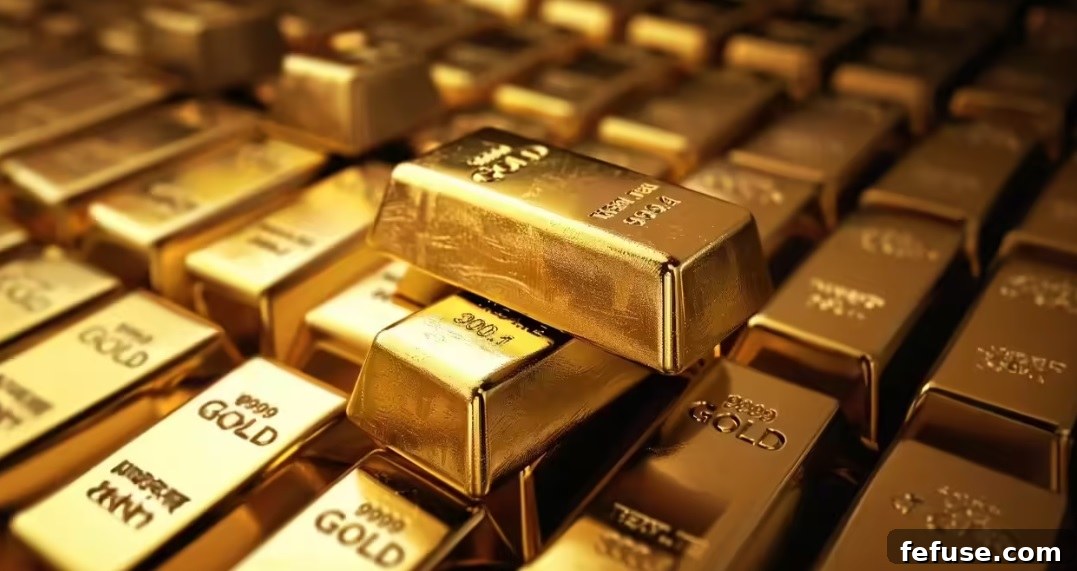
India’s Gold Demand Under Pressure: High Prices Dim Festive Sparkle
India, the world’s second-largest consumer of gold, is witnessing a significant shift in its age-old tradition of gold purchases, particularly during the crucial festive season. This year, the usual rush for gold jewelry, an integral part of Indian culture and celebrations, is losing its luster. The primary culprit? Record-high bullion prices that are compelling buyers to re-evaluate their spending, leading to a noticeable slowdown in what is typically the busiest period for the country’s vibrant jewelry market.
The Unprecedented Price Surge: A Global and Local Phenomenon
Gold’s intrinsic value and its role as a safe haven asset have driven its prices to historic highs on the global stage. Spot gold has recently touched unprecedented levels, more than doubling its price in just a couple of years. This global surge has a direct and amplified impact on the Indian market. Locally, bullion prices have breached the symbolic one-lakh-rupee mark — approximately ₹100,000 per 10 grams — representing an astounding nearly 50% increase compared to last year’s festive period. This steep escalation in cost is significantly altering consumer sentiment and purchasing power across the nation.
Cultural Roots: Gold’s Enduring Significance in India
To understand the depth of this shift, one must appreciate gold’s profound cultural significance in India. Far more than just an ornament, gold is interwoven into the very fabric of Indian life. It symbolizes prosperity, purity, and good fortune, playing an indispensable role in almost every major life event and celebration. Indian weddings, for instance, are incomplete without elaborate gold jewelry, often constituting a substantial part of a bride’s trousseau and a cherished family heirloom passed down through generations. Beyond matrimony, gold is the preferred gift for births, anniversaries, and religious ceremonies.
Festivals like Navratri, Dhanteras, and Diwali mark the pinnacle of the gold buying calendar. Dhanteras, specifically, is considered an auspicious day to buy gold, believed to bring wealth and prosperity into the home. During these weeks, jewelry shops traditionally stay open until late at night, bustling with eager customers. For many, especially in rural areas, gold also serves as a critical form of investment and financial security, a tangible asset that can be easily liquidated during times of need, often preferred over formal banking channels due to accessibility and trust.
Consumer Response: Shifting Priorities and Strategies
The current price landscape is forcing Indian consumers, particularly those in urban centers, to make difficult choices. According to data from the India Bullion and Jewellers Association, demand for jewelry during the three-week buying period spanning Navratri to Diwali could see a substantial decline, potentially falling by nearly 27% in volume compared to the previous year. This indicates a broad trend where consumers are either postponing their purchases, hoping for a price correction, or significantly scaling back their spending.
A notable trend emerging from this price pressure is the shift towards smaller, lighter ornaments. Jewelers across the country report that customers are increasingly opting for budget-friendly pieces. For example, it’s not uncommon to find shoppers purchasing jewelry as light as 2 grams, a stark contrast to previous years when demand for heavier, more intricate designs was robust. This adaptation allows consumers to uphold the tradition of buying gold during auspicious times without breaking their budgets. However, it profoundly impacts the overall volume and value of sales for retailers.
Broader Market Strain: Beyond the Festive Season
The impact of high prices isn’t confined to the festive season alone; it has been a persistent theme throughout recent times. Data from earlier this year revealed a significant dip in jewelry purchases, with sales between April and June falling by 17% year-on-year. The World Gold Council anticipates that India’s full-year gold consumption could slide to its lowest level in five years. This extended period of suppressed demand signals a deeper challenge for the Indian gold market, influencing everything from import levels to local manufacturing and retail strategies.
Implications for India’s Gold Retailers and the Economy
The implications of this slowdown are particularly severe for India’s vast network of gold retailers. Jewelry accounts for almost 70% of India’s total gold consumption, making the festive season a make-or-break period for many businesses. A significant portion of jewelers’ annual revenues hinges on these crucial weeks. A substantial slump during this period can lead to financial strain, impacting inventory management, employment within the sector, and overall business sustainability.
Small and medium-sized jewelers, who often operate on tighter margins and rely heavily on traditional customer bases, are feeling the pinch most acutely. The entire value chain, from artisans who craft intricate designs to gold refiners and suppliers, experiences a ripple effect. Furthermore, reduced gold imports, while potentially beneficial for India’s current account deficit in the short term, also signal a reduction in consumer spending power and a shift in a culturally significant economic activity.
Adapting to the New Reality: Industry Innovations and Future Outlook
In response to these challenging market conditions, the Indian gold industry is showing signs of adaptation and innovation. Jewelers are exploring various strategies to maintain customer engagement and drive sales. These include promoting lightweight and modular jewelry designs, introducing attractive gold savings schemes, and offering flexible payment options like EMIs (Equated Monthly Installments) to make purchases more accessible. There’s also a growing emphasis on transparency and trust, with increased adoption of hallmarking to assure customers of gold purity.
Looking ahead, the trajectory of India’s gold demand will depend on a confluence of factors: global gold price movements, the stability of the Indian rupee, government policies regarding import duties, and the overall economic health and disposable income of Indian households. While the cultural affinity for gold is deeply ingrained, continuous high prices could lead to more permanent shifts in consumer behavior, potentially accelerating the adoption of alternative investments or a sustained preference for lighter, more affordable pieces.
The current festive season serves as a critical barometer for the Indian gold market. It highlights the delicate balance between tradition, economic realities, and evolving consumer preferences. Despite the current challenges, the resilience and adaptability of the industry, coupled with gold’s enduring cultural significance, suggest that while the sparkle may be dimmed for now, India’s fascination with gold will continue, albeit in potentially new and evolving forms.