
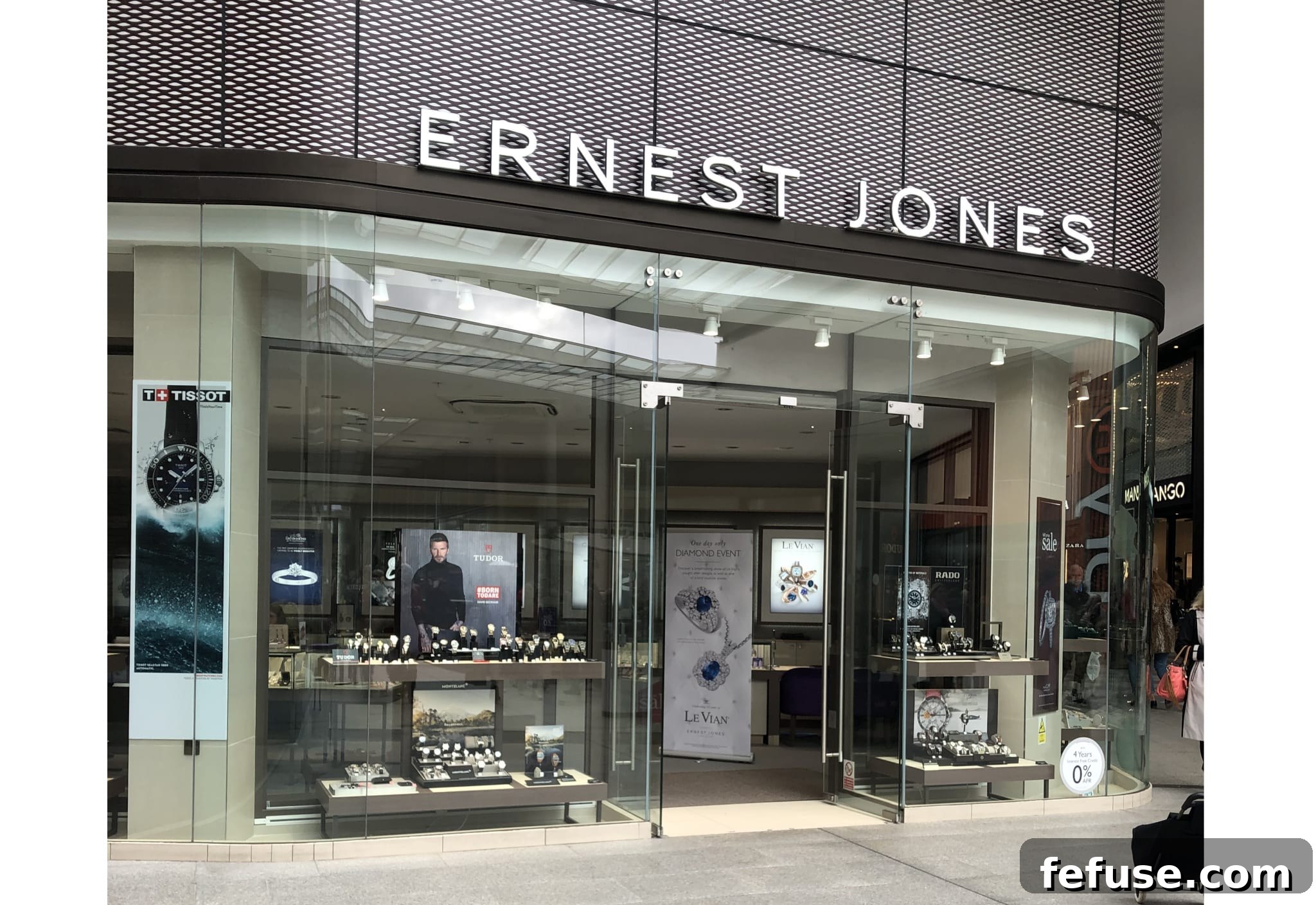
Signet Jewelers, a global leader in diamond jewelry retail, concluded its fiscal year 2020 with a mixed financial picture. While the company celebrated a robust holiday season and a strong performance in its fourth quarter across many of its markets, the United Kingdom segment continued to face significant headwinds, experiencing a persistent decline in sales. This nuanced performance sets the stage for what would become an unprecedented year, as the global retail landscape was about to be reshaped by unforeseen circumstances.
The challenges in the UK market were particularly evident in the fourth quarter, where same-store sales for Signet’s high street chains, H Samuel and Ernest Jones, recorded a notable decrease of 3.1%. This figure underscored an ongoing struggle within a critical European market. The full fiscal year painted an even clearer picture of the difficulties faced, with same-store sales for the UK business falling by 4.9%. This decline was largely driven by a significant 5.9% drop in brick-and-mortar same-store sales, which overshadowed a modest 2.7% growth in eCommerce sales. The contrast between the digital channel’s resilience and the physical stores’ struggles highlighted a broader trend impacting traditional retail across the UK.
It is crucial to note the timing of Signet’s fiscal year end, which concluded on February 1. This predated the widespread and severe impact of the Coronavirus pandemic across the United States and Britain. The financial results for FY2020 therefore reflect a pre-pandemic operational environment. However, since that date, the rapidly escalating global health crisis forced Signet, like many non-essential retailers worldwide, to close all of its physical stores. This dramatic shift meant that the company’s strategic focus, even just weeks after the fiscal year closed, had to pivot drastically to address the immediate and evolving challenges posed by the pandemic.
Navigating Uncharted Waters: No FY2021 Guidance Amidst Global Crisis
In light of the unprecedented uncertainty stemming from the COVID-19 pandemic, Signet Jewelers made the prudent decision not to provide financial guidance for Fiscal 2021. This decision reflects the volatile and unpredictable nature of the current economic environment, where consumer behavior, supply chains, and operational capacities are subject to rapid change. The absence of guidance, while common among companies facing similar crises, signals the immense challenges ahead and the need for extreme flexibility and adaptability.
The immediate and paramount task for Chief Executive Officer Virginia Drosos and her executive team shifted dramatically. Their focus pivoted to two critical objectives: maintaining a viable level of turnover through the company’s burgeoning eCommerce channels and rigorously conserving cash during the prolonged period of physical store closures and economic slowdown. This dual strategy is vital for ensuring the company’s liquidity and long-term viability in an environment where traditional revenue streams are severely constrained.
CEO Virginia Drosos’s Proactive Strategy for Financial Resilience
Virginia Drosos articulated a clear and decisive plan to navigate these turbulent times. She emphasized, “What’s paramount now is that we are moving quickly and aggressively to strengthen Signet’s financial flexibility by reducing capital expenditures, driving transformational cost savings, and accelerating optimization of our real estate footprint.” Each of these pillars represents a critical component of a comprehensive strategy aimed at fortifying the company’s financial position and streamlining its operations for a post-pandemic world.
Reducing capital expenditures, for instance, involves a careful review of all planned investments, prioritizing only the most essential and strategically vital projects. This typically means deferring or canceling non-critical store renovations, technology upgrades, or new market expansions, thereby freeing up significant capital. Simultaneously, the drive for “transformational cost savings” goes beyond simple budget cuts; it implies a fundamental re-evaluation of operational efficiencies, supply chain management, and overheads to achieve sustainable, long-term reductions in expenditure. This transformation is not merely about surviving the current crisis but emerging as a leaner, more agile organization.
Furthermore, the acceleration of real estate footprint optimization signifies a proactive approach to Signet’s extensive portfolio of physical stores. In a world increasingly driven by digital commerce and potentially reduced foot traffic, an optimized real estate strategy might involve renegotiating leases, downsizing certain locations, or even closing underperforming stores that no longer align with the company’s strategic vision. This bold move reflects an understanding that the retail landscape, especially for jewelry, is evolving rapidly, and the physical presence must complement, rather than detract from, the overall omnichannel experience.
Bolstering Liquidity and Digital Prowess
Beyond operational adjustments, Signet also undertook significant financial maneuvers to enhance its liquidity. Drosos detailed these steps: “In addition, we have accessed $900 million from our revolving credit facility, suspended our common dividend, and elected to pay the May quarterly dividend on the preference shares in kind rather than in cash.” Accessing the revolving credit facility immediately injected substantial capital, providing a crucial buffer against revenue shortfalls and ensuring operational continuity. Suspending the common dividend signals a clear commitment to cash preservation, prioritizing the company’s long-term health over immediate shareholder payouts.
The decision to pay preference shares in kind, rather than cash, further underscores this commitment to conserving liquid assets. These financial decisions, while potentially unpopular with some investors in the short term, are essential for ensuring the company’s resilience during a period of unprecedented economic strain. They reflect a disciplined approach to capital management, designed to weather the storm and position Signet for recovery and growth once market conditions stabilize.
Crucially, the strategy also includes a significant emphasis on digital innovation. Drosos highlighted: “In line with our Customer First and Omni-channel strategies, we are prioritising choiceful [sic] digital investments, including advancing our e-commerce experience and enabling a more flexible fulfillment model.” This focus on “choiceful” digital investments indicates a targeted approach, concentrating resources on initiatives that offer the highest return and directly enhance the customer journey. Advancing the e-commerce experience means not just having an online store, but ensuring it provides an intuitive, engaging, and personalized shopping experience that rivals or even surpasses the in-store visit. This includes high-quality visuals, virtual try-on options, improved navigation, and robust customer support.
Furthermore, enabling a more flexible fulfillment model is critical in an era of rapid shifts in consumer purchasing behavior. This could encompass various options such as buy-online-pickup-in-store (BOPIS), ship-from-store capabilities, expedited home delivery, or even innovative contactless pickup solutions. Such flexibility ensures that customers can access products through their preferred method, adapting to evolving health guidelines and convenience demands. These digital investments are not merely reactive measures but an acceleration of Signet’s pre-existing omnichannel strategy, recognizing that digital channels will play an increasingly dominant role in retail moving forward.
Leveraging the Path to Brilliance: A Foundation for Agility
Drosos expressed strong confidence in Signet’s ability to navigate the current crisis, attributing it to the foundational work done through the company’s “Path to Brilliance” transformation. She stated, “We believe the exceptional team, capabilities, and agility we have built through our Path to Brilliance transformation position us well to navigate these unprecedented business times and emerge with greater competitive advantages.” The Path to Brilliance, a multi-year strategic program, has focused on enhancing Signet’s customer experience, optimizing its operational efficiency, and fostering a culture of innovation and agility.
This prior investment in organizational transformation now serves as a crucial asset. The capabilities developed – from enhanced data analytics to more flexible supply chains and a customer-centric operational model – provide the agility needed to respond swiftly to rapid market changes. The emphasis on an “exceptional team” highlights the human capital that underpins Signet’s resilience. Drosos concluded by acknowledging their invaluable contribution: “I want to thank all of our team members for their continued commitment to each other, our customers, our shareholders and our company. Amidst all challenges, they are demonstrating remarkable compassion, courage, and creativity.” This recognition underscores the vital role of employee dedication in maintaining operational effectiveness and delivering customer satisfaction during extremely challenging circumstances.
The Future of Jewelry Retail: Adapting and Innovating
Signet Jewelers’ experience mirrors the broader challenges and transformations occurring within the global retail sector, particularly in luxury and specialized goods like jewelry. The pandemic has not only accelerated existing trends, such as the shift to eCommerce, but also created new imperatives for retailers. Companies that can adapt quickly, conserve resources effectively, and pivot their strategies to meet evolving consumer needs are most likely to survive and thrive.
The focus on “Customer First” and “Omni-channel” strategies is no longer just a competitive advantage but a fundamental requirement for success. As consumers become more comfortable purchasing high-value items online, the digital experience must be seamless, trustworthy, and engaging. Physical stores, when they reopen, will need to offer more than just transactions; they must provide unique experiences, personalized services, and serve as crucial touchpoints within a wider digital ecosystem. Signet’s proactive measures in digital investment and real estate optimization position it to capitalize on these shifts, provided consumer confidence and spending power rebound.
In conclusion, Signet Jewelers concluded its 2020 fiscal year with a complex financial picture, marked by global strength offset by persistent UK challenges, all before the full impact of COVID-19. The rapid and decisive actions taken by CEO Virginia Drosos and her team – focusing on financial flexibility, aggressive cash conservation, and accelerated digital transformation – are critical for navigating the current crisis. By leveraging the foundational strengths developed through its “Path to Brilliance,” Signet aims not only to weather the unprecedented storm but to emerge as a more agile, digitally proficient, and competitively advantaged leader in the global jewelry retail market. The coming fiscal year will undoubtedly test the resilience of the company and its strategic vision, but the proactive measures in place offer a clear path forward amidst the pervasive uncertainty.