
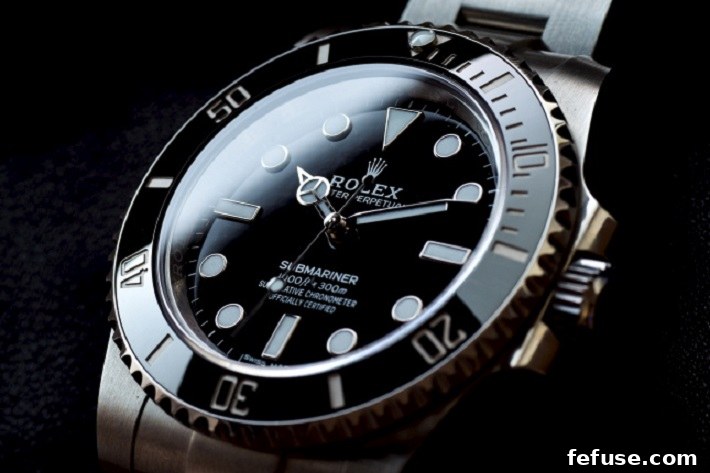
In the esteemed realm of haute horlogerie, one name consistently reigns supreme: Rolex. New research from investment bank Morgan Stanley and consultants LuxeConsult unequivocally confirms Rolex’s unparalleled dominance in the Swiss watch market, commanding an astonishing market share of over 30 percent in 2023. This figure not only solidifies Rolex’s position as the industry’s undisputed leader but also underscores a unique phenomenon in the luxury sector.
The joint report highlights that “No other luxury brand can claim such a dominant position in its respective sector.” This statement resonates profoundly when one considers the intensely competitive nature of the luxury market, where even a single percentage point can represent billions in revenue and millions of loyal customers. Rolex’s extraordinary market penetration speaks volumes about its enduring appeal, strategic prowess, and the timeless allure of its meticulously crafted timepieces.
To put Rolex’s supremacy into perspective, its market share exceeds that of the next five largest brands combined. This formidable group includes industry titans such as Cartier (8 percent), Omega (7 percent), Patek Philippe (6 percent), Audemars Piguet (5 percent), and Richard Mille (3 percent). Together, these five venerable houses account for approximately 29 percent of the market, still trailing behind Rolex’s individual performance. This statistical reality is a powerful testament to Rolex’s unique brand equity and operational excellence, allowing it to overshadow a collective of some of the most prestigious watchmakers globally.
The financial implications of this dominance are equally staggering. Rolex’s estimated revenue for the year reached an impressive $11.43 billion (CHF 10.1 billion). During the same period, the brand sold an estimated 1.24 million watches, each carrying an average price tag of approximately $13,832 (CHF 12,218). In stark contrast, second-placed Cartier sold 660,000 watches, with an average cost per unit of $6,467 (CHF 5,712). These figures not only illustrate Rolex’s significantly higher sales volume but also its ability to command a premium price point, reflecting its perceived value, exquisite craftsmanship, and aspirational status among consumers worldwide.
Beyond individual brand performance, the broader Swiss watch market demonstrated a robust recovery, with total sales returning to pre-Covid levels. The industry experienced a healthy year-on-year growth of 7.6 percent, pushing total sales to $30.23 billion (CHF 26.7 billion). This resurgence underscores the enduring strength and resilience of the luxury watch sector, even in the face of global economic fluctuations and changing consumer landscapes. It also suggests a renewed appreciation for tangible, high-quality investments and symbols of enduring style.
What factors underpin Rolex’s seemingly unshakeable position at the pinnacle of the watch industry? The answer lies in a confluence of meticulously cultivated brand attributes and strategic decisions that have defined the company since its inception. Foremost among these is an unwavering commitment to quality and precision. Founded by Hans Wilsdorf in 1905, Rolex pioneered numerous innovations that have become industry standards, including the first waterproof wristwatch (the Oyster, 1926) and the first self-winding movement with a perpetual rotor (the Perpetual, 1931). These technological breakthroughs, coupled with rigorous testing and an emphasis on in-house manufacturing, ensure that every Rolex timepiece meets exceptionally high standards of durability, reliability, and accuracy.
Brand heritage and consistent messaging play an equally vital role. Rolex has masterfully intertwined its narrative with human achievement, exploration, and success. Its watches have graced the wrists of mountaineers conquering Everest, divers exploring the deepest oceans, race car drivers breaking speed records, and leaders shaping global events. This powerful association with extraordinary feats imbues the brand with an aura of prestige and aspiration. Rolex doesn’t just sell watches; it sells a legacy, a dream, and a symbol of accomplishment. This aspirational positioning is further amplified by carefully managed marketing and strategic partnerships, often avoiding overt celebrity endorsements in favor of aligning with fields of excellence and exploration.
Exclusivity and controlled distribution are also cornerstones of Rolex’s strategy. Unlike many other luxury brands that have expanded aggressively into e-commerce, Rolex maintains a highly selective network of authorized dealers. This approach creates a sense of scarcity and ensures that the brand experience remains premium and consistent. The high demand, often exceeding supply for popular models, fuels secondary market activity and further reinforces the perception of Rolex watches as highly desirable and valuable assets. Indeed, the investment aspect of Rolex watches is a significant draw for many buyers; certain models are known to retain or even appreciate in value over time, making them not just luxury accessories but also tangible investments.
The unique ownership structure of Rolex also contributes to its long-term stability and success. Owned by the Hans Wilsdorf Foundation, a private charitable trust, Rolex is not beholden to public shareholders or short-term financial pressures. This allows the company to reinvest profits back into research and development, manufacturing capabilities, and charitable initiatives, fostering a culture of continuous improvement and innovation without compromising its core values. This independence grants Rolex the freedom to pursue long-term strategies that reinforce its brand identity and market position, rather than being swayed by fleeting market trends.
While Rolex shines brightest, the overall health of the Swiss watch market is reassuring. The strong performance of other luxury players like Cartier, Omega, Patek Philippe, Audemars Piguet, and Richard Mille demonstrates a diverse and vibrant industry catering to various segments of high-net-worth individuals. Cartier, with its elegant designs and strong jewelry heritage, appeals to a different aesthetic. Omega, known for its sporting legacy and association with space exploration and James Bond, occupies another distinct niche. Patek Philippe and Audemars Piguet represent the pinnacle of traditional high horology, with their intricate complications and limited production volumes catering to connoisseurs and collectors. Richard Mille, meanwhile, has carved out a niche with its avant-garde designs and high-tech materials, targeting a younger, ultra-wealthy demographic.
The post-pandemic recovery highlights a renewed consumer confidence in luxury goods, often viewed as safe-haven assets or enduring symbols of personal achievement. This trend is likely to continue as consumers prioritize quality, craftsmanship, and timeless design over disposable fashion. The industry is also adapting to modern challenges, including the rise of e-commerce (though less impactful for ultra-luxury brands like Rolex, which prefer in-person experiences), increasing demand for sustainability, and the need to engage with younger generations who have different purchasing habits and values.
Looking ahead, Rolex faces the perennial challenge of managing its overwhelming demand while preserving its exclusivity. Balancing increased production with maintaining scarcity is a delicate act that Rolex has consistently navigated with finesse. The brand must also remain vigilant against counterfeiting and navigate the complexities of the grey market, which can sometimes impact brand perception and authorized dealer relationships. However, with its robust foundation, unwavering commitment to excellence, and deeply ingrained market leadership, Rolex is exceptionally well-positioned to continue its reign.
In conclusion, the latest market research reaffirms what many have long observed: Rolex is not merely a brand but an institution, an emblem of luxury, precision, and enduring value. Its over 30 percent market share, far outstripping its nearest competitors combined, is a testament to a century of strategic vision, relentless innovation, and an unparalleled understanding of what luxury consumers truly desire. As the Swiss watch industry continues to evolve, Rolex’s position at the apex remains unchallenged, solidifying its status as the eternal king of Swiss watches and a benchmark for luxury brands across all sectors.