
Rio Tinto Navigates Diamond Production Shifts: A Comprehensive Review of 2019 and Future Outlook
Global mining giant Rio Tinto has released its comprehensive production figures for the fourth quarter and the full year of 2019, revealing a nuanced picture for its diamond mining operations. The reports indicate an overall 8 percent decrease in production at both the venerable Argyle and the significant Diavik mines compared to the previous year, 2018. These figures come at a pivotal time for Rio Tinto’s diamond portfolio, especially with the anticipated closure of the Argyle mine, a significant player in the world of natural diamonds.
Understanding the 2019 Production Dynamics
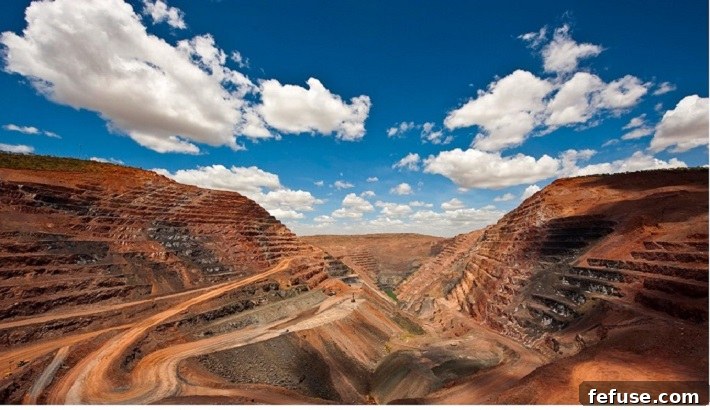
The reported decline in diamond production is attributed to a combination of operational factors specific to each mine. At the Argyle mine, located in Western Australia and renowned globally for its rare pink diamonds, the primary challenge stemmed from a lower recovered grade. This metric, crucial in diamond mining, reflects the amount of diamond recovered per ton of ore processed. Despite this hurdle, the mining operation demonstrated resilience, partially offsetting the impact through stronger mining and processing rates. This indicates efficient operational management in a period of geological challenge.
Conversely, the Diavik mine in Canada’s Northwest Territories, where Rio Tinto holds a 60 percent stake, faced its own set of production headwinds. The downturn here was primarily a result of reduced ore availability and lower grades from its underground operations. However, the mine strategically mitigated these issues by leveraging higher tons and improved grades from its A21 open pit, showcasing the adaptability of its multi-faceted mining approach. Diavik is known for producing high-quality, large white diamonds, making its performance critical to Rio Tinto’s premium diamond offerings.
Deep Dive into Argyle Mine’s Performance
The Argyle mine, a 100-percent owned asset by Rio Tinto, posted a production of 3.36 million carats for the three-month period ending December 31, 2019. This represents a 5 percent increase when compared to the same period in 2018, demonstrating a strong quarterly finish despite the overall annual decline. However, a quarter-on-quarter comparison reveals a slight dip, with these Q4 figures being 5 percent lower than those recorded in Q3 2019. This fluctuation highlights the inherent variability in mining operations, particularly in mature mines where ore body characteristics can change. Argyle has been a cornerstone of the global diamond industry for decades, not only for its volume but also for its unique contribution of fancy colored diamonds, especially the coveted pinks, purples, and reds. Its impending closure marks a significant moment for both Rio Tinto and the wider natural diamond market, setting the stage for potential shifts in supply dynamics for certain diamond categories.
Diavik’s Contribution Amidst Operational Nuances
Rio Tinto’s share of diamonds recovered from the Diavik mine during the fourth quarter of 2019 amounted to 840,000 carats. This figure marks a substantial 22 percent decrease compared to the corresponding period in 2018. Diavik operates through a joint venture, with Rio Tinto managing the operations and holding the majority stake. The challenges at Diavik’s underground operations—lower ore availability and grade—underscore the complexities of extracting diamonds from deep within the earth. Underground mining, while allowing access to richer kimberlite pipes at depth, typically involves higher operational costs and more intricate logistical planning compared to open-pit mining. The successful contribution from the A21 open pit, therefore, was critical in partially offsetting the challenges faced in other sections of the mine, demonstrating a flexible and responsive operational strategy designed to maximize recovery under varying conditions. Diavik remains a crucial source of high-quality diamonds, playing a vital role in meeting the demand for premium gems in the global luxury market.
The Road Ahead: Rio Tinto’s 2020 Diamond Production Forecast
Looking forward, Rio Tinto has provided its production forecast for 2020, projecting an output of between 12 million and 14 million carats. This guidance is directly influenced by two major strategic and operational considerations. Firstly, it reflects the much-anticipated closure of the Argyle mine, scheduled for the fourth quarter of 2020. The winding down of operations at Argyle will inevitably lead to a reduction in Rio Tinto’s overall diamond output, marking the end of an era for one of the world’s most prolific diamond producers. The impact of Argyle’s closure is expected to reverberate across the industry, particularly for specialty colored diamonds.
Secondly, the 2020 forecast also incorporates the expectation of lower grades at the Diavik mine. This suggests that the geological challenges experienced in 2019 may continue into the current year, requiring ongoing strategic management and innovation to maintain efficient recovery rates. The combination of these factors paints a realistic picture of Rio Tinto’s diamond production trajectory for the near future, emphasizing a period of transition and adjustment as the company refines its diamond mining footprint. As a diversified global mining company, diamonds represent a smaller, albeit significant, segment of Rio Tinto’s vast portfolio, which primarily focuses on iron ore, aluminum, copper, and minerals. The strategic decisions surrounding its diamond assets are thus made within the broader context of optimizing shareholder value and managing diverse commodity exposures.
Broader Market Implications and Rio Tinto’s Strategic Positioning
The performance of Rio Tinto’s diamond mines in 2019 and its outlook for 2020 are not isolated events; they are intertwined with the broader trends and challenges facing the global diamond industry. The natural diamond market has been navigating a complex landscape, characterized by evolving consumer preferences, the rise of laboratory-grown diamonds, and macroeconomic uncertainties impacting luxury spending. Against this backdrop, the closure of Argyle will lead to a notable reduction in global natural diamond supply, especially for specific categories of diamonds that Argyle was uniquely positioned to provide.
For Rio Tinto, the strategic decision to close Argyle after decades of production underscores the finite nature of mining resources and the economic realities of diminishing returns in mature operations. While Argyle’s contributions to the colored diamond market are irreplaceable, the company’s focus will now shift more squarely to the profitable and high-quality production from Diavik. This consolidation could allow Rio Tinto to concentrate resources and expertise, potentially leading to more efficient and sustainable operations at its remaining diamond asset. The company’s long-term strategy in the diamond sector will likely involve leveraging its technological advancements and operational excellence to maximize value from its continuing stake in Diavik, while carefully monitoring market conditions and opportunities.
Conclusion: A Transitional Phase for Rio Tinto Diamonds
Rio Tinto’s 2019 results and its 2020 forecast signify a transitional period for its diamond division. The figures reflect a blend of operational challenges and strategic adaptations, particularly highlighted by the impending closure of the Argyle mine. While overall production saw a decline, the individual performance metrics and the forecast for 2020 provide transparency into the factors shaping Rio Tinto’s diamond business. As the company prepares to bid farewell to Argyle, its focus will undoubtedly sharpen on optimizing the Diavik operation and adapting to a shifting global diamond market. This phase marks not an exit from the diamond industry, but rather a strategic realignment, ensuring that Rio Tinto remains a significant, albeit more streamlined, player in the supply of natural diamonds.
News Source: idexonline