
Why Gold’s Shrinking Supply is Catching Billionaire Attention: An In-Depth Look at Future Gold Prices
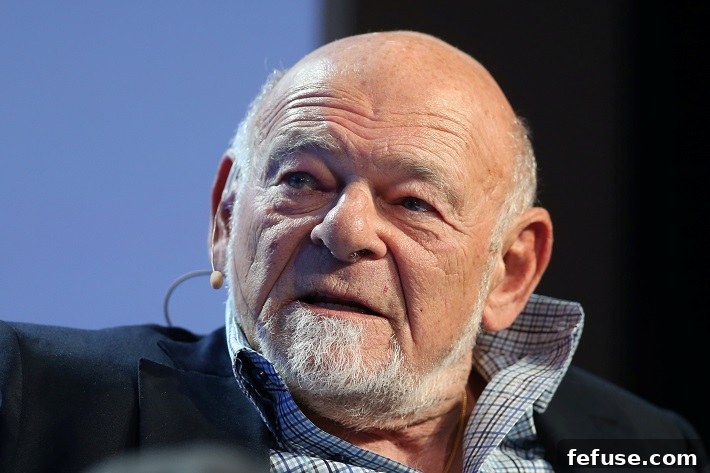
In the intricate world of global finance, few assets command the enduring fascination and trust quite like gold. Often hailed as the ultimate safe haven, a hedge against economic turbulence, and a timeless store of value, its allure is deeply ingrained in human history. Yet, beneath the surface of its steady appeal, significant shifts are occurring within the very foundations of its supply. These changes are not going unnoticed, particularly by astute investors with a keen eye for long-term trends. One such figure, the renowned billionaire investor Sam Zell, founder of Equity Group Investments, has recently voiced a compelling perspective that has reverberated across financial markets. His decision to invest in gold, a move he described as a personal first, underscores a critical and often overlooked dynamic: the dwindling global supply of the precious metal.
Sam Zell’s Rationale: Gold as a Strategic Hedge
Zell’s candid admission, made during a Bloomberg TV interview, that “For the first time in my life, I bought gold because it is a good hedge,” speaks volumes about the current economic climate and the future prospects of gold. His investment philosophy typically leans towards tangible assets and real estate, making his foray into gold particularly noteworthy. Zell’s primary justification for this pivot is rooted in a fundamental economic principle: supply and demand. He explicitly stated, “Supply is shrinking and that is going to have a positive impact on the price.” This simple yet profound observation forms the core of his investment thesis regarding gold’s appreciating value.
A hedge, in financial terms, is an investment made to reduce the risk of adverse price movements in an asset. Gold has historically served this role exceptionally well during periods of inflation, currency devaluation, and geopolitical instability. As central banks grapple with rising inflation and governments accumulate unprecedented levels of debt, the purchasing power of fiat currencies often comes into question. In such scenarios, gold, with its finite supply and intrinsic value, tends to maintain or even appreciate in value, acting as a crucial safeguard for wealth. Zell’s move signals a belief that current economic conditions warrant such a protective measure, further amplified by the impending supply crunch in the gold mining sector.
The Drying Well: Unpacking Gold’s Diminishing Supply
The idea of “shrinking supply” isn’t merely speculative; it’s a tangible reality supported by industry data and observable trends within the gold mining sector. The roots of this impending scarcity can be traced back over a decade. After reaching an all-time high in 2011, gold prices experienced a significant correction, tumbling by almost a third from their peak. While still maintaining a respectable value, this post-2011 slump had a profound and lasting impact on investment decisions within the gold mining industry.
Mining for gold is an incredibly capital-intensive and time-consuming endeavor. Discovering new commercially viable deposits requires extensive exploration, which can take years and carries a high degree of risk. Once a deposit is found, developing a new mine involves massive upfront investment in infrastructure, equipment, and regulatory compliance, often spanning several more years before the first ounce of gold is extracted. When gold prices were lower, the incentive for mining companies to undertake these risky, multi-year projects diminished significantly. Exploration budgets were slashed across the board, and consequently, fewer new projects received the green light for development. As Zell aptly put it, “The amount of capital being put into new gold mines is mostly nonexistent,” underscoring the severe underinvestment.
A Shift in Strategy: Acquisitions Over Exploration
Instead of pouring capital into the laborious and uncertain process of discovering and developing new mines, many of the world’s largest gold producers have adopted an alternative strategy: acquiring existing assets and smaller competitors. This approach allows them to bolster their output pipelines and increase their proven reserves without the same level of exploration risk or the lengthy development timelines associated with greenfield projects. It’s often seen as a more immediate and de-risked path to growth, especially in a challenging market environment.
While acquiring rivals can lead to immediate increases in reported reserves and production capacity, it doesn’t fundamentally address the broader issue of new gold entering the market from new discoveries. It’s essentially a reshuffling of existing assets rather than the creation of new ones. Companies are buying already discovered gold, or mines that are already operational, rather than investing in the frontier exploration that is vital for long-term supply growth. This M&A (Mergers and Acquisitions) driven growth, while financially attractive to shareholders in the short term, inadvertently exacerbates the underlying problem of underinvestment in genuine new supply generation. “All of the money is being used to buy up rivals,” Zell noted, highlighting the industry’s immediate focus over its long-term health and the critical need for new gold deposits.
Statistical Confirmation: Declining Gold Reserves
The implications of this shift are not just anecdotal; they are backed by robust data that confirm a significant challenge to future gold supply. According to Bloomberg Intelligence, which closely tracks major producers, the combined gold reserves still buried in mines—a critical indicator of future production prospects—shrank by more than 40 percent in 2017 alone, from its peak. This dramatic reduction underscores the direct consequence of companies cutting spending on exploration and the development of new projects. These reserves represent the known quantities of gold that can be economically extracted using current technology and pricing. A significant drop in this figure signals a substantial impediment to future production capacity. It indicates that the industry is consuming its existing inventory of easily accessible gold faster than it is replenishing it through new discoveries, setting the stage for a potential structural supply deficit in the coming years.
The Broader Landscape: Factors Influencing Gold’s Future
While supply dynamics are a crucial piece of the puzzle, gold’s price trajectory is also shaped by a confluence of other global economic and geopolitical factors. Understanding these interconnected elements provides a more holistic view of gold’s investment appeal and why it remains a cornerstone of many diversified portfolios.
Inflationary Pressures
Persistent and elevated inflation erodes the purchasing power of fiat currencies, driving investors towards gold as a traditional and proven inflation hedge. Central banks’ expansive monetary policies, such as quantitative easing, coupled with massive government spending, can contribute significantly to these inflationary pressures, making gold a favored asset for wealth preservation.
Economic Uncertainty and Recession Fears
Periods of economic slowdown, recessionary concerns, or broader market volatility often see investors flock to gold as a safe-haven asset. Gold tends to perform exceptionally well when confidence in traditional assets like stocks and bonds wavers, offering stability in times of turmoil. Global economic instability historically strengthens gold’s appeal.
Geopolitical Instability
International conflicts, trade wars, political tensions, and other forms of geopolitical instability increase global uncertainty and risk perception. In such environments, gold becomes an increasingly attractive refuge for capital seeking stability and security, as it is often seen as a neutral asset unaffected by national political or economic woes.
Interest Rates and Monetary Policy
The direction of real interest rates (nominal rates minus inflation) significantly impacts gold. Rising real interest rates can make non-yielding assets like gold less attractive, as investors can earn a return elsewhere. Conversely, low or negative real interest rates enhance gold’s appeal, as the opportunity cost of holding it decreases. However, the impact of rates can be nuanced when combined with high inflation or significant market risk, often leading to a complex interplay of factors.
Currency Strength (USD)
Gold is predominantly priced in U.S. dollars. A stronger dollar can make gold more expensive for holders of other currencies, potentially dampening demand. Conversely, a weaker dollar can make gold more affordable and boost its demand, as its relative value increases for international buyers. Fluctuations in major global currencies, particularly the USD, therefore, play a critical role in gold’s short-term price movements.
When these potent demand-side factors converge with a tightening gold supply, the conditions become particularly ripe for significant upward price movements. Sam Zell’s investment decision is a clear reflection of his assessment that these powerful forces are aligning to favor gold as a robust investment for the foreseeable future.
The Long-Term Outlook for Gold Investors
For investors, the profound insights from influential figures like Sam Zell, combined with the hard data on diminishing reserves and shifting mining strategies, paint a compelling picture for gold’s long-term prospects. The current trajectory strongly suggests that the fundamental supply-demand equation for gold is poised to tilt heavily in favor of higher prices. As new discoveries become scarcer, existing mines deplete their high-grade ore bodies, and the capital required for extracting increasingly difficult-to-reach deposits continues to rise, the marginal cost of producing gold is likely to increase significantly. This, in turn, will necessitate higher market prices to incentivize future production and maintain profitability for miners.
Moreover, the global economic landscape remains fraught with uncertainty. Persistent inflation, exacerbated by ongoing fiscal and monetary policies, geopolitical tensions that disrupt global stability, and the potential for financial instability due to burgeoning national debts and market volatility, continue to underpin the demand for tangible assets like gold. In an environment where traditional hedging strategies might face new challenges and yield diminishing returns, gold’s time-honored role as a reliable store of value becomes even more critical. Investors seeking to diversify their portfolios, protect their wealth against systemic risks, and hedge against economic headwinds would do well to consider the implications of gold’s tightening supply alongside its traditional demand drivers. The days of abundant, easily accessible gold may well be behind us, making the remaining supply all the more valuable and sought after.
Conclusion
Sam Zell’s decision to invest in gold marks a significant moment, highlighting a confluence of factors that are reshaping the precious metal market. His rationale—centered squarely on a shrinking supply—is not merely an opinion but an observation supported by compelling industry trends and verifiable data. The pronounced shift from intensive exploration to strategic acquisition among major gold miners, coupled with a drastic reduction in proven gold reserves, indicates a fundamental structural change in the gold supply pipeline. As global economic uncertainties persist and the demand for safe-haven assets remains robust, the diminishing availability of gold is highly likely to exert considerable upward pressure on its price. For astute investors, understanding these crucial supply-side dynamics is paramount to effectively navigating the future of gold investment and recognizing its potential as a crucial and increasingly valuable hedge in an ever-more complex and unpredictable financial world.
NewsSource: bloomberg