
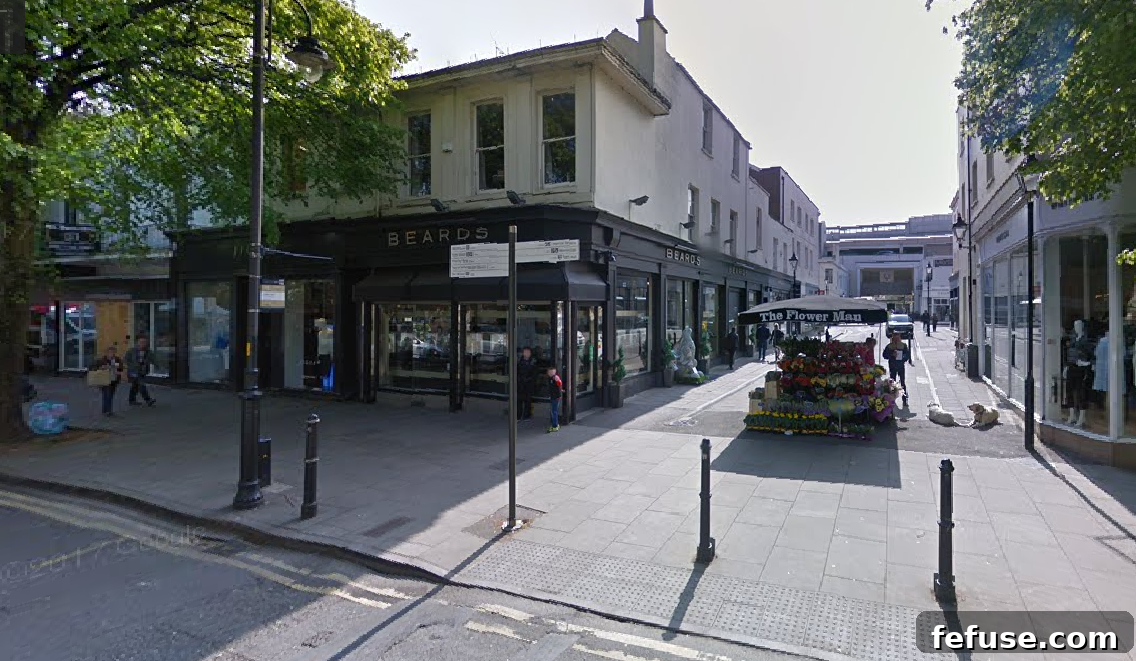
The Unwavering Bloom: Cheltenham Flower Stall Secures Its Spot Against Jeweller’s Challenge
In a tale that underscores the enduring charm of local character against the backdrop of commercial pressures, a beloved flower stall on Cheltenham’s historic Promenade has successfully fended off a high-profile campaign for its relocation. Beards Jewellers, a venerable institution with a 240-year history in the town, led the charge to have the long-standing stall moved, citing concerns about aesthetics, footfall, and the overall perception of the upscale retail area. However, the Cheltenham Borough Council licensing sub-committee ultimately sided with the vibrant stall, ensuring its continued presence much to the delight of many local residents and visitors.
This dispute brought into sharp focus the delicate balance between preserving the unique character of a town centre and the commercial aspirations of its businesses. At its heart, the conflict was a microcosm of broader challenges facing high streets across the UK, where independent traders and established luxury brands often coexist, sometimes uneasily, within shared public spaces. The resolution in Cheltenham serves as a compelling narrative on the power of community support and the importance of individuality in urban landscapes.
A Clash of Visions: Beards Jewellers vs. The Flower Stall
The campaign to relocate the flower stall was spearheaded by Beards Jewellers, a prominent name on the Promenade, known for its luxury offerings and distinguished heritage. Alongside a well-known clothing retailer and a local shopping centre, Beards applied pressure on the flower stall owner, Mr. Morris, arguing that his stall, which has been in its current location for 11 years, detracted from the elegance of the high street. Alex Rose, managing director of Beards Jewellers, was particularly vocal about his concerns, describing the stall as a “psychological barrier” that impeded the natural flow of pedestrians from the Promenade towards Regent Street and beyond, thereby causing businesses on Ormond Place to miss out on potential footfall.
From the jeweller’s perspective, the Promenade represents a prime retail location, a visual gateway that should reflect the sophistication and luxury associated with its establishments. The argument was rooted in a desire to maintain a pristine, unobstructed view that would enhance the shopping experience for high-end clientele and ensure maximum visibility for all businesses. The notion that a humble flower stall could disrupt this carefully curated image, or create an invisible barrier that discouraged shoppers, was a central plank of their argument. They posited that an uncluttered environment would naturally lead to more engagement and higher footfall for everyone in the vicinity, ultimately benefiting the entire commercial ecosystem of that particular street.
However, the flower stall, a fixture next to Beards for over a decade, represented something entirely different to many: a splash of natural beauty, a vibrant touch of colour, and an accessible, friendly face on the bustling street. Its presence was seen by supporters not as an impediment, but as an enhancement – a charming element that added to Cheltenham’s unique appeal. Independent businesses, particularly those selling fresh produce or artisanal goods, often contribute significantly to the local atmosphere, providing a sense of authenticity and local flavour that chain stores cannot replicate. The longevity of the stall, though modest compared to Beards’ centuries-long history, had cemented its place in the daily lives and affections of many Cheltenham residents.
The Council’s Deliberation and Decisive Verdict
The dispute ultimately landed before the Cheltenham Borough Council licensing sub-committee, tasked with weighing the competing interests and making a decision that served the broader public good. The committee heard detailed arguments from both sides, meticulously examining the claims made by Beards Jewellers regarding visual obstruction and reduced footfall, as well as the counter-arguments championing the stall’s aesthetic and communal value. The councillors, representing the community, were tasked with deciding whether the stall truly “spoiled the view” or, conversely, added to the character of the Promenade.
During the committee’s proceedings, local sentiment played a crucial role. Conservative councillor Chris Mason, who represents the ward where the flower stall is located, eloquently articulated the community’s overwhelming support for Mr. Morris. “I’ve not met anybody who wants to see him move,” he reportedly stated, highlighting a clear divergence between the jeweller’s commercial concerns and the public’s appreciation for the stall. This direct feedback from a local representative underscored the deep connection residents felt towards the independent business, viewing it as an integral and cherished part of their urban landscape rather than an obstruction.
After careful consideration, the sub-committee decisively dismissed the notion that the flower stall acted as a “psychological barrier” or detracted from the area. Instead, they reached a unanimous verdict (reported as a majority of three, implying no dissenting votes from the committee members present), stating that the stall “enhances the area, not hampers it.” This strong statement affirmed the stall’s positive contribution to the Promenade and upheld the value of diverse, independent businesses in maintaining a vibrant town centre. The decision effectively validated the community’s perspective and sent a clear message about the council’s commitment to supporting local character and small enterprises.
Beyond the Verdict: Reactions, Acceptance, and the Future
Following the council’s definitive ruling, Beards Jewellers managing director Alex Rose acknowledged the decision and stated that the jeweller would not exert any further pressure on the flower stall owner to relocate. While expressing disappointment that their specific concerns regarding footfall and visibility were not fully endorsed, Rose’s public statement also conveyed an acceptance of the democratic process. He notably commented, “It was a fair meeting. I was disappointed not to get the support of our local councillor who didn’t even take the time to consult with us. We accept the council’s decision and as far as we are concerned that’s the end of the matter.” Intriguingly, his statement concluded with a seemingly gracious note: “We’re delighted that Mr Morris is going to stay on the Promenade.” This final sentiment, perhaps a strategic gesture of goodwill, signalled a willingness to move forward and coexist peacefully following the robust debate.
For Mr. Morris, the flower stall owner, the council’s decision brought immense relief and security, allowing him to continue his trade in the spot he has occupied for over a decade. His stall can now thrive without the looming threat of displacement, providing continuity for his business and for the numerous customers who rely on him for fresh blooms. This outcome reinforces the idea that unique, independent businesses are vital components of a vibrant retail environment, contributing not just economic value but also cultural richness and a sense of community identity.
The resolution of this dispute has broader implications for Cheltenham and other towns grappling with similar issues. It highlights the importance of public perception and community engagement in local planning decisions. When a business, regardless of its size or antiquity, is seen by the majority of the public and local representatives as an asset, its position becomes far more secure than when it is viewed purely through a commercial lens of obstruction or visual clutter. The case demonstrates that preserving the unique tapestry of a town often involves embracing its smaller, independent elements that contribute significantly to its overall charm and distinctiveness.
The Evolving High Street: Valuing Local Character
The Beards Jewellers versus flower stall saga is more than just a local dispute; it’s a compelling illustration of the ongoing evolution of the high street. In an era dominated by online shopping and large retail chains, traditional town centres are constantly seeking ways to remain relevant, attractive, and economically viable. One key strategy is to foster unique experiences and local character that cannot be replicated elsewhere. Independent businesses like Mr. Morris’s flower stall are often at the forefront of providing this distinctiveness, offering personalised service, unique products, and a sense of community that major retailers struggle to match.
This dispute also touches upon critical themes in urban planning and aesthetics. What constitutes an “attractive” high street is often subjective. While some might advocate for sleek, uniform facades and unobstructed sightlines, others value the eclectic mix of stalls, shops, and street life that creates a dynamic and engaging public space. The Cheltenham Borough Council’s decision underscored a preference for the latter, affirming that vibrancy and charm, even if they occasionally deviate from a purely streamlined aesthetic, contribute significantly to a town’s appeal. It suggests a progressive approach where the social and cultural value of a local institution can outweigh purely commercial arguments for uniformity.
Ultimately, the story of the Cheltenham flower stall is a testament to the resilience of local businesses and the power of community advocacy. It’s a reminder that amidst the grand narratives of commerce and development, the smaller, more colourful stories of independent traders often hold the key to a town’s enduring charm and identity. The Promenade in Cheltenham will continue to bloom, visually enriched by its steadfast flower stall, a symbol of local character prevailing in a complex retail environment.
News Source: professionaljeweller.com