
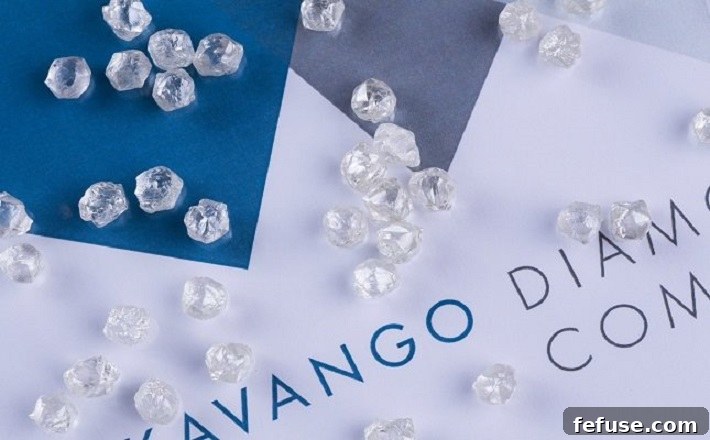
Botswana, a global leader in diamond production, is strategically re-evaluating its approach to marketing rough diamonds. The state-backed Okavango Diamond Company (ODC) is spearheading a significant shift, moving away from its historical reliance on volatile spot auctions towards a more stable, predictable revenue model through structured contract sales. This pivotal recalibration is a direct response to the prolonged weakness and uncertainty observed in global diamond demand, aiming to fortify Botswana’s position and financial stability within the international diamond value chain.
Under this new framework, ODC plans to channel nearly half of its rough diamond allocation via long-term, structured contracts. This bold move is set to substantially reduce the company’s exposure to the fluctuating prices and inconsistent participation often experienced in spot market tenders, ushering in an era of enhanced predictability and resilience for Botswana’s diamond revenues.
From Volatility to Predictability: Embracing Long-Term Contracts
Historically, ODC operated by selling its entire rough diamond allocation through a series of 10 annual spot auctions and citizen tenders. While this model offered flexibility, it also left the company vulnerable to the inherent volatility of the global diamond market. Fluctuating prices, often influenced by macroeconomic shifts, geopolitical events, and changing consumer sentiment, coupled with uneven buyer participation, led to inconsistent revenue streams and challenges in long-term financial planning.
Recognizing these systemic challenges, ODC has strategically opted for a more robust and stable revenue framework. The introduction of structured contract sales marks a pivotal departure from the traditional auction-only system, designed to provide greater consistency and transparency for both ODC and its global clientele. This move aligns Botswana’s diamond marketing strategy with best practices observed in other major commodities, emphasizing stability over short-term market speculation.
The pilot program for these contract sales commenced in November, demonstrating ODC’s proactive stance. These structured sales adopt a model conceptually similar to the renowned “sight” system utilized by industry giant De Beers. This sophisticated system allows for a more controlled and consistent allocation of rough diamonds to a select group of trusted buyers, fostering stronger, long-term relationships.
This groundbreaking shift was made possible under Botswana’s new 10-year diamond marketing agreement with De Beers, an accord that was finalized earlier this year. This landmark agreement represents a significant milestone, as it grants ODC the unprecedented authority to adopt such a strategic sales approach for the first time. It underscores Botswana’s increasing autonomy and ambition to take a more direct and influential role in the marketing and beneficiation of its national treasure.
Expanding Allocation and Broadening the Customer Base
At the heart of Botswana’s diamond industry lies Debswana, the highly successful 50-50 joint venture between the Botswana government and De Beers. ODC currently receives a substantial 30% share of the rough diamond production from Debswana, a significant allocation that reflects Botswana’s commitment to deriving maximum value from its natural resources. The remaining production continues to be marketed and sold by De Beers, leveraging its established global distribution network.
However, the new agreement is designed to progressively increase ODC’s share of Debswana’s output over time. This incremental increase in allocation empowers ODC with greater marketing responsibility and influence, allowing Botswana to exert more control over the distribution and pricing of its diamonds. This strategic expansion is not merely about volume; it’s about strengthening Botswana’s position in the global diamond value chain, fostering local expertise, and diversifying its revenue streams.
A key indicator of the new model’s initial success and future potential is the rapid expansion of ODC’s customer base. According to acting Managing Director Lipalese Makepe, the initial pilot phase in November and December engaged an average of 14 key customers. The positive reception and strategic importance of these contract sales are expected to drive this number significantly higher, with projections indicating a more than doubling of participants to 32 as the program continues to mature and expand. This broadened customer base ensures greater market penetration and reduces reliance on a limited number of buyers, further enhancing ODC’s market resilience.
This expansion will primarily target established diamond manufacturers and sightholders who possess the financial stability, operational capacity, and ethical standards required to engage in long-term contractual relationships. By cultivating a diverse portfolio of reputable buyers, ODC aims to establish robust, resilient sales channels that can withstand market fluctuations and contribute to sustainable growth for Botswana’s diamond sector.
Stabilizing Cash Flow Through Innovative Indexed Pricing
A cornerstone of ODC’s new marketing framework is the implementation of an advanced indexed pricing mechanism. Under this innovative system, ODC meticulously selects qualified, long-term buyers, primarily consisting of well-established and reputable diamond manufacturers. These partners enter into agreements specifying predefined volumes, quality assortments, and pricing bands, all agreed upon well in advance of actual deliveries.
Crucially, the contract pricing is ingeniously linked to an industry-recognized index. This index-linking mechanism represents a significant advancement in rough diamond marketing, providing a dynamic and equitable system for both ODC and its esteemed clients. It ensures that both parties share proportionally in market movements, mitigating risks associated with both upward and downward price fluctuations. In periods of market strength, ODC benefits from improved pricing, while during downturns, buyers gain a degree of protection, fostering a spirit of partnership and shared risk management.
The primary objective of this sophisticated mechanism is to significantly reduce revenue volatility for ODC. By providing a more stable and predictable cash flow, ODC can better plan for national development initiatives, invest in infrastructure, and support various social programs that benefit the citizens of Botswana. Furthermore, index-linked pricing enhances transparency throughout the supply chain. Buyers gain clear visibility into how prices are determined, fostering trust and long-term commitment. This mutual risk management approach is designed to create a more resilient and sustainable ecosystem for the rough diamond trade, moving beyond the often-opaque and unpredictable nature of traditional spot markets.
A Strategic Response to Evolving Market Pressures
The global diamond trade is currently navigating a period of unprecedented challenges, marked by subdued consumer demand, fluctuating economic conditions, and increasing competition from alternative products such as lab-grown diamonds. In this complex environment, ODC’s strategic pivot toward structured contract sales reflects a broader, industry-wide trend towards establishing more predictable and resilient supply relationships. Major players across various commodities are increasingly seeking long-term agreements to insulate themselves from market shocks and ensure stability.
By judiciously balancing these stable contract sales with selective, strategic tenders for specific parcels or market segments, ODC aims to achieve the best of both worlds. This hybrid approach allows the company to secure steadier, more predictable cash flows, which are vital for national economic planning and long-term stability. Simultaneously, by retaining the option for selective tenders, ODC can maintain a degree of market responsiveness, capitalizing on opportune moments for higher prices for unique or highly sought-after rough diamonds.
This transition signals Botswana’s unwavering intent to bolster its marketing resilience and assert greater control over its most valuable natural resource. As Botswana assumes an increasingly prominent and sophisticated role in the global diamond value chain, these strategic initiatives are crucial for ensuring the long-term prosperity and sustainable development of the nation. It represents a mature and forward-thinking approach, moving beyond mere extraction to sophisticated market engagement.
Botswana’s Vision for a Resilient Diamond Future
Botswana’s proactive adjustment to its diamond marketing strategy is not just a tactical response to current market conditions; it is a clear articulation of a broader national vision. This vision prioritizes long-term economic resilience, greater local beneficiation, and enhanced national control over a resource that has fundamentally transformed the country. By moving towards structured contract sales, ODC is contributing to a more diversified and robust economic future for Botswana.
The benefits of this shift extend beyond immediate revenue stability. It strengthens Botswana’s negotiating power in the global market, fosters deeper and more trust-based relationships with international buyers, and positions the nation as a sophisticated and reliable supplier of rough diamonds. This strategic evolution enhances Botswana’s reputation as a responsible and innovative leader in the diamond industry, further cementing its commitment to transparent and ethical business practices.
In conclusion, the Okavango Diamond Company’s pivot from predominantly spot auctions to a model integrating significant long-term contract sales represents a landmark development for Botswana and the global diamond industry. It is a strategic, well-considered response to market pressures, designed to secure stable cash flows, broaden its customer base, and enhance its influence in the global diamond value chain. This forward-thinking approach underscores Botswana’s unwavering commitment to maximizing the long-term value of its diamond heritage for the benefit of its people and future generations, ensuring a resilient and prosperous future in the world of diamonds.